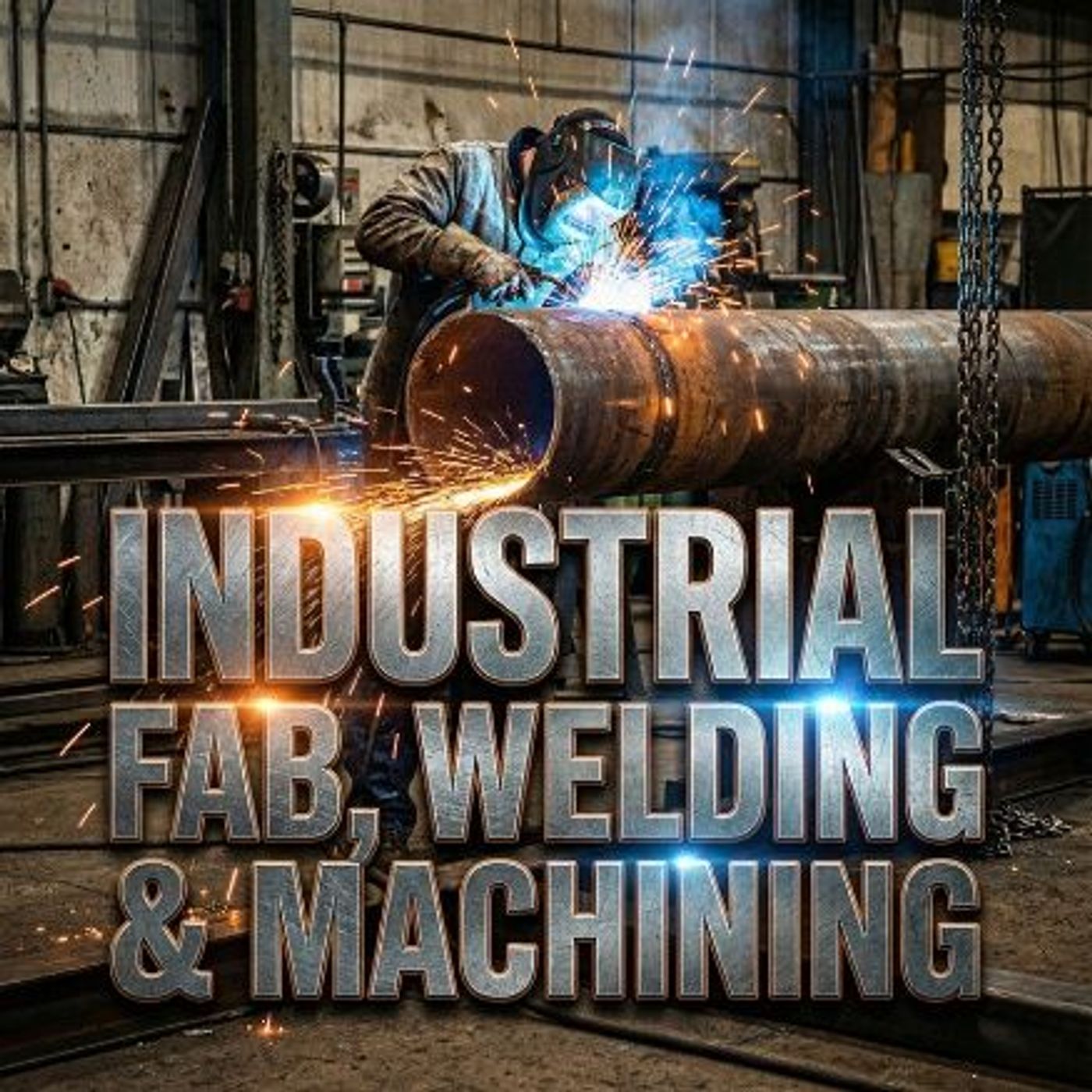
Industrial Field Services: Essential Guide for 2026
from Industrial Fab, Welding & Machining Hosted by Aaron Sova
Industrial field services are the backbone of modern heavy infrastructure—keeping oil platforms, gas processing plants, aggregate mines, and recycling facilities operating without catastrophic downtime. Even as smart automation and AI transform industrial plants, hands-on human expertise remains irreplaceable when heavy equipment fails in remote environments. On-site technical execution demands specialized precision, strict safety adherence, multi-code compliance, and extreme environmental adaptability. On this episode of Industrial Fab, Welding & Machining, the field operations team at LTJ Industrial Services explores mobile precision machining, high-stakes field welding, hydraulic root-cause diagnostics, digital quality documentation, and sustainable asset management. Key Episode Highlights The Automation Field Paradox: While plant automation increases production efficiency, it also elevates the complexity and financial risk of unplanned downtime. Highly skilled mobile technicians are essential for resolving unexpected mechanical failures on-site. On-Site Precision Machining & Alignment: Transporting massive equipment to a machine shop is often cost-prohibitive or physically impossible. Portable line boring, flange facing, and optical precision alignment deliver shop-grade tolerances ($\pm 0.001\text{ inches}$) directly in the field. Environmental Field Welding Challenges: Field welding lacks controlled shop conditions. Certified mobile welders must manage ambient wind, temperature swings, and moisture while maintaining strict multi-code compliance—including ASME Section IX, AWS D1.1/D1.6, and API 1104 standards. Hydraulic Root-Cause Diagnostics: Field hydraulic service extends beyond replacing ruptured hoses. Technicians perform systematic fluid contamination testing, valve manifold diagnostics, and pump flow audits to resolve the root causes of system degradation. Comparative Capability Framework: In-House Plant Maintenance vs. Specialized Mobile Field ServicesTooling & Equipment Capabilities In-House Plant Maintenance: Basic hand tools, standard shop lathes, portable stick welders; limited to routine servicing and small component swaps. Specialized Mobile Field Services: Heavy-duty service rigs equipped with portable line boring units, multi-process power sources, flange facers, and ultra-high-pressure waterjetting equipment. Code Certification & Quality Assurance In-House Plant Maintenance: General facility maintenance skills; limited formalized code certifications or non-destructive testing (NDT) capabilities. Specialized Mobile Field Services: AWS D1.1, ASME Section IX, and API 1104 multi-code certified welders; digital parameter logging; CMTR material heat-number verification. Response Speed & Emergency Availability In-House Plant Maintenance: Limited to facility operating shifts; constrained by spare parts availability and competing internal priorities. Specialized Mobile Field Services: 24/7 mobile field dispatch; rapid deployment to remote sites; emergency field fabrication and component modification. Actionable Playbook for Mobile Field Service ExecutionTo streamline emergency equipment repairs, minimize plant downtime, and enforce safety compliance during field interventions, facility managers should execute this four-part operational plan: Establish Remote Emergency Dispatch SLAs: Partner with a regional industrial service provider that guarantees 24/7 mobile field response with fully equipped service trucks and multi-code certified technicians. Mandate Portable Machining for Heavy Components: Utilize on-site line boring and flange facing for worn pivot points, crusher frames, and valve bodies to eliminate the massive freight costs and downtime of off-site transport. Enforce Digital Field Parameter Tracking: Require mobile technicians to log real-time weld parameters, NDT inspection results, and material heat numbers into a digital QA asset record for regulatory compliance. Schedule Root-Cause Hydraulic Audits: Pair routine fluid filter changes with diagnostic pressure and contamination testing to identify pump cavitation or internal valve leaks before complete system failure occurs. Partner with LTJ Industrial Services Relying on uncertified local handymen or attempting complex on-site repairs without specialized equipment exposes your facility to recurring breakdowns, safety hazards, and regulatory fines. Located at 22505 US-6, Rifle, Colorado, LTJ Industrial Services brings over 60 years of combined team experience across multi-code welding (ASME, AWS D1.1/D1.6, API 1104), multi-axis CNC machining, high-definition waterjet cutting, custom structural steel fabrication, and 24/7 mobile field service.Our fleet of mobile service rigs delivers turnkey field repair—from portable line boring and emergency pipeline welding to hydraulic system troubleshooting and high-pressure surface preparation—across Colorado and the Western United States.Get your heavy equipment back online fast. Call our Rifle engineering desk today at (970) 625-9353 or visit LTJIndustrial.com to request immediate field service dispatch. click here to read more Learn more about LTJ Industrial Services at www.ltjindustrial.com/
Embed this episode
No transcript yet.