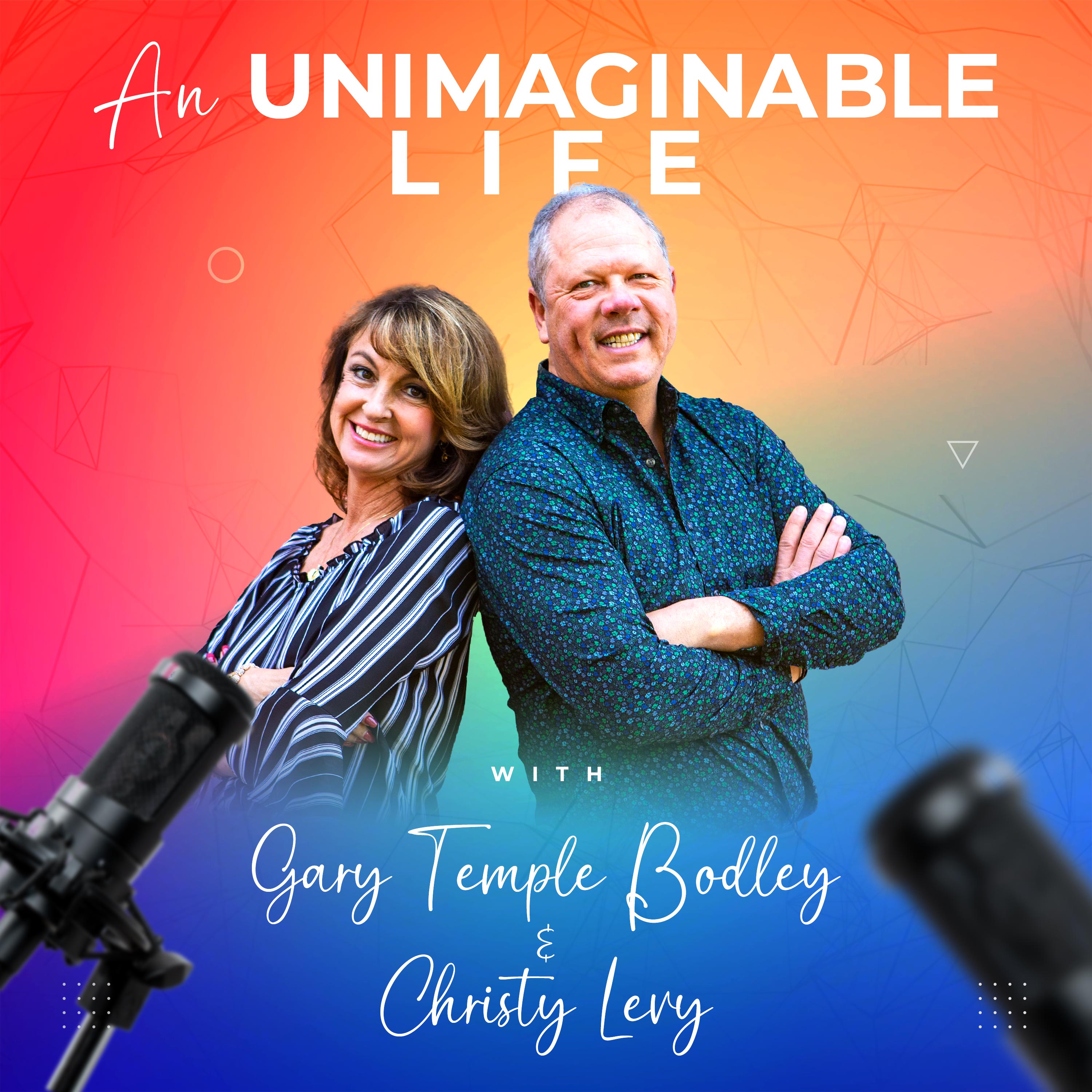
Inner Freedom After Trauma with Etty Hillesum and Vaclav Havel episode artwork

EPISODE · Jan 31, 2026 · 58 MIN

Inner Freedom After Trauma with Etty Hillesum and Vaclav Havel

from An Unimaginable Life · host Christy Levy, Spiritual Medium with Gary Temple Bodley

Read about The Freedom Project here Schedule a call with Gary to learn more about The Freedom Project here   This Dead Talk episode is a channeled teaching on inner freedom after trauma, guided by two historical figures: Etty Hillesum (young Jewish diarist who wrote from Westerbork and later Auschwitz) and Václav Havel (Czech dissident who became the first president of the Czech Republic after the Velvet Revolution). The core theme: freedom doesn’t come from being unhurt or from circumstances improving—it comes from no longer organizing life around the wound. Etty found freedom inside a collapsing world (Holocaust reality). Havel found freedom inside an oppressive structure (communism), and lived long enough to see inner freedom reflected outward in social change. The main teaching: trauma is not the event They redefine trauma as not what happened, and not even the pain. Trauma is: the moment life became smaller to survive, the internal contraction that says: I must be less open, feel less, expect less, risk less. This contraction becomes an internal “government” that continues long after the danger passes. It decides what you can feel, hope for, explore, or trust. In that sense, trauma is protective, intelligent, temporary by design—but it becomes limiting when it interferes with love, presence, and the ability to be touched by something good. Freedom, they say, is not “healing trauma” as a project. It’s outgrowing it by restoring your range: what you’re willing to feel, how much you’re willing to love, how much you’re willing to let in. “Imprint” vs trauma They introduce a second layer: imprint—fear and limitation installed before you had direct experience or choice. Imprints come from: parents, culture, religion, schooling, media, authority, warnings and stories that the child’s body stores as reality, not information, and sometimes genetic or past-life residue. Because imprint fear is “older” than the current opportunity, it cannot be reasoned away. It must be met. The body is reacting to memory, not to now. Examples of common imprints: Money: “money runs out,” “never enough,” “security requires effort.” Authority: “I’ll get in trouble,” “rules protect me from myself.” Love: “if I’m fully myself, I’ll be left,” “connection is fragile.” Body/health: “symptoms mean danger,” “aging means decline.” Visibility/expression: “being free has consequences.” They note the irony: many listeners are not materially poor, yet their nervous systems are “poor” from imprinting. Practical guidance they offer They emphasize this is not a heavy “healing session,” but a noticing: “Who are you now that your nervous system no longer needs to lead your life?” “What became unavailable that might now be safe to reopen?” Key practices: Acknowledge the story as a helper “Thank you for helping me survive. You don’t need to work so hard anymore.” The story persists when it doesn’t feel recognized. Replace “Why did this happen?” with “What’s happening now?” “Why” pulls you into the past; “now” returns you to presence. When you feel righteous/need to be right: check the body Righteousness can signal you’re inside a trauma loop—trading aliveness for certainty. Ask: “What does this story allow me to avoid risking?” Trauma stories often protect you from the vulnerability of expansion. Use proximity, not coercion Don’t force yourself through fear. Sit with it, let the body learn safety gradually. Talk to fear without consulting it “I see you’re afraid. Thank you for trying to keep me safe. We don’t have to decide today.” They make a key distinction: overriding fear to do something “wild” isn’t necessarily expansion—real expansion honors safety and lets fear soften through presence. Group field moment There’s a vivid description of the group’s energetic field: an oval, forward-oriented, permeable, slate-blue/soft gold tone—mature, coherent, grounded, not organized around wounds. “Connection without dependency; individuality without isolation.” Humor appears as a low “center of gravity”—less seriousness, more embodied decision-making. Etty’s “inner tower” and the role of acceptance Etty explains her awakening in the camps: it wasn’t dramatic kundalini-style; it began when she accepted the war would not end in time for her. That acceptance removed hope-as-victimhood and opened an “inner tower” (a state of unassailable coherence). The tower wasn’t protection—it was perspective. She remembered a dimension of being untouched by threat, time, or harm. Her line: “Belief didn’t save me. My alignment did.” The episode closes with a powerful reframing: At first, releasing struggle doesn’t feel like a rush—it feels like an exhale, a spaciousness. That space can feel unsettling because struggle used to provide identity. Eventually you see how “future safety” becomes comical—presence is the only real safety.

Read about The Freedom Project here Schedule a call with Gary to learn more about The Freedom Project here   This Dead Talk episode is a channeled teaching on inner freedom after trauma, guided by two historical figures: Etty Hillesum (young Jewish diarist who wrote from Westerbork and later Auschwitz) and Václav Havel (Czech dissident who became the first president of the Czech Republic after the Velvet Revolution). The core theme: freedom doesn’t come from being unhurt or from circumstances improving—it comes from no longer organizing life around the wound. Etty found freedom inside a collapsing world (Holocaust reality). Havel found freedom inside an oppressive structure (communism), and lived long enough to see inner freedom reflected outward in social change. The main teaching: trauma is not the event They redefine trauma as not what happened, and not even the pain. Trauma is: the moment life became smaller to survive, the internal contraction that says: I must be less open, feel less, expect less, risk less. This contraction becomes an internal “government” that continues long after the danger passes. It decides what you can feel, hope for, explore, or trust. In that sense, trauma is protective, intelligent, temporary by design—but it becomes limiting when it interferes with love, presence, and the ability to be touched by something good. Freedom, they say, is not “healing trauma” as a project. It’s outgrowing it by restoring your range: what you’re willing to feel, how much you’re willing to love, how much you’re willing to let in. “Imprint” vs trauma They introduce a second layer: imprint—fear and limitation installed before you had direct experience or choice. Imprints come from: parents, culture, religion, schooling, media, authority, warnings and stories that the child’s body stores as reality, not information, and sometimes genetic or past-life residue. Because imprint fear is “older” than the current opportunity, it cannot be reasoned away. It must be met. The body is reacting to memory, not to now. Examples of common imprints: Money: “money runs out,” “never enough,” “security requires effort.” Authority: “I’ll get in trouble,” “rules protect me from myself.” Love: “if I’m fully myself, I’ll be left,” “connection is fragile.” Body/health: “symptoms mean danger,” “aging means decline.” Visibility/expression: “being free has consequences.” They note the irony: many listeners are not materially poor, yet their nervous systems are “poor” from imprinting. Practical guidance they offer They emphasize this is not a heavy “healing session,” but a noticing: “Who are you now that your nervous system no longer needs to lead your life?” “What became unavailable that might now be safe to reopen?” Key practices: Acknowledge the story as a helper“Thank you for helping me survive. You don’t need to work so hard anymore.”The story persists when it doesn’t feel recognized. Replace “Why did this happen?” with “What’s happening now?”“Why” pulls you into the past; “now” returns you to presence. When you feel righteous/need to be right: check the bodyRighteousness can signal you’re inside a trauma loop—trading aliveness for certainty. Ask: “What does this story allow me to avoid risking?”Trauma stories often protect you from the vulnerability of expansion. Use proximity, not coercionDon’t force yourself through fear. Sit with it, let the body learn safety gradually. Talk to fear without consulting it“I see you’re afraid. Thank you for trying to keep me safe. We don’t have to decide today.” They make a key distinction: overriding fear to do something “wild” isn’t necessarily expansion—real expansion honors safety and lets fear soften through presence. Group field moment There’s a vivid description of the group’s energetic field: an oval, forward-oriented, permeable, slate-blue/soft gold tone—mature, coherent, grounded, not organized around wounds. “Connection without dependency; individuality without isolation

NOW PLAYING

Inner Freedom After Trauma with Etty Hillesum and Vaclav Havel

0:00 58:57

No transcript for this episode yet

We transcribe on demand. Request one and we'll notify you when it's ready — usually under 10 minutes.

Eat to Live Jenna Fuhrman, Dr. Fuhrman Our health is our most precious gift and smart nutrition can change your life. Each month, join Dr. Fuhrman and his daughter, Jenna Fuhrman as they discuss important topics in the world of nutrition. Eat to Live will change the way you eat and think about food. French Your Way Jessica: Native French teacher founder of French Your Way Boost your French listening skills and test your comprehension with this one of a kind series of podcasts. Get the chance to listen to a real conversation between native speakers talking at normal speed AND customise your learning experience through carefully designed sets of questions (2 levels of difficulty) available for download at www.frenchvoicespodcast.com. All interviews also come with the transcript. French teacher Jessica interviews native speakers of French from around the world who share a bit of their life and passion. Where else would you meet in one same place a French yoga teacher based in Melbourne, a soap manufacturer from Provence, or a couple cycling around the world? That Hoarder: Overcome Compulsive Hoarding That Hoarder Hoarding disorder is stigmatised and people who hoard feel vast amounts of shame. This podcast began life as an audio diary, an anonymous outlet for somebody with this weird condition. That Hoarder speaks about her experiences living with compulsive hoarding, she interviews therapists, academics, researchers, children of hoarders, professional organisers and influencers, and she shares insight and tips for others with the problem. Listened to by people who hoard as well as those who love them and those who work with them, Overcome Compulsive Hoarding with That Hoarder aims to shatter the stigma, share the truth and speak openly and honestly to improve lives. HOMELAND HOMELAND The Church is a body not a building. It's the bride of Jesus Christ! Jesus is coming back for a mature bride. That means it's time for the church of Jesus Christ to move from milk to meat. This is the hour of maturity!HOMELAND is an announcement that the church is being set free. Only the church has the ability to transform the world. The kingdom's of this world will become the kingdoms of our Lord and Savior!All of creation has been waiting for this moment! Sons and daughters of God are rising up and taking their seat!

Frequently Asked Questions

How long is this episode of An Unimaginable Life?

This episode is 58 minutes long.

When was this An Unimaginable Life episode published?

This episode was published on January 31, 2026.

What is this episode about?

Read about The Freedom Project here Schedule a call with Gary to learn more about The Freedom Project here   This Dead Talk episode is a channeled teaching on inner freedom after trauma, guided by two historical figures: Etty Hillesum (young Jewish...

Can I download this An Unimaginable Life episode?

Yes, you can download this episode by clicking the download button on the episode player, or subscribe to the podcast in your preferred podcast app for automatic downloads.
URL copied to clipboard!