Inside Horizon Shine Village
from Sebastopol CITY LIMITS Podcast Hosted by Dale Dougherty
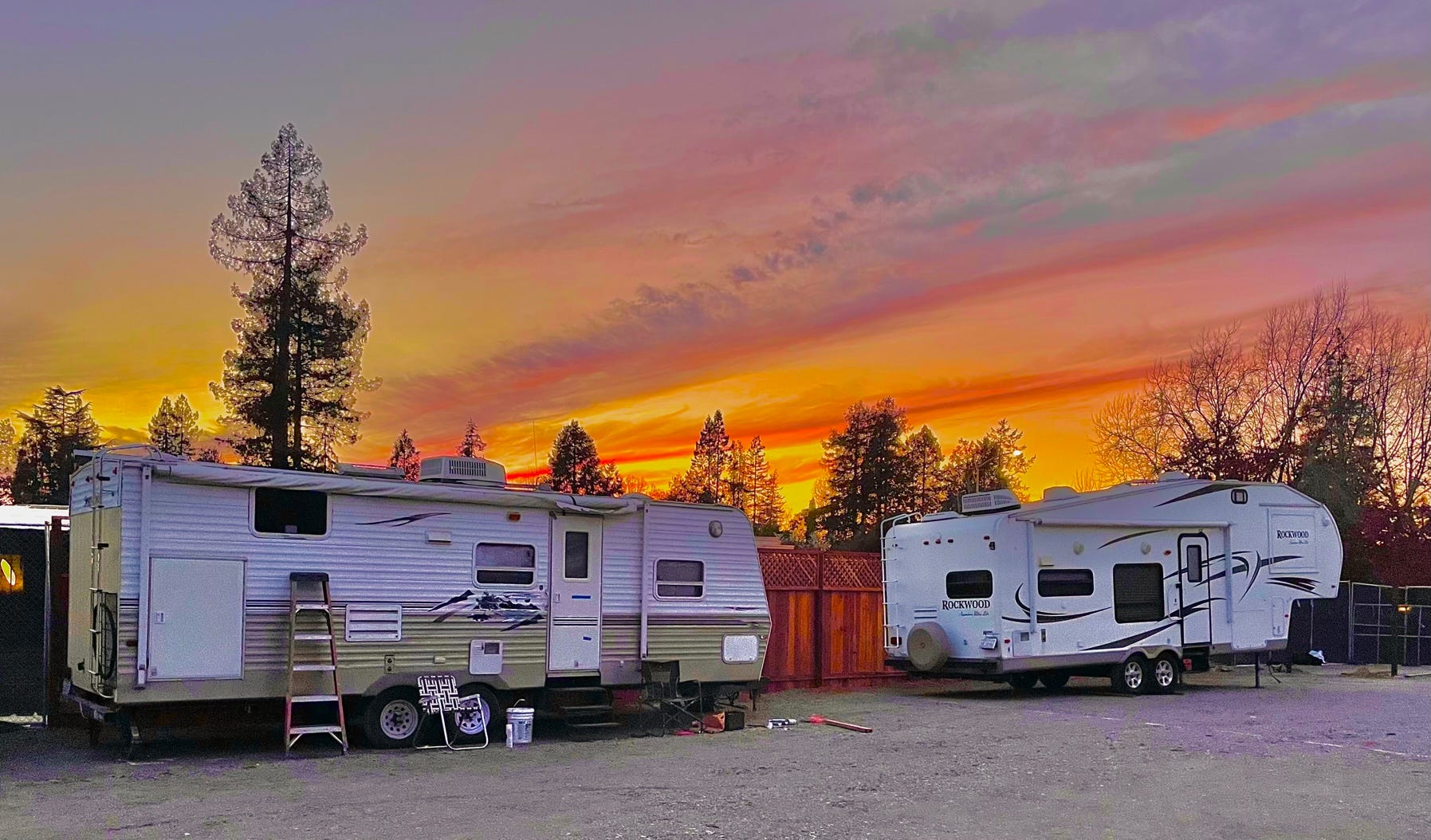
Horizon Shine was put forth as a name by a homeless person on Morris Street and everyone in the planning session liked it. It’s now the name of the village community on North Gravenstein Avenue built by Sonoma Applied Village Services (SAVS) and opened in February 2022. About 20 RVs and 30 individuals were relocated from Morris Street to Horizon Shine Village where they have access to showers, a daily hot meal, and case workers who can help them figure out how to get what they need. The effort, which came about through a partnership between SAVS and the Sebastopol City Council, was funded by donations as well as grants from County Board of Supervisors and the State of California. In this episode, we talk with Adrienne Lauby, the President of Sonoma Applied Village Service and Hector Gutierrez who is the Village Project Manager. Sebastopol Times is a reader-supported publication. To receive new posts and support our work, consider becoming a free or paid subscriber. Transcript Adrienne: The bottom line of everything I do is the feeling that housing is a human right. And that's in the international declaration of rights, but it's also just reality. We live in the rich country. Sonoma County is a rich county. It's ridiculous that we have 2,000 people with nowhere to sleep at night. I think it's a human right. And I hope other people will understand that and just be as appalled as me. That's all. Dale: I'm joined today by Adrienne Lauby and Hector Gutierrez from Sonoma Applied Village Services. SAVS is the acronym and they manage the Horizon Shine on Gravenstein Avenue. And we're gonna learn more about them and what managing that means. Actually we'll start with you, Adrienne. Can you tell us a bit about yourself and your background and how you got into this? Adrienne: Sure. So I'm right now, the board president of SAVS and I've been doing homeless work for about eight years. I got into this through a long history of trying to do change in the world, starting with feminism in the seventies and going through a disability movement. I wanted to do local work and because of Occupy Santa Rosa, I realized that there was an overlap between disability and homelessness. And so I started trying like a lot of us -- do something, help. Oh my gosh, this shouldn't happen like it is. Why do we have 2000 people on the street in Santa Rosa, not in Santa Rosa in Sonoma County, So, gathered up my courage to go meet homeless people and started developing a team. We worked with this group called homeless action for and then eventually we realized that all of our good ideas were not gonna be put into play unless we ourselves did them. So we started SAVS in 2018 as a nonprofit, and that allowed us to get some government funding, which is what we've done and eventually to open up Horizon Shine here in Sebastopol. Dale: Great. Thank you. Hector, how about you? Hector: Actually I'm new to that homeless cause only because I just been here in the Santa Rosa area about a year and a half ago. I moved up here from Los Angeles area. I work mostly city government for last 30 years and retired from that particular job. And then I moved up here with my wife. She's originally from this area. And how I got involved with SAVS, I had applied for a position, a project manager, and mostly that would be construction after discussing with Adrienne what the project was and what was the goal? I find it very interesting. I think it's a great idea. I think it's a humane type of thing that I wanted to be involved with. I wanted to help the community. I wanted to help the cause of what this is program was trying to achieve. So with that being said I took the job so that I can be part of this particular project and the rest is history. I've been there for, going almost in a year. We completed the village in Sebastopol and we're moving on to other projects in the future. It's so new, but I'm really enjoying the work that I'm doing. Dale: What do we know about the homeless situation in Sonoma County from your perspective? What have you learned that you could share with us? Adrienne: I think the biggest thing I've learned is to keep the generalities outside of the world. People have lots of generalities about homeless people, starting from the most stigmatizing, like they're all mentally ill, they're all losers, they're all drunks and addicts to the kindest ones. They're all wonderful, giving, loving people who just lost a job. And the truth is there are 3000 homeless people in Sonoma County and they are very particular people with particular histories, just like anyone else. What we do know is that there's an increase of elderly people in their seventies and even eighties. And these are people who have generally had a work life and retired and then had some level of tragedy or unusual circumstances hit them. But I think because of the economy, rich getting richer, the poor getting poor, it's just more of those folks. Which is they're all heartbreaking. We also see a lot and I'm saying the things that I think might surprise people. So we see a lot, I said about disability. And people would say yes, mentally ill. We closed the mental institution. So of course there's a lot of mentally ill people, but actually there's also a lot of physically ill people. We meet people, an amazing number of people to me who have cancer and are going through cancer treatments, people in wheelchairs with mobility problems, people with breathing problems. We also find, I would call them economic refugees who had been priced out of the housing market because of maybe they just didn't expect it to be so hard to rent an apartment, but also people who've lost jobs and people who lost housing because of the Tubbs fires. So climate change and economics definitely affected us. 2000 of those people live outside. A thousand of the 3000 are in some sort of facility: shelters, group homes, whatever. But that 2000 really literally have nowhere to stay every night. About a third of them, and this will probably surprise people, do have a vehicle they live in, which makes sense because if you were to lose your home, the first place you'd go is whatever vehicle you have. And also people get given like an RV. Oh, I have this one. I'm not using it anymore. Or my brother-in-law has a crapped out one in their backyard. You can have it, just take it out of the backyard. So we have what the police call "caravans" of homeless vehicles. This has worked out well for SAVS because it's easy. Like they already have a kitchen, they already have a bathroom. They already have a place to live. And it's a matter of just giving them a place that's safe and legal because the biggest problem is two things. One is keeping your RV registered and smogged and all those things that cost a lot and which you don't really need cuz you're living in them. You're not traveling in them. And then the police, because you're only allowed to be on the street at certain number of days, depending on where it is. And so they get harassed by the cops like, "oh, you have to leave. You have to leave. Yeah. I saw you over on there last week, but you're here this week. You gotta go somewhere else." And so it's constant stress. Where are you gonna be? And of course, this is all magnified when people are living in tents, same thing happens. They get neighbors (who) call and then, "okay, you gotta leave. You gotta leave." We just kept saying, and they keep saying. Where are we gonna go? Where are we gonna go? So the mission of SAVS is to give them a place to go. And we have our one village in Sebastopol. We're hoping to do a new one that will be Latino focused because they are overrepresented in the homeless population. We'll have more to say about that later in the year. Dale: Is the RV home site kind of a model that you're gonna build on? Adrienne: I mean our goal we call it tiny villages and we say, whatever is a villa… Get full access to Sebastopol Times at www.sebastopoltimes.com/subscribe
Embed this episode
No transcript yet.