AI isn't just opening new business opportunities, it's changing the way businesses get work done. Questions they ask, the decisions they make, the routine tasks that can be handed off, that's the idea behind NetSuite Next, the next generation of NetSuite, with AI woven into the tools that your business already relies on. NetSuite Next surfaces insights exactly when you need them, puts agents to work on routine tasks and problems, and lets you ask complex questions in plain language like talking to a knowledgeable colleague. But technology is only part of the story. AI is also shaping how people and teams work together. And shift is underway. And that's why there is a new expert created business guide for you.
It's called Aligning for the Agentic Era, how AI is changing everyday work. And right now it's totally free. You can explain how AI can reshape work across your entire organization and how businesses like yours can prosper from it. If your revenues are at least in the seven figures, get this free business guide aligning for the Agentic Era at netsuite.com slash stoic. The guide is free to you at netsuite.com slash stoic. And MBA can cost as much as $250,000. Meanwhile, Warren Buckets'
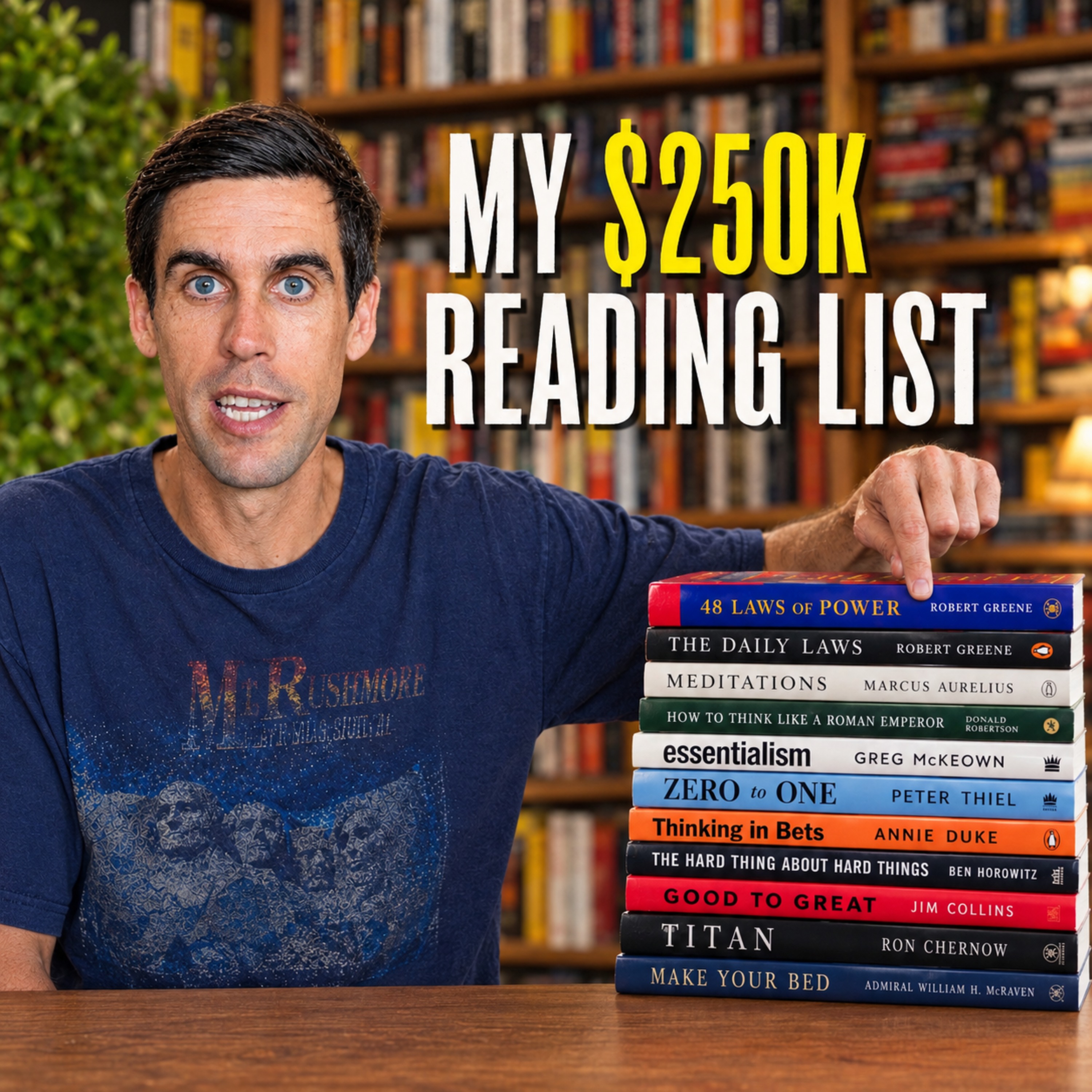
business empire, one of the most successful companies and investment runs in human history, was built on the knowledge he got from a book that he paid less than $2 for in the 1960s. My whole life was changed by a copy of Mark Smolens' Meditations that I bought for $9 on Amazon. It changed me personally and also professionally. This bookstore, my books, which is sold millions of copies, none of that would be possible by not learned what was in between those two covers. So I wanted to give you some book recommendations that even if you buy all of them, even if you buy signed first editions of all of them would be cheaper and better than an MBA. Let's start with
some of my favorite business books. Not that business books are the end all be all in fact, I think, philosophy and psychology and books about history and human nature are more important, but we'll start with some business ones. Here is a $1,000,000 coach. This is written by Eric Schmidt, one of the most successful business CEOs of all time. But this is about one of the greatest leadership coaches of all time, who mentored and coached Steve Jobs, Larry Page, and some of the biggest CEOs in the history of Silicon Valley. This one is great. Everyone should read what I learned losing a million dollars. It's
about a trader on the Chicago Stock Exchange who blows it in the 80s and loses over a million dollars. Obviously today they're playing with slightly larger amounts of money, but this one is really good. I would also pair it with another book about failure, which we should have here somewhere. A $1,000,000 lessons. Again, you can learn as much from people's very expensive failures than you can from their successes. Guy Ross is interviewed basically every CEO of a big or new company of the last
generation or so. This book, How I Built This is incredible. Actually, funny story, we have a hard cover of how I built this up there in the book tower. Can't have that one. I don't think it's coming out anytime soon. Jim Collins, good to great. This one's very important, unreasonable
hospitality on the great restaurant, tours and hospitality experts. This book is great. Pair that with Danny Meyer, Peter Teal, who I wrote a book about zero to one. Obviously, controversial guy, but his thinking here is incredible. Everyone should read this. Maybe let's do personal
MBIs since we're talking about how to get an MBA. As far as marketing goes, I'd also throw in the 22 immutable laws of marketing. This is both a marketing and a business and a life strategy, blue ocean strategy. The best business is the most successful businesses, most successful entrepreneurs, most successful artists. They're not better than the people that are doing what they do.
Usually they got there because they were the only one doing what they do. You want to go to where you have a monopoly? Peter Teal talks about that in zero to one. You don't do that by kicking out all the competitors. You do that by going to where there are no competitors. Be a one of one. Be the
only one doing your thing. We're all unique. We are all different. Don't try to be like everyone else. Go to the blue ocean. This book is very important. It's very instrumental in my career
and my business strategy. Again, when you're thinking about an MBA, it's costing $250,000. People think starting a business is so expensive. Some of them are, some businesses are really capital intensive. I do like $100 startup. No, Kagan's also written some interesting stuff
on how it is much cheaper and easier to start a company. If you start really small, they're going to talk about this in the lead startup. Very good. Danny, you're talking about this thinking and that's shrinking. The risks that you're taking is really important. Ben Horowitz,
hard to think about hard things. You will have to make hard decisions in life and in leadership. Very important. McCallen's essentialism, also really good. As Mark Schugler says, when you eliminate the inessential, get the double benefit of doing the essential things better. I'd
also throw in Robert Green's stuff. 33 strategy for war. This is an incredibly powerful book for anyone launching a campaign or in the midst of a battle of some kind of literal or figuratively. I would also add in the 40 laws of power. You don't have to be one of the people in the book, but you want to be able to protect against the people who operate like that in the book. And then I
would, I could see this book being on the desk of any student or future CEO. It's one lesson a day from all of his books. There's your strategy for law of human nature, 40 laws of power, artist, and mastery. So this is power, seduction, mastery, strategy, and human nature. These are all things that hopefully you would learn in an MBA program, but clearly most people don't.
Let's go over here to leadership because that's what ultimately you are being primed to do. William Craven's stuff, it's been laden. I really like Admiral James Stevreides, his book sailing true north and to risk it all. These are about great naval leaders for the most part. People who had to do some incredibly dangerous or scary things. This is journeys and how character
develops and shapes a leader highly recommend. I put Charles Duhigg's super communicators on this list as well. If you can't communicate, if you can't listen, if you can't connect with people, you're going to have a lot of trouble. Violent threats against executives are growing at an alarming rate. When a company experiences backlash, executives are the first people that are blamed. And people try to track them down
through their address, the personal details that are available online. So that backlash can lead right to someone's front door. The team at Ironwall knows this better than anyone. They protected some of the most targeted executives and individuals on the planet for almost two decades. As a white glove enterprise security service, they protect your people with continuous personal data removal proactive prevention tools and human led emergency support. Someone goes looking for your executives
Ironwall ensures they hit a dead end. So here's what to do. Go to ironwall.com. dailystoic. You fill out a quick form and you can request a free risk assessment. Their team will show you just
how exposed your executives are and how to walk it down before the threat reaches their front door. Ironwall.com. dailystoic. Learn how to stop online threats before they become real world attacks. The link is in the show notes. Benjamin Franklin said time is money in 1748. That was his advice
to a young man. 278 years later, some of us, depending on what you do, are still spending part of everyone typing receipts into a form. It's bad use of your time. That's bad use of company time. Expense reports are tedious. It's not what I want my employees doing. Well, ramp makes collecting
and submitting expenses super simple with ramp expenses. Submit themselves. You just text or email your receipt and ramp categorize codes and submit it. When you book business travel with ramp, they find the best flights and hotels you're actually allowed to book. You don't find out later that your company is only partially going to cover it. Ramp is the only finance platform that employees
and finance teams both rave about and companies have saved over $12 billion with ramp. Time is money save both with ramp new customers get $250 off at ramp.com slash dailystoic. That's ramp.com slash dailystoic. Now let's go a little bit back in time here. Blue Turks out of the leader. He's speaking about
this not just as a scholar and a biographer, but he is a leader in Greece and Rome. Really like this book. I would throw in Seneca's How to Keep Your Cool and this little collection of Dogenes the cynic. How to Say No. Dogenes the cynic managers to say No to Alexander the Great, the most powerful man in the world. How to think like a Roman emperor. We had more leaders and business people who think
like a Roman emperor. They'd be more successful as a John Robinson's book on Marcus Ries. And then of course, every leader should read Marcus Ries' meditations, the private thoughts of the most powerful man in the world. Unlike your typical business memoir, which is performative, which is about the CEO trying to transition to be a speaker or a consultant or caring about their legacy, this is just Marcus Ries writing notes to himself about what he's thinking about what he needs to know. Maybe in your MBA, you're reading Adam Smith, The Wealth of Nations. Obviously important, the bedrock of
modern capitalism. But here's the moral philosophy of Adam Smith, which I think is really important by a great economist named Russ Roberts. I really liked that book. In 1962, the Navy sends Commander James Stockdale, a fighter pilot back to college to get not an MBA, but a master's nevertheless. And he ends up studying philosophy at Stanford. And that shapes what becomes not just this book,
Thoughts of a philosophical fighter pilot, which is some of the best essays and articles on leadership and adversity. And difficulty through the over-read, I mentioned Jim Collins is good to great, Stockdale paradoxes in that book. But when Stockdale is shot down, it has to lead 500 or so aviators through imprisonment, torture, deprivation, isolation. He's drawing on what he learned there at Stanford and from the Stoics, incredibly powerful book. And of course, biography is the best way to learn about how to lead, how not to lead, churn out, tighten, incredible. Really, a lot of business
lessons here of what not to do in his biography of Mark Twain. Mark Twain was a great writer, a great thinker, but he wanted to be an entrepreneur. He's always falling for schemes, always thought he had the next big company lost most of the money he made writing as a result. This, Howard Hughes, his life in madness, cautionary tale genius, disruptive entrepreneur, brilliant guy, also insane, also in egomaniac. How did I learn about this cautionary tale? I should have read about it in
the interview that Elon Musk gave. So he clearly read it and then forgot most of the lessons. Walter Isaac's since his new jobs, Elon Musk, great, his book on Benjamin Franklin, also incredibly successful and brilliant business person. I liked this book on The Wright Brothers as a type of creative, the power of creativity to make something new and how much powerful it is even in incentives. And then I would give you these two moral biographies is what they're called, the President Lincoln, Lincoln's virtues and President Lincoln. Again, it's not just about how good you are at the thing, but what is the
thing you are trying to do? I think that's very powerful. I would recommend those. And then Timur Rival's absolute must read, Lincoln's genius as a wielder of an unwieldy cabinet, his ability to use people he disagreed with, people who had divergent interest from him, but his ability to bring people together and manage that, just absolutely incredible. And then let's wrap up with some memoirs of great leaders. Jerry Winetrow, producer, tour manager, etc. for Elvis, Sinatra, producer of Nashville,
karate kid movies, diner, oceans 11, oceans 12, fascinating guy. This is actually written with Rich Cohen, who's one of my favorite writers who did this book. Fish that ate the whale about the Samuel Zemuri, who starts as the little guy, ends up being acquired by United Fruit, takes over United Fruit, that's always known as the Fish that ate the whale. He has a line in this book basically, you could ignore it for everything you learn in business school, but if you read the story of Sam the Banana Man, you could go pretty far in life. Samuel Zemuri was lacking a moral compass in many ways, so this has to be balanced out with some of the leadership and the philosophy stuff we're talking about, but as far as being a genius businessman and a crafty entrepreneur, that is an incredible memoir that I ever should read. Of course, Shudag about Phil Knight, also very incredible.
What I thought was great about that book, if you read most business books, one of the problems with it is that they sort of skip over the early days, they just go to when it became huge and successful. This book is about the early days, the grind, when he's the Shudag selling shoes out of the trunk of his car, it really goes into the minutia of the early days of Nike, which I think is really, really important and rounds out a part of the entrepreneur and business and leadership perspective that is not told often enough. Let's do some quick things here. Thinking fast and slow, you're making decisions as a business person, you need to know your cognitive biases, cognitive dissonance being one of the biggest ones, so this book on cognitive dissonance mistakes were made but not by me. Very important, I recommend as far as persuasion goes, I might put words that work up there with some of the ones we were talking about earlier as well as mindset. Do you ever feel like other
people are getting more out of their books than you are? You finish a book that everyone's been raving about and you're like, I don't get it, did I miss something? Or there's this book that you've always wanted to read that you heard is important, that you heard has great stuff in it and you can't seem to get through it. There's nothing wrong with you. It's just that really great readers, all the great readers that I've met in my life, they're not just winning it. They have a system,
they're our practices. I myself was taught how to read, how to break down a book, how to take everything I need to get out of it from the great Robert, great, great readers know which books to pick, they know what to look for, they know how to process, retain, they know how to do the most important thing there is to do with a great book. Which as Seneca said is to turn those words into works. We're trying to read to become better people. This is what Truman was getting at when he said that that not all readers are leaders but every leader has to be a reader. Okay so how can you be a better
reader? Well that's what we built at DailyStoke Read to Lead course around. I'm going to show you the system that I have developed over the years to read books in all different kinds of genres, all different lengths, all different styles. If it works for me a college dropout I'm pretty sure it will work for you too. Actually let me show you my system. Like when I read something difficult,
I take notes, I transfer those notes onto note cards, I break books down, talk about the ideas, work on them, I put them into practice. This isn't just the system that I use, this isn't just the things that I was taught by people like Robert Green and others but it's also how the ancient is read, how the stokes read. Mark is really a Seneca epic teetah thousands of years of wisdom extracted from books in the centuries since and we're going to share it with all of you. We've had this course for a really long time. People have loved it. They asked us to bring it back so
that's what we're doing and we'd love to have you join us. You can sign up right now at DailyStoke.com slash read to lead.