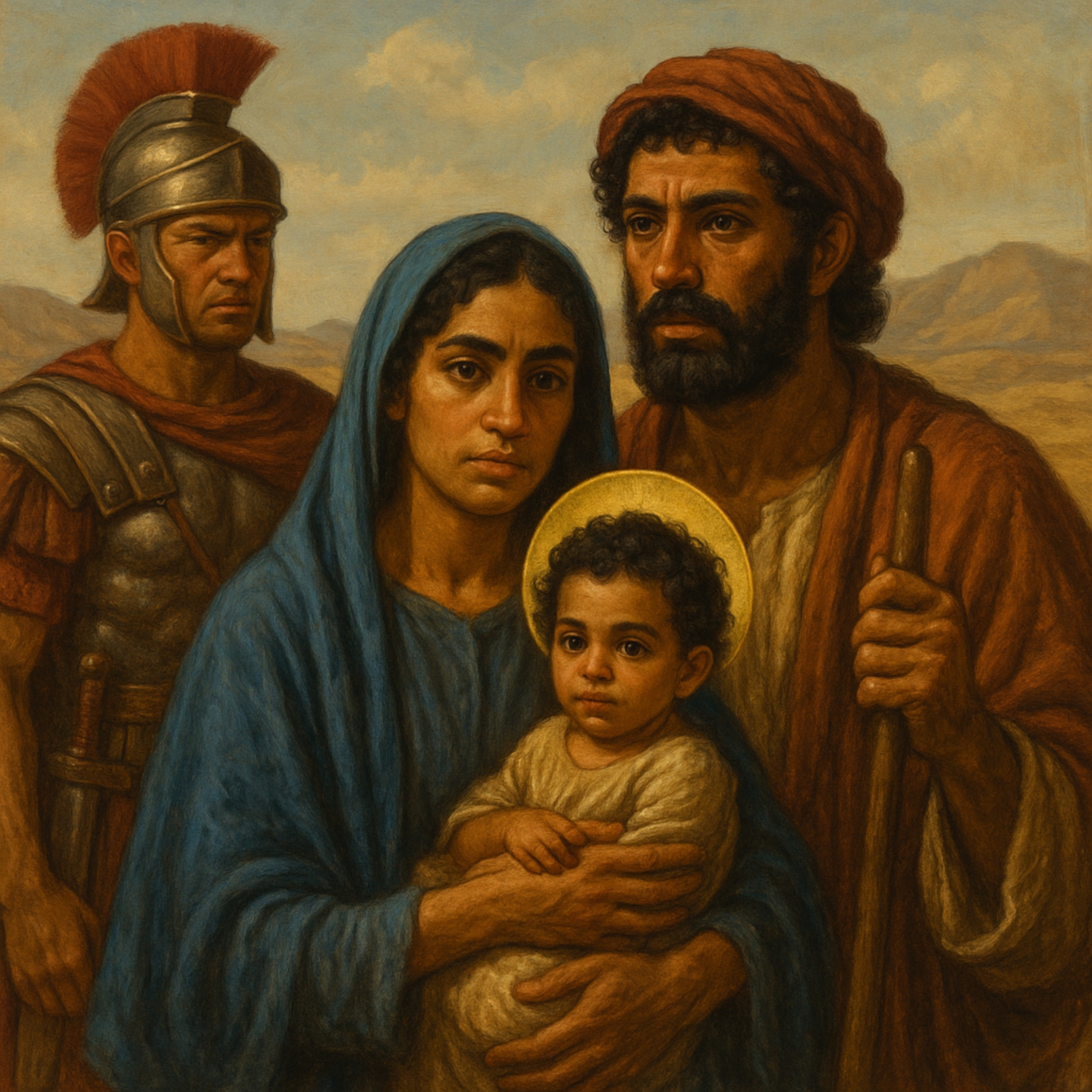
Inside the Empire: Why the Holy Family Were Never Refugees episode artwork

EPISODE · Dec 10, 2025 · 52 MIN

Inside the Empire: Why the Holy Family Were Never Refugees

from The Chris Abraham Show · host Chris Abraham

Welcome back. Today we’re taking on a Christmas claim that resurfaces every year: that Jesus, Mary, and Joseph were refugees, undocumented migrants, or ancient asylum-seekers. It’s emotionally appealing, politically useful, and completely incompatible with the world the Nativity took place in.To understand why, we have to put aside modern nation-states and step into Rome. Rome wasn’t a patchwork of countries. It was a unified imperial world, more like a continental-scale United States than anything else in antiquity. Judea and Egypt were not separate nations. They were Roman jurisdictions. Moving between them was like moving from one state to another, not crossing an international border.And that’s the heart of it: the Holy Family never left their own political system. They never crossed into foreign territory. They never became stateless. They never occupied any category resembling “undocumented.” They were lawful Roman subjects everywhere they went.Now, Rome did have borders — fierce ones. Caesar defended the external edges of the empire with levels of force modern governments wouldn’t dream of using. Unauthorized groups approaching Rome from outside were blocked, repelled, or crushed. In that sense, Caesar absolutely behaved like a modern head of state securing a national border. But none of that applied to people already inside the empire. Rome didn’t deport internal subjects for moving from one province to another. There was no immigration system for internal movement because internal movement didn’t require permission.So when Joseph took Mary and the infant Jesus to Egypt after receiving a divine warning, they weren’t entering a foreign country or seeking asylum. They weren’t applying for refuge. They weren’t presenting themselves to a host government. They were relocating inside the only political world they belonged to.If we want analogies, the closest modern parallels come from American internal displacement, not international refugee movements. Think of Dust Bowl families fleeing starvation and drought by heading to California. Think of the Great Migration, when millions of Black Americans fled racial terror in the South and rebuilt their lives in northern cities. Think of families uprooted by hurricanes or wildfires and moving across state lines. These were dramatic, sometimes desperate relocations. But they weren’t refugees under law. They were citizens moving inside a single national system.The Holy Family fits this pattern far better than the refugee framework we keep projecting onto them. Their story is about danger, intervention, and survival — but not about crossing a border into a foreign land.So why do we keep forcing the Nativity into modern immigration politics? Because the analogy is emotionally powerful. Casting Jesus as an undocumented child and Herod as the voice of border enforcement gives modern debates a moral clarity many people crave. But it rests on a misunderstanding of both worlds: Rome and our own.Rome enforced external borders. The United States enforces external borders. But Jesus, Mary, and Joseph were never on the wrong side of those borders. They were not outsiders seeking entry. They were insiders seeking safety. Their legal status never changed. Their political identity never changed. Their movement never triggered anything resembling asylum, deportation, or refugee law.This isn’t about shutting down compassion. It’s about keeping the historical record intact and resisting the urge to retrofit sacred stories into modern political frameworks. The Nativity is many things — a theological hinge, a confrontation with violence, a narrative of protection — but it is not an immigration parable.Thanks for listening. For sources, notes, and the full written version, check the show notes.

Welcome back. Today we’re taking on a Christmas claim that resurfaces every year: that Jesus, Mary, and Joseph were refugees, undocumented migrants, or ancient asylum-seekers. It’s emotionally appealing, politically useful, and completely incompatible with the world the Nativity took place in.To understand why, we have to put aside modern nation-states and step into Rome. Rome wasn’t a patchwork of countries. It was a unified imperial world, more like a continental-scale United States than anything else in antiquity. Judea and Egypt were not separate nations. They were Roman jurisdictions. Moving between them was like moving from one state to another, not crossing an international border.And that’s the heart of it: the Holy Family never left their own political system. They never crossed into foreign territory. They never became stateless. They never occupied any category resembling “undocumented.” They were lawful Roman subjects everywhere they went.Now, Rome did have borders — fierce ones. Caesar defended the external edges of the empire with levels of force modern governments wouldn’t dream of using. Unauthorized groups approaching Rome from outside were blocked, repelled, or crushed. In that sense, Caesar absolutely behaved like a modern head of state securing a national border. But none of that applied to people already inside the empire. Rome didn’t deport internal subjects for moving from one province to another. There was no immigration system for internal movement because internal movement didn’t require permission.So when Joseph took Mary and the infant Jesus to Egypt after receiving a divine warning, they weren’t entering a foreign country or seeking asylum. They weren’t applying for refuge. They weren’t presenting themselves to a host government. They were relocating inside the only political world they belonged to.If we want analogies, the closest modern parallels come from American internal displacement, not international refugee movements. Think of Dust Bowl families fleeing starvation and drought by heading to California. Think of the Great Migration, when millions of Black Americans fled racial terror in the South and rebuilt their lives in northern cities. Think of families uprooted by hurricanes or wildfires and moving across state lines. These were dramatic, sometimes desperate relocations. But they weren’t refugees under law. They were citizens moving inside a single national system.The Holy Family fits this pattern far better than the refugee framework we keep projecting onto them. Their story is about danger, intervention, and survival — but not about crossing a border into a foreign land.So why do we keep forcing the Nativity into modern immigration politics? Because the analogy is emotionally powerful. Casting Jesus as an undocumented child and Herod as the voice of border enforcement gives modern debates a moral clarity many people crave. But it rests on a misunderstanding of both worlds: Rome and our own.Rome enforced external borders. The United States enforces external borders. But Jesus, Mary, and Joseph were never on the wrong side of those borders. They were not outsiders seeking entry. They were insiders seeking safety. Their legal status never changed. Their political identity never changed. Their movement never triggered anything resembling asylum, deportation, or refugee law.This isn’t about shutting down compassion. It’s about keeping the historical record intact and resisting the urge to retrofit sacred stories into modern political frameworks. The Nativity is many things — a theological hinge, a confrontation with violence, a narrative of protection — but it is not an immigration parable.Thanks for listening. For sources, notes, and the full written version, check the show notes.

NOW PLAYING

Inside the Empire: Why the Holy Family Were Never Refugees

0:00 52:12

No transcript for this episode yet

We transcribe on demand. Request one and we'll notify you when it's ready — usually under 10 minutes.

Frequently Asked Questions

How long is this episode of The Chris Abraham Show?

This episode is 52 minutes long.

When was this The Chris Abraham Show episode published?

This episode was published on December 10, 2025.

What is this episode about?

Welcome back. Today we’re taking on a Christmas claim that resurfaces every year: that Jesus, Mary, and Joseph were refugees, undocumented migrants, or ancient asylum-seekers. It’s emotionally appealing, politically useful, and completely...

Can I download this The Chris Abraham Show episode?

Yes, you can download this episode by clicking the download button on the episode player, or subscribe to the podcast in your preferred podcast app for automatic downloads.
URL copied to clipboard!