
EPISODE · Aug 4, 2026 · 36 MIN
Inside the MQ-9A: The Role of Remotely Piloted Aircraft & the Future of Technology in the 163d Attack Wing
from Policy Chats · host UCR School of Public Policy
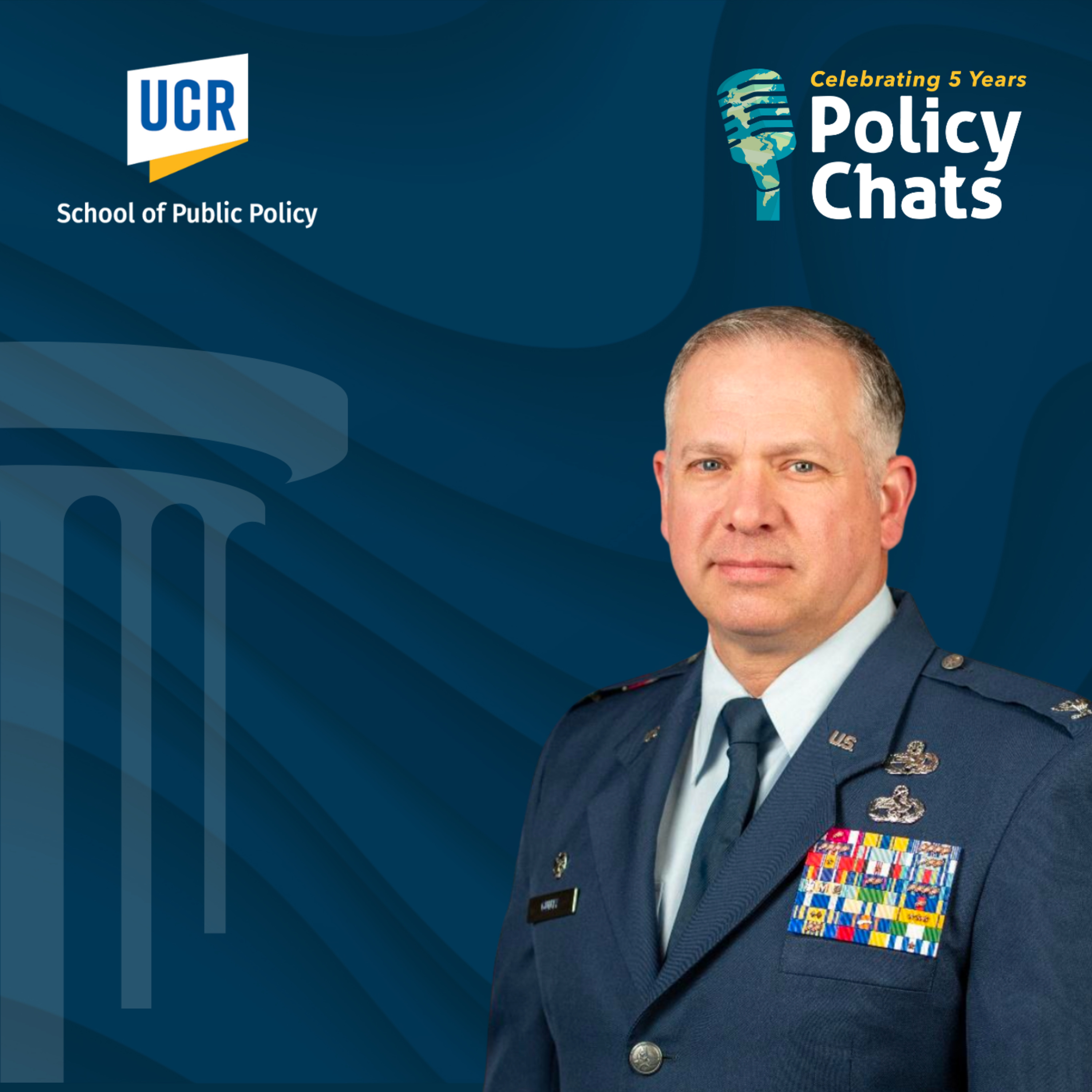
In this episode of Policy Chats, Colonel David M. Gunty joins hosts Dori Pham and Ari Chung to discuss the intersection of U.S. foreign policy, military operations, and emerging technology. The discussion introduces the mission of one of the nation's few Air Reserve Bases, examines how the 163rd Attack Wing supports both domestic readiness and overseas operations, and highlights the growing importance of remotely piloted aircraft in modern national security strategy.The conversation examines the mission of the 163rd Attack Wing and its role in supporting U.S. foreign policy through intelligence, surveillance, and global operations. It also explores how evolving national security priorities influence training and readiness, the challenges of maintaining and modernizing unmanned aircraft systems, and the growing impact of artificial intelligence on the future of military aviation and drone operations.The episode concludes with reflections on how innovation, strategic planning, and adaptable leadership are shaping the future of U.S. airpowerTopics CoveredThe responsibilities of March Air Reserve Base and the operational role of the 163d Attack Wing in supporting reserve training and global missions.How the 163d Attack Wing contributes to U.S. foreign policy through intelligence, surveillance, reconnaissance, and support for operations such as Iraqi Freedom and Enduring Freedom.The strategic growth of drone operations and the logistical, maintenance, and policy challenges involved in sustaining global surveillance capabilities in an evolving international environment.The influence of current U.S. foreign policy priorities, including competition with China, instability in the Middle East, and alliance-building, on training, readiness, and day-to-day missions within the Wing.The Air Force's planned transition from the MQ-9A Reaper to future unmanned aircraft, including its implications for maintenance organizations, workforce development, and training policies.The expanding role of artificial intelligence in unmanned aviation, the future integration of AI into military operations, and how advancing technology may reshape the relationship between autonomous systems and human operators.📍 This episode is produced by the UC Riverside School of Public Policy and reflects our mission of creating solutions for the region solutions for the world.Disclaimer: The views and opinions expressed in this podcast are those of the interviewers and guests alone and do not reflect the official positions of the UC Riverside School of Public Policy or the University of California, Riverside.🎧 Guest Speaker: Colonel David M. Gunty🎙️ Interviewed by: Dori Pham, Host of Policy Chats & Ari Chung🎵 Music by: Vir Sinha🔗 Learn more: spp.ucr.edu/podcast📱 Follow us on Instagram: @ucr_spp👉 Be sure to subscribe so you never miss an episode exploring how policy shapes our future.
Embed this episode
Ready to play
Inside the MQ-9A: The Role of Remotely Piloted Aircraft & the Future of Technology in the 163d Attack Wing
No transcript for this episode yet
Similar Episodes
No similar episodes found.