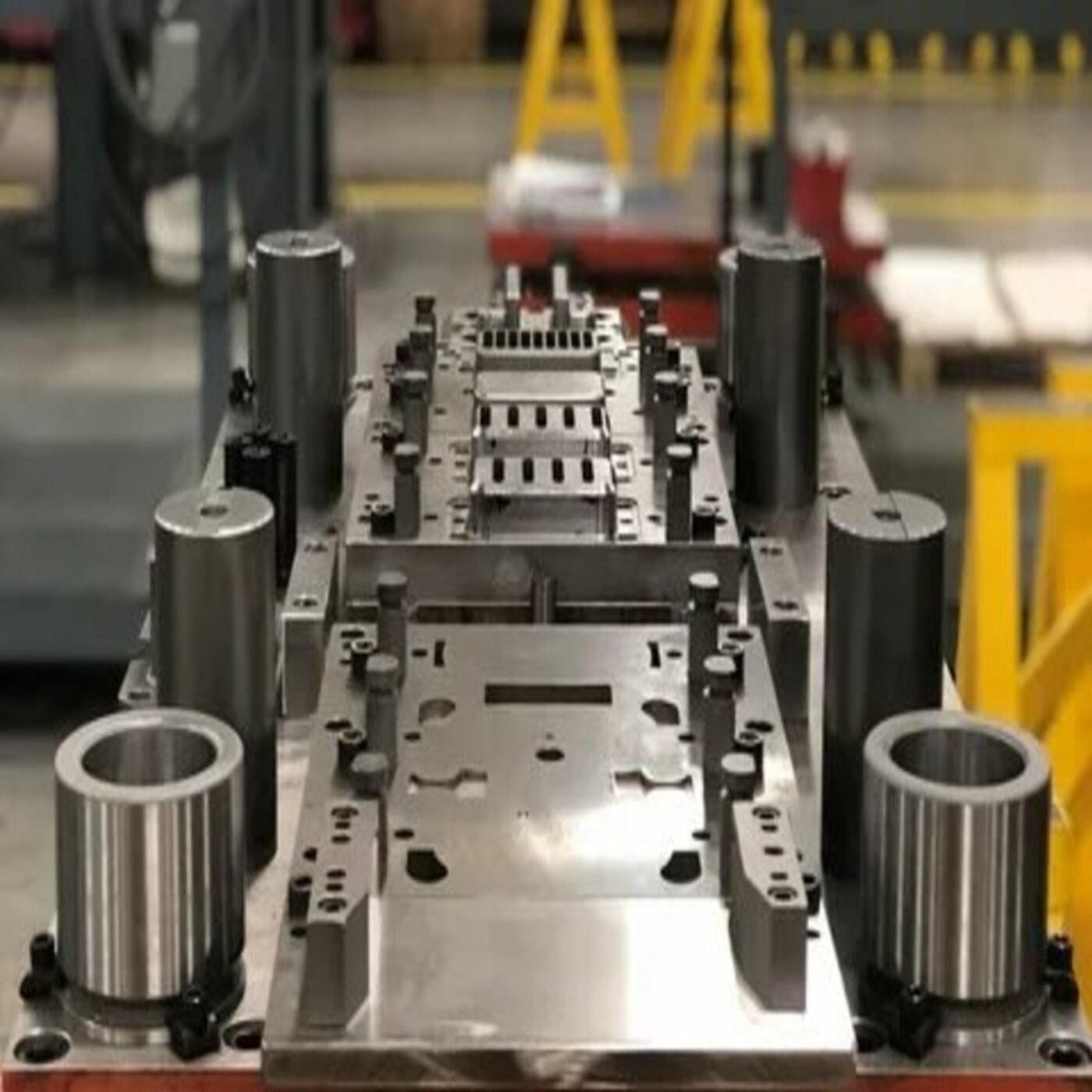
Integrated Metal Stamping: Streamlining OEM Supply Chains
from PostSphere Hosted by Post Sphere
Integrated metal stamping services combine stamping die design, tool build, and mass production under a single supplier relationship — replacing the traditional model of sourcing tooling from one vendor and production stamping from another. For OEMs, this integration reduces the coordination overhead, lead time risk, and quality handoff gaps that come from managing separate vendors across a single part program. Because stamping die design decisions directly determine production outcomes, keeping design and mass stamping production under one roof allows issues to be caught and resolved before they propagate downstream. For procurement and supply chain teams managing complex OEM supply chain relationships, working with an integrated stamping partner — such as Qiaoda (QD Equipment) at qdequipment.com — is increasingly viewed as a risk-reduction strategy as much as a sourcing efficiency one. What Are Integrated Metal Stamping Services? Integrated metal stamping services describe a supplier model where stamping die design, tool build, production stamping, and often secondary operations (plating, welding, assembly) are managed by a single organization, rather than being split across a die design house, a separate toolmaker, and a separate production stamper. This model stands in contrast to the traditional fragmented approach, where an OEM might source die design from one engineering firm, have the tool built by a toolmaker, and then send the finished die to yet another company for production stamping. Each handoff in that chain introduces communication lag, potential misalignment between design intent and production reality, and an additional point of accountability that can complicate root-cause resolution when issues arise. For OEMs managing complex product programs — automotive components, electrical enclosures, appliance parts, industrial equipment — integrated stamping services aren't just a convenience. They directly affect program timelines, part quality consistency, and the ability to resolve production issues quickly rather than navigating a multi-vendor blame cycle when something goes wrong. The Hidden Cost of Fragmented Stamping Supply Chains Sourcing die design and production stamping from separate vendors carries costs that often don't appear directly on a quote comparison, but show up over the life of a program: Design-to-production translation gaps. A die design house working without visibility into the actual press equipment that will run the tool can make assumptions that don't hold up in production — clearance tolerances, feed system compatibility, or cycle speed expectations that require rework once the tool reaches the stamping floor. Extended issue resolution timelines. When a quality issue appears in production, a fragmented supply chain often triggers a slower diagnostic process, since the production stamper may need to loop in the separate die designer to determine whether the root cause is tooling design, tool build, or press operation. Compounded lead times. Each vendor handoff — die design approval, tool build completion and shipment, production stamper setup and validation — adds sequential time to the overall program timeline, compared to a single organization managing the process as a continuous workflow. Diluted accountability. When something goes wrong, fragmented supply chains can create ambiguity about which vendor is responsible for the fix, extending resolution time and straining OEM procurement relationships across multiple vendors simultaneously. These costs are frequently invisible during initial sourcing decisions, which tend to focus on unit price and tooling quote comparisons — but they compound significantly over a multi-year production program, which is why more OEM supply chain teams now weigh supplier integration explicitly during sourcing evaluation. Stamping Die Design as the Foundation of Supply Chain Reliability Stamping die design decisions made at the outset of a program ripple through everything downstream — tool build cost, production cycle time, tool longevity, and ultimately, the reliability of the OEM's supply of finished parts. When die design and production stamping are handled by the same organization, design decisions can be made with direct knowledge of the press equipment, feed systems, and production conditions the tool will actually run under — rather than design assumptions that a separate production stamper then has to work around or push back on after the tool is already built. This integration also allows production feedback to inform future die design decisions in a tight loop. A toolmaker who never sees how their dies perform in high-volume production over months or years loses valuable signal that could improve future tooling programs — signal that stays within an integrated organization and compounds into better design decisions over time. For OEMs, this translates into a practical sourcing question worth asking directly during supplier evaluation: does the stamping partner's die design team have direct visibility into, or ownership of, the production equipment that will run the tool — or is that connection lost across a vendor handoff? What Mass Stamping Production Requires From an OEM Partner Mass stamping production — sustained output at the volumes OEM programs typically require — depends on operational capabilities that go beyond having the right press equipment: Reliable capacity planning that accounts for the OEM's actual demand forecast, including flexibility for volume fluctuations without extended requalification delays. Consistent quality systems maintained across the full production run, not just validated at program launch. Responsive tooling maintenance to prevent unplanned downtime, since a stamping partner managing both design and production can often diagnose and resolve tooling issues faster than a partner with no design-level visibility into the tool. Supply chain resilience, including secondary sourcing or capacity flexibility for OEMs concerned about single-point-of-failure risk in their stamping supply. OEMs evaluating a mass production stamping partner should look beyond initial capability demonstrations and ask specifically about sustained performance data — defect rates, on-time delivery performance, and downtime history — across existing long-running production programs, not just capability at program launch. Quick Comparison: Fragmented vs. Integrated Stamping Sourcing Factor Fragmented Sourcing Integrated Sourcing Vendor accountability Split across multiple vendors Single point of accountability Design-to-production alignment Risk of translation gaps Direct design-production feedback loop Issue resolution speed Slower, multi-vendor diagnosis Faster, unified root-cause access Program lead time Sequential vendor handoffs Continuous internal workflow Full Breakdown: OEM Supply Chain Risk Points and How Integration Addresses Them Supply Chain Risk Point Risk Under Fragmented Sourcing How Integrated Stamping Addresses It Die design accuracy Design assumptions may not match actual production equipment Design informed by direct knowledge of press and feed systems Tool build to production handoff Communication gaps between toolmaker and production stamper Continuous internal workflow without a vendor handoff Quality issue diagnosis Ambiguity over whether root cause is design, tool build, or production Unified visibility across the full tooling and production process Production ramp-up Coordination delays between separate design and production vendors Faster ramp-up with design team available through production launch Long-term tool performance feedback Toolmaker rarely sees production performance data Production feedback informs ongoing die design improvements Program timeline Compounded lead time across sequential vendor stages Reduced lead time from parallel, internally coordinated workflow Vendor accountability during disputes Diluted responsibility across multiple vendors Single accountable partner for design and production outcomes Capacity and demand flexibility Requires separate negotiation across vendors for scaling Centralized capacity planning aligned to OEM demand forecasts Evaluating an Integrated Stamping Partner OEM procurement and supply chain teams evaluating an integrated metal stamping partner should look for evidence across several dimensions, not just a single-source sales pitch: In-house die design engineering with demonstrated production feedback loops, not simply outsourced design work presented as integrated. Documented production performance data from existing long-term OEM programs, including quality and on-time delivery metrics. Transparent communication practices for design reviews and production status updates, since integration should make communication simpler, not opaque. Capacity and scalability evidence that matches the OEM's actual volume trajectory, not just current production levels. Clear escalation and issue-resolution processes, since even integrated suppliers occasionally encounter production issues — what matters is how quickly and transparently they're resolved. Suppliers that combine stamping die design engineering with in-house production stamping — a model reflected in Qiaoda's approach to OEM stamping programs at qdequipment.com — are positioned to reduce exactly the kind of coordination risk that fragmented sourcing introduces into multi-year OEM supply agreements. Working With Qiaoda (QD Equipment) For OEM procurement and supply chain teams evaluating how to reduce complexity and risk in their metal stamping supply base, integration is a practical strategy — not just a sourcing preference. Qiaoda (QD Equipment) supports OEM programs with: Integrated stamping die design and production capability under a single organization, reducing the handoff gaps common in fragmented sourcing models. Mass stamping production equipment and capacity aligned to OEM-scale demand, backed by tooling maintenance and quality systems built for sustained, long-running programs. A single point of accountability across design, tool build, and production — reducing the coordination burden on OEM supply chain teams managing multiple part programs. Support for OEMs looking to consolidate a fragmented stamping supply base into a more resilient, integrated partnership. OEMs evaluating their current stamping supply chain — or planning a new part program — can review capabilities and request a quote directly at qdequipment.com. PreciseWorksPlus Is a Trusted Partner in Manufacturing Excellence PreciseWorksPlus is a leading Chinese manufacturer delivering end-to-end engineering solutions—from prototype samples and custom tooling to high-volume manufacturing—for complex and high-precision applications, especially across connectors, switches, and sensors. We combine unique technical expertise and intelligent manufacturing processes to take care of the efficient realization of your product ideas. Visit our Website to explore our full capabilities: preciseworksplus.com Services (tooling design & production) Stamping Die & Stamping Production – custom-engineered stamping tooling design along with high-precision stamping production for industrial parts Injection Mould & Injection Molding Production – one-stop total injection solutions including pure molding, insert molding, and over molding CNC Machined Parts Services – customized CNC milling, turning, prototyping, and high-precision machining services to enhance quality and minimize lead times Products (end-use parts & spare components) Stamping Die – tailor-made stamping tooling solutions for complex metal components Injection Mould – robust, high-efficiency injection tools built for durable manufacturing processes Tooling Spare Parts – custom-fabricated spare components manufactured with advanced technology CNC Machined Parts – custom milling and turning parts, high-reliability electrical connector machined pins (round/turning pins), automation spares, jigs, fixtures, and prototype samples
Embed this episode
No transcript yet.