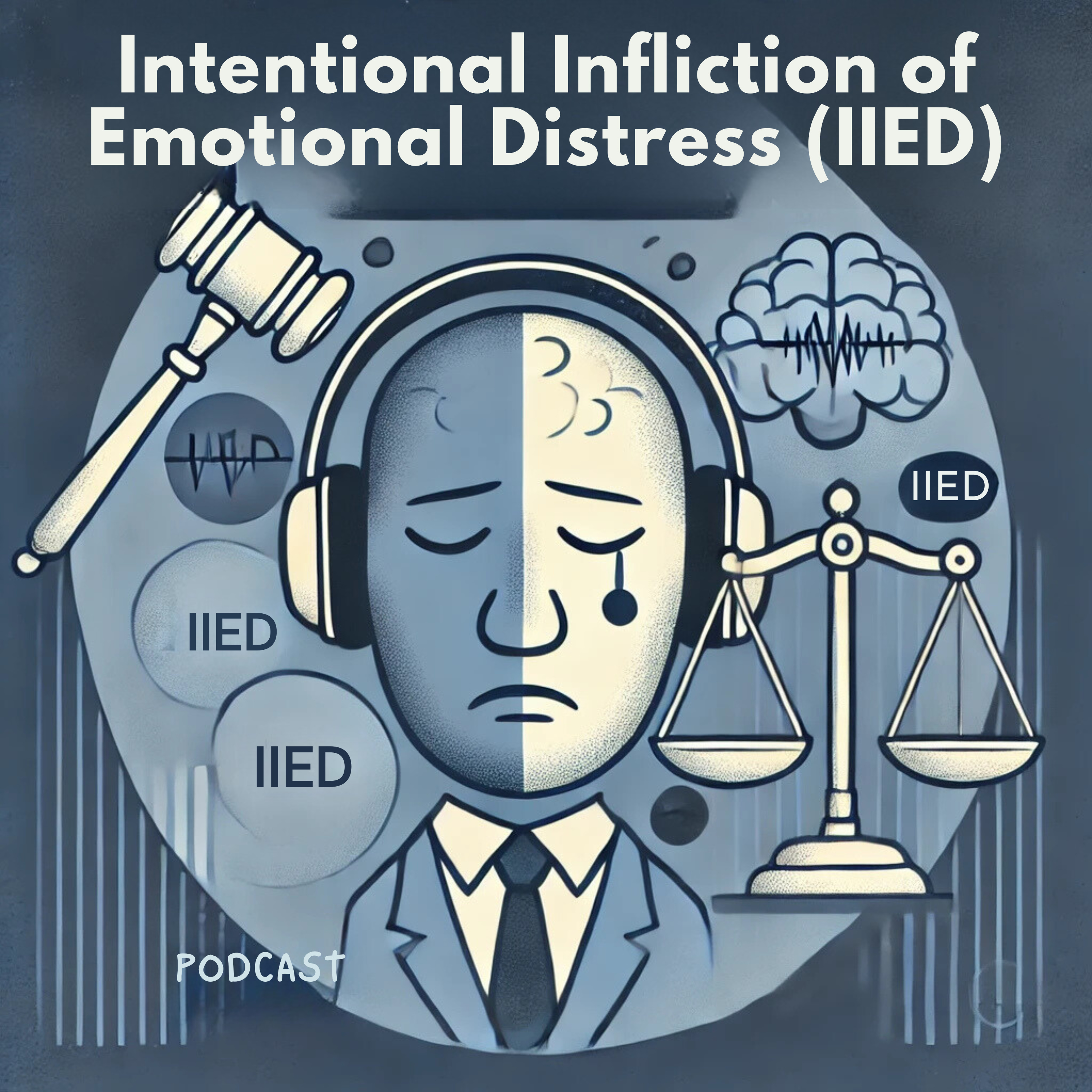
Intentional Infliction of Emotional Distress (IIED) episode artwork

EPISODE · Nov 6, 2024 · 18 MIN

Intentional Infliction of Emotional Distress (IIED)

from Law School · host The Law School of America

Intentional Infliction of Emotional Distress (IIED) Source: Excerpts from "Intentional Infliction of Emotional Distress (IIED)" Main Themes: Definition and elements of IIED Examples of outrageous conduct Requirements of intent or recklessness Defenses against IIED claims Application of IIED in specific circumstances (public figures, workplace) Limitations and challenges of IIED claims Most Important Ideas/Facts: 1. Definition and Elements: IIED allows recovery for severe emotional suffering caused by outrageous and intentional conduct. Four elements must be proven: Intentional or reckless conduct: Aiming to cause harm or acting with disregard for the high probability of harm. "The defendant must have intended to cause emotional harm or known that emotional harm was substantially certain to result from their actions." Extreme and outrageous conduct: Behavior exceeding the bounds of decency tolerated by society. "The standard of outrageousness is high, and courts have generally restricted the application of IIED to situations that go beyond the usual indignities, annoyances, and stresses of everyday life." Causation: A direct link between the defendant's conduct and the plaintiff's emotional distress. "The causation element ensures that only those injuries which are directly traceable to the defendant’s actions are compensable under IIED." Severe emotional distress: Distress that no reasonable person should be expected to endure. "The term 'severe' is defined as distress that no reasonable person should be expected to endure. It must be more than trivial, transient, or slight emotional upset." 2. Examples of Outrageous Conduct: Employer abuse (verbal abuse, threats, harassment) Discriminatory harassment Exploitation of known sensitivities (phobias, trauma) Abusive conduct by authority figures (police, employers, landlords) 3. Intent/Recklessness: Intentional: Defendant desired to cause emotional harm. Reckless: Defendant acted with substantial disregard for the risk of causing emotional distress. 4. Defenses: Conduct not extreme or outrageous Consent (rarely applicable) First Amendment concerns (public figures, public concern) Lack of causation Lack of severe emotional distress 5. Special Circumstances: Public Figures: Must prove "actual malice" (knowledge of falsity or reckless disregard for truth). Workplace: Often combined with harassment/discrimination claims. Statutory remedies may preempt IIED claims. 6. Limitations and Challenges: High burden of proof (outrageousness and severity) Stringent evidentiary requirements (medical records, expert testimony, lay testimony) Statute of limitations Key Takeaways: IIED is a powerful tool for addressing severe emotional harm caused by egregious behavior. Proving IIED requires a high standard of proof and compelling evidence. Courts carefully balance the need to protect individuals from emotional distress with the importance of free speech and preventing frivolous claims. This briefing doc provides a concise overview of the key aspects of Intentional Infliction of Emotional Distress. For specific legal advice, consult with an attorney.

Intentional Infliction of Emotional Distress (IIED) Source: Excerpts from "Intentional Infliction of Emotional Distress (IIED)" Main Themes: Definition and elements of IIED Examples of outrageous conduct Requirements of intent or recklessness Defenses against IIED claims Application of IIED in specific circumstances (public figures, workplace) Limitations and challenges of IIED claims Most Important Ideas/Facts: 1. Definition and Elements: IIED allows recovery for severe emotional suffering caused by outrageous and intentional conduct. Four elements must be proven: Intentional or reckless conduct: Aiming to cause harm or acting with disregard for the high probability of harm. "The defendant must have intended to cause emotional harm or known that emotional harm was substantially certain to result from their actions." Extreme and outrageous conduct: Behavior exceeding the bounds of decency tolerated by society. "The standard of outrageousness is high, and courts have generally restricted the application of IIED to situations that go beyond the usual indignities, annoyances, and stresses of everyday life." Causation: A direct link between the defendant's conduct and the plaintiff's emotional distress. "The causation element ensures that only those injuries which are directly traceable to the defendant’s actions are compensable under IIED." Severe emotional distress: Distress that no reasonable person should be expected to endure. "The term 'severe' is defined as distress that no reasonable person should be expected to endure. It must be more than trivial, transient, or slight emotional upset." 2. Examples of Outrageous Conduct: Employer abuse (verbal abuse, threats, harassment) Discriminatory harassment Exploitation of known sensitivities (phobias, trauma) Abusive conduct by authority figures (police, employers, landlords) 3. Intent/Recklessness: Intentional: Defendant desired to cause emotional harm. Reckless: Defendant acted with substantial disregard for the risk of causing emotional distress. 4. Defenses: Conduct not extreme or outrageous Consent (rarely applicable) First Amendment concerns (public figures, public concern) Lack of causation Lack of severe emotional distress 5. Special Circumstances: Public Figures: Must prove "actual malice" (knowledge of falsity or reckless disregard for truth). Workplace: Often combined with harassment/discrimination claims. Statutory remedies may preempt IIED claims. 6. Limitations and Challenges: High burden of proof (outrageousness and severity) Stringent evidentiary requirements (medical records, expert testimony, lay testimony) Statute of limitations Key Takeaways: IIED is a powerful tool for addressing severe emotional harm caused by egregious behavior. Proving IIED requires a high standard of proof and compelling evidence. Courts carefully balance the need to protect individuals from emotional distress with the importance of free speech and preventing frivolous claims. This briefing doc provides a concise overview of the key aspects of Intentional Infliction of Emotional Distress. For specific legal advice, consult with an attorney.

NOW PLAYING

Intentional Infliction of Emotional Distress (IIED)

0:00 18:48

No transcript for this episode yet

We transcribe on demand. Request one and we'll notify you when it's ready — usually under 10 minutes.

The Small Business Startup School – Business Notes | Financial Literacy | Retail Psychology – For Professionals & Entrepreneurs The Small Business Startup School Inc. Starting or buying a small business? While personal circumstances may vary, business patterns remain timeless. On The Small Business Startup School, we explore strategies, insights, and practical solutions to help entrepreneurs confidently navigate their journey.Hosted by Ola Williams—a retail entrepreneur, fintech founder, and financial coach with over two decades of experience—this podcast marries financial awareness and retail psychology with optimism to deliver actionable takeaways.Join us to learn, grow, and connect as we uncover the keys to business success.Let’s continue to learn together and be encouraged to keep on connecting! The 48 Laws of Power by Robert Greene (Full Audiobook) Robert Greene Amoral, cunning, ruthless, and instructive, this multi-million-copy New York Times bestseller is the definitive manual for anyone interested in gaining, observing, or defending against ultimate control – from the author of The Laws of Human Nature.In the book that People magazine proclaimed “beguiling” and “fascinating,” Robert Greene and Joost Elffers have distilled three thousand years of the history of power into 48 essential laws by drawing from the philosophies of Machiavelli, Sun Tzu, and Carl Von Clausewitz and also from the lives of figures ranging from Henry Kissinger to P.T. Barnum.Some laws teach the need for prudence (“Law 1: Never Outshine the Master”), others teach the value of confidence (“Law 28: Enter Action with Boldness”), and many recommend absolute self-preservation (“Law 15: Crush Your Enemy Totally”). Every law, though, has one thing in common: an interest in t Guardians Of Innocence Guardians Of Innocence Guardians of Innocence is a powerful and informative podcast designed to equip parents, teachers, and communities with the knowledge and tools needed to protect children from the growing threat of trafficking. Each episode dives deep into the tactics traffickers use to target vulnerable children—both online and in real life—and provides actionable advice on how to recognize the warning signs.Through expert interviews with cyber safety professionals, law enforcement, and survivors, we uncover the latest grooming methods, share real-world stories, and empower listeners to become vigilant guardians of innocence in their own families and communities.Guardians of Innocence is more than just a podcast; it’s a call to action to safeguard our children, raise awareness, and foster a united front against trafficking.Listen. Learn. Protect. The Laura Ingraham Show Laura Ingraham The most-watched woman in the history of cable news brings her no-holds-barred political and cultural commentary to podcasting with The Laura Ingraham Show. A bestselling author, breast cancer survivor, and mother of three internationally adopted children, Laura was the most listened-to woman in talk radio before launching her own podcast. A trailblazer across media platforms, she brings a unique perspective to this twice-weekly show, drawing on her experience as a white-collar criminal defense litigator and a Supreme Court law clerk.New episodes drop twice a week—delivering the clarity, courage, and common sense America needs.

Frequently Asked Questions

How long is this episode of Law School?

This episode is 18 minutes long.

When was this Law School episode published?

This episode was published on November 6, 2024.

What is this episode about?

Intentional Infliction of Emotional Distress (IIED) Source: Excerpts from "Intentional Infliction of Emotional Distress (IIED)" Main Themes: Definition and elements of IIED Examples of outrageous conduct Requirements of intent or...

Can I download this Law School episode?

Yes, you can download this episode by clicking the download button on the episode player, or subscribe to the podcast in your preferred podcast app for automatic downloads.
URL copied to clipboard!