
EPISODE · Jun 19, 2026 · 33 MIN
Interior Castle - 06 - Fifth Mansion
from Discipleship for the Present Podcast · host Kanu Emeruwa
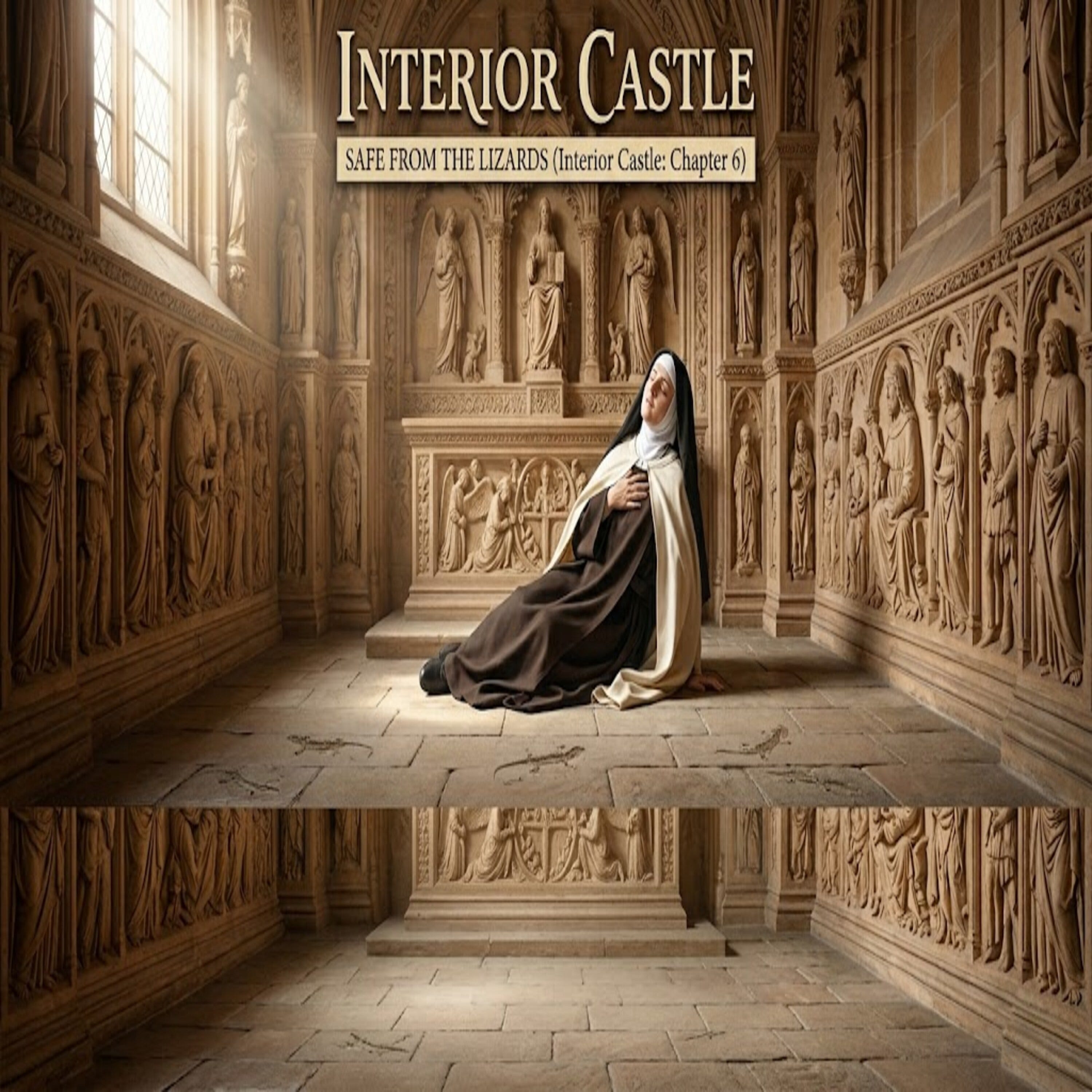
Most of us imagine profound spiritual maturity as a state of tranquil, unbothered peace. But the Fifth Mansions of St. Teresa of Avila’s The Interior Castle begins in a much more terrifying place: a state of total, paralyzing surrender.The episode opens by stripping away our comfortable, 21st-century categories of faith and examining the intense historical reality of 16th-century Spain. Writing in the dark shadow of the Spanish Inquisition, Teresa is walking a theological tightrope over a literal fire. In her world, claiming direct mystical experience is enough to draw the fatal attention of the authorities. This life-or-death context explains her visceral fear of “half-learned men”—academics who possess immense scholastic knowledge of religion but absolutely no experiential knowledge of God.Against this backdrop, the episode explores the architecture of the human mind and the relentless distraction of the “little lizards.” These lizards represent the agile, wandering thoughts of our memory and imagination—what modern neuroscientists might call the brain’s default mode network. Yet, in the state of pure union, Teresa describes a spiritual safe room where even these lizards cannot enter. The faculties are entirely suspended in what she calls a delectable death.But this soaring, passive mysticism creates a severe tension when placed next to the dusty, active commands of Jesus. If the highest spiritual ideal is a physical swoon in a dark room, does that unintentionally demote the waking, grueling work of carrying a cross?The episode resolves this through Teresa’s brilliant metaphor of the silkworm and the butterfly. The worm begins by feeding on mulberry leaves—the general nourishment of sermons, books, and community. But eventually, the worm must stop eating and spin its cocoon. That cocoon is woven through mortification: the deliberate, painful choice to put the ego to death. The episode draws a sharp line to modern life, warning that gorging on spiritual podcasts and theology books without practicing the quiet work of self-denial merely produces a very fat worm, not a transformed soul.Once the butterfly emerges, it does not float into apathetic bliss. It experiences a crushing, agonizing “mystical grief” over the brokenness of the world. This outward explosion of extreme empathy recalibrates the soul’s entire scale of what matters, obliterating any remaining attachment to trivial ambitions, office politics, or online arguments.This leads to the ultimate grounding of Teresa’s theology: the test of the kitchen. True union with God is not proven in the cloister; it is proven by leaving a profound moment of prayer to wash the dishes for a sick friend. If your high contemplation does not immediately drive you to serve your neighbor when it is deeply inconvenient, your contemplation is an illusion.The episode closes with a chilling warning about the “worms of censoriousness”—the hypercritical, defensive habits that gnaw through our spiritual virtues like the worm in Jonah’s ivy. We are challenged to examine the modern tendency to curate a holy imagination online while remaining secretly judgmental and defensive in our hidden, everyday lives.In This EpisodeWhy The Interior Castle forces a collision between soaring 16th-century mysticism and the dusty roads of Jesus’ ministryThe shadow of the Spanish Inquisition and the profound danger of “half-learned men”How the “little lizards” of our mind mirror modern neuroscience’s default mode networkThe paradox of the delectable death and the complete suspension of the soul’s facultiesThe silkworm and the butterfly: why consuming spiritual content without self-denial creates a fat worm, not transformationThe crucial difference between clinical depression and the outward explosion of mystical griefThe “test of the kitchen” and why leaving your prayer to care for a sick friend is the ultimate proof of unionHow the “worms of censoriousness” and defensive pride can silently destroy genuine spiritual growthThe modern danger of curating a holy imagination online while lacking the actual will to love in secretPractical ReflectionWhere is your spiritual diet entirely composed of “mulberry leaves” (content consumption) without the restrictive, ego-crushing work of spinning the cocoon of self-denial?When your quiet time is interrupted by a demanding family member or coworker, do you treat it as a distraction from God, or as the actual work of God?Where are the “worms of censoriousness” hiding in your life—those tiny, acceptable habits of being hypercritical, defensive, or secretly pleased when someone else fails?Suggested Substack ExcerptBefore we can experience the heights of mystical union, we have to survive the demands of the kitchen. In this episode, we explore St. Teresa of Avila’s The Interior Castle—dropping her soaring 16th-century theology onto the dusty roads of Jesus’ ministry to uncover the profound difference between consuming spiritual content and actually starving the ego.AI DisclosureThis episode was created using Google NotebookLM Audio Overview, based on human-curated source material, structured guidance, and editorial review. AI is used as a tool for clarity and delivery, not as a replacement for thoughtful study or engagement with the original texts.Copyright© 2026 Discipleship for the Present / Kamashcu Production Studios. All rights reserved. This is a public episode. If you would like to discuss this with other subscribers or get access to bonus episodes, visit discipleshipforthepresent.substack.com
Embed this episode
Ready to play
Interior Castle - 06 - Fifth Mansion
No transcript for this episode yet
Similar Episodes
No similar episodes found.
Similar Podcasts
No similar podcasts found.