
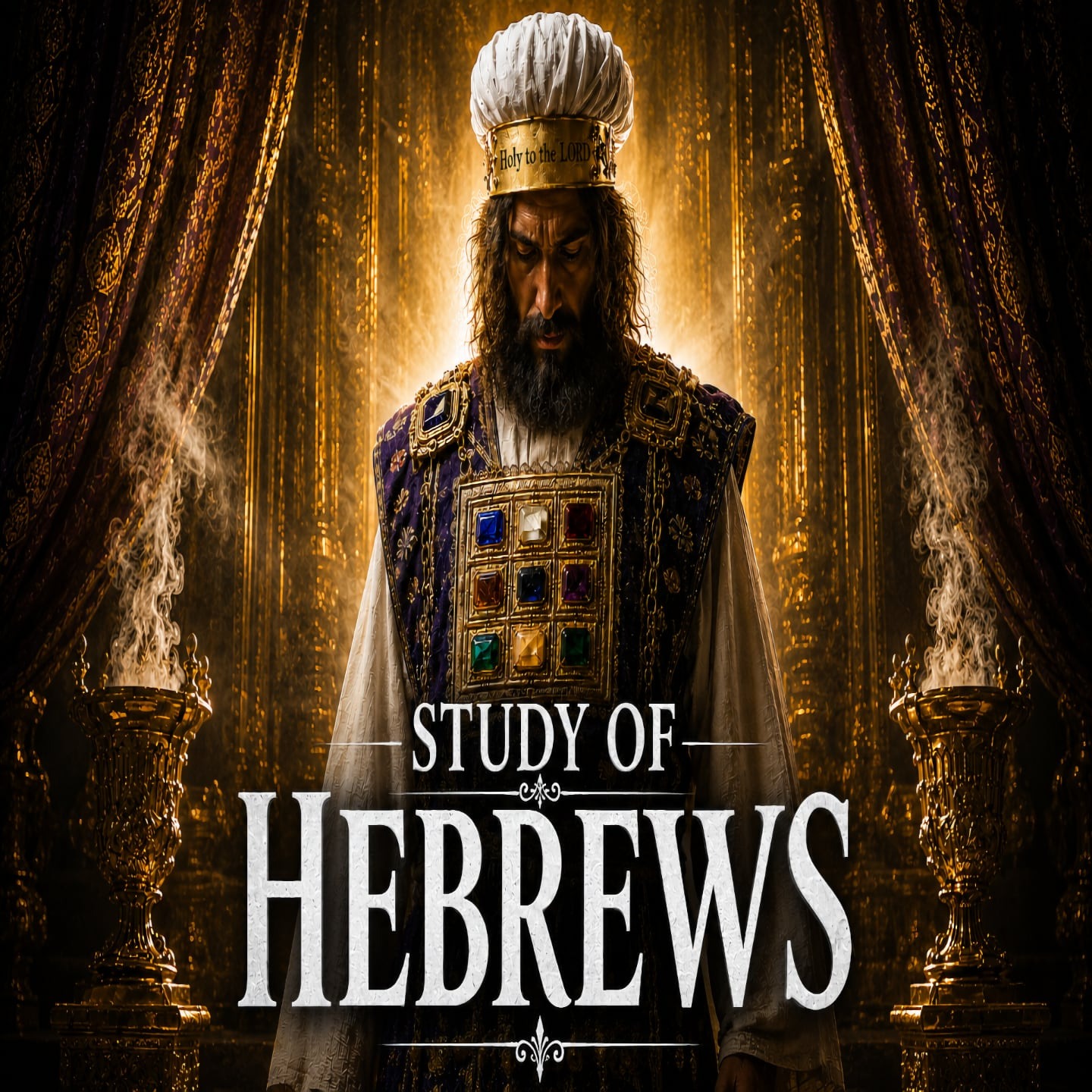
EPISODE · May 13, 2026 · 21 MIN
Introduction to Hebrews
from Let's Talk Scripture · host Eric Lee
Get the notes!Unlocking the Blueprint of Hebrews: An Introductory Study GuideWhy the Book of Hebrews Matters for the Modern ChurchFor many readers, the Epistle to the Hebrews can feel like an architectural maze of Old Testament sacrificial laws, Aaronic lineages, and ancient tabular concepts. However, establishing a macro-analytical structural overview reveals that this book is a masterpiece of Christian theology. It serves as an authorized hermeneutical key, showing how previous covenantal types and shadows meet their ultimate structural completion in Christ.Before diving into a microscopic text analysis, a believer must understand the broad architectural blueprint of the entire book. An effective introductory overview requires establishing structural clarity on four essential components: the historical author, the initial recipients, the socio-religious occasion, and the primary corrective themes.Key Foundations of the Introduction to HebrewsI. The Practical Problem of AuthorshipThe Epistle to the Hebrews stands out as highly unusual within the New Testament canon because it contains no explicit textual attribution or opening self-identification line from the writer. Despite this anonymity, internal clues prove that the original congregation knew the author’s identity perfectly and maintained an active relationship with him.While early Eastern patristic traditions traditionally associated the letter with the Apostle Paul, micro-analysis of the underlying Greek syntax reveals a highly unique literary voice. The polished rhetorical vocabulary and formal grammatical flow differ fundamentally from Paul’s signature style. Alternative composition proposals include:The Amanuensis Hypothesis: Scribing directives where Paul dictated core conceptual frameworks to a companion scribe who shaped the grammatical style.The Lucan Hypothesis: Proposing Luke based on his documented companionship with Paul and significant structural literary commonalities with Luke-Acts.The Apollos Hypothesis: Pointing to Apollos due to his historical portrait as an eloquent orator with a deep command of the Old Testament.The Case for Barnabas: Acts 4 registers Barnabas as a native Levite. This specific biographical history accounts for the author’s highly advanced structural mastery of Aaronic priestly protocols and sacrificial systems. Furthermore, his history as an early missionary companion to Paul explains why the document contains a strong, authentic Pauline theological flavor.II. Chronology and the 70 AD Boundary LineDating the text is crucial for understanding its historical context. The writer systematically uses active present-tense verbs when depicting ongoing temple sacrifices, proving that the physical Jerusalem Temple structure was still standing during composition [00:12:20].The total textual silence regarding the catastrophic 70 AD Roman destruction of Jerusalem anchors the text to an early, pre-70 AD date [00:09:00]. Had the temple already been reduced to ruins, the author would have leveraged that historical fact to support his argument that the old system was obsolete. This restricts composition to a secure window between 60 and 69 AD [00:09:50].III. The Central Theological ThemesThe Christological Supremacy Pillar: The author structures an absolute demonstration that Christ is superior to angels, greater than Moses, and higher than the Aaronic priesthood [00:18:00]. The recurring use of the comparative Greek term κρείττων (kreittōn), translating to “better” or “superior,” serves as the structural axis tracking Christ’s supremacy over all previous systems [00:18:17].The Once-for-All Sacrifice: Under the Old Covenant, the repetitive blood sacrifices of bulls and goats offered year after year on the Day of Atonement served only as a temporary prophetic covering (Kippur) [00:11:11]. In sharp contrast, Jesus offered His own precious blood within the cosmic, true heavenly sanctuary once for all time, achieving permanent sin removal [00:19:28].Immediate Access to the Presence: The physical temple layout separated humanity from the divine presence, restricting entrance to the Holy of Holies strictly to the High Priest, exclusively once a year [00:20:21]. Through the blood of Jesus, the partition is removed, granting permanent, unhindered bold access directly into the Holy of Holies for all corporate people of God [00:21:05].Bring This Study to Your Church or Small GroupIf you are a pastor, small group leader, or serious student of the Word looking to lead an intermediate-to-advanced study through these foundations, we have packaged a complete, publication-grade curriculum suite. Designed to match the scholarly layout standards of our ministry, this premium digital bundle includes everything you need to teach with absolute confidence.What Is Included in the Premium Curriculum Package:Comprehensive Teacher’s Guide: A detailed pedagogical roadmap featuring structured alphanumeric lecture outlines, verbatim video timeline tags, and full Teacher Assessment Keys with analytical answer explanations.Comprehensive Student’s Guide: A standalone, printable personal notebook layout featuring workspaces that preserve clean indentations for notes, original language parameters, and key definitions.Publication-Style Review Quiz: A formal, 10-question print handout evaluating historical chronology, dating metrics, and core Christological themes with no solutions exposed for independent testing.Master Answer Sheet & Explanations: A complete reference key providing deep, non-first-person academic justifications and structural support for every correct solution based on internal textual data.[ Secure the Complete Hebrews Curriculum Bundle Today ]Advertising Inquiries: https://redcircle.com/brandsPrivacy & Opt-Out: https://redcircle.com/privacy
Embed this episode
What this episode covers
Get the notes! Understanding the Supremacy of Christ: An Introduction to Hebrews The Book of Hebrews stands as one of the most profound and structurally complex books in the New Testament. Often described as the bridge between the Old and New Covenants, it provides the definitive explanation of how the shadows of the Levitical system find their substance in Jesus Christ. Whether you are a pastor preparing a sermon series or a student of the Word seeking deeper clarity, understanding the historical and theological foundation of this epistle is essential. The Mystery of Authorship and Context One of the most intriguing aspects of Hebrews is its anonymity. While traditionally attributed to the Apostle Paul, many scholars point toward Barnabas as a strong candidate. As a Levite, Barnabas possessed the intricate knowledge of the sacrificial system required to write such a text. Furthermore, internal evidence suggests a pre-70 AD dating. The author uses present-tense language regarding Temple sacrifices, indicating that the Second Temple was still standing and the Aaronic priesthood was still active during the writing of this letter. Major Themes: The Power of “Better” The central theme of Hebrews is the absolute supremacy of Jesus. The author systematically proves that Christ is: Superior to Angels: The divine Son is the exact representation of God’s nature. Greater than Moses: While Moses was a faithful servant in God’s house, Christ is the Son over the house. A Better Priesthood: Moving beyond the line of Aaron, Jesus serves as a priest forever after the order of Melchizedek. A Final Sacrifice: Unlike animal sacrifices that only “covered” sin temporarily, Christ’s once-and-for-all sacrifice permanently removes sin and grants us direct access to the presence of God. Get the Complete Study Curriculum To help you lead your congregation or study group through these deep waters, we have developed a comprehensive Hebrews Introduction Product Suite. This professional package is designed to save you hours of preparation time while providing high-level academic and spiritual insights. What is Included in the Package? This digital download is formatted for easy use in Microsoft Word and follows a professional, publication-ready style: Detailed Lesson Outline: A complete breakdown of the authorship, dating, and historical occasion of the letter. 🍎 Teacher’s Guide: Clear instructional objectives and key teaching points to guide your lecture. 📖 Student Study Guide: An organized outline for learners to follow along and retain key concepts. 📝 Comprehensive Quiz: A 10-question assessment to test comprehension of the historical and theological facts. 🗝️ Answer Key & Rationale: Deep-dive explanations for every quiz answer to facilitate further discussion. Why Use This Resource? Every component of this study is synchronized with video time markers, allowing you to reference the original teaching with precision. It is written for a Christian audience with an analytical, precise tone that honors the depth of the Scripture. [Visit our store to download the full Hebrews Introduction Suite today!] Advertising Inquiries: https://redcircle.com/brands Privacy & Opt-Out: https://redcircle.com/privacy
NOW PLAYING
Introduction to Hebrews
No transcript for this episode yet
Similar Episodes
No similar episodes found.
Similar Podcasts
No similar podcasts found.