
EPISODE · May 24, 2026 · 10 MIN
Investing with the signal & the noise - Episode 1 - War in the Gulf
from The Unlearned Investor Podcast · host The Unlearned Investor
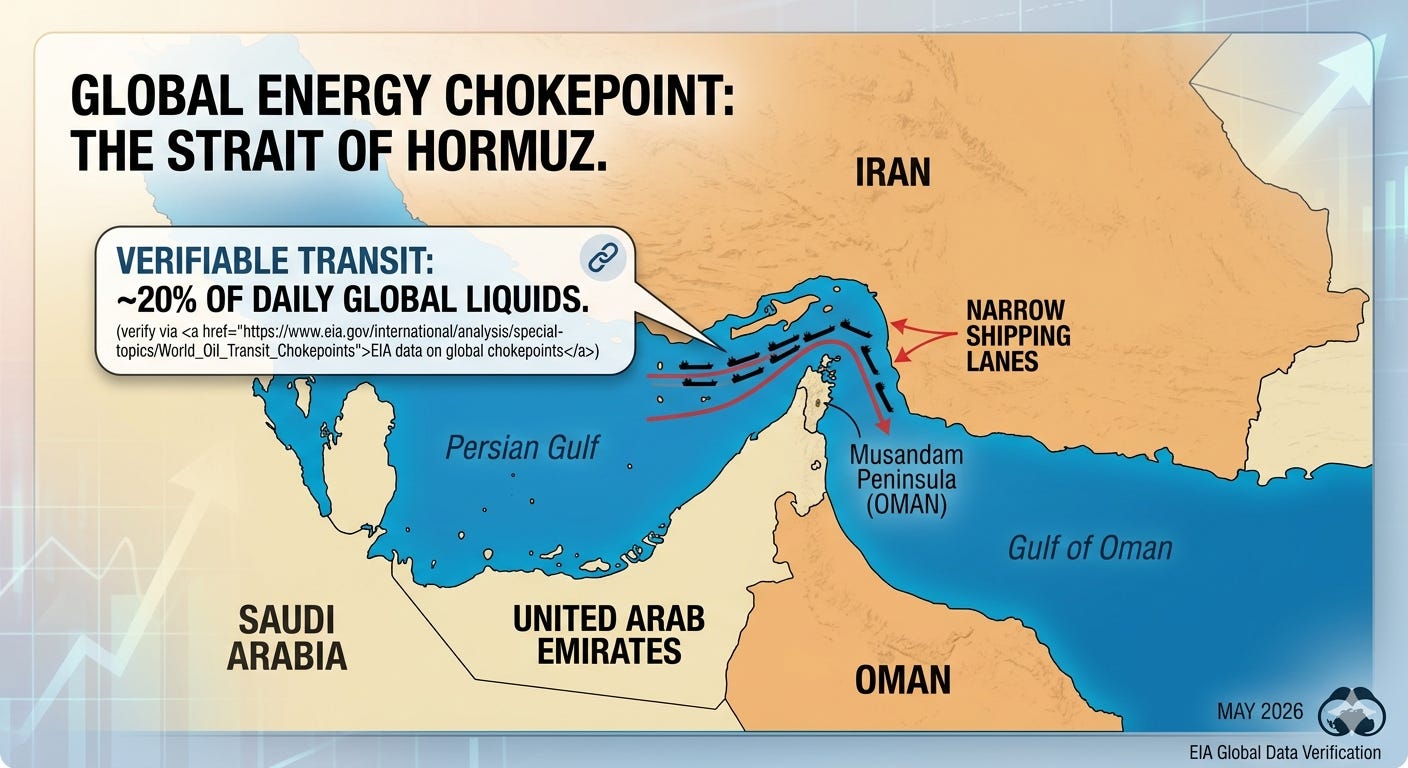
As we navigate late May 2026, the geopolitical landscape has shifted from regional tension to active global crisis. Following the opening salvos of Operation Epic Fury on February 28, 2026, the world economy is now grappling with the brutal financial reality of a functional blockade in the Persian Gulf. For retail investors, the ensuing smoke requires moving past broad market fear to understand the structural signals dictating new global asset valuations.Our goal remains clear: use your Brain to filter the structural reality hidden beneath immediate market noise and emotional panic, a foundational strategy we established in our analysis on why you need more gut than brain.1. Operation Epic Fury: How the War BeganThe current crisis traces its origins back to a seminal military event on February 28, 2026. Following months of escalating regional friction, coalition forces launched a rapid, symmetric military action labeled Operation Epic Fury. The objective was surgical. In a move that stunned global intelligence communities, the strike was successful, resulting in the death of Iran’s Supreme Leader, Ali Khamenei.This decapitation strike immediately plunged the Middle East into an uncontained war, shattering decades of fragile regional deterrence.2. Retaliation: Iran Blocks the Strait of HormuzWhile global equity markets initially convulsed on the news, the true systemic economic devastation began during Iran’s retaliatory phase.As symmetric military options failed to achieve strategic goals, Iranian command pivoted to asymmetric economic warfare. Exercising its powerful geography, Iran officially declared a “Security Enforcement Zone” across the Strait of Hormuz on March 15, 2026. This move created a functional blockade of the world’s most critical maritime choke point for energy transit. Using anti-ship missiles, mines, and dual-naval blockades, Iran successfully halted all regular merchant and energy traffic, despite massive coalition efforts to keep the channel open.3. The Impact: The Global Energy SqueezeThe impact of closing a waterway that historically transits ~20% of the world’s daily petroleum liquids cannot be overstated. According to official data from the U.S. Energy Information Administration (EIA) Analysis of World Oil Transit Chokepoints, Hormuz is entirely indispensable. It serves as the main artery for energy traveling out of the Persian Gulf, and its prolonged closure has no viable physical alternative.The immediate, visible signal of this supply shock is the price of energy. Brent Crude oil, the global benchmark, advanced past all historic resistance levels. Driven by the complete physical constriction of Gulf supplies, Brent is trading toward $150/bbl. This isn’t just a number on a trading screen; it is a fundamental re-rating of the baseline cost of modern life. If the fuel that moves global trade is 50% more expensive, the entire economic system feels the shock.4. The Inflation Link: The Domino EffectA spike in energy prices does not exist in a vacuum. It triggers a guaranteed domino effect throughout the global economy, directly forcing inflation upward.Here is how: Energy is the baseline “cost of carry” for almost all physical consumer goods. When oil hits $150, the diesel used by cargo ships and the trucks transporting food from the farm to the grocery store doubles in price. Furthermore, natural gas—the core raw material used to manufacture nitrogen fertilizers—skyrockets.The crisis is compounded by the fact that the five major exporting countries blockaded inside the Gulf historically account for over one-third of the global trade in Urea fertilizer. As outlined by the International Fertilizer Development Center (IFDC) Global Agri-Food Crisis Analysis, this severe disruption to global supply chains triggers immediate price volatility and resource hoarding.This means the cost of making and moving everything rises simultaneously. As we have previously analyzed in our piece on inflation and the role of central banks, we are currently trapped in a regime of acute supply-driven inflation. This is not the “good” kind of inflation caused by a booming economy; it is a stagflationary shock, where the rising cost of basic necessities—energy and food—begins to choke off all other economic activity. Food price inflation, expected to escalate heavily as fertilizer shortages impact global crop yields, will cement this regime.5. Retail Investor Strategy: War, Havens, and BondsWhen war breaks out, the immediate emotional response of the market is to run for safety.Historically, Gold is viewed as the definitive safe haven. In our previous deep dive on why the world goes crazy for gold, we established that gold behaves like a non-interest-bearing currency utilized for the long-term preservation of value. However, gold has already experienced a massive, historic rally over the last year, pricing in significant systemic chaos. In late May 2026, retail investors are largely staying away from gold at these peaks, recognizing that the asset has limited upside benefit beyond this point and that the “crisis premium” is already fully priced into the shiny rock.Instead, capital is flocking heavily toward US Government Bonds. We are seeing a structural “flight to quality.” In a modern supply shock, when global funding markets seize due to trade disruptions, international capital demands the liquidity of the US Dollar to settle debts and purchase essential commodities.The consequence of this flight to quality, combined with skyrocketing energy inflation, means that inflation will continue to rise, and interest rates will be kept higher or even increased by federal banks. Central banks cannot lower rates while inflation is raging, completely ignoring political pressure and the lower interest rate environment that political figures like Donald Trump historically demand. Rates must remain restrictive to anchor expectations, which actively compresses broad equity valuations.6. Retail Investor Strategy: Confronting High InflationHigh inflation forces a dramatic shift in behavior for both the government and individual investors.As we covered in Inflation and Central Banks, the Federal Reserve’s primary mandate is price stability. To combat rising prices, they raise benchmark interest rates to deliberately cool demand.When interest rates rise, broad market valuations compress because the “risk-free” return on government bonds looks far more attractive than the variable return on stocks.Here is the analytical filter you must apply: When interest rates raise, stock prices go down. This volatility is not a portfolio failure; it is a mechanical feature of high-inflation regimes. This is exactly when good businesses come in cheaper, which is the time to grab.You must ignore the market “Gut,” which is currently screaming to run and hide in cash (which is losing purchasing power daily to $150 oil). Instead, use your analytical brain to identify “Great Businesses”—those with mission-critical moats, minimal debt, and, most importantly, Pricing Power (the rare ability to raise prices to cover input costs without losing customers). When high interest rates cause a broad, indiscriminate market sell-off, these quality businesses become available at deep value prices.7. Bottom Line: The Wait-and-Watch StrategyWhile the conflict is terrifying, and there is arguably no historical asset class better than Gold to strictly lock away real value during total systemic breakdown, other assets exist. US Government Bonds are a functional alternative for capital preservation, but in an inflationary inferno, fixed-income streams come with the inherent risk of purchasing power erosion.In a regime of prevailing high inflation, the most strategic asset a retail investor can hold right now is cash, but only as a tactical tool to wait.This is a market where capital is a weapon, and it is optimized by “waiting and watching.” Use your brain to identify the great, indispensable value-producers on your watchlist. Watch for temporary price dislocations in these strong moats—especially in Consumer Staples (essential food, medicine, and hygiene) which people are forced to buy regardless of the economic environment.Conversely, avoid the broader consumer goods sector, where high inflation directly destroys the purchasing power of the average household. Lifestyle, luxury, and discretionary businesses will face an acute demand crisis as consumer wallets are eaten away by high energy bills and non-essential consumption vanishes.By gathering tactical cash and watching the signal of quality businesses rather than the noise of wartime volatility, you can use the fortitude from your strong stomach to act decisively and invest when excellent businesses are irrationally dumped by the panic of others.DISCLAIMER: The events, figures, and simulated responses above detail a fictionalized scenario set in May 2026 for the purposes of financial modeling. Factual out links are provided for relevant historical data and economic principles. Always do your own research and speak with a certified financial professional before making investment decisions.Thanks for reading! This post is public so feel free to share it.This Substack is reader-supported. To receive new posts and support my work, consider becoming a free or paid subscriber. Get full access to The Unlearned Investor at unlearnedinvestor.substack.com/subscribe
Embed this episode
NOW PLAYING
Investing with the signal & the noise - Episode 1 - War in the Gulf
No transcript for this episode yet
Similar Episodes
No similar episodes found.
Similar Podcasts
No similar podcasts found.