
EPISODE · Aug 6, 2026 · 1H 11M
IRL Experiences Build Trust and Authority | Samara Beth Hurley #679
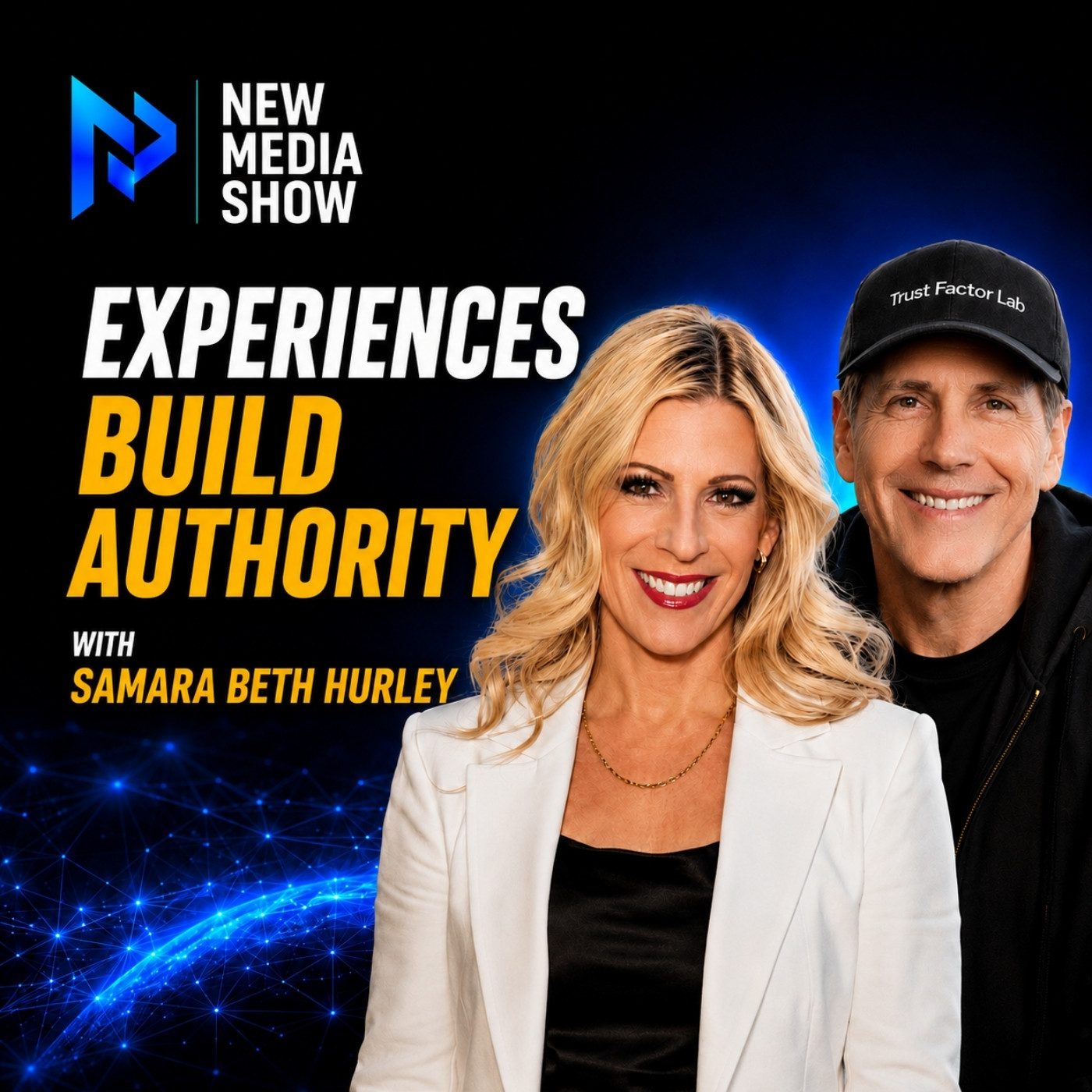
In Episode 679 of the New Media Show, host and Podcast Hall of Famer Rob Greenlee welcomes Samara Beth Hurley, founder and CEO of Samara Beth & Co., for a wide-ranging conversation about experiential branding, audience trust, personal authority, storytelling, live events, artificial intelligence, and the growing value of real human relationships. Creators have more ways than ever to attract attention through podcasts, video, social media, newsletters, events, books, speaking, search, and AI-powered discovery. But attention is only the beginning. The deeper challenge is turning attention into trust, trust into authority, and authority into relationships that can support a lasting creator brand or business. Samara brings more than 30 years of experience across events, experiential branding, public relations, marketing, publishing, coaching, speaking, and business strategy. She explains why memorable experiences engage more than the mind. They involve emotion, physical presence, environment, story, and multiple senses, making them more likely to remain with an audience. The central idea of the episode is that content may introduce people to a creator, but experiences can make that creator memorable. From Attention to Experience: Why creators need more than visibility, impressions, downloads, views, or followers. Samara explains that an immersive experience can involve all five senses and create a much deeper memory than a conventional piece of content. This can happen through an in-person event, retreat, workshop, book, video, virtual presentation, conversation, or carefully designed brand interaction. The goal is not simply to be seen. The goal is to make people feel something meaningful and consistent enough that they remember the creator, trust the message, and understand the value behind the brand. Samara also explains why events should be reverse-engineered around the desired audience result. Before selecting the venue, visuals, entertainment, content, or promotion, creators should determine what they want people to believe, feel, remember, and do after the experience. Credibility, Confidence, and Congruence: One of the central frameworks Samara shares is her three-part trust formula: – Credibility – Confidence – Congruence Credibility comes from experience, demonstrated knowledge, proof, media appearances, testimonials, awards, published work, results, and a consistent record of showing up. Confidence develops through practice. Samara discusses how speaking, presenting, selling, training, and communicating become stronger through repetition rather than waiting to feel completely prepared. Congruence means that the person audiences encounter across a website, podcast, social profile, book, stage, event, media appearance, and personal interaction should feel recognizably connected. Omnipresence With a Strategy: Samara describes herself as an “omnipresence fairy godmother” and explains why creators need to appear across multiple relevant platforms, media formats, and public channels. But omnipresence does not mean publishing without direction. Creators need a strategy that connects social media, podcasts, video, PR, books, articles, television appearances, events, awards, websites, and public profiles. Rob and Samara discuss the danger of throwing content onto platforms without a clear understanding of the audience, purpose, brand position, or desired business outcome. A creator may be visible everywhere but still be difficult to understand. The strongest public presence creates repeated, credible signals around who the person is, what they know, what they stand for, and why their work matters. Personal Brand Versus Business Brand: Samara explains the distinction between a personal brand and a business brand. A personal brand is connected to the individual’s name, expertise, story, reputation, values, speaking, publishing, and long-term legacy. A business brand may be structured so it can grow beyond the founder, employ a larger team, scale independently, and potentially be sold. Not every creator needs both. – A coach, speaker, consultant, author, or experienced executive may only need a strong personal brand. – A founder building a company that can eventually operate without them may need a separate business identity and brand architecture. Turning Personal Stories Into Authority: How frequent moves, career changes, family experiences, loss, divorce, business transitions, and personal reinvention shaped Samara’s current work. The conversation examines when personal experience becomes a valuable market asset rather than simply a private story. Samara argues that people connect to stories because stories help audiences see themselves inside another person’s experience. A strong creator does not need to reveal every private detail. A personal experience can be adapted, anonymized, reframed, or presented as a client, family, or community example when appropriate. The purpose is not personal exposure for its own sake. The purpose is to make knowledge relatable, memorable, and useful to the audience. Samara also describes how she integrated memoir elements into her business book, “WIN YOUR BRAND: The Unapologetic Playbook for Becoming Iconic”. Her personal stories support the larger lessons about branding, resilience, visibility, relationships, and authority. When the Brand Leaves the Screen: Why in-person events, retreats, masterminds, workshops, intimate gatherings, and community experiences may become more important as digital content becomes more abundant. Large conferences can provide scale and visibility, but smaller events can create stronger relationships. A person may speak to thousands of people from a major stage but only build genuine relationships with a smaller number through meals, conversations, workshops, shared activities, informal gatherings, and follow-up. Samara believes the market is moving toward more intimate experiences where participants can meet one another, build trust, share knowledge, and form partnerships. The most valuable part of an event may happen over coffee, dinner, a walk, a workout, a shared hotel stay, or a conversation after the scheduled programming has ended. Those interactions can create referrals, clients, collaborations, partnerships, friendships, and long-term business value. Creating Immersive Virtual Experiences: Not every creator or audience member can travel. Storytelling, visual design, direct eye contact, shared activities, gifts, music, food, demonstrations, physical materials, and guided participation can make virtual experiences more engaging. A virtual event cannot fully replicate physical presence, but it can be designed to foster stronger emotional engagement. Storytelling remains one of the most powerful tools. When a creator describes a setting, emotion, challenge, sound, physical feeling, or moment in detail, the audience can begin to experience that story even when they are not physically present. Samara supports the use of AI for research, workflow automation, idea development, organization, operational support, and production assistance. But warn against using AI in ways that create a false impression or weaken the audience’s confidence in the creator, thereby breaking trust. Rob discusses his decision to label The New Media Show as human-hosted and his earlier consideration of creating an AI-generated co-host or clone. They explore how synthetic voices, avatars, cloned appearances, generated scripts, and automated media could become increasingly difficult to distinguish from human-created work. The risk is not simply that AI content exists. The larger risk is that an audience believes it is interacting with a real person and later discovers that it was misled. Transparency, consent, rights, voice protection, likeness protection, and responsible disclosure will become more important as these technologies improve. Many of these tools remain inconsistent. They may produce images that do not resemble the person, use generic language, miss the creator’s personality, or create more work rather than saving time. Samara advises creators not to purchase every new tool simply because an early price or lifetime deal appears attractive. The AI marketplace is crowded, and many products have not yet reached a reliable level of quality. Creators should begin with a clear problem, test the technology, measure the result, and determine whether the tool actually improves the work. Professional photography, original video, custom design, trusted partners, and human creative judgment continue to matter. Content Repurposing Versus New Content: The conversation also explores the tension between repurposing existing material and creating new content for specific platforms. AI can help extract clips, rewrite posts, summarize interviews, search archives, and transform old material into different formats. But audiences and platforms may still respond more strongly to content created for the current moment. Samara explains that her social media team encouraged her to reduce some repurposing and create more original, audience-directed content. The larger lesson is that efficiency should not replace relevance. Creators need a balance between extending the value of existing work and continuing to produce fresh ideas, stories, and perspectives. Relationships Are the Long-Term Advantage: The episode returns repeatedly to the value of relationships. Platforms, algorithms, content formats, AI systems, and business models will continue changing. A creator’s strongest long-term assets may be credibility, relationships, reputation, trust, lived experience, professional network, and the ability to create meaningful human connection. AI can help operate the systems behind a business. AI can automate repetitive tasks, support follow-up, organize information, and free up more time. Samara’s argument is that creators should use some of that saved time to be with people, attend events, build relationships, have conversations, and create experiences that technology cannot easily reproduce. Discussion Highlights – Why attention alone does not create trust or authority – How immersive experiences engage memory and emotion – Using all five senses in events, books, media, and brand experiences – Samara’s three Cs of trust: credibility, confidence, and congruence – The difference between omnipresence and unstructured content publishing – Why creators need a clear personal-brand strategy – When a separate business brand is necessary – Turning lived experience into relatable authority – Using storytelling without exposing every part of private life – Why smaller, intimate events can create deeper relationships – Making virtual experiences more engaging and memorable – The value of books, speaking, PR, awards, podcasts, and media appearances – Balancing content repurposing with original platform-specific work – Using AI for research, automation, ideas, and workflow support – The limits of AI avatars, generated imagery, and creator clones – Protecting voice, likeness, intellectual property, and reputation – Why professional photography and original creative assets still matter – The importance of transparency when using AI – Using AI to create more time for real human relationships – Why networking after an event may be more valuable than the formal sessions – The movement toward smaller retreats, workshops, summits, and masterminds – Building a legacy while still being able to experience it Chapter Markers: 00:42 Why creator brands need more than content 02:22 Introducing Samara Beth Hurley 04:00 How experiences engage the five senses 05:20 Reverse-engineering events around audience outcomes 06:23 Building connection in person and virtually 08:47 Audience attention, energy, and human presence 09:32 Omnipresence across platforms and media 11:25 Samara’s three Cs of trust 12:06 Building confidence through repetition 13:28 Congruence and consistency across a brand 14:25 Turning personal history into a relevant story 16:20 Content overload and the need for strategy 18:48 Why creators need a personal-brand strategy 20:11 Building a legacy while living it 21:06 Personal brands versus business brands 22:01 Separating private life from professional content 24:05 Executive transitions and second-act personal brands 25:50 Recession-proofing a business 26:32 The growing trust recession 27:54 What an immersive brand means today 29:25 Creating immersive retreats, workshops, and masterminds 30:31 Bringing experiential elements into virtual media 32:04 Storytelling that helps audiences feel present 34:17 Why relatable content performs 35:52 Using memoir and personal experience in a business book 37:20 Turning stories into business and brand value 38:29 Building trust through partners and vendors 39:52 Using AI to help shape stories and scripts 41:04 The difficulty of making AI speech feel human 41:55 Human-hosted media and the future of creator clones 44:04 Content scraping, archives, and AI repurposing 45:14 When repurposed content stops performing 46:12 Problems with AI-generated images and avatars 47:20 Why creators should stop buying every new AI tool 48:21 The coming AI platform shakeout 50:37 How established brands survive technology shifts 51:14 How creators should use AI today 52:15 AI for research, editing, and practical support 53:04 Why professional photos and original assets still matter 54:00 AI, copyright, likeness, and intellectual property 55:44 Using AI without replacing the creator 57:04 Transparency and disclosure 58:24 Adapting without losing human credibility 59:21 Trust must be earned 01:00:01 Why intimate events are returning 01:02:01 Relationship building versus event scale 01:03:23 Why smaller gatherings can be more memorable 01:04:42 Samara’s future television and media plans 01:06:05 AI can create more time for human connection 01:07:05 Why the best networking happens after the event 01:08:41 Using automation to support real relationships 01:09:06 Responsible AI and protecting audience trust 01:10:03 Why Rob chose not to create an AI co-host 01:11:01 Avoiding deception with synthetic media 01:12:18 Where to find Samara Beth Hurley 01:13:05 “WIN YOUR BRAND” and Samara’s audiobook plans About the Guest: Samara Beth Hurley, professionally known as Samara Beth, is the founder and CEO of Samara Beth & Co. She is an experiential branding strategist, event producer, speaker, author, business coach, and entrepreneur with more than 30 years of experience across events, public relations, branding, marketing, publishing, community building, and business development. Her work focuses on helping entrepreneurs, executives, authors, speakers, and creators turn expertise and personal stories into immersive brands that operate consistently online and offline. Samara is the author of “WIN YOUR BRAND: The Unapologetic Playbook for Becoming Iconic”, a combination of personal storytelling, branding strategy, resilience, and practical frameworks for building a memorable brand. Samara Beth & Co. https://samarabethandco.com Samara Beth Personal Website https://samarabeth.com WIN YOUR BRAND: The Unapologetic Playbook for Becoming Iconic https://brands.samarabethandco.com/winyourbrandbook Samara Beth Hurley on LinkedIn https://www.linkedin.com/in/samarahurley Samara Beth & Co. on Instagram https://www.instagram.com/samarabethandco About the Host: Rob Greenlee is a 2017 Podcast Hall of Fame inductee, Chair of the Podcast Hall of Fame, and a longtime new-media executive, creator, strategist, and industry leader. He is the founder of Trust Factor Lab. The New Media Show https://newmediashow.com The New Media Show on YouTube https://youtube.com/@TheNewMediaShow New Media Show Audio on Apple Podcasts https://podcasts.apple.com/us/podcast/new-media-show-audio/id392545649 Rob Greenlee https://robgreenlee.com Rob Greenlee on LinkedIn https://www.linkedin.com/in/robgreenlee Rob Greenlee on YouTube https://youtube.com/@RobGreenlee Podcast Hall of Fame https://podcasthall.com AI Disclosure AI tools were used to create a video and audio introduction clip, episode images, help organize and edit this episode and its description, and create chapter markers from the completed Episode 679 transcript. The recorded conversation, human performances, guest perspectives, editorial direction, final review, and responsibility for the published content remain with actual human Rob Greenlee and Samara Beth Hurley.The post IRL Experiences Build Trust and Authority | Samara Beth Hurley #679 first appeared on New Media Show.
Embed this episode
NOW PLAYING
IRL Experiences Build Trust and Authority | Samara Beth Hurley #679
No transcript for this episode yet
Similar Episodes
No similar episodes found.
Similar Podcasts
No similar podcasts found.