From The New York Times, I'm Natalie Kittrow. This is The Daily. President Trump's trade war against China has so far proven much harder to win than his administration ever let on. And it's only getting worse as China undertakes its most aggressive act of retaliation to date. Today, my colleague Keith Bradshaw on a potential turning point in the standoff as President Trump meets this week with Chinese leader Xi Jinping in what will be their first talks since the trade war began. It's Wednesday, October 29.
Keith, I think a lot of us, frankly, started to feel as though this trade war may have finally died down. I think we were lulled perhaps into a false sense of calm when there wasn't that much news on this for months. But then, all of a sudden, things seemed to heat back up again. So give us a sense of the state of the relationship right now. The relationship is at one of its tensest moments in years. Both sides have threatened measures bordering on economic warfare against each other. There's an urgency to resolving these issues at the meeting on Thursday in South Korea between the two countries' top leaders. Here in Beijing, everyone is watching to see can they reach some kind of a deal that pulls both countries back from the brink. And what are the main sticking points right now in these negotiations? What do we expect to come up in that meeting?
The United States wants China to start buying soybeans again. China has a boycott against American soybeans right now because of its unhappiness with American policies. The United States wants China to stop shipping the chemicals that are used in Mexico and Latin America to make fentanyl. China wants the United States to allow it to buy any kinds of semiconductors it wants, including some of the most advanced semiconductors used in artificial intelligence and high-performance military systems. And China in particular wants America to distance itself from Taiwan, although America depends enormously on Taiwan for semiconductors. But hanging over all of these issues is a big debate over rare earth metals.
China is threatening to cut off much of the world's supply, and it's saying that it will block any effort outside of China to manufacture rare earths and rare earth magnets in competition with China. Can you just unpack what exactly China did? Because this was something that I think a lot of people were talking about as a major escalation. There were new restrictions, right, on these rare earth minerals. These are critically important to, you know, everything from missiles to cars. We need them. And China was saying you can't have them. What exactly happened? Rare earths are very important these days.
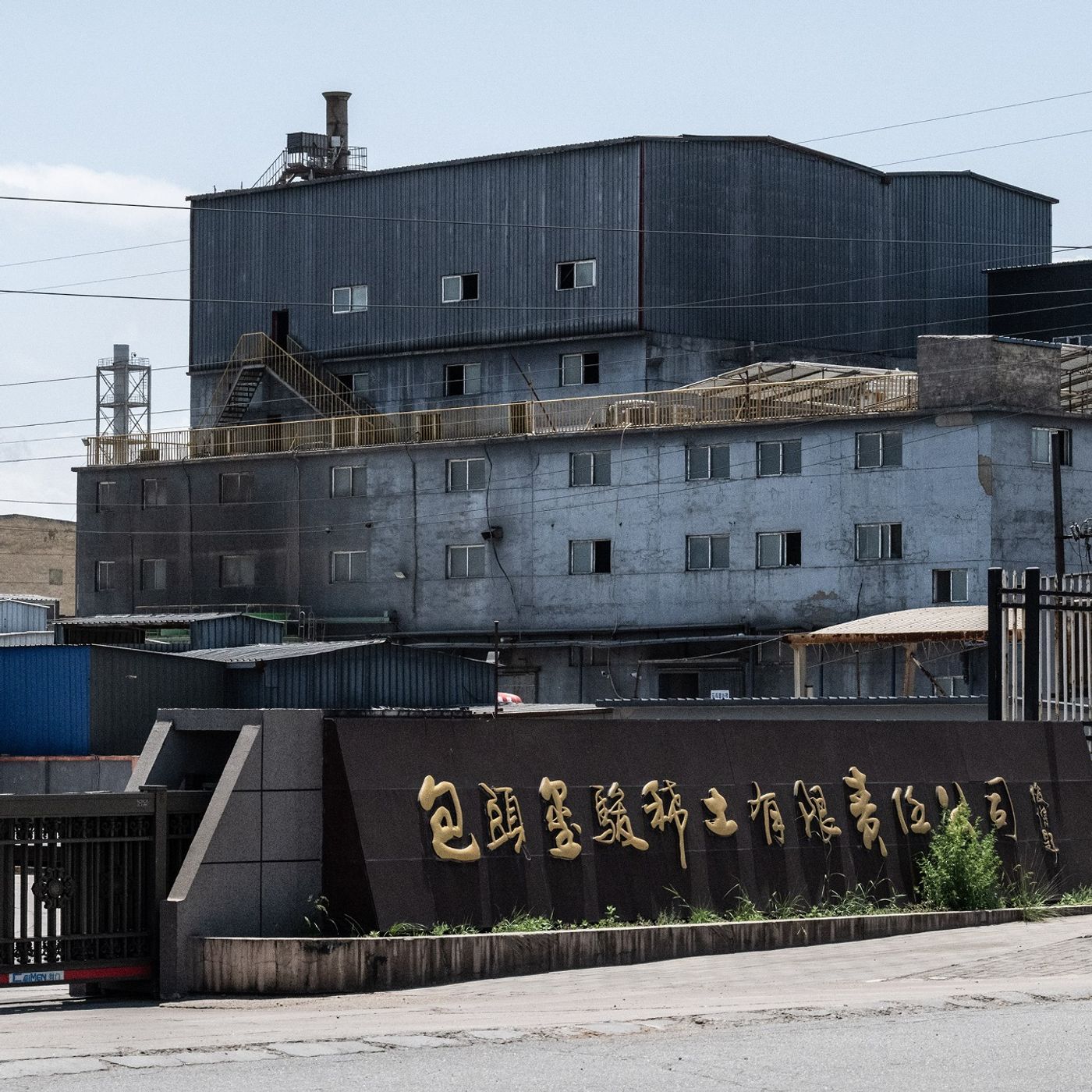
all over the economy, whether it's cars, computer chips, fighter jets, missiles. China controls the materials, rare earth metals, for making them anywhere in the world. And it has put already in April, some export controls on supplying those materials. And on October 9th, China said, we're going to put a lot more restrictions on these. China is expanding its restrictions on rare earth exports.
The new rules do three things. One, they prevent the West from being able to build its own mines and refineries and magnet factories, or at least they make it much more difficult for the West to do that. So no more using any Chinese patents without permission. No more buying equipment from China to do any of this. And China makes almost all the equipment for mining and refining rare earths or making magnets. Second, the new rules put restrictions on what you are allowed to move across any country's borders if it has Chinese magnets and rare earths inside it.
And third, China is saying for the first time that it's going to restrict even more kinds of rare earths than it did the first time around last April. And so this will affect even more military production. For example, making it hard for Europe to build weapon systems for Ukraine or for Europe to protect itself against Russia. Mr. Trump just announced a 100% add-on tariff to China for their export controls on rare earths. And look at this sell-off. Tonight, the stock market plunging nearly 900 points at the close.
This is China versus the world. They have pointed a bazooka at the supply chains and the industrial base of the entire free world. And that's why Treasury Secretary Scott Bassett said that these new rules are a bazooka aimed at the entire world's supply chains. And, you know, we're not going to have it. I have to say, for me, this is like a control freak's approach to trade restrictions. Is this normal? Like, do countries typically make their trade rules this specific, this in-depth so as to control every aspect of how a product is used?
The United States has done this with the fastest semiconductors. So about the top 3% to 5% of the world's semiconductors do have these very restrictive rules from the United States that do track what downstream products they are later built into. What is new and different about China's rules is that China is putting the restrictions on a raw material. and then saying that products that are later manufactured from that raw material are also restricted. So in a way, this is a combination of the U.S. rules on semiconductors combined with the Arab oil embargo in 1973 against the United States and its allies, which was aimed at halting American support for Israel at the time. So it is both a high-tech restriction, and in China's case, it is now also a raw material restriction, both at the same time.
Can I ask, Keith, do you agree with Besson's assessment that this is China pulling out a bazooka? I really do. This is China trying to make sure that it controls global commerce and can turn on and off the taps, not just for goods leaving China, but for goods moving across Europe, across North America, across South Asia, you name it. This is seeking a new global level of comprehensive control out of Beijing by the Ministry of Commerce. And how should we interpret the fact that China's decided to do this now? Is that a sign that the Chinese government has kind of reached a point of no return in these negotiations, that they're using what sounds like one of their biggest points of leverage? China has concluded that it benefits from taking very strong stands towards Trump and also towards Europe.
This is a China that is not allowing itself to be pushed around. We've now seen top Chinese leaders line up with the leaders of Russia and North Korea at military parades twice in six weeks in Beijing and then in Pyongyang. And so China has really in some ways embarked on a new geopolitical stance and a new economic stance of standing tough against the West to protect China's strategic interests. And for the rest of us, for the rest of the world, what are the implications? For the rest of the world, this could be extremely damaging.
Any country with an advanced manufacturing sector has to be really worried about this We'll be right back Law transforms agreement into reality. A word becomes an agreement. An agreement becomes a contract. A contract becomes law. Today, Harvey, the AI platform for legal work, is writing the next chapter. More than 200,000 lawyers are building with Harvey, accelerating review, sharpening negotiations, and more. This is how the future of agreements is being crafted now. Harvey. Learn more at Harvey.ai. Harvey does not provide legal advice. Users should always independently review and verify any output from Harvey. Hi, this is Carolyn Ryan, Managing Editor of the New York Times. At the Times, we strive to help everyone stay informed. And at this critical moment, we're making all of our election coverage free in our app.
This election has been expansive battleground map. States that hadn't been in play before are suddenly competitive. We have more than 100 reporters out there talking to voters. I wonder if I can just call Will to get the actual numbers. Hey, how are you? How many voter interviews do you think we've done? Our plan is to talk to 30,000 voters this year. Okay, you're awesome. Thank you very much. Thank you. Don't you love the New York Times? On election night, we are the place to go for race results. Our maps are updated minute by minute. Our data team can show you what votes have come in, what votes are yet to be counted, and how that might affect the overall results. Come experience all of our election coverage for free right now in the New York Times app.
Let's talk about what you mean, Keith, when you said this could be extremely damaging. Spell out for me what kind of damage we'd be looking at in the US with these restrictions. There is the immediate damage of American companies continuing to have trouble getting enough rare earth magnets just to make their day-to-day products. Detroit has been struggling to get enough brake motors, steering motors, power seat motors, all these different systems that require rare earth magnets. And as more of these Chinese regulations from October 9th take effect, it will become even harder for American companies, for example, even to move.
parts across the border from Mexico or across the border from Canada. What about the national security implications of this? Because you've told us rare earths go into missiles, go into a ton of military equipment. The West is already having trouble in slowing down production of some military items because of the shortage of rare earths. The West failed to stockpile these rare earths in advance. And so the military contractors trying to supply Ukraine or trying to rebuild inventories in the West are really having trouble procuring the magnets they need.
So this is a big win for Russia because the West really needs these rare earths to continue supplying military equipment to Ukraine to defend itself. And now that supply has been cut off cold by China. Fascinating. This clearly has pretty big consequences for Europe, which is honestly kind of surprising. I thought this was a U.S.-China trade war. Why is China now putting the screws to Europe? China has a whole separate dispute going with Europe over cars. The European Union became very concerned last year.
that China had subsidized the development of electric cars and was going to flood the European market with electric cars. And so the European Union put tariffs in place, and there was a big loophole left in these tariffs, which is that if you put a tiny gasoline engine in, along with a great big electric system in these cars, then you don't pay any tariffs at all. And so China has been flooding the European market, particularly this year, with exactly that category of highly capable electric cars with a tiny gasoline engine included, and they don't face any extra tariff. China does not want Europe to raise the tariffs. It does not want Europe to close the hybrid loophole. So China is putting a lot of pressure on Europe. And then finally, China's leaned towards Russia on the Ukraine issue. China wants Europe to distance itself from the United States in NATO. So China has a lot of incentives to...
be very tough with Europe and has been very tough with Europe this year. Listening to you, Keith, I have to say, it does seem as though China has the ability to inflict just enormous pain with this. If China is willing to go this far in the trade war, it does seem fair to say that they have the upper hand. Am I wrong about that? Short term, China does have a very strong position. But there are real long-term dangers to the Chinese economy in pursuing this strategy. So many multinational companies have come to rely on China for part...
or all of their supplies of many components, many products that you see in stores all over the United States. And as China shows that it's willing practically overnight to halt these supplies, China is damaging its reputation as a reliable supplier. European and American companies are frantically searching for ways to buy more from Southeast Asia, from India, and from elsewhere. So there is a long-term interest in China in not taking this too far. In fact, it's already gone far enough that they are worried in China that they may be losing their appeal as a destination for foreign investment. Who wants to build another factory in China if you're not going to be able to send the goods from that factory out of China? It's interesting. It's like China in trying to show the world, look, you really can't live without us. You can't live without our rare earths. Beijing may actually be spurring the world to look for ways to live without it, to find a way to reduce that reliance on China for just about everything.
That is exactly right. China is not backing down in any way. China is all in on restricting rare earths. That's a risky position to be in when you're a country like China that lives on exports, even as the domestic economy is a mess. So China may have overplayed its hand. But it seems equally possible, plausible even, that the U.S. actually overplayed its hand because it's forced China into this point of no return where now it's pulling out the big guns, where now it's using its biggest point of leverage and forcing everyone into a corner.
It's possible the U.S. has overplayed its hand, but the U.S. is in a very difficult position because China has enormous overcapacity of factories. And just last Thursday, we had a pivotal moment. The central committee of the entire Communist Party said, we're going to double down on manufacturing. We want to be the country that makes everything. And that is a direct challenge to the United States and Europe, which still have some manufacturing sectors and to Japan and to South Korea.
This emphasis on making practically all kinds of advanced technology is really a worry. And so the United States is on the spot now. Does it take the short-term strategy of... accepting a deal that gets it back to where it was at the start of the year, but risks further deterioration of what's left of the American manufacturing sector? Or does it continue to have a confrontation, but that could be very painful? So are you saying it's possible that the U.S. overplayed its hand, but it had no other option? The U.S. was not in a good position to begin with, and the Biden administration had struggled with the same issue. The Biden strategy was to proceed cautiously and avoid an outright confrontation, unlike Trump.
But the Biden administration also had the weakness of not really slowing down China's remarkable race towards dominance of an extremely wide range of manufacturing industries. And so the Trump administration felt a need to go considerably farther. And that has now triggered an outsized response from Beijing. You're sort of saying it's like you're damned if you do, you're damned if you don't. If you don't go hard enough to try to combat China's dominance in manufacturing, nothing actually gets done about it. But if you do go too hard, you risk.
eliciting this kind of really potentially damaging retaliation. That's exactly right, Natalie. But has all this poking of the bear that the Trump administration's done actually done anything to slow China's progression toward the most dominant superpower manufacturing country that we've ever seen? Yes. The Trump administration tariffs have resulted in a significant drop in Chinese exports to the United States, more than 20% this year compared to last year. On the other hand, China has been ramping up exports to other countries.
such as Vietnam. And you get estimates that as much as 85% of China's exports to Vietnam then end up in the United States. So Chinese exporters have been very nimble in finding alternative routes through countries like Vietnam and Mexico to still reach the U.S. market. But the Trump administration felt it needed to do something because the U.S. industrial base has been rapidly hollowing out. And without a strong manufacturing sector, the U.S. cannot remain a strong country with a strong conventional military that can protect not only the United States, but other democracies around the world.
The situation you've described is one where the stakes are just incredibly high for both sides. So at this meeting between Trump and Xi this week, what should we expect to see? Do you expect a dramatic announcement or just the continuation of what we've seen before, which is incremental agreements, temporary pauses, etc.? I expect a dramatic announcement of temporary agreements and incremental changes. I think that what we will see is a postponement, for example.
So, a narrow deal, perhaps announced with great fanfare. Exactly. The two countries' leaders might be able to establish a floor for the relationship here. They might begin to change the trajectory so that next year they can begin to patch together something better. Because if they don't, then we could be headed for ever greater confrontation between two superpowers with enormous ability to harm each other and the entire world. Well, Keith, thank you. Thanks for making us all smarter in anticipation of it. Thank you. Always good to talk to you, Natalie. We'll be right back.
Hey, it's Anna Martin from the New York Times. Wherever you get your podcasts. You've heard that line before, right? Wherever you get your podcasts. Wherever you get your podcasts. Of course you have. But what if I told you you never have to hear that line ever again?
You know what? You caught me. I actually can't tell you that. But I can tell you somewhere I think you might want to go. It's the show's tab in the New York Times app. You can find full episodes of The Ezra Klein Show, The Interview, Modern Love, The Daily, new and classic episodes from Serial, and so much more. So much to listen to and watch. I think that's really special. I did this interview once on Modern Love with the actor Andrew Garfield. He was reading an essay and suddenly he was moved to tears. And when you watch the video, you feel like a part of it. The show's tab. Find it wherever you get your... Just kidding. It's in the New York Times app. Explore the show's tab and follow a show today.
Here's what else you should know today. Hurricane Melissa made landfall on Tuesday and it carved a path of destruction across Jamaica as one of the strongest Category 5 storms on record. It wasn't clear exactly how much damage Jamaica had sustained because of limited communications, but Jamaican officials said that 15,000 people were in government shelters. More than half a million people, or about a sixth of the country's population, were without power. And on Tuesday, Defense Secretary Pete Hegseth said the Trump administration had launched yet another round of deadly strikes on boats that it claims were smuggling drugs, killing 14 people in four vessels. Hegseth said the strikes took place in international waters and that there had been one survivor. The attacks bring the overall death toll in the growing U.S. military campaign off the Central and South American coasts to 57.
Finally, Prime Minister Benjamin Netanyahu ordered the Israeli military to conduct strikes in Gaza on Tuesday. The Israeli government accused Hamas of violating the ceasefire agreement by firing on Israeli forces and failing to return the bodies of dead hostages. Netanyahu's office said the prime minister had informed President Trump before the action was taken. Hamas denied involvement in an attack on Israeli forces and, in a statement, said it remained committed to the ceasefire agreement, which had accused Israel of violating. Today's episode was produced by Mary Wilson and Ricky Nowetski. It was edited by Lisa Chow. Contains original music by Dan Powell, Marion Lozano, and Pat McCusker. And was engineered by Alyssa Moxley. That's it for The Daily. I'm Natalie Kittrow. See you tomorrow.
I'm MJ Franklin, and this week on the Book Review Podcast, Switzy by Emma Klein. Hands down, the novel with the most impressive control I've read this year. Someone is losing their mind, and they're approaching their death. Completely moving, elegantly written. I just got lost in the prose of it, which sometimes feels like poetry to me. What does a life add up to? What does it all mean? Listen to the Book Review wherever you get your podcasts.