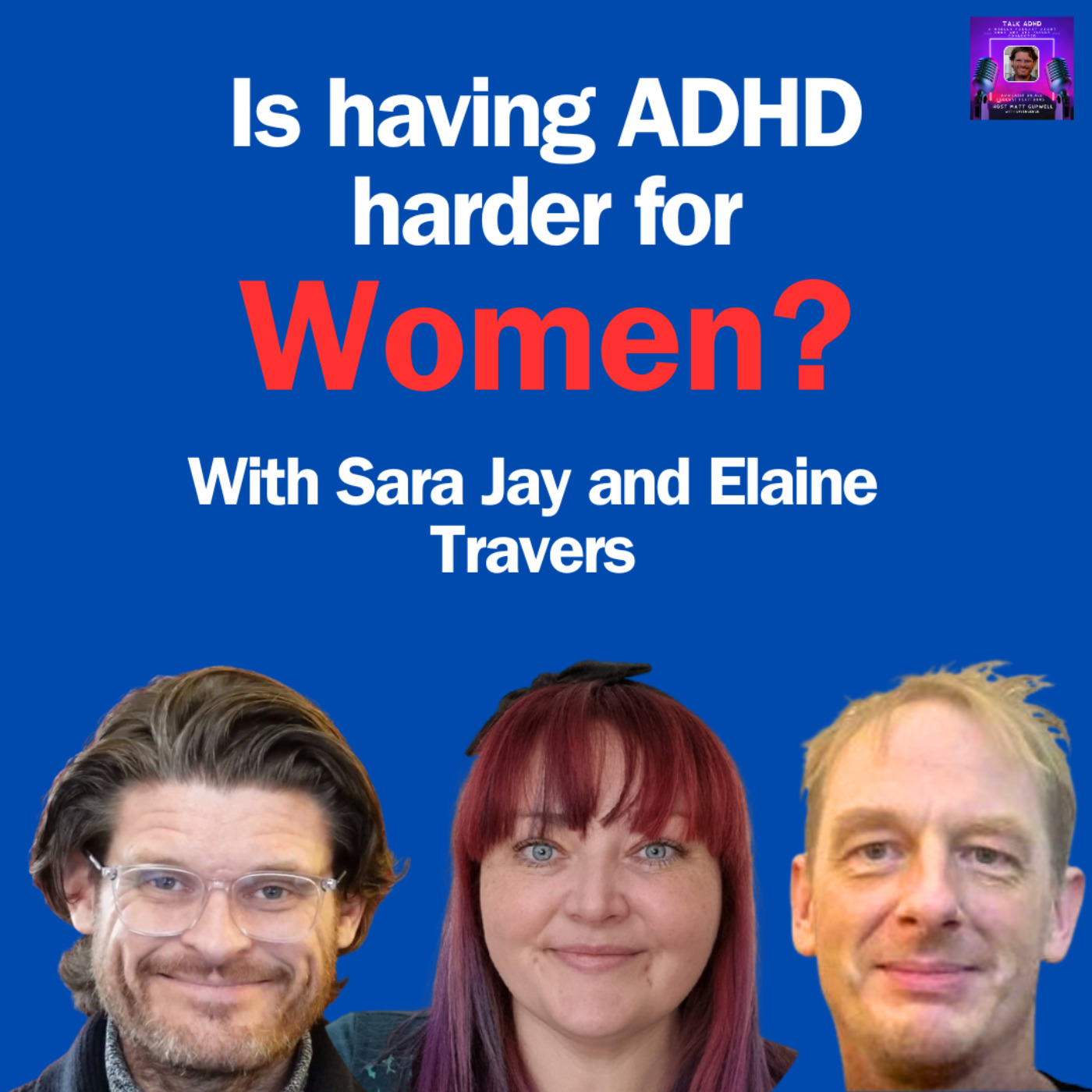
Is having ADHD harder for Women? episode artwork

EPISODE · Jan 3, 2024 · 1H 30M

Is having ADHD harder for Women?

from talkADHD

Why bring a woman with ADHD is harder?0:00 Introduction 4:29 Endochrinology and the science bit 10:25 The female hormone journey 15:42 Why ADHD research doesn't suit women? ADHD 28:26 What does a good assessment look like for a woman? 42:50 Is it hormones or ADHD? 54:45 Should people provide extra info at assessment? 1:08:40 Should teachers know more about ADHD and girls? 1:15:50 We're not radical feminists, we're just being heard! 1:21:53 Final wordsIn this episode Matt and Andrew are joined by Sara Jay, Senior ADHD nurse, mom, wife to Andrew and late diagnosed ADHD'er and Elaine Travers, a former corporate exec who left her career of over 20 years as her struggles with perimenopause took grip and who this year recieved her diagnosis of ADHD. References: The Goddess research: The GODDESS ADHD research project focuses on understanding and improving the care for women with ADHD. This project emphasizes gender-informed research to address diagnostic delays and emotional dysregulation in female ADHD through self-awareness and self-efficacy【7†source】. Studies in this area highlight that females with ADHD often exhibit different symptom profiles, comorbidities, and functional impacts compared to males, necessitating a better understanding and tailored approaches in healthcare【8†source】【17†source】.Epidemiological research from the GODDESS ADHD group reveals that females with ADHD, compared to unaffected females and/or same-aged males, face increased risks such as higher rates of teenage deliveries, depression when using oral hormonal contraceptives, borderline personality disorder diagnoses, preterm birth, postpartum depression and anxiety, smoking during pregnancy, and overall greater comorbidity and healthcare utilization【18†source】. Qualitative studies further show that young women with ADHD engage in more risk-taking behaviors and face unique challenges in healthcare, such as being disproportionately affected by school lockdowns during the Covid-19 pandemic【19†source】.Additionally, an expert consensus statement on females with ADHD highlights the need for a lifespan approach in identifying and treating ADHD in girls and women. It stresses the importance of moving away from viewing ADHD as solely a behavioral disorder and attending to more subtle or internalized presentations common in females. This approach includes comprehensive assessments, pharmacological and psychological interventions, and a lifespan model of care to support transitions experienced by females with ADHD【25†source】【27†source】.The prevalence of ADHD in children and adults indicates a disparity in diagnosis between males and females. While ADHD symptoms tend to decline with age, the rate of decline in inattentive symptoms varies. Psychiatric comorbidity is common in individuals with ADHD, complicating identification and treatment. The consensus statement also addresses the 'female protective effect' theory, suggesting that females may require a higher threshold of genetic and environmental exposures for ADHD to be expressed, which could account for the lower prevalence in females【28†source】【30†source】【31†source】【33†source】.In a broader perspective, Psychology Today highlights that ADHD is under-identified and under-treated in girls and women, despite being equally prevalent and impairing among both genders. ADHD presentations in girls and women often differ from those in males, leading to missed diagnoses.Z Hosted on Acast. See acast.com/privacy for more information.

Why bring a woman with ADHD is harder?0:00 Introduction 4:29 Endochrinology and the science bit 10:25 The female hormone journey 15:42 Why ADHD research doesn't suit women? ADHD 28:26 What does a good assessment look like for a woman? 42:50 Is it hormones or ADHD? 54:45 Should people provide extra info at assessment? 1:08:40 Should teachers know more about ADHD and girls? 1:15:50 We're not radical feminists, we're just being heard! 1:21:53 Final wordsIn this episode Matt and Andrew are joined by Sara Jay, Senior ADHD nurse, mom, wife to Andrew and late diagnosed ADHD'er and Elaine Travers, a former corporate exec who left her career of over 20 years as her struggles with perimenopause took grip and who this year recieved her diagnosis of ADHD. References: The Goddess research: The GODDESS ADHD research project focuses on understanding and improving the care for women with ADHD. This project emphasizes gender-informed research to address diagnostic delays and emotional dysregulation in female ADHD through self-awareness and self-efficacy【7†source】. Studies in this area highlight that females with ADHD often exhibit different symptom profiles, comorbidities, and functional impacts compared to males, necessitating a better understanding and tailored approaches in healthcare【8†source】【17†source】.Epidemiological research from the GODDESS ADHD group reveals that females with ADHD, compared to unaffected females and/or same-aged males, face increased risks such as higher rates of teenage deliveries, depression when using oral hormonal contraceptives, borderline personality disorder diagnoses, preterm birth, postpartum depression and anxiety, smoking during pregnancy, and overall greater comorbidity and healthcare utilization【18†source】. Qualitative studies further show that young women with ADHD engage in more risk-taking behaviors and face unique challenges in healthcare, such as being disproportionately affected by school lockdowns during the Covid-19 pandemic【19†source】.Additionally, an expert consensus statement on females with ADHD highlights the need for a lifespan approach in identifying and treating ADHD in girls and women. It stresses the importance of moving away from viewing ADHD as solely a behavioral disorder and attending to more subtle or internalized presentations common in females. This approach includes comprehensive assessments, pharmacological and psychological interventions, and a lifespan model of care to support transitions experienced by females with ADHD【25†source】【27†source】.The prevalence of ADHD in children and adults indicates a disparity in diagnosis between males and females. While ADHD symptoms tend to decline with age, the rate of decline in inattentive symptoms varies. Psychiatric comorbidity is common in individuals with ADHD, complicating identification and treatment. The consensus statement also addresses the 'female protective effect' theory, suggesting that females may require a higher threshold of genetic and environmental exposures for ADHD to be expressed, which could account for the lower prevalence in females【28†source】【30†source】【31†source】【33†source】.In a broader perspective, Psychology Today highlights that ADHD is under-identified and under-treated in girls and women, despite being equally prevalent and impairing among both genders. ADHD presentations in girls and women often differ from those in males, leading to missed diagnoses.Z Hosted on Acast. See acast.com/privacy for more information.

NOW PLAYING

Is having ADHD harder for Women?

0:00 1:30:00

No transcript for this episode yet

We transcribe on demand. Request one and we'll notify you when it's ready — usually under 10 minutes.

No similar episodes found.

No similar podcasts found.

Frequently Asked Questions

How long is this episode of talkADHD?

This episode is 1 hour and 30 minutes long.

When was this talkADHD episode published?

This episode was published on January 3, 2024.

What is this episode about?

Why bring a woman with ADHD is harder?0:00 Introduction 4:29 Endochrinology and the science bit 10:25 The female hormone journey 15:42 Why ADHD research doesn't suit women? ADHD 28:26 What does a good assessment look like for a woman? 42:50 Is it...

Can I download this talkADHD episode?

Yes, you can download this episode by clicking the download button on the episode player, or subscribe to the podcast in your preferred podcast app for automatic downloads.
URL copied to clipboard!