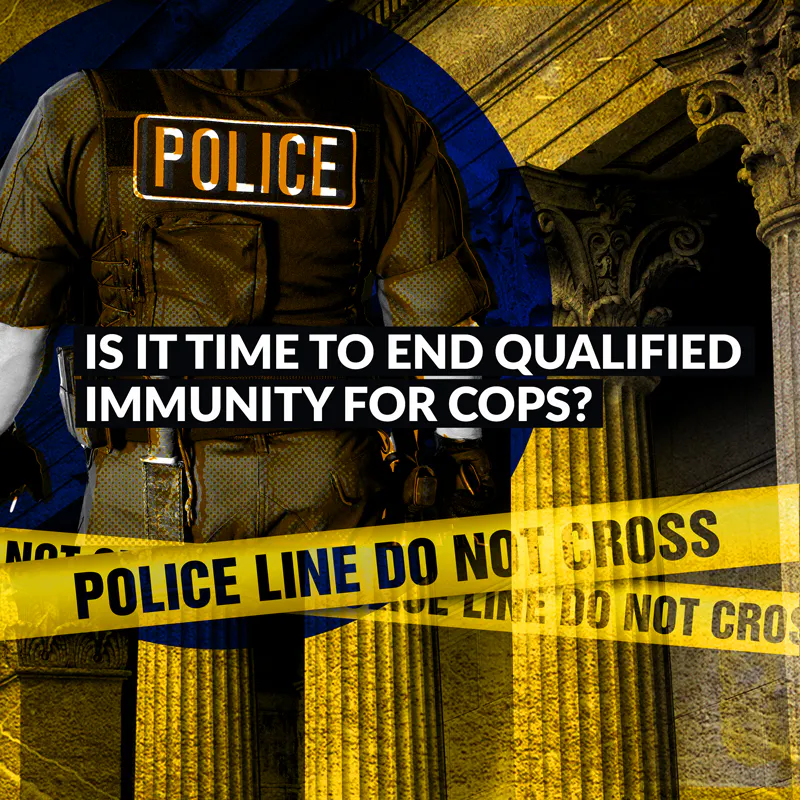
Is It Time to End Qualified Immunity for Cops? episode artwork

EPISODE · Oct 28, 2022 · 53 MIN

Is It Time to End Qualified Immunity for Cops?

from Open to Debate · host Open to Debate

How does one balance two important, though at times competing, public interests? In this case, it’s the need to hold public officials accountable versus the need to shield those officials from harassment and legal liability. In 1967, the US Supreme Court lay the foundations of an answer during a case involving two police officers, sued over civil rights violations carried out at a segregated bus stop in Jackson, Mississippi. The court effectively ruled that if unconstitutional arrests were made in good faith and with probable cause, officers then enjoyed a degree of legal immunity.  That case then served as bedrock for a legal doctrine that later came to be known as “qualified immunity;” a concept that effectively provides government officials with immunity from civil suits in certain circumstances. In 1982, the court went further, codifying qualified immunity for officials and rendering subjective intent of the official immaterial. In other words, whether or not a defendant was acting in good faith was effectively considered irrelevant. Under the revised doctrine, cases could proceed to trial only when there was a clear violation of “established statutory or constitutional rights of which a reasonable person would have known.” Since then, critics have argued that this doctrine stands as a central barrier to substantive police reform, allowing officers to more easily to kill or injure with impunity. But advocates say it’s a necessary protection, shielding police officers – who are tasked with making split-second life-and-death decisions – from bankruptcy and vindictive personal lawsuits. In this context, we debate this question: Is It Time to End Qualified Immunity for Cops?  Learn more about your ad choices. Visit podcastchoices.com/adchoices

How does one balance two important, though at times competing, public interests? In this case, it’s the need to hold public officials accountable versus the need to shield those officials from harassment and legal liability. In 1967, the US Supreme Court lay the foundations of an answer during a case involving two police officers, sued over civil rights violations carried out at a segregated bus stop in Jackson, Mississippi. The court effectively ruled that if unconstitutional arrests were made in good faith and with probable cause, officers then enjoyed a degree of legal immunity.  That case then served as bedrock for a legal doctrine that later came to be known as “qualified immunity;” a concept that effectively provides government officials with immunity from civil suits in certain circumstances. In 1982, the court went further, codifying qualified immunity for officials and rendering subjective intent of the official immaterial. In other words, whether or not a defendant was acting in good faith was effectively considered irrelevant. Under the revised doctrine, cases could proceed to trial only when there was a clear violation of “established statutory or constitutional rights of which a reasonable person would have known.” Since then, critics have argued that this doctrine stands as a central barrier to substantive police reform, allowing officers to more easily to kill or injure with impunity. But advocates say it’s a necessary protection, shielding police officers – who are tasked with making split-second life-and-death decisions – from bankruptcy and vindictive personal lawsuits. In this context, we debate this question: Is It Time to End Qualified Immunity for Cops?  Learn more about your ad choices. Visit podcastchoices.com/adchoices

NOW PLAYING

Is It Time to End Qualified Immunity for Cops?

0:00 53:29

No transcript for this episode yet

We transcribe on demand. Request one and we'll notify you when it's ready — usually under 10 minutes.

MG Show MG Show The MG Show, hosted by Jeffrey Pedersen and Shannon Townsend, is a leading alternative media platform dedicated to uncovering the truth behind today’s most pressing political issues. Launched in 2019, the show has grown exponentially, offering unfiltered insights, comprehensive research, and real-time analysis. With a commitment to independent journalism and factual integrity, the MG Show empowers its audience with knowledge and encourages active participation in the political discourse. Breaking News Show | eTurboNews Juergen Thomas Steinmetz News is relevant to the global travel and tourism industry, human rights and global issues.Breaking news when it happens and only from the source. Eat to Live Jenna Fuhrman, Dr. Fuhrman Our health is our most precious gift and smart nutrition can change your life. Each month, join Dr. Fuhrman and his daughter, Jenna Fuhrman as they discuss important topics in the world of nutrition. Eat to Live will change the way you eat and think about food. French Your Way Jessica: Native French teacher founder of French Your Way Boost your French listening skills and test your comprehension with this one of a kind series of podcasts. Get the chance to listen to a real conversation between native speakers talking at normal speed AND customise your learning experience through carefully designed sets of questions (2 levels of difficulty) available for download at www.frenchvoicespodcast.com. All interviews also come with the transcript. French teacher Jessica interviews native speakers of French from around the world who share a bit of their life and passion. Where else would you meet in one same place a French yoga teacher based in Melbourne, a soap manufacturer from Provence, or a couple cycling around the world?

Frequently Asked Questions

How long is this episode of Open to Debate?

This episode is 53 minutes long.

When was this Open to Debate episode published?

This episode was published on October 28, 2022.

What is this episode about?

How does one balance two important, though at times competing, public interests? In this case, it’s the need to hold public officials accountable versus the need to shield those officials from harassment and legal liability. In 1967, the US Supreme...

Can I download this Open to Debate episode?

Yes, you can download this episode by clicking the download button on the episode player, or subscribe to the podcast in your preferred podcast app for automatic downloads.
URL copied to clipboard!