Is there Harm in Harm Reduction - Part 4
from Pairodocs' Podcasts Hosted by Pairodocs
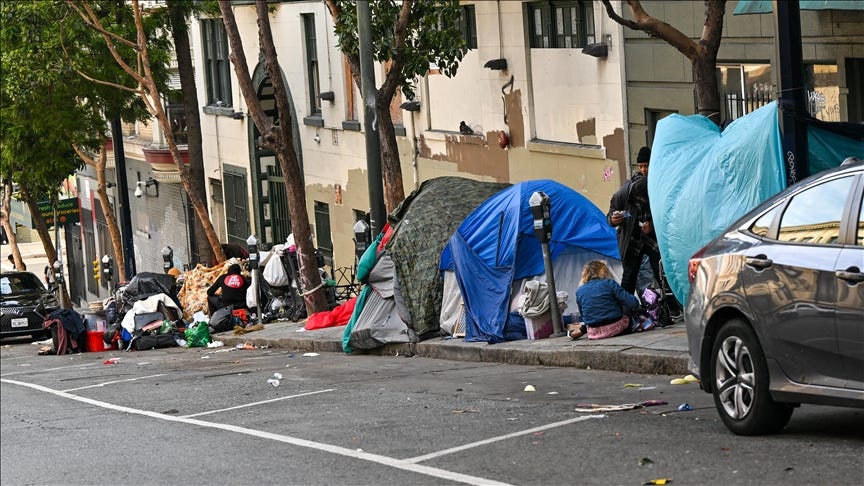
Urban wastelands One of my friends described our hometown of Sydney’s downtown as looking more and more like a zombie apocalypse. Those who are addicted to the point of homelessness tend to migrate to larger centres. A rural community won’t put up with Joe Smith, Mike and Maggie’s son, pitching a tent in the field where the kids play baseball, leaving dirty needles around, and passing out on the grass. Cities are big and anonymous and such behaviour is tolerated. More than tolerated, some would say it is implicitly encouraged by the presence of harm reduction programs that make a lifestyle of homeless addiction more sustainable, as well as selective non-enforcement of loitering, panhandling, and other bylaws. A recent media article I came across referred to ‘safe’ injection sites as “controversial”. This is an understatement. Although harm reduction is preached as gospel truth, one who speaks with a representative sampling of doctors, nurses, or thinking citizens will find mainly dissenting opinions. Although one can selectively comb the literature to find small studies where harm reduction programs tout their local successes, a look at the big picture suggests a different conclusion. Even though our downtowns are more and more being turned over to addicts, Experts™ tell us to reject the evidence of our own eyes and ears. Harm reduction is working great, we just need to do more of it. Do The Experts™ know something that we don’t? I recently attended an online education session on a pilot project designed to bring “harm reduction” into the ER. The presenter suggested that we should be screening patients for addiction (requiring another piece of paperwork and a longer triage process), providing naloxone kits, starting “opiate replacement” and “safe supply” immediately, and prioritizing people with addictions ahead of other ER patients (sorry little old lady with the broken hip, I’ll be another 25 minutes…). At the end of the session I asked if there was actual evidence that this program was helping. I pointed out that although we have invested far more in harm reduction in the last generation, there are more addicts and more overdose deaths, not fewer. ER funding is a zero-sum game: when we do more of one thing we do less of another; when we prioritize one person we de-prioritize others. The answer I got was that indeed, there was no actual evidence that this pilot project was helping, but that we “have to do something”. And that “we think it might be worse if we weren’t doing this”. One presenter suggested that if we could find “the denominator” - ie: the total number of addicts - then we would see that even though there are more addicts, and even though there are more overdose deaths, that a smaller PERCENTAGE of addicts are dying of overdose. Et voila, that would prove that harm reduction helps. It felt like a stretch, to say the least. A moving of the goalposts. (Or for you math-y folks, this is called P-Hacking.) Data that contradicts visible reality should be treated skeptically The below article in the Journal of the American Medical Association concludes that “safe supply” (the new golden boy of harm reduction programs) was associated with INCREASED harms - in this case opioid-related hospitalizations - in the area of British Columbia where it was implemented. This data seems trustworthy, given that it matches, rather than contradicts, real life evidence. There is a joke about academics, who are prone to believing very ridiculous things if they appear in a journal: “one would have to be highly educated to believe such nonsense”. Much of the “evidence” for harm reduction falls into this category. The average joe/josephine who walks downtown, or reads the obituaries, knows that whatever The Experts™ are doing just ain’t working. Most citizens do not set up tents on the sidewalk and use drugs in public It’s great to want to help those with addiction issues. But at the same time, what does non-enforcement of loitering, littering, public intoxication, and other bylaws do to the ability of an average citizen to enjoy his city? To play with his kid in the park? To walk down a street without getting constantly panhandled? To not have his car broken into again and again? To not be randomly assaulted? How is it that we can speak incessantly about the needs, wants, and rights of one group - those who abuse drugs - while at the same time completely ignoring the needs, wants, and rights of the great majority of society who do not? Consider a law-abiding tax-paying citizen who has no criminal record. He wants to build a garage on his own property, which he owns and pays taxes on. First he needs a permit which requires a trip to city hall housing/zoning department. He has to pay a fee and spend time spent filling forms. The garage is finally built. The inspector comes and finds out that an ‘i’ was not dotted and a ‘t’ not crossed properly on the form. The citizen is forced to either pay a fine, or to have expensive modifications done on the garage to correct the error. (This is a real story, by the way). All this even though his garage affects no one else, and is on his own property. If he does not comply immediately he could end up charged higher fines or interest, and eventually if he did not pay he could be in contempt of court and face jail time. The police would eventually be called to enforce the bylaw. As the saying goes, “All laws are ultimately enforced at the end of a gun.” Meanwhile, a few hundred metres away, a large group of addicts has taken over a park. Land that belongs to, and is maintained by, taxpaying citizens. They erect tents and more “permanent” shelters of various kinds on land where people used to walk their dogs and kids used to play. No building permits are demanded. No inspections are done. No police are involved. No attempt is made to remove them. No one is threatened with jail. There are no consequences. We seemingly have chosen to enforce unreasonable laws on reasonable people, while at the same time not enforcing reasonable laws on unreasonable people. Are “safe injection sites” creating “safety”, or a Zombie Apocalypse? The first safe injection site in Canada opened in Vancouver around 20 years ago, and since then “harm reduction” has grown massively. It now includes the distribution of seemingly limitless clean needles, free tents, free drug paraphernalia (to crush and melt pills), naloxone kits (an injection drug that can be given to reverse the effects of an overdose) and most recently “safe supply”. In fact, more than 1 million dollars PER DAY was being spent in downtown Vancouver on these programs, even before “Safe Supply” (more properly called PSAD – Public Supply of Addictive Drugs) was added to the tally. We have put a lot of tax money into making homeless drug addiction a practically sustainable way of living. Many harm reduction advocates lament NIMBYism (Not In My BackYard): that nobody wants to have a safe injection site in his neighbourhood. But there are logical reasons for this. These facilities are bug-lights for criminal behaviour. Just several years ago, downtown Sydney Nova Scotia was safe. Like many downtowns in North America, suburban malls and online shopping had meant there were lots of empty shops, but it was safe. Male or female, one could stagger home from a bar at 2AM unmolested. Then we went all in on "harm reduction". The local (taxpayer-funded) addiction help centre has become a focal point of loitering, public intoxication, scuffles and fights, l… Get full access to Pairodocs’ Collection of Heresy at pairodocs.substack.com/subscribe
Embed this episode
No transcript yet.