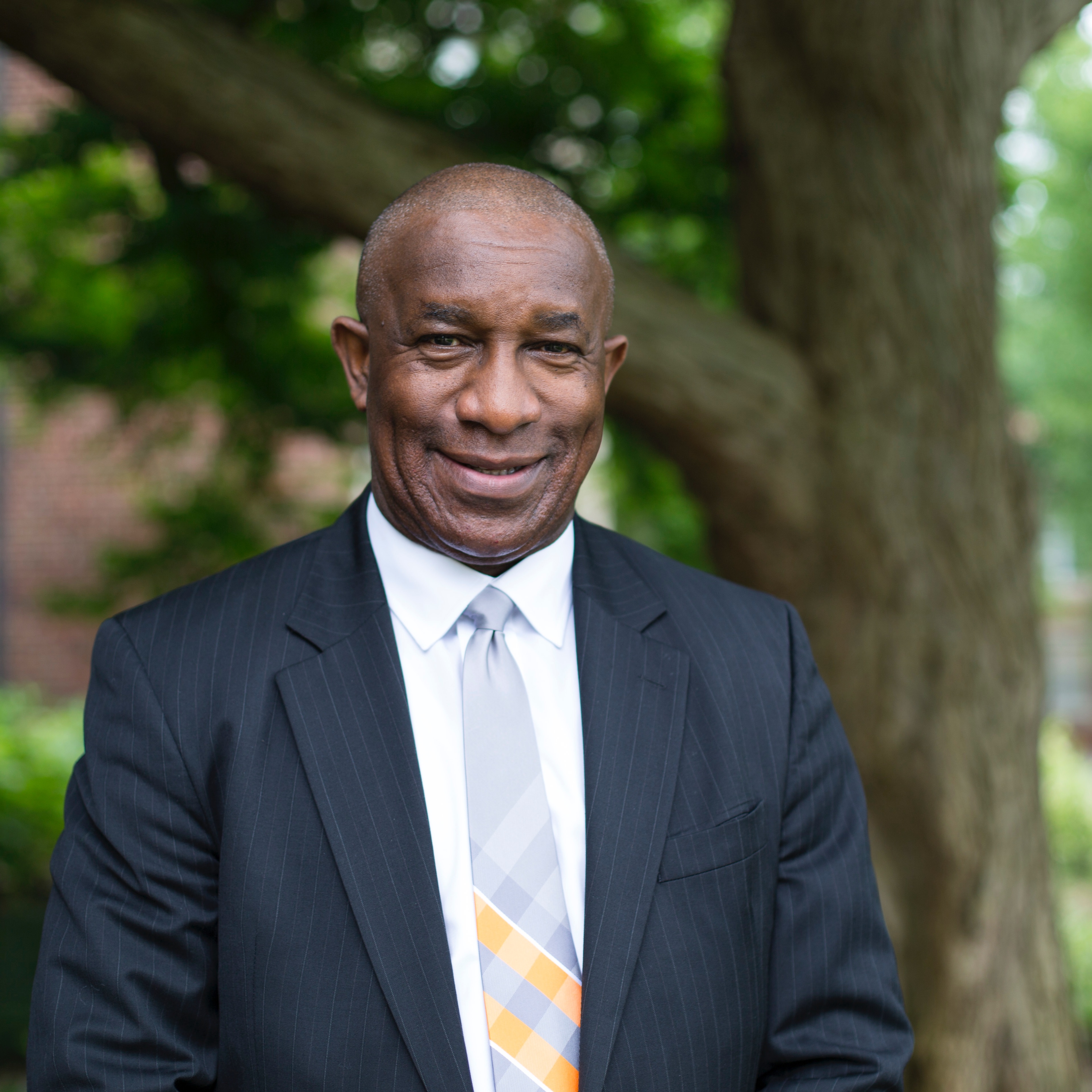
This is Doug Edlund. Isaac Bennett is a 1984 graduate of UTIA's College of Agricultural Sciences and Natural Resources. Recently, Bennett was a commencement speaker at Catherine's graduation ceremony this past May. During his visit to Knoxville, we had a chance to catch up with Isaac Bennett and get his thoughts on agriculture and his college experience.
This is AgCast, brought to you by the University of Tennessee Institute of Agriculture. Isaac Bennett, Vice President, Capital Markets, Farm Credit Bank of Texas, my 1984 graduate of University of Tennessee. Tell me a little bit about the job you do now. What we do in the Capital Markets, we partner with other farm credit institutions as well as commercial banks, and we finance most of your food companies as well as farmers, ranchers, ag-related businesses.
So if it has an agriculture tie, food and fiber, then possibly we can finance those type of operations. What do you find rewarding about your job? It's the people. At the end of the day, while I enjoy meeting the CEOs, CFOs of some of the large corporations, when I have an opportunity to actually meet the family farmer, kind of hear the history, how long it's been in operation, how the farm has been passed down over generations, that's always very rewarding, and I've always said that everybody has a story, and so it's always good to hear their stories.
So you're a 1984 graduate of Kasmer. Yes. Tell us a little bit about how you ended up here at UT. Well, I had a good friend at the time who had gone to graduate school here, and I graduated from high school in 1978.
I went to work, and one day we started talking, and he says, What are you thinking about college? I said, Well, I'm thinking about going back. I don't know where. And he says, What do you think I'm majoring in?
I said, Agriculture. And he said, Well, I know good at school. And fortunately for me, he still had, I knew some people here on campus when he was here in graduate school, and we came up on the weekend and met some folks, Dr. John Todd, Dean Glenn Hall at the time, and as they say, the rest is history.
So how did your experience here at UT help shape your career? Well, it was great. Number one, I had, again, a good advisor, Dr. John Todd, who every day just encouraged me, even when things got a little tough and difficult, even from a financial standpoint, he was always there.
I was able to maintain a little small scholarship, which, again, paid big dividends. I worked for study jobs as well. But, again, just being exposed to agriculture, not only what it is today, but what it was projected to be in the future, definitely prepared me. So when I went to work, it was almost a perfect fit for me, as far as the farm credit system, and what I was able to obtain on campus here on campus.
And how do you feel about agriculture as a career? I mean, you said in your speech today at graduation, it's a noble profession. Can you tell us a little bit about that? Yeah, because, again, I think the people we deal with are very honorable people.
When you think about farmers and ranches, they get up every day and they put everything they got. They take big risks, many times, risking their whole livelihood and future for their families as well. Again, we all have to eat. That's one thing that's not going to go away.
Technology is going to replace a lot of things, but it will never replace that we all have to eat as a nation, as a country, as a world. And that's just going to continue to be more important. And so the more we can produce as being safe and of quality, then that's what people will demand. If you were going to talk to a student who's trying to decide on a career, and they don't really know what they want to do, but they're thinking about agriculture, how would you tell them or how would you sell the career of agriculture or an ag-related field to someone who's trying to decide a career?
Yeah, I think it's one of those things that's not going away. And there's some opportunities. Many times we talk about agriculture. It's not, as we say, it's not your grandfather's farm anymore.
And we talk about technology as well. Also, you can be the computer whiz if you want to and still have a place in this industry because technology is really driving agriculture as well. I mean, when you look at the GPS system, again, producing more food, better quality, that's all going to be driven by agriculture and technology. So I think there's a fit.
There are many opportunities in many different areas you can go into and still be satisfied. And one final question. In your job, there has to be a lot of satisfaction in knowing that you do play a role in helping people in their careers, helping feed the world, helping people fulfill their dreams. That must make you feel good.
Well, it does. When I first started with the farm business over 30 years ago, I worked in one of the associations, which is more direct leaning, if you will, to the farm or ranch ag-related businesses. What I'm doing now is more on the corporate side. But, again, being in that association, yeah, I loaned directly to the farm or rancher.
Also, we did real home loans. And for many people, that was their first time actually owning a home. And to see a generation where I loaned to the parents, and then now they have children who are now going to their first home to feel that you now have something to do with that. It does make you feel good.
Well, Isaac Bennett, thank you very much for talking with us. Thank you. For more real-life solutions provided by the UT Institute of Agriculture, go to our website at ag.fennessee.edu.