Israel: What Went Wrong?
from Ralph Nader Radio Hour Hosted by Ralph Nader
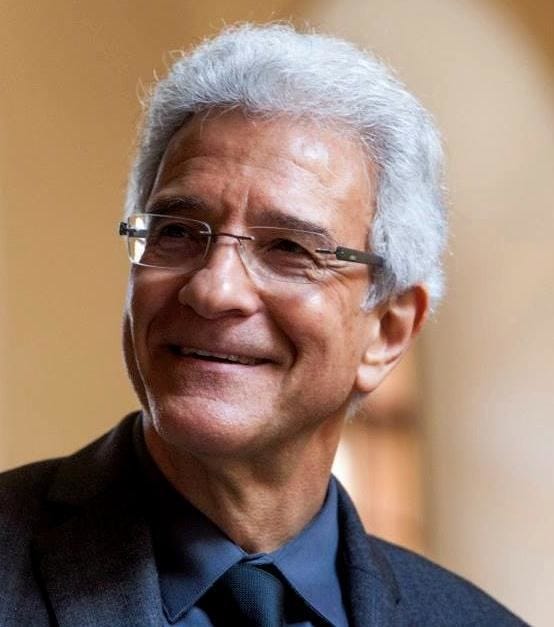
Ralph speaks to historian Omer Bartov about his new book “Israel: What Went Wrong?” with special guest, international law expert Bruce Fein Bruce Fein is a Constitutional scholar and an expert on international law. Mr. Fein was Associate Deputy Attorney General under Ronald Reagan and he is the author of Constitutional Peril: The Life and Death Struggle for Our Constitution and Democracy, and American Empire: Before the Fall. Many of the things that you describe in Israel apply in spades in the United States. We also have an administration that says we’re being invaded militarily by Venezuela gangs, so we have to go kidnap their president and annex Venezuela. We’ve stated that Iran is an existential threat to the United States because at some future time, it’s conceivable they may get one nuclear weapon. We have 5,000, Israel probably has 300 or 400. Or make the argument that we are being invaded by defenseless immigrants across the southern border. And it does seem to me that all countries—I don’t think it’s unique anyway to the United States or Israel, but it’s generally true those in power are there to manufacture fear, to inflate fleas into elephants and say “My gosh, tomorrow the sky is falling down. We need to have national emergencies, rule by decree.” Everything is “an imminent danger”, the Communist domino theory. It’s a very challenging issue. I say what you’ve described in Israel is not unique to Israel. We confront it every day right in the United States. And it works. Bruce Fein Omer Bartov is the Dean’s Professor of Holocaust and Genocide Studies at Brown University. A historian, Professor Bartov was born on a kibbutz, grew up in Tel Aviv, and served in the Israel Defense Forces during the Yom Kippur War. He went on to become a leading scholar of the German army and the Holocaust, before turning his attention to his native country. His early research concerned the Nazi indoctrination of the Wehrmacht and the crimes it committed in World War II. He then turned to the links between total war and genocide and interethnic relations in the borderlands of Eastern Europe. His current interest is reflected in his recent books, Genocide, the Holocaust and Israel-Palestine: First-Person History in Times of Crisis, Israel: What Went Wrong?, and the forthcoming The Broken Promise: A Personal Political History of Israel and Palestine. The whole idea of creating a Jewish state (and it says so in the Proclamation of the State from May 1948) is that it would be a state for Jews—that it would be both Jewish and democratic. And that has proven to be not possible. A Jewish state can be both Jewish and democratic only if the overwhelming majority (if not all) of its citizens are Jews. Omer Bartov [Zionist zealots] believe that history is on their side—so in that sense, they are similar to Communists they’re similar to Fascists they’re similar to Nazis in that they believe that they can see the way forward, they know the logic of history, and the logic of history as they see it is on their side. Omer Bartov In Israel, since the 1980s (really since after the War of 1973, with the rise of the right wing in Israel in particular) the Holocaust has come to serve a particular purpose. Instead of being commemorated as an event that happened in the past that we should remember and commemorate and research, it’s become a kind of image of an imminent danger to Israel. And the farther Israel has moved from the actual event of the Holocaust, and the more the Israeli army has become the military hegemon in its region, the more this alleged threat of an “Auschwitz around the corner” has been used by Israeli governments. Why has it been used? Because Israel actually needs to explain to itself and to its citizens: Why is it bossing it over millions of Palestinians? Half of the population under Israeli control are Palestinians. Two million are citizens, but they don’t have equal rights, and the others have no rights at all (they’re simply under arbitrary military rule). So how do you explain that? You explain that by telling your population and the rest of the world that those Palestinians—who have no power, who can never pose a threat to you—are an existential threat. And in Israel, that has worked quite well. Omer Bartov Because of the focus on Hebrew—to create Hebrew as a mother tongue for children whose mothers didn’t speak Hebrew—because of that, there was a great antagonism towards speaking any other language. And the notion of having bilingual schools (that is, of having schools in Palestine where people would learn both Hebrew and Arabic, the language of the place) is not entertained by the vast majority of educators. Now, if you think about what would have been the result of having bilingual schools already in the 1920s and 30s, that children could speak each other’s language and recognize each other’s culture—that could have had a huge effect on how Zionism developed and how the state would have developed. But in today’s Israel, the only bilingual population are the Palestinians. Palestinian citizens of Israel speak Arabic and Hebrew. Most Israelis don’t speak Arabic. And most Israelis who trace themselves (quite large numbers) not to Europe, but to North Africa and the Middle East, where their parents and grandparents spoke Arabic (this was their language) have forgotten that language and were ashamed of their parents speaking it because it associated them with the Arabs. So the loss in this kind of creation of a nation around one language was the ability to imagine yourself as sharing the space with another group. Omer Bartov * Our top story concerns a progressive insurgent running in a must-win Senate race – and not the one you’re thinking of. Late last week, Senate candidate Abdul El-Sayed won the endorsement of Congresswoman Alexandria Ocasio-Cortez. The New York Times notes that this is AOC’s first Senate endorsement of this cycle, coming just about a month ahead of the August 4th Michigan primary. El-Sayed is quoted saying that he is “honored for what her support says about what this campaign is building and what we’re fighting for,” adding that he thinks that “too many establishment Democrats are…afraid that I will win.” He pointedly attacked Senator Chuck Schumer, charging that the Minority Leader “doesn’t want to see me on the inside of the U.S. Senate,” because El-Sayed would “call out the kind of politics where we take money from corporations and AIPAC to run milquetoast campaigns and don’t say anything about the problems that everyday people are facing.” El-Sayed has announced that he will campaign with AOC and Senator Bernie Sanders in Detroit, Lansing and Grand Rapids on July 18th and 19th, per MLive. * Another earthquake occurred in the Michigan Senate race on July 5th, when State Senator Mallory McMorrow announced that she would be withdrawing from the race – turning what was a competitive three-way race into a head-to-head between El-Sayed and the Democratic establishment pick, Congresswoman Haley Stevens. The Detroit Free Press notes that this announcement “comes after absentee ballots have already been mailed out to some voters and too late to remove her name from the primary ballot,” though voters are able to rescind their absentee votes and submit new ones up through Friday, July 24th. In a video statement, McMorrow maintained that “People are crying out for change and we need to listen.” McMorrow once led her opponents in this race but saw her support collapse and was trailing in a distant third place in recent polls. Rumor also had it that outgoing Senator Gary Peters was privately calling for her to exit the race so centrists could consolidate around Stevens. While many of her supporters are expected to go to Stevens, El-Sayed is energetically courting McMorrow’s voters as well. The Detroit News reports McMorrow herself has announced that she will remain neutral in the remaining days of the primary, leaving her voters to vote their own consciences. * … Get full access to Ralph Nader Radio Hour at www.ralphnaderradiohour.com/subscribe
Embed this episode
No transcript yet.