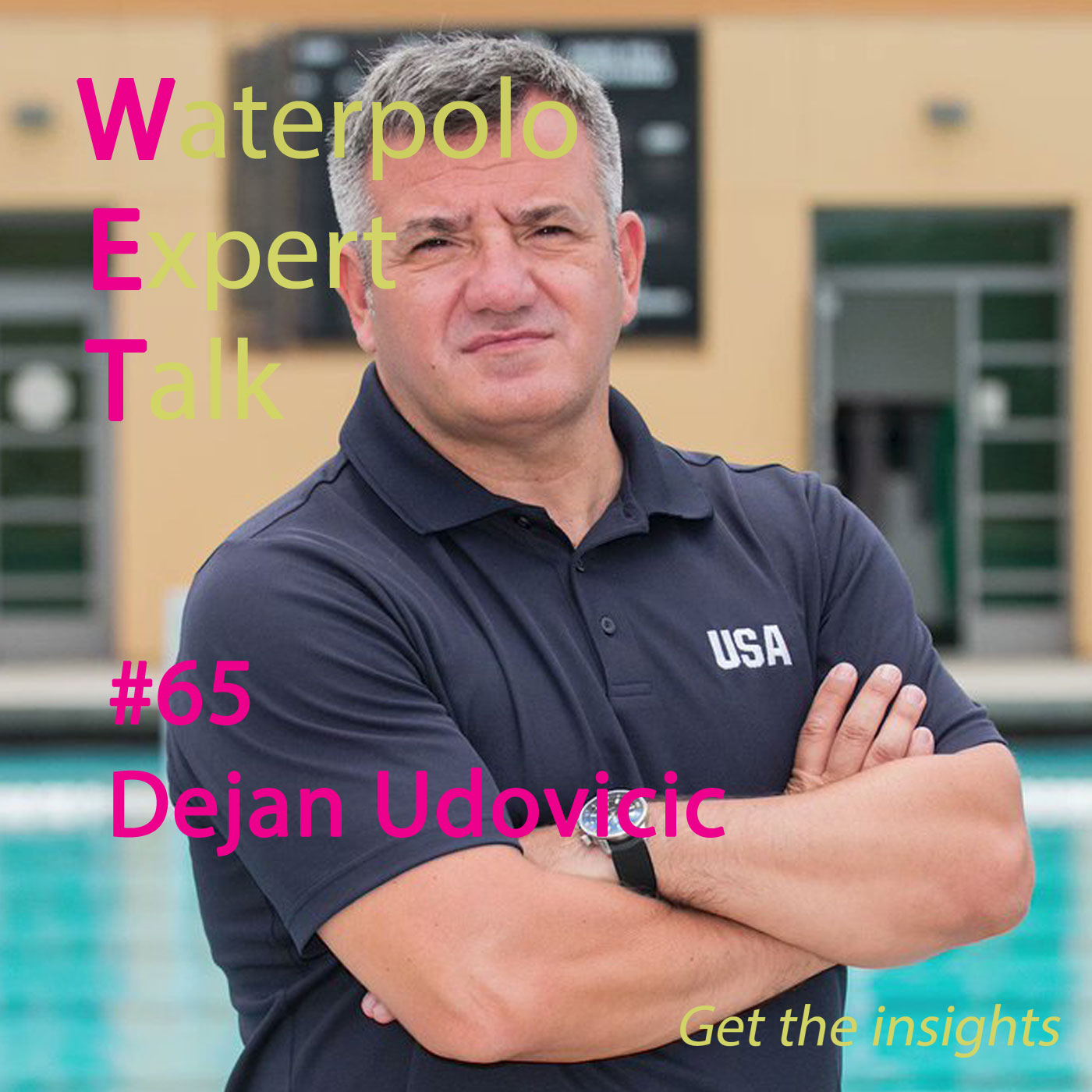
“It is essential for us that players play in Europe” – Dejan Udovičić on development pathways & Olympics (Part 2) episode artwork

EPISODE · Sep 3, 2022 · 34 MIN

“It is essential for us that players play in Europe” – Dejan Udovičić on development pathways & Olympics (Part 2)

from Waterpolo Expert Talk · host Andreas Schulze-Kopp

In the second part of his in-depth conversation on the Waterpolo Expert Talk, legendary coach Dejan Udovičić explains one of the most decisive strategic choices he made as head coach of the United States men’s national team: sending his top players to Europe to accelerate their development. Udovičić openly describes the structural limitations of the American system. Despite the enormous participation numbers created by high school, college and youth programs, the United States cannot offer a professional domestic league comparable to Europe. Conflicts between the NCAA season and national team preparation, limited international exposure and calendar overlaps made it impossible to develop elite players exclusively at home. Faced with these realities, Udovičić made a bold decision: export the national team. Instead of waiting for structural changes in the US, he actively encouraged players to move abroad. What started with a handful of athletes quickly became a cornerstone of the program. Before COVID-19, seven or eight American players competed in Europe. During and after the pandemic, that number rose to nearly twenty. Udovičić explains why this step was non-negotiable. Playing in Europe exposes athletes to daily competition against world-class opponents, tactical complexity, physical intensity and pressure situations that simply cannot be replicated elsewhere. Step by step, American players integrated into top leagues in Italy, Greece, Spain, France and Croatia, learning how to survive and succeed at the highest level. He highlights examples such as Ben Hallock, Champions League winner and national team captain, Alex Bowen, World Championship top scorer, and a new generation of younger players who are now establishing themselves across Europe. Over time, the culture shifted: players no longer needed convincing. Those already abroad became the strongest advocates, motivating the next generation to follow. Udovičić also addresses the challenges this approach creates for a national coach. With players spread across multiple countries, training camps become harder to organize and direct daily supervision is impossible. Still, from his perspective, the benefits far outweigh the drawbacks. Europe provides something the US system cannot: continuous elite pressure. Beyond player development, the conversation expands to broader themes: long-term planning for Paris 2024 and Los Angeles 2028, the importance of early calendar clarity from World Aquatics and LEN, financial realities of international travel, and why federations must fully support coaches during system rebuilds. Udovičić draws parallels to the situation in Germany under Petar Porobić, emphasizing that successful rebuilds require patience, trust and a shared language between federation, coaches and players. Resetting a system is painful, but unavoidable if long-term success is the goal. The episode closes with Udovičić’s trademark realism and optimism: critical situations always start long before they become visible, but with courage, structure and belief in the process, medals will eventually follow. 🎧 More about the podcast: https://www.schulzekopp.de

In the second part of his in-depth conversation on the Waterpolo Expert Talk, legendary coach Dejan Udovičić explains one of the most decisive strategic choices he made as head coach of the United States men’s national team: sending his top players to Europe to accelerate their development. Udovičić openly describes the structural limitations of the American system. Despite the enormous participation numbers created by high school, college and youth programs, the United States cannot offer a professional domestic league comparable to Europe. Conflicts between the NCAA season and national team preparation, limited international exposure and calendar overlaps made it impossible to develop elite players exclusively at home. Faced with these realities, Udovičić made a bold decision: export the national team. Instead of waiting for structural changes in the US, he actively encouraged players to move abroad. What started with a handful of athletes quickly became a cornerstone of the program. Before COVID-19, seven or eight American players competed in Europe. During and after the pandemic, that number rose to nearly twenty. Udovičić explains why this step was non-negotiable. Playing in Europe exposes athletes to daily competition against world-class opponents, tactical complexity, physical intensity and pressure situations that simply cannot be replicated elsewhere. Step by step, American players integrated into top leagues in Italy, Greece, Spain, France and Croatia, learning how to survive and succeed at the highest level. He highlights examples such as Ben Hallock, Champions League winner and national team captain, Alex Bowen, World Championship top scorer, and a new generation of younger players who are now establishing themselves across Europe. Over time, the culture shifted: players no longer needed convincing. Those already abroad became the strongest advocates, motivating the next generation to follow. Udovičić also addresses the challenges this approach creates for a national coach. With players spread across multiple countries, training camps become harder to organize and direct daily supervision is impossible. Still, from his perspective, the benefits far outweigh the drawbacks. Europe provides something the US system cannot: continuous elite pressure. Beyond player development, the conversation expands to broader themes: long-term planning for Paris 2024 and Los Angeles 2028, the importance of early calendar clarity from World Aquatics and LEN, financial realities of international travel, and why federations must fully support coaches during system rebuilds. Udovičić draws parallels to the situation in Germany under Petar Porobić, emphasizing that successful rebuilds require patience, trust and a shared language between federation, coaches and players. Resetting a system is painful, but unavoidable if long-term success is the goal. The episode closes with Udovičić’s trademark realism and optimism: critical situations always start long before they become visible, but with courage, structure and belief in the process, medals will eventually follow. 🎧 More about the podcast: https://www.schulzekopp.de

NOW PLAYING

“It is essential for us that players play in Europe” – Dejan Udovičić on development pathways & Olympics (Part 2)

0:00 34:52

No transcript for this episode yet

We transcribe on demand. Request one and we'll notify you when it's ready — usually under 10 minutes.

Flottengeflüster ALD Automotive Österreich | LeasePlan Beim Flottengeflüster powered by ALD Automotive | LeasePlan präsentieren Jörg Janik und Peter Gutenbrunner alle zwei Wochen spannende Informationen rund um das Thema nachhaltige Mobilität. Beide beschäftigen sich schon lange mit der Thematik und bringen umfangreiches Fachwissen mit. Sollten sie aber doch einmal nicht weiter wissen, werden unsere Expert*innen hinzugezogen, die ihnen gerne mit Rat und Tat zur Seite stehen. Humanizing Change Tremendousness Join us each episode as we talk with innovators in their respective fields about their unique journeys and how they humanize change in their own work, right here, on Humanizing Change. AI Erik's Podcast Audio Erik Conn The AI News Podcast where we talk AI. NEWMORROW SESSIONS - A PodCast Series on the Future of Hospitality Mario C. Bauer, Florian Schneider, Axel Weber & Dr. Tillman Bardt The Newmorrow PodCast is more than a podcast — it's a platform for open dialog on the future of our business, a platform for those building what doesn’t exist yet. Here, we share and embrace our passion for the hospitality industry, but we won’t romanticize the journey. We ask the tough questions, confront uncomfortable truths, and prepare for a future that resists easy answers. We believe that the tougher and wilder times become, the more openly, honestly and humanely people need to talk to each other and act together. We believe, openness, togetherness, and truthfulness should also be cornerstones of a professional community to develop our utopian idea of „open source“. This is a space where visionaries don’t just imagine the future — they wrestle with the paradoxes that shape it: success vs. happiness, data vs. instinct, stability vs. reinvention. Join leaders, entrepreneurs, and thinkers as they share not what made them — but what’s actively shaping them, now and next. So tune in

Frequently Asked Questions

How long is this episode of Waterpolo Expert Talk?

This episode is 34 minutes long.

When was this Waterpolo Expert Talk episode published?

This episode was published on September 3, 2022.

What is this episode about?

In the second part of his in-depth conversation on the Waterpolo Expert Talk, legendary coach Dejan Udovičić explains one of the most decisive strategic choices he made as head coach of the United States men’s national team: sending his top players...

Can I download this Waterpolo Expert Talk episode?

Yes, you can download this episode by clicking the download button on the episode player, or subscribe to the podcast in your preferred podcast app for automatic downloads.
URL copied to clipboard!