
EPISODE · Jul 15, 2025 · 22 MIN
Itch & Urticaria: Mechanisms, Misconceptions & Hope
from All Things Urticaria – Learning about urticaria with Prof. Dr. Torsten Zuberbier · host UCARE, the Global Allergy and Asthma Excellence Network for Urticaria
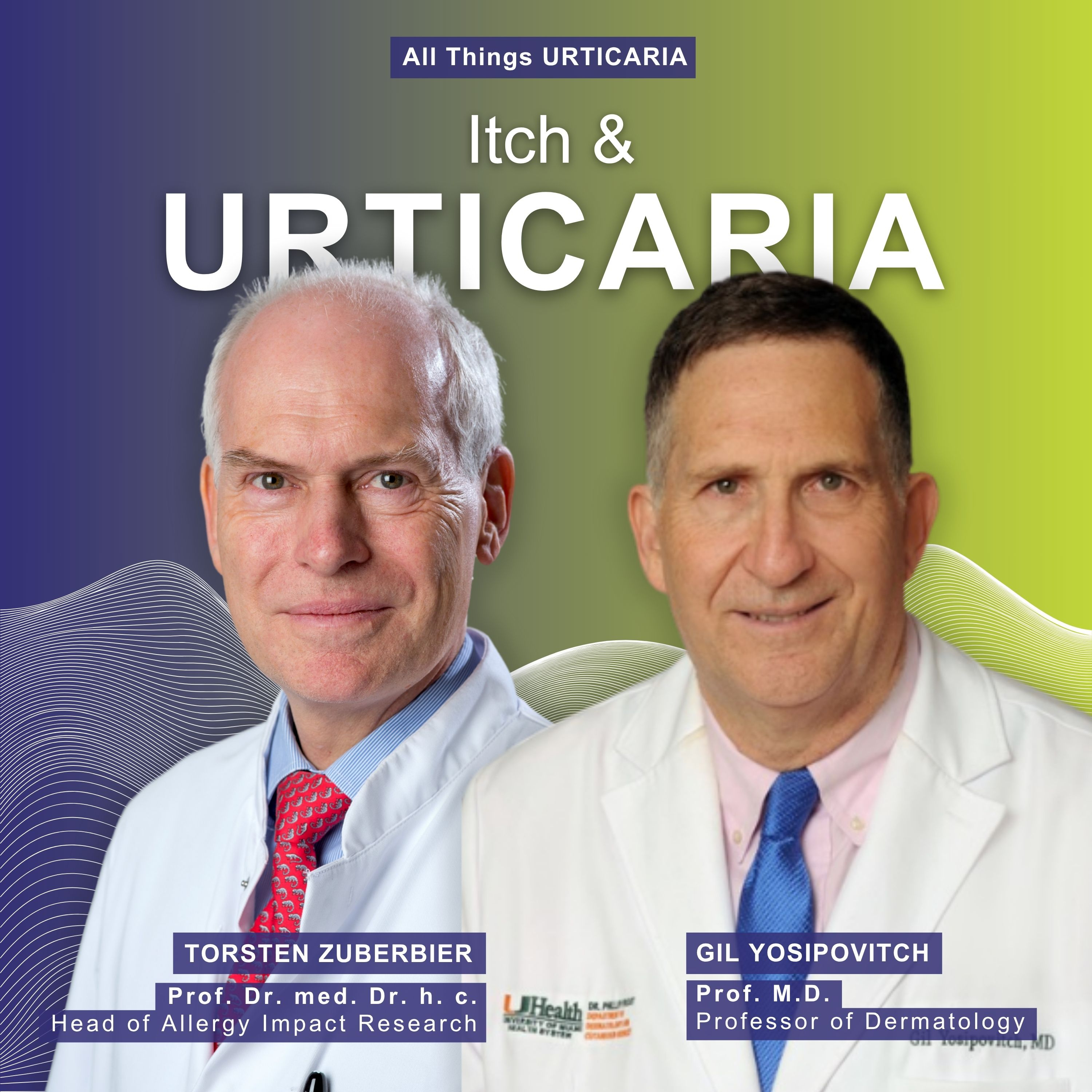
In this episode, Prof. Torsten Zuberbier welcomes Prof. Gil Yosipovitch, world-renowned itch researcher and dermatologist at the University of Miami, for an in-depth discussion on the science of itch in urticaria, and why histamine isn’t the full story. They discuss: 🔹 Why do antihistamines fail in up to 40% of urticaria patients? 🔹 What is MRGPRX2, and why is it such a promising target for future treatments? 🔹 How do pain and itch differ neurologically — and why is itch harder to ignore? 🔹 What role do topical steroids, JAK inhibitors, and GABAergic drugs play? Prof. Yosipovitch shares clinical and research insights on chronic itch mechanisms, highlighting how mast cells, nerves, cytokines, and ion channels interact to drive symptoms. The episode also explores why scratching can feel pleasurable, what makes urticaria itch unique, and how new therapies could revolutionize care. Join us for a cutting-edge conversation on the future of urticaria treatment — and why individualized care is the most powerful approach of all. Key Learnings from the Episode Chronic urticaria itch is not purely histaminergic — up to 40% of patients don’t respond to antihistamines, indicating other mechanisms. MRGPRX2 is a key non-histaminergic itch receptor found on mast cells and possibly nerve fibers — and is overexpressed in many itch disorders. Scratching itch activates pleasure centers in the brain, but urticaria patients scratch less deeply than those with atopic dermatitis. Cold and heat don’t always inhibit itch — responses vary across diseases and individuals, involving channels like TRPM8. Steroids and JAK inhibitors modulate both histaminergic and non-histaminergic itch pathways. Long-term steroid use is still widespread, especially in the US — but leads to serious comorbidities.Gabapentin and SNRIs like mirtazapine are valid add-on options in selected chronic itch patients. New biologics and mast cell-targeting drugs (like CKIT inhibitors) are on the horizon and may transform treatment. Each patient is unique — clinicians must move beyond dogma and adjust treatments to the individual, not just the guideline. Chapters00:00 Understanding Itch: The Science Behind Chronic Pruritus03:02 The Role of MRGPRX2 in Itch Mechanisms05:53 Pain vs. Itch: Exploring the Neural Pathways09:03 Individual Patient Experiences: The Complexity of Itch11:48 Treatment Approaches: Antihistamines and Beyond15:11 Emerging Therapies: The Future of Itch ManagementDo you have suggestions for future episodes? Please provide feedback and offer your suggestions for future topics and expert selection here.Feedback form:ATU: https://forms.office.com/e/m6a2uEdsUH
Embed this episode
NOW PLAYING
Itch & Urticaria: Mechanisms, Misconceptions & Hope
No transcript for this episode yet
Similar Episodes
No similar episodes found.
Similar Podcasts
No similar podcasts found.