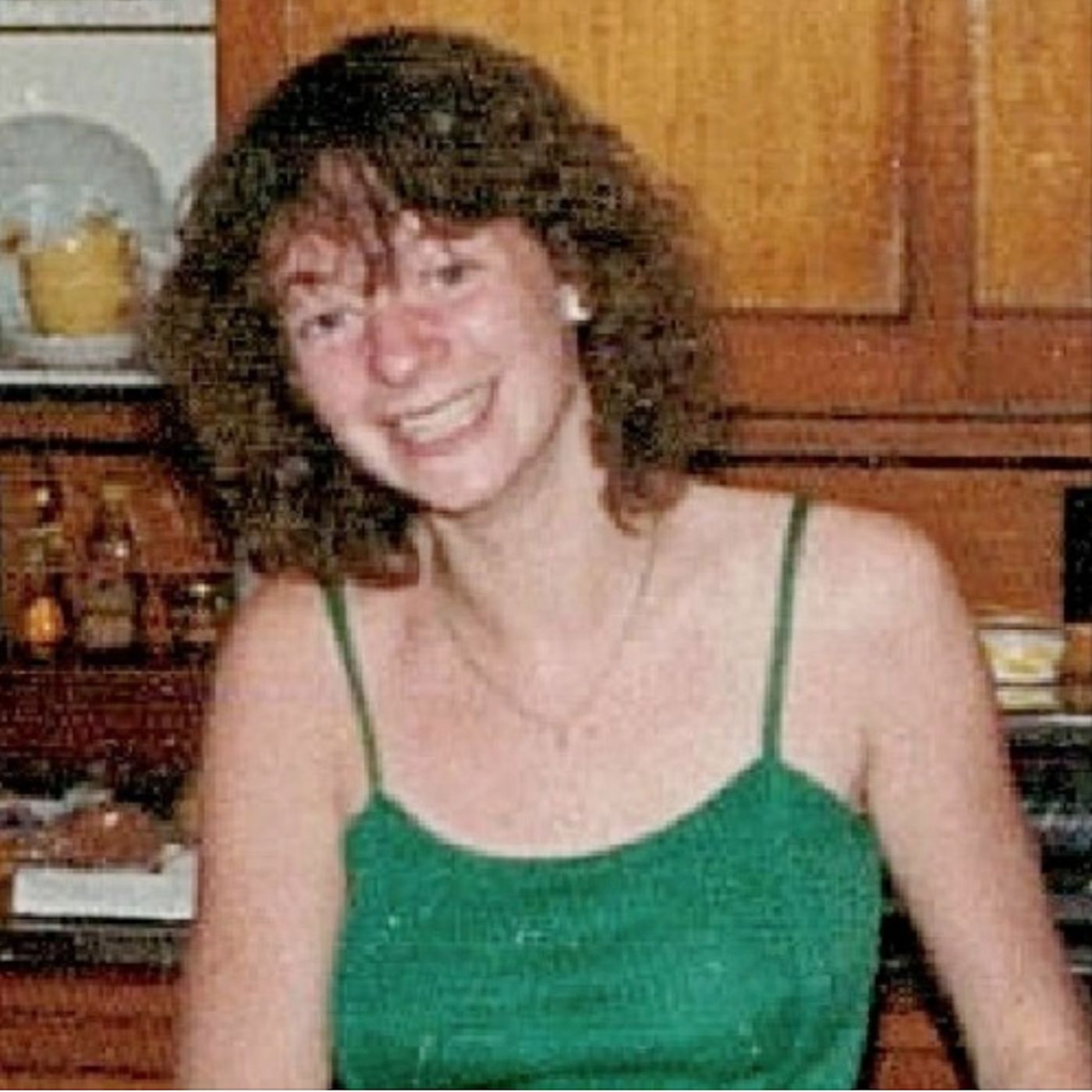
Hey, I'm John Allure. Before you listen to this episode, a couple of things, these are podcasts from the first season of Who Killed Teresa, and they're very raw. They were unedited. I haven't gone back and checked over them.
I pondered about whether I should do these. Many people found them. I do amateurish and kind of... Not very good, but others really kind of liked that that raw nature to them.
So I've just released them as they are. Don't come to me asking questions about them. You know, this was an iterative process. So what I thought seven years ago is not what I believe today.
And then on that note, I'll be closing down Who Killed Teresa over the next six months. We'll run the remaining of the first season episodes. But I've started a new podcast called Undiluted Hocus Pocus, The Wonder of Problems. We'll talk about puzzles and games, and sometimes we'll talk about unsolved murders and police negligence.
And you can find that on Spreaker at Undiluted Hocus Pocus. Also, you can check it out on all your major platforms, Spotify and iTunes, etc. We'll set up social media pages for it as well. So it's a pretty unique name.
Undiluted Hocus Pocus. If you put it into a search engine, I'm sure you'll find us. Thanks for listening. And once again, life is unfair, justice is blind, and dysfunctional, and some cops aren't smart, like on television.
This is Who Killed Teresa. Hi, welcome to the podcast. This is Who Killed Teresa. And I'm your host, John Allure.
Something happened this week. I got put on a top 10 list. The top 10 true crime podcasts, which is very nice. Didn't expect to be put on a list like that.
Well, on the other hand, as the old Grudgeau Marx jokes goes via Woody Allen, I never want to belong to a club that would have someone like me as a member. I recognize I am part of the true crime universe, although true crime is it's it's very popular. There's a lot of different types of people who have interest in this. I knew this getting into that into this.
Nevertheless, I'm slightly suspicious of it and like to hang around the periphery of the whole sphere. However, and I shout out to Emily Thompson from Ireland, who's a crime writer who put the list together for true crime radio on auto radio. Thank you very much, Emily. That's very kind of you.
I thought it was only right for me to see who to do a little research and yet to know the other nine entries on the list. So I did. The first one I knew it's it's serial. I don't know what in the name of hi-hell I'm doing on a list with serial, but I'll take it.
Serial, I do know. I listen to it. Actually, I think it's one of the first podcasts I ever heard. Whenever I travel to to Canada by car and when I travel with the car, it usually means my kids are with me.
We in order to pass what is a drudgery of time. If you drive to Montreal from North Carolina, it can take 13 hours. However, if you drive to where my parents live where they still live in St. John New Brunswick on the East Coast, it can take upwards of 16 hours.
It's usually a two-day trip. However, right when we hit New York City is when we make the decision to either stop for the night or are we going to suck it up and go go all the way. This particular time about two years ago, we sucked it up. You know, you're driving through Connecticut.
You hit Boston and then once you get into Maine, you're getting really punchy. It's probably 10 o'clock, 11 o'clock at night. You hit that interior of the state of Maine, which is so rustic. It's about four or five hours till you get to Banger.
Banger is sort of the last stop. You have to travel the bypass around Banger, Maine to the east side of the city. As you come up this little hill, there's an ex on mobile station on your left. It's like the last stop.
It's the last gas station before you hit this, what clearly was once a logging road for the trucks carrying all that lumber out out of the interior of Maine. It's about a two-hour drive from Banger to the border town of Calais, Maine. At Calais, you hit a river, you crossed the river and there you are at Canadian Customs. So it was right around where we hit that ridge at the ex on mobile station where we were in the heart of darkness of cereal.
And it's about two o'clock in the morning. It wasn't that late. No, it was 11, 11, 12. And shit's getting really real and cereal.
And you're about to go into, you know, on this wages of fear type of journey. One of my daughters found out that there was going to be a meteor shower that night. So about halfway between Banger and Calais, she insisted that we stop on this plateau. There's a point where you come out of the woods and you're up on a plateau that really kind of looks like the surface of the moon midway between these two towns.
The best place for viewing was a clear night. So if she makes a stop, we look at the meteor shower. It's beautiful. Blah, blah, blah.
If you're from the main area, I think you know exactly where I'm talking about sort of kind of meadows with, there's a lot of boulders and rocks around there. That's why it looks like the surface of the moon, like the landscape from the movie, wages of fear. And it's right around, there's this place along this road where there's a, I think it's a 1950s tow truck that's sitting atop a like a 30 foot metal pole to advertise for, you know, Jake's Towing Service or something, something like that. It's right around there anyway.
So, you know, we're out there looking at it, but at the same time, it's like, get the hell back in the car. I'm scared of that crap out of me. Get in the car, you make the final haul of the Cali, you cross the border, you're almost at St. John de Prinsburg.
So that was my serial experience. Second on this list, and I believe it's by the same producers as serial is Esstown. And obviously I've heard of Esstown, I haven't listened to it yet. I'm saving it for our trip this summer to Canada.
That's going to be our listening. But the remainder of the ones, I know the other seven, I listened to, I've not heard of any of these podcasts because I don't really, I don't really truck in that world for reasons that should be fairly apparent. But you know what, I really enjoyed them. I sort of communicated with some of the people who made them.
I really dug them. I thought and learned a lot. I think I was originally tended to go out into this realm, this world, partly out of insecurity, what if somebody's better than me, I'll crap like that. And stubbornness, I'm not going to change the way I am.
I'm making my podcast. Dang, you can't make me make it your way. But I went out and there's a lot of good stuff. In no particular order, and if I forget someone, don't take offense, but sort and scale.
I really enjoyed that. And I'm not doing this as a quid pro quo advertising thing. Okay, I'm just doing this because I want to do this. So let me get that straight.
I'm not expecting somebody now to attack a bit in my podcast and their podcast. We'll get into that. It's a little silly. But sort and scale, great.
It was an episode on the Canadian serial killer Clifford Olson. I listened to a podcast by two ladies called misconduct. The particular episode was about the murder of Elizabeth Dicaro. Really, really sad.
They document this prolonged history of domestic abuse against this woman by the husband, inevitably, you know how it ends. I think what I found most enjoyable about it is so our hosts are trying to be very objective at first, but increasingly, you can feel them getting outraged as they should with with Dicaro's husband's behavior. Slowly, they begin to editorialize more and more, a few more and more. Right comments are thrown in.
And that was really for me, that was the pleasure of the episode. I was watching it begin objectively and then slowly it involving them on a more personal level. Minds of madness is a Canadian podcast. A couple of young guys, I think.
I listened to Greyhound bus 1170. This is, I chose that one because I was familiar with the case, but I really didn't know the details. It documents a tragedy that happened on a Greyhound bus out of Winnipeg, Manitoba, where a schizophrenic individual had an episode on the bus and decapitated a fellow passenger. It is the most gruesome 30 minutes and sort of just nail biting 30 minutes I've listened to, but in no way exploitive.
I thought they did a really good job of balancing, telling the story of what was unimaginably gruesome with the victim's perspective. And finally, case file, which is a podcast out of Australia by this guy who chooses to be anonymous. I think that a lot of the other ones are indeed produced, including mine. This one is a little more professionally done.
It was the case of Jennifer Pan, which was a Canadian case. And I was by no means cherry picking Canadian cases. In some cases, yes, but in the case of this one, I just saw, I said, oh, listen to that, turned out to be a burglary in Markham, Ontario. That ended up in murder.
And then I was like, oh, Markham, Ontario. I know it. My uncle lives there. I've been to Markham many times, stayed at this house.
And then he realized, he's like, oh my god, this is unfolding in the very neighbourhood that he lives in or in that area. So he very vividly can see the whole thing. But again, I thought there was a really good telling and it was like two trains running. There's this story of the offender and the victim and how they come to just come smack together, really artfully told, quite enjoyable.
So that's the list. And then I began to kind of prod around the outskirts of this world, listen a little more to some of the other ones just to see what's out there. And I would say it's how much will I continue to listen to this? Probably not much.
I find it disturbing and I find it particularly disturbing here. Look, what I find troubling is the bloodlust. And I get it. I completely understand why people are attracted you know, voraciously to this realm.
I'm just not going to truck it. You know, I wish, you know, there was more of a victim's perspective in a lot of these. And as I've cited, a lot of them, there really was. Certainly the ladies who did misconduct and I didn't say it, I will say it.
A tremendous empathy for Elizabeth de Caro and again did a very, very good job of relating the victim's point of view. And not that everybody has to do that. And I'm not suggesting that. I'm just suggesting that that's what is going to attract me and that's what's going to bring me back to listen.
Rather than just the flat out lewd, let's tell, you know, let's tell about John Wayne this kind of stuff that where it's just, you know, almost teetering on the level of pornographic. I'm just not going to go there. But what I do find offensive is in some of these where they say, you know, they pay lip service to the victim. They say, you know, the true crime podcast you've, you've all been looking for being respectful to the voice of victims.
And there's absolutely nothing in the podcast that even pays a modicum of respect for victims. If you're going to be, as I say, a true crime bloodlust project, then own it. But don't come, you can't have it both ways. You can't say that's what I'm doing.
But don't get me wrong. I respect, you know, I respect what happens to victims and all that. And yet have absolutely nothing in there that shows that you don't see the victim as anything other than a Jane Doe. And you know, the more I looked at these, it's a world man.
It is a world, you know, it's like tequila and true crime and tacos and true crime turnips and yeah, okay, I get it. I understand. I understand where you're coming from. It's just, it's not where I'm, it's not where I'm going to go at all.
By way of an example, someone had one out there concerning the Abbotsford serial killer, whose name is Terry Driver. And I don't know anything about this case except for one thing. My friend, Misty Cockrell, survived an attack from Terry Driver. That's, that's all I know.
I know the victim. I know Misty, I was asked to speak at a conference in British Columbia and I wound up on a bill with Misty. And that's how I met her. And I know her as a human being, as a really resilient, funny, young woman who had this horrible thing happen to her and were on Facebook and every once in a while, she posts and etc, etc.
But up until seeing that, and I think this conference was, it was 10 years ago, up until seeing this thing about the Abbotsford killer, I had never considered the name Terry Driver whatsoever. I didn't even know it was a serial killer thing. I just know that she was brutally, brutally attacked and, and against all odds survived that attack. And when I say all odds, all odds, she shouldn't have, but she did.
That's what I know. And, and that's what I choose to know. The woman who put this list together, as I said, the Irish woman, Emily Thompson, corresponded a little bit and she asked me, are there others out there like you, meaning other, are there crime victims or survivors of family members, survivors of murder that you know of that, do this? And, and, you know, I kind of wanted to say, I was hoping you could tell me.
I guess my perspective is fairly unique. It's just for me, it's just a, it's a story I'm compelled to tell. I'm not, and I've thought about this. I've thought about this a lot because there seems to be an awful lot of sort of like, if you like my podcast, all like your podcast, and we can, you know, you can, you can grow the thing.
And initially this week, I started doing some of that, you know, I'll, hey, maybe I can boost up my ratings. How are all these people getting like 60 people giving them five star reviews? I, you know, I have four. So I started, you know, down that run, I said, then I said, no, no, I don't, I don't want to, I don't want to do that.
I'm not going to do that. I am not judging anyone who does that. I don't know your circumstance. This may be how you make a living.
So I don't, I don't in any way judge that. It's just saying that I'm not going to be a part of that. I'd rather stick with the audience that I have. I'm not going to put advertising on, on these things.
Because I've listened to them and some of them are, I mean, I just can't imagine sort of like a dry pepto bismol. And now back to murder. I just, I'm not going to, I'm not going to do that. One of them was even was selling some form of true crime murder mystery package once a week, you could get a clue and then solve the murder.
I just thought was absolutely asinine. And so no, I'm not going to have coffee mugs. I'm not going to have t-shirts with who killed Theresa on them. It's not that I'm above that.
It's just, it doesn't fit. It doesn't fit with what I want to do. And, and I've been approached by that. Somebody, some guy wrote me and then phoned me up and wanted to talk about it.
Would you come over to our platform? And then he said, but I feel uncomfortable saying this. Mr. Littlemore, how would you feel about monetizing your podcast?
I was just like, Oh, come on, man. No, I'm not going to do it. I'm not going to tell a story. And then, you know, at 30 minutes, talk about laxatives and erectile dysfunction.
I'm just not going to do it. Like somebody else do it. But I'd rather, I'd rather roll the way we roll people. And yet, I used to be just like you.
I want to read it to you something. This is from August 10th, 2002. This is Patricia Pearson's first installment of the Who Killed Theresa series. So this is the thing that just, that started it all in 2002.
And very, very, very early in the article, she writes this. We tend to think of unsolved mysteries as a parlor game. But that isn't the case for everyone. For some like John Allor, the mystery he cannot solve is the one that keeps his heart from mending.
Now, yes, there's, there is a truth to that. And that it's, it's very lovely. And it's very poetic. However, I would say, and I have always loved parlor games.
And I used to be just like you. Before 2002, I was interested in all of this stuff from a civilian level. I fully recall being in the Toronto, when the OJ Bronco chase was happening. And within a week, as chance would have it, I had to fly to Los Angeles on a Saturday night.
My friend Bob and I got drunk. We found ourselves at two in the morning outside of Gretna Green, where Nicole Brown Simpson was murdered, poking around the front and the back of the, which was an empty dark residence. Police cruiser came by and torchlight in the face. What do you fellas up to?
We wound up being mentioned in the Los Angeles Times. I believe the paragraph was, looky-lose as far as Toronto, Canada, are coming to, you know, see what's up, something like that. And that was me. I've been to the site where the Black Dahlia was found in East Los Angeles.
I went through a tremendous James L. Roy phase. My dark place is the story of his mother's murder obsessed me for a time. And then I read all of his true crime, Ali Confidential Dahlia, and all of it.
I sort of dropped off when James almost got too hard-boiled, too terse. You know, what once were, he might have a sentence with a comma and then just these staccato sentences. And then finally, again, it sort of reduced itself to pornography. And that's when I jumped off the L.
Roy train. But I was certainly on that train without a doubt. And this is prior to me, even having the flash of an idea that anything that happened to my sister had anything whatsoever to do with a murder, let alone a serial murder. And then in terms of parlor games, that's my whole origins.
You know, as kids, Teresa loved riddles and puzzles and, you know, and all that shit. You know, as I sit here recording this, I look to my left and I'm looking up in the closet and I see all of our old board games from when we were kids. I just read these off to you. Clue, Monopoly, Face Off, Risk, Admirals, Careers, Billionaires.
These are all games that we played repeatedly all our lives. So, games and puzzles were always a part of her life. And actually, they even infiltrate themselves into this podcast. And I've been thinking about that and waiting to bring it up.
But I will often, I will do different things. I'm fairly confident I'll get the timing right. This is the 24th episode of Who Killed Teresa. This time of that, I am quite sure.
But in the preceding episodes, I've often planted a seed of an idea or a story that I knew I might harvest later. I've thrown things out there that I know are deliberately vague or might kind of cause the listener to go, what? You're not even going to answer that? And it's like, well, no, I kind of want you to either answer it or it was an attempt and maybe clumsily so to engage in audience, to see if people would come back and say, yeah, well, what about the or this, that kind of thing?
Obviously, it never really worked. But, you know, still, you know, that's what I was striving for. And then I will even, I'll put clues to things in episodes. I'll give you an example.
So we were talking about, I'm sorry, I'm just pulling it up here. Okay, a couple of episodes, we were talking about the cases of the Shadda Gay Killer, of the murders of Norma O'Brien and Debbie Fisher. And I had stated how there had been a publication ban in that the person who was arrested for those crimes, his name could not ever be mentioned. So I just referred to him as MX.
If you look closely, the name of the person responsible for the murders of those two young girls is clearly indicated in that episode. You just need to know how to look and where to look. But it is, it is visually right in front of you. And, you know, this may be silly or immature or whatever, but really what it is, it's a call and answer to, frankly, to my sister.
She liked games, I like games. If I'm going to do this, I'm going to have fun with it. So why not put clues and stuff like that into the podcast? I'll enjoy it.
It can be a little in-joke for me. You can certainly listen to the podcast on one level, but it also operates on another level where you could go back and kind of go, Oh, I didn't catch that. So yeah, yeah, I am doing that. And just to play with an open hand here, I'll tell you what I'm going to do.
I, as we go forward here with the second half of the show, I'm going to throw a clue into something that you should, let's say this, not everyone. But if you're from Montreal, you should, and Quebec, maybe Canada, you should definitely pick up on this thing and kind of go, Whoa, that should be investigated. And so I'm going to, in the second half, we're getting close to 30 minutes here. I'm going to apply the seat and then we're going to get to our main piece of business here.
And at the end of the episode, I'll do a coda and I'll just, as I say, play with an open hand and tell you exactly what the clue was. How's that? I'm like fun? I'm like a regular listener to this podcast is, is traveling to Montreal this weekend for the first time.
They've never been there. So they're going to see the city. And they asked me for some advice about, you know, what we're saying, what to do, what to see, where to eat, all that kind of thing, which I gladly gave. They also said, I want to do a true crime tour, take the map, go to the, you know, where the victims disappeared, where they were found, etc.
I said, have at it, you know, knock yourself out, go and do that. Why not? I do it myself. They said, I'm traveling by car because I want to be able to get around.
And I thought, Oh, no, no, no, no, no, no, no, no, no, no. If you've driven in Montreal, in the last, as long as I can remember, at least 20 years, there is so much construction on the roads and overpasses, etc. It is, it is in a constant state of rebuilding that is endless. It looks quite literally like a war zone.
And I remember that from the last, the last time I was there, I, I chose not to rent a car. I flew into the airport, took a bus downtown and then proceeded to buy like a three day bus and Metro Pass. And driving from the airport to downtown Montreal, I think I think the bus stopped at the Atwater Metro station was quite literally, again, yeah, it looked like a war zone looked like the surface of the moon. There was so much dug up or being dug up and so many detours in one lane, this one lane, that.
So no, you cannot be mobile in a car. And but you can be with this bus and subway system. I think this is the first time since I was a kid, I opted to do it that way. I stayed, I stayed on Saints in the East End and yes, I did deliberately stay there because I wanted to see firsthand the sights that these on play, where her house was, where where Jocelyn who disappeared, etc, etc.
I wanted to, I think we've talked about this before with these cases, who will play a D'Aplon tromdley, there's the possibility of a commuter offender stalker. So I wanted to map that out and take the bus and take the subway and see if that conclusion was viable. It is, it is very much. I think we've mentioned this before, that it's, it's one thing to be in a, in a, in a town or a village where you, you might need a car in order to be mobile, but when you switch to a city, a heightened urban environment, you switch it up and you can do things like stalk people in close proximity and get away with a blitz, murder, and, and disappear into the city quite quickly by, merely by walking a block or hopping a metro or a wing for the bus.
Now I, I, I bring this up above the immobility in a car in, in, in Montreal, because I can tell you if you think, well, what is this chaos and dysfunction with Montreal always being under construction? I can tell you that it is quite systemic and, and deliberate dysfunction. We recently in, in Quebec, if you don't know, had a public inquiry and Quebec loves its public inquiries as does Montreal. But the most recent one was the Charbonneau Commission.
And this was an investigation and inquiry into corruption in the construction industry. And it basically concluded what, what everyone already knew, which is, is that there's tremendous that there would, tremendous corruption in the, in the construction industry with direct ties to the mob and the, the mafia, all the way back to the origins of the mafia in Sicily and, and that, that parties in the administration at, at City Hall, it was a pay, it was a pay to play, arrangement. Construction contracts were inflated. There were payoffs to planners and the people who, the gatekeepers of permits in City Hall.
And this also infiltrated all the way at the political level with political parties. And that was, so that was the conclusion of, of Charbonneau. And as, and as I say, there is, there is no lack of public inquiries in, in Canada or Quebec. We are on the cusp of one in Canada in regards to missing and murdered Indigenous women in, in Canada, particularly in Western Canada and all that entails.
And we are about to get into it. And already, there's, there are signs and, and cries of dysfunction and disorganization. They can't even give the public, which forms part of that word or that term public inquiry, a schedule and agenda of where meetings and events will take, take place. And I think I've expressed my feelings on these things before.
It's a tremendous expense at the tax payers expense to do these things. And they're really political theatre. And very often, you know, after the bill is told, there's 20 to 30 millions of dollars, these inquiries make recommendations. And of course, here's, here's the platform.
The, the recommendations are, are never enacted. This happened in the 1990s with the Poetress inquiry, the Poetress Commission. This was an investigation into malfeasance at the hands of the Sarque de Quebec. They had fabricated evidence.
They were caught. The whole thing blew up. Poetress made something of up to 75 to 80 recommendations, including, you know, the one we hear all, all the time with police is we want a civilian oversight body. No one would ever agree to that.
They, they agreed to very little in the Poetress affair. And after millions and millions of dollars, the tax payers expense, everything went back to normal and nothing was ever solved. And, as I've said, passed his prologue. And right now we have an inquiry into the, the Montreal police force.
And the watchdogs are fellow police agencies, the Long Day Police, Sarque de Quebec. And we're about to go through this affair where they're going to look back at the administrative practices of the Montreal police force for the last 10 years and they're going to clean it up. But of course, we know that they never, they never clean it up. And of course, this is at its essence a travesty of justice.
The matter of the missing and murdered indigenous women is no laughing matter. And I even looked at a comment on an article that came out this week where somebody disgustingly said, we all know that 80% of these cases have been solved because in 80% of the cases, it was a matter of domestic violence and the family was responsible. So why are we wasting all the time? Well, I think we're, we're investing all the time because legitimately, we need to find out why, with indigenous women, this is the outcome.
And then you need to trace it all the way back to the origins, which may in fact be exactly what you're talking about. But what is happening in those disenfranchised communities to allow this to be the outcome. And this is a responsibility of everyone. You can't simply, I can't sit back and say, well, this is an indigenous matter.
And I know nothing about that. Well, it's my responsibility to get educated on these matters. And it should not always be the obligation of the aboriginal population in the indigenous to carry the flag for these matters. That's a tremendous burden.
And we owe it to those people and to those cultures, these other cultures, to sometimes be the standard bearer and to stand up and to lead the charge. Because I can tell you, they get fatigued. And quite honestly, I'm sure feel, feel bad about constantly being perceived as whiners or, or somehow.