It’s Not about the Theology
from Translating the Tradition
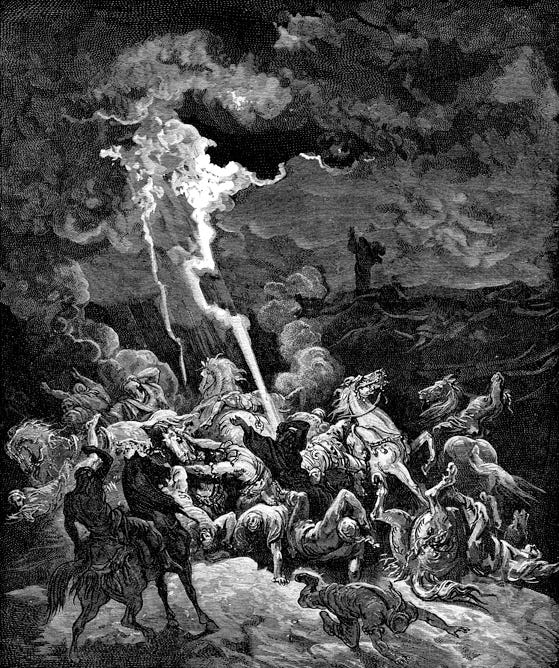
I want to do things a little differently today. Instead of a three-point sermon, I have three mini-sermons. They’re not exactly connected to each other, except by the day. But I want to preface my remarks by saying that I hope they are all genuinely practical — because one of the things that has struck me after almost 30 years of being Orthodox is that it’s really not about the theology. Now don’t get me wrong, theology is wonderful and important. If you’ve been attracted to the Orthodox Church because of the riches and depths of Orthodox theology, glory to God, that’s wonderful. But even for those of us who have fallen in love with Orthodox theology, the whole point of the Church’s teaching about who God is is so that we can work out our salvation in fear and trembling. It was one of the more disturbing realizations I had about ten years in, when I realized — I had converted to Orthodoxy because I wanted to be right — after all, this is the one true Holy Catholic and Apostolic Church — and that’s not a horrible reason for converting… But about ten years in, as we were reading and studying the sayings of the Desert Fathers, it suddenly struck me, powerfully: this is about me. It’s about me having to allow God to change me. And I really don’t want him to change me. I’m happy to repent of my sins to get rid of my guilt, but I don’t actually want to change. But that’s the whole point. The whole point of Jesus’ teachings is so that we can change and grow into the people God made us to be in the beginning. And we see that all through his ministry. So I want to start with the Gospel reading we heard for the Icon Made Without Hands. I’m not going to talk about that particular icon — if you want to look up the story, go look it up, it’s pretty cool. But the reading itself has Jesus and his disciples going down to Jerusalem. It begins by saying that Jesus “set his face to go to Jerusalem” — which he would have had to do: he knows what is awaiting him there, and he knows that this was his ultimate destiny — this is what he has to accomplish, but it’s going to be pretty hard. So he has set his face steadfastly to go to Jerusalem, and he’s going in the most direct way possible: straight through Samaria. I won’t belabor the point about the relationship between Jews and Samaritans, other than to remind you that one of the key contentions between them was, where do you worship? The Samaritans had built a nice temple on Mount Gerazim, but of course, the Jewish tradition was that you had to worship in the temple at Jerusalem. And so when the Samaritans saw Jesus and his disciples with their face clearly set to go to Jerusalem — this was obviously their destination: they’re going to Jerusalem to worship — they wouldn’t let them in. They showed them no hospitality. They essentially (whether literally or figuratively) slammed their doors in the disciples’ faces. The disciples were distraught. Even given the horrible relationship between Jews and Samaritans, one of the things that is absolutely sacrosanct across the ancient world is the duty to show hospitality to strangers. It was a sacred obligation. They didn’t have hotels — well, they had a few, but it wasn’t quite the same: if someone is traveling and needs a place to stay, it’s your job is to look after them, not to slam your door in their face. So the disciples are furious. James and John come to Jesus and say, “Do you want us to command fire to come down from heaven and consume them, just as Elijah did?” Now, Elijah did do this. When soldiers were sent to arrest him, he called down fire from heaven which consumed them. He was just one unarmed man — when you send a whole host of soldiers to fetch someone, you expect them to come back with their prisoner. But Elijah simply prayed, and fire fell down from heaven and consumed those who were sent to arrest him. This actually happened twice, because the king kept sending more soldiers. The third time, the officer sent fell down before Elijah and begged him not to call down fire, and Elijah was merciful. So this is something that God does, apparently, in certain circumstances. And so the disciples felt it would be entirely appropriate for God to do the same here — to send down fire from heaven and consume those villages that had so rudely rebuffed the one they loved. Because, of course, it wasn’t just about them: the Samaritans had been horribly rude to the Christ, the Messiah. But Jesus turns to them and rebukes them: “You do not know what manner of spirit you are of. For the Son of Man did not come to destroy men’s lives, but to save them.” And they went to another village. I love that last line. They just went to another village. Simple solution. And I think one of the things we can take away from this — particularly as Orthodox Christians, people who have found the one true Holy Catholic and Apostolic Church — is that there is a temptation to be a little triumphalistic, or to be very eager to guard the honor of the tradition we have inherited and come to love. And when people aren’t honoring that tradition, this can become our natural response: I’d like God to send down fire from heaven, and maybe not consume them, but at least show them that I’m right. But in that response, we show that we do not know what manner of spirit we are of. Because the Son of Man did not come to destroy men’s lives, but to save them. And one thing especially important for those of us who are converts to Orthodoxy to remember is that we were wrong too, once. That’s why we’re here. If we don’t extend the same grace to those we’re talking with — or who are maybe trash-talking the Orthodox Church within our hearing — the same grace that God extended to us, then what manner of spirit are we of? The second thing I want to say is something you have heard me say over and over again, and I’m going to say it again, because it is so deeply important for us as we work out our salvation in fear and trembling. It’s the other Gospel reading we heard today, from Matthew. You know the story. A king decided to settle accounts with his servants. When he was going over the books, he found someone who owed him 10,000 talents — a debt on the level of a nation-state. The king calls him in and commands that he be sold, along with his wife, his children, and all that he has, so that some payment can be made. He’s not going to recover 10,000 talents from that, but at least he’ll recoup some of the losses. And the servant is obviously deserving of some punishment — I don’t know how he racked up a debt of 10,000 talents, but probably not by doing the right thing. The servant falls down before him and says, “Master, have patience with me and I will pay you everything.” Which is, of course, ridiculous — there is simply no way he’s ever going to repay 10,000 talents. But the master is moved with compassion and releases him, forgiving him the entire debt. So the servant goes out the door, thinking this is wonderful, he’s off the hook — and immediately spots a fellow servant who owes him money. Not an insignificant sum, but something like a third of a year’s wages. He goes up to this man, grabs him by the throat, and says, “Pay me what you owe.” The fellow servant falls down before him and says, “Have patience with me and I’ll get you the money.” And the servant who has just been forgiven 10,000 talents will have none of it and has the man thrown into prison. The other servants see what has happened, and they go to the master and tell him everything. The master is unsurprisingly unhappy, and says, “You wicked servant, I forgave you all that debt because you begged me. Should you not also have had compassion on your fellow servant, just as I had pity on you?” And his master was angry and delivered him to the torturers until he should pay all that was due. “So my heavenly Father also will do to you if each of you from his heart does not forgive his brother his trespasses.” I don’t know how much more solemn a warning we could receive … This is a public episode. If you would like to discuss this with other subscribers or get access to bonus episodes, visit translatingthetradition.substack.com
Embed this episode
No transcript yet.