
EPISODE · Jan 15, 2026 · 1H 1M
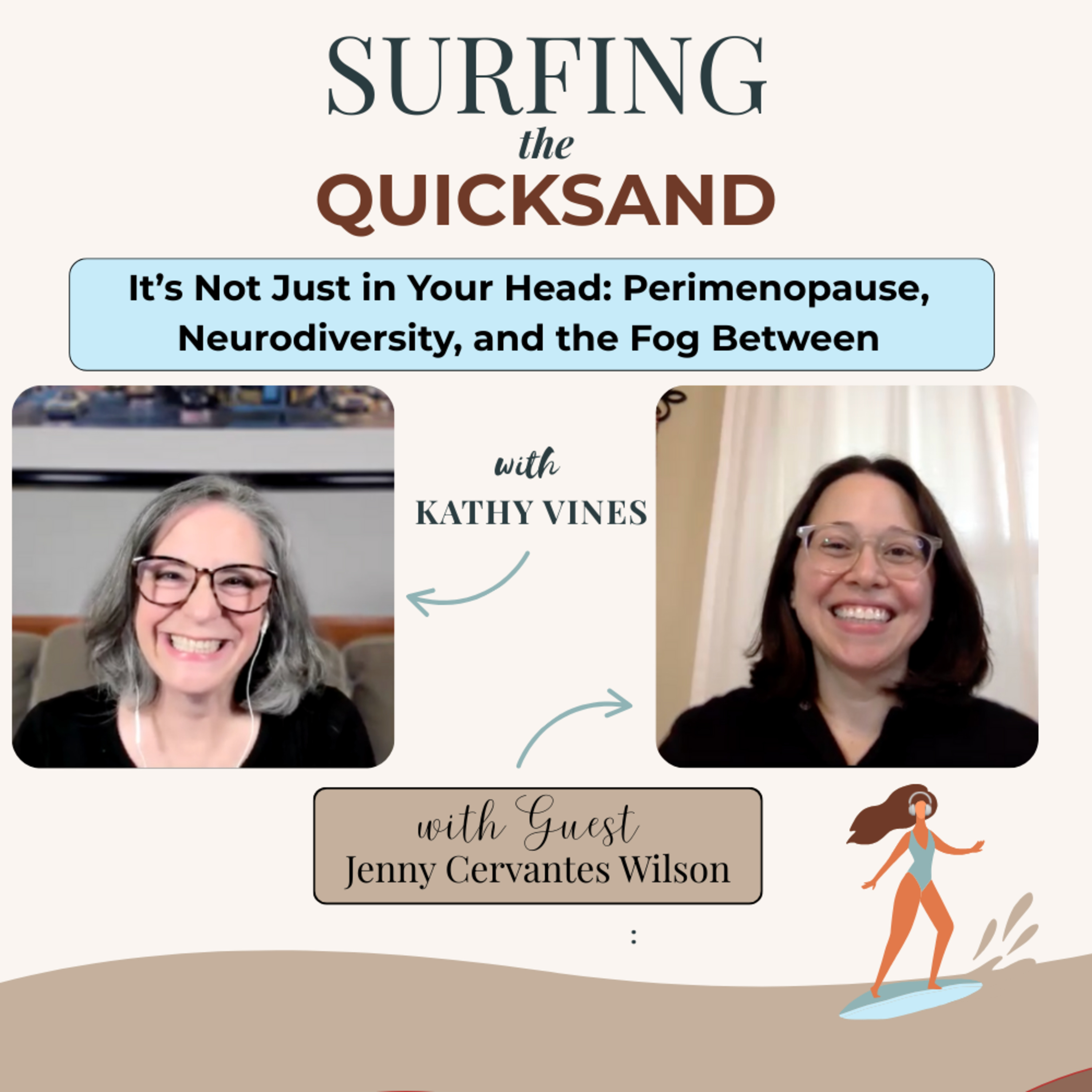
It’s Not Just in Your Head: Perimenopause, Neurodiversity, and the Fog Between (Ep 117)
from Surfing the Quicksand · host Kathy Vines
When everything feels harder than it used to - focus, memory, motivation, patience - it’s easy to wonder: Is something wrong with me? In this thoughtful and refreshingly honest conversation, Kathy sits down with Jenny Cervantes Wilson, professional organizer and owner of Sweetgrass Organizing, to explore how her personal experiences, especially discovering her autism diagnosis later in life, have shaped the way she approaches both her work and her world. They discuss the murky intersection of perimenopause, hormones, and executive function. Together, they explore how shifting estrogen, progesterone, and testosterone levels can impact memory, impulse control, mood, and motivation, and how those changes can mimic or magnify ADHD and autism symptoms as well as autism From late-night shopping scrolls to forgotten appointments, from shame spirals to self-compassion, Jenny and Kathy normalize the chaos that often comes with midlife and offer gentle insights on when to seek professional help, what strategies can help right now, and why curiosity (not judgment) is the key to feeling more in control again. Jenny shares how understanding her neurodivergence brought her a new sense of clarity and self-compassion, and how it informs the empathy, patience, and flexibility she brings to her clients. The conversation flows from practical strategies for working with neurodivergent individuals to deeper reflections on self-acceptance, burnout, and redefining what “organized” really means. Together, Kathy and Jenny unpack the myths of perfectionism, the importance of sustainable systems, and the quiet beauty of giving ourselves (and our homes) permission to just be enough. Key Takeaways: Hormonal shifts can mimic ADHD. Drops in estrogen, progesterone, and testosterone affect mood, memory, and focus, sometimes leading to ADHD-like symptoms. Emotional dysregulation is real. The ability to “keep it together” at work or home can slip during hormonal transitions. Shame compounds the struggle. Many women blame themselves for losing focus or control, rather than recognizing physiological causes. Compassion first. The softness we offer others should also be extended to ourselves, especially during midlife transitions. Organizing isn’t just about stuff. Over-acquiring, disorganization, or burnout may be signs of deeper cognitive or emotional overwhelm. Diagnosis as Liberation: Jenny describes her autism diagnosis as a revelation that helped her make sense of lifelong experiences and challenges, and freed her from self-blame. Empathy as a Superpower: Jenny’s lived experience fosters deep compassion and adaptability when working with clients who process the world differently. Letting Go of “Shoulds”: Both Kathy and Jenny reflect on the cultural expectations around productivity and order, and the freedom that comes from defining success on your own terms. About Jenny Cervantes Wilson Jenny Wilson is a neurodivergent, cancer-surviving, trauma-informed Certified Professional Organizer and coach specializing in neurodivergent clients and executive function challenges. Through Sweetgrass Organizing, she helps clients create systems that support their unique brains and lifestyles. Jenny works virtually and with clients in the Dallas area. Jenny holds multiple certificates of study in subjects like Brain Based Conditions, Chronic Disorganization, and Hoarding.
What this episode covers
When everything feels harder than it used to - focus, memory, motivation, patience - it’s easy to wonder: Is something wrong with me? In this thoughtful and refreshingly honest conversation, Kathy sits down with Jenny Cervantes Wilson, professional organizer and owner of Sweetgrass Organizing, to explore how her personal experiences, especially discovering her autism diagnosis later in life, have shaped the way she approaches both her work and her world. They discuss the murky intersection of perimenopause, hormones, and executive function. Together, they explore how shifting estrogen, progesterone, and testosterone levels can impact memory, impulse control, mood, and motivation, and how those changes can mimic or magnify ADHD and autism symptoms as well as autism From late-night shopping scrolls to forgotten appointments, from shame spirals to self-compassion, Jenny and Kathy normalize the chaos that often comes with midlife and offer gentle insights on when to seek professional help, what strategies can help right now, and why curiosity (not judgment) is the key to feeling more in control again. Jenny shares how understanding her neurodivergence brought her a new sense of clarity and self-compassion, and how it informs the empathy, patience, and flexibility she brings to her clients. The conversation flows from practical strategies for working with neurodivergent individuals to deeper reflections on self-acceptance, burnout, and redefining what “organized” really means. Together, Kathy and Jenny unpack the myths of perfectionism, the importance of sustainable systems, and the quiet beauty of giving ourselves (and our homes) permission to just be enough. Key Takeaways: Hormonal shifts can mimic ADHD. Drops in estrogen, progesterone, and testosterone affect mood, memory, and focus, sometimes leading to ADHD-like symptoms. Emotional dysregulation is real. The ability to “keep it together” at work or home can slip during hormonal transitions. Shame compounds the struggle. Many women blame themselves for losing focus or control, rather than recognizing physiological causes. Compassion first. The softness we offer others should also be extended to ourselves, especially during midlife transitions. Organizing isn’t just about stuff. Over-acquiring, disorganization, or burnout may be signs of deeper cognitive or emotional overwhelm. Diagnosis as Liberation: Jenny describes her autism diagnosis as a revelation that helped her make sense of lifelong experiences and challenges, and freed her from self-blame. Empathy as a Superpower: Jenny’s lived experience fosters deep compassion and adaptability when working with clients who process the world differently. Letting Go of “Shoulds”: Both Kathy and Jenny reflect on the cultural expectations around productivity and order, and the freedom that comes from defining success on your own terms. About Jenny Cervantes Wilson Jenny Wilson is a neurodivergent, cancer-surviving, trauma-informed Certified Professional Organizer and coach specializing in neurodivergent clients and executive function challenges. Through Sweetgrass Organizing, she helps clients create systems that support their unique brains and lifestyles. Jenny works virtually and with clients in the Dallas area. Jenny holds multiple certificates of study in subjects like Brain Based Conditions, Chronic Disorganization, and Hoarding.
NOW PLAYING
It’s Not Just in Your Head: Perimenopause, Neurodiversity, and the Fog Between (Ep 117)
No transcript for this episode yet
Similar Episodes
Mar 26, 2026 ·1m
Mar 19, 2026 ·34m
Feb 18, 2026 ·11m
Feb 11, 2026 ·45m