
Love this podcast? Support this show through the ACAST supporter feature. It's up to you how much you give, and there's no regular commitment. Just click the link in the show description to support now.
While every other channel is fighting for your customer's attention, podcasts are where they've already given it. No one accidentally listens to a podcast for 45 minutes. They choose to be here. They trust the voice in their ears, and when that voice talks about your brand, it doesn't sound like advertising.
It sounds like a recommendation from a friend. ACAST gives you that trust at scale. Visual precision, post-read authenticity, and performance data that proves it worked. Don't fight for attention.
Buy it with ACAST. Learn more by visiting acast.com slash advertise. Welcome to the Serial Killer Podcast, the podcast dedicated to serial killers. Who they were, what they did, and how.
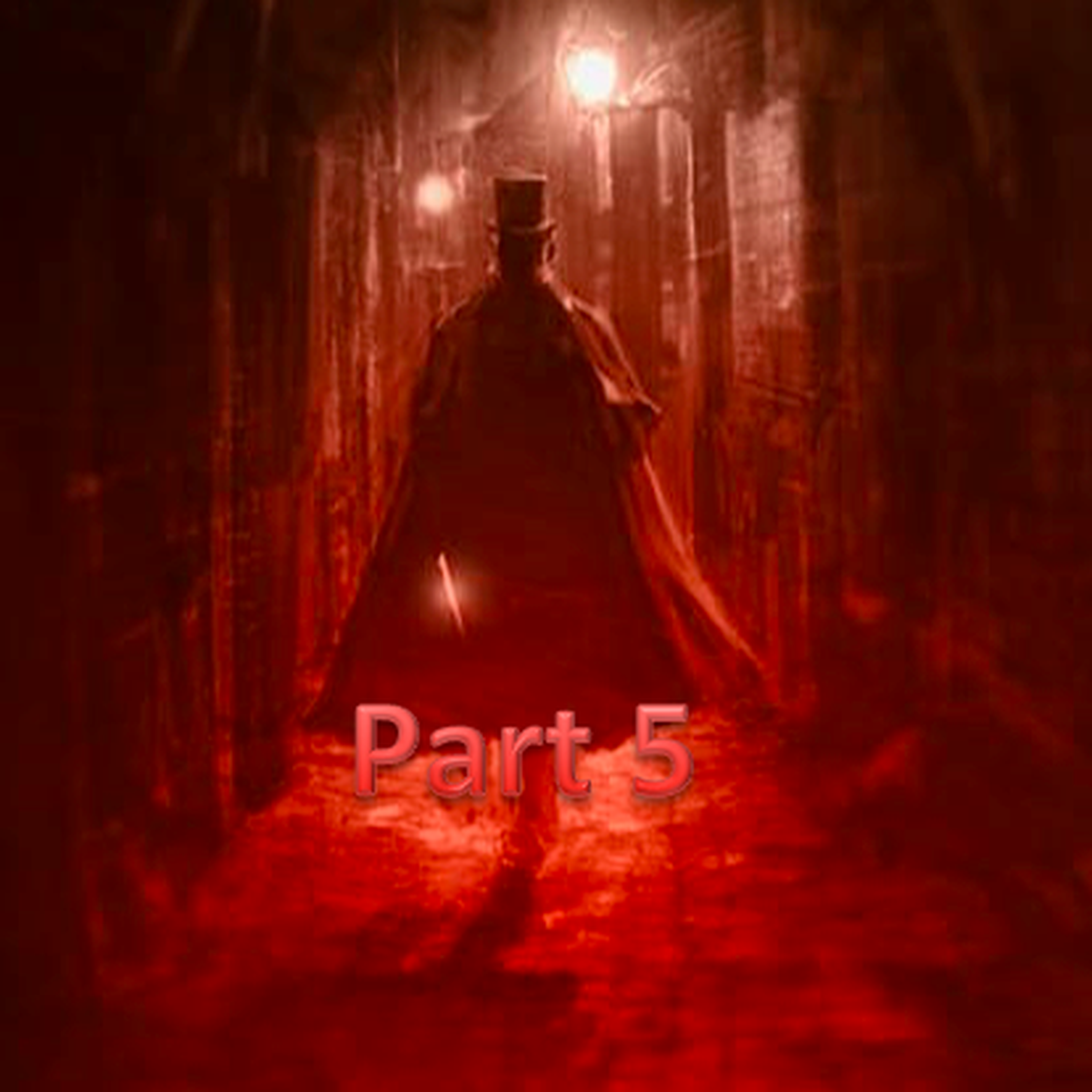
I am your Norwegian host, Thomas Vyborg Thu. As promised last week, tonight, you can once again breathe in the chill London evening air. Feel the cobblestones beneath your leather boots, and see the dim gas-lit streetlights through the yellowish smog. We find ourselves back in the belle époque, and watching old Jack the Ripper do his final known, pièce de résistance, the gruesome murder and evisceration of Mary Jane Kelly.
Please, to fully understand Jack's actions, you need to have listened to part one through four of this series before you listen to this one. If you haven't done so yet, do so now. The Serial Killer Podcast is brought to you by Quip. Quip was designed to make brushing your teeth more simple, affordable, and even enjoyable.
I know that I had problems with my guns often ending out bloody from my rough brushing. Quip helps with that, having sensitive sonic vibrations that are really gentle on sensitive guns like mine. Another reason I love Quip is it comes with a multi-use cover that mounts on my bathroom mirror, and I don't have to constantly charge it like other electrical devices. Quip runs for three months on one charge.
That's why I love Quip, and they're backed by over 20,000 dental professionals. Quip starts at just $25, and if you go to getquip.com slash serial, get your first refill pack for free with a Quip electrical toothbrush. That's your first refill pack free at getquip.com slash serial. S-E-R-I-A-L.
This podcast has in excess of 7 million downloads in total, but both my Patreon page and my Facebook page are only visited by a few thousand. On my Facebook page at facebook.com slash the SK Podcast, you will find bonus content, exclusive Facebook live videos featuring me, and you can contact me, your humble host, directly, and I always reply in person. Imagine if you will, dear listener, a derelict and cramped tenement building complex in Whitechapel, London. As he perused his accounting books, John, a.k.a.
Jack McCarthy, could not overlook the fact that his tenant, Mary Jane Kelly, was six weeks behind in her rent. He had allowed the fees to accumulate, and this morning decided that it was time to see if Kelly could pay up tasking his shop assistant, Thomas Boyer, with catching Kelly before she left her room for the day. Kelly, like many others in the city, was planning to observe the procession of Right Honorable James Whitehead as he drove to the Royal Courts of Justice in the Strand to be sworn in as mayor. The room at number 13 Miller's Court was actually a converted bedroom from number 26, Dorset Street, which opened to the street just beyond the courtyard.
A passageway into Miller's Court from Dorset Street led to Kelly's little room, which had a door on one side and two windows around the corner from the door. Tenement apartments lined the rest of the courtyard, and nothing else stood inside but a water pump and a dustbin. When Boyer arrived at number 13 Miller's Court, he knocked on the door twice. Receiving no answer, he rounded the corner of the yard to see that a couple of glass window panes were broken.
He reached in through the knocked-out glass and moved the curtain to see whether Mary Kelly was at home or not. The first thing he saw was what looked like two lumps of meat sitting on the bedside table. The second thing he saw sent him running back to his employer's office. McCaffey followed him back to Miller's Court.
He drew the curtain aside to see just what the office assistants had. A bloody corpse, mangled beyond recognition, with parts thrown all over the blood-soaked bed. McCaffey sent his assistants to find a constable, and Boyer soon came across Inspector Walter Beck and Detective Walter Dew, chatting on Commercial Street. Boyer cried out to them, Another one, Jack the Ripper.
Awful. Jack McCaffey sent me. The officers followed him, observing the carnage through the broken window with queasy horror. They sent for Inspector Adeline, who was in charge of the Ripper case.
The inspector arrived at 11.30 a.m., and Dr. George Baxter Phillips, a police surgeon who had also responded to the murder of Annie Chapman, arrived around the same time. Rather than immediately break their door down, however, the officer and medical investigator had been instructed to wait for the arrival of two police bloodhounds, Burgo and Barnaby. Using dogs to sniff out murderers was a new and untested technique, but the Home Office of Scotland Yard had been eager to show the public that they were taking the Whitechapel murders seriously.
The two-hour wait signaled a considerable breakdown in communication within the police force, though. A few weeks earlier, the dog's owner, a breeder named Edwin Brough, had reclaimed his hounds from the police when it became clear that Scotland Yard would neither be paying nor insuring him for their services. Nobody told this to Adeline, however, and in the interim two hours, he could do little more than block off Miller's court to pedestrians and wait. Finally, Superintendent Arnold arrived at 1.30 p.m.
in the afternoon, ordering the door to be broken down. John McCarthy used a pickaxe to chop the front door down. The scene inside, which they had only glimpsed at before, would haunt them all forever. But before we get into the explicit details of the Ripper's handiwork, let us pause and examine a bit more about who Mary Jane was.
Before we continue our story, here is a quick word from my sponsor. Madison Reed is an online hair color company built on integrity, innovation, and love for you and for your hair color. It is no secret that your humble host appreciates the beauty of great hair. And the future of at-home hair color is hair with Madison Reed.
For decades, women have had two options when it came to coloring their hair. Outdated at-home hair color or the time and expense of a salon. A trip to the salon to color your hair might run you several hundred dollars, but Madison Reed gives the same quality for less than $25. Find your perfect shade at madison-reed.com That is M-A-D-I-S-O-N-R-E-E-D dot com I am truly thankful that Madison Reed would like to honor the Serial Killer podcast's listeners with 10% off plus free shipping on their first color kits with promo code KILLER.
That's code KILLER. Mary Jane Kelly was a familiar face around Whitechapel. Detective Constable Walter Dew, one of the responding officers, said that she was rarely seen without an entourage of other women or at least arm-in-arm with two or three friends. She was often seen around the neighborhood, always dressed in her signature white apron.
By the accounts of those who knew her, Mary Kelly was the youngest and the most attractive of all of the Ripper's victims. She was born around 1863 in Limerick, Ireland, making her 25 at the time of her death. She was tall, about 5 feet 7 inches, and had blonde hair, blue eyes, and fair skin. Most of what was known of her backstory came from her partner, Joseph Barnett, and that story was based on what Kelly herself had told him.
It was also rife with gaps and small mysteries of its own. Though Irish-born, Mary Kelly spent most of her early years living in Wales. Her father was John Kelly, an ironworker. Kelly told Barnett that she had six or seven siblings.
Landlord John McCarthy said that in the time that Kelly lived in Miller's court, she had received one letter from her mother, but otherwise had not been in close correspondence with her family. Both Barnett and a former landlady named Mrs. Carthy hinted that Kelly's family had been well-to-do. Carthy also said that Kelly was an excellent scholar and an artist of no mean degree.
In spite of this fact, Kelly seemed to be on her own in the world, from a young age. In 1879, when Kelly would have been 16 years old, she married a collier named Davies. After only three years of marriage, he was tragically killed in a coal mine explosion. Kelly did not return to her parents, but rather headed to Cardiff to live with a cousin and became a prostitute.
Kelly only spent a little time in Cardiff and spent much of that time ill and in an infirmary. She moved to London in 1884 and may have stayed in a charitable house, the Providence Row Knight Refuge, and worked as a charwoman. Not long afterward, she left this place and moved into a house in the West End. In the West End, Kelly worked and lived in a high-class brothel, which the press association reported was run by a Frenchwoman.
It was said that during this time, Kelly had added some exorcism to her own name by going by Marie Jeannette. Kelly told Barnette that she had often ridden in a carriage and that at one point she had even been taken to Paris. She had not liked Paris, however, and returned to London after just two weeks. She then moved to a house in the East End, on St.
George's Street. She was quickly ejected from that house for drinking too much and possibly using other intoxicants besides alcohol. At this point, Kelly moved in with Mrs. Carthy, who would be one of the few people that could illuminate Kelly's background for investigators.
She may have been another madam as well, though, because Barnette referred to the cafe residence as a bad house. Never one to stay put for long, Kelly moved on from there to frequent Cooley's Lodging House in Thrall Street, Spitalfields, around the end of 1886. Joseph Barnette entered Kelly's life on Good Friday, the 8th of April, 1887. Barnette also came from Irish parents, but was born in London in 1858.
He worked as a laborer on the docks and a market porter for Billingsgate Fish Market. The two first met on Commercial Street and then went out for a drink, agreeing to meet the next day. They decided after meeting only twice to move in together. Barnette and Kelly lived first on George Street, then Dorset Street, from which they were evicted for not paying rent and for being drunk.
In fact, the Thames Magistrate Court fined Kelly for being drunk and disorderly on the 19th of September, 1888. The couple would move two more times before August of 1888, and during that time, Kelly had been working odd jobs. Then Barnette lost his job. With weeks of rent fees piling up as well as debts to the state for public drunkenness, it was up to Mary Kelly to bring in money.
Much to Barnette's chagrin, Kelly resumed her career in the oldest profession in the world, prostitution. By the fall of 1888, their relationship between Mary Kelly and Joseph Barnette had become strained by their financial situation as well as the latter's disapproval of Kelly's lifestyle. The reign of Jack the Ripper overshadowed Whitechapel with fear, and Mary had begun to allow other prostitutes who had nowhere to go in the evenings to stay with the couple in their tiny room at Miller's Court. She only let them because she was good-hearted and did not like to refuse them shelter on cold, bitter nights, Barnette told the inquest.
We lived comfortably until Marie allowed a prostitute named Julia to sleep in the same room. I objected, and as Mrs. Harvey afterwards came and stayed there, I left and took lodgings elsewhere. End quote.
Sure enough, Elizabeth Prater of number 20 Miller's Court, who lived directly above number 13, reported that on the 30th of October, sometime between 5 and... 6 p.m., the couple had argued. Barnette left Kelly to live at Mrs. Buller's boarding house.
Kelly had been drunk and broke two of the window panes that looked out on the courtyard. A shy woman who lived at number 1 Miller's Court, Julia Wintourney, says that Barnette was known to have treated Mary well and gave her money whenever he could. This did not stop after he moved out. He disapproved of her prostitution and did not want to live that way, and he continued to visit her every day up until the evening of the 8th of November.
In the meantime, time, Kelly continued to allow other women, including Mrs. Harvey and Julia, to sleep over there until she took up lodgings on Dorsey Street, on the 7th of November. The next day Barnette visited Kelly at 7pm, then left, on good terms, at 7.45pm. At this point witness testimonies diverge.
One thing is for sure, however, and that is that the next time Barnette saw Kelly, he could identify her only by her eyes and her hair. When authorities entered the room, there was a fire burning in the fireplace. Mary Jane Kelly's clothes were neatly folded on a chair, and her boots sat in front of the fireplace. Kelly's corpse was nude except for a loose-fitting undergarment, and lying in the middle of the bed that sat flush against the apartment wall.
She was inclined slightly to the left side of the bed, and her head was resting on the left cheek. Her right arm had been partially disconnected from the torso. Her legs were spread wide and placed at right angles. Attending police surgeons included Dr.
Thomas Bond and Dr. George Baxter Phillips, and they made the post-mortem report, but carnage was so great that some of this information was suppressed for the public inquest. Dr. Bond's report said as follows.
The whole of the surface of the abdomen and thighs was removed, and the abdominal cavity emptied of its viscera. The breasts were cut off, the arms mutilated by several jagged wounds, and the face hacked beyond recognition of the features. The tissues of the neck were severed all round to the bone. Presumably without the presence of police walking their feet, concealed in a private room, the Ripper had the time and privacy to carry his compulsions further than he had to that point.
As with previous victims there were entrails and organs piled to the right of the body. This time there were also other lacerations and organ displacements. Kelly's uterus, kidneys, and one breast, replaced beneath her head. Her left lung was torn, and her heart was completely missing.
The Ripper had taken the flaps of skin, which had stripped from the thighs and abdomen, and piled them on the bedside table. Those were the lumps that Thomas Boyer had first spotted when he peeked in through the broken window. Every feature of Kelly's face was irregularly slashed. Her nose, hairs, cheeks, and eyebrows were all partially removed, and her lips were sliced multiple times.
The bed was saturated in blood, and Dr. Phillips stated with confidence that the cause of death this time was severance of the carotid artery, rather than asphyxiation. Unusual for the time, there actually exists a crime scene photo of Mary Jane Kelly's corpse. It is quite graphic, but easy enough to find online if you are interested.
The photo shows how the corpse lays almost invitingly with both legs spread and pulled up, and one arm, outstretched, ready for an embrace. This is sharply contrasted with the extensive mutilation done to the body, and reams of flesh and tissue hang from the body, down onto the blood-soaked bed. There were conflicts as to Kelly's time of death between the medical contingents. The confusion was made worse by the long delay between the discovery of Kelly's corpse, and the ability for investigators to examine the body.
Dr. Thomas Bond, held that the murder took place at 1 or 2 a.m. Based on witness testimony, Metropolitan Police believed it took place around 3.30 or 4 a.m. Dr.
Phillips, who had responded to other ripper murder scenes, asserted that the time of death was 5 or 6 a.m. Authorities had to slough through myriad stories from neighbors, many of whose stories also conflicted with one another. What follows is a general picture pieced together from these accounts. Before we continue with the show, here is a brief word from my sponsor, Shudder, the premium streaming video service from AMC Networks.
Shudder was built to specifically super-serve fans of all degrees of thriller, suspense, and horror. As you can imagine, the host of the premier serial killer podcast is a big fan. They have the largest, fastest-growing, human-curated section of thrilling and dangerous entertainment. You can stream ad-free on all your favorite devices.
Choose from a number of their exclusive titles, such as the serial killer thriller Cold Hell, or from one of their countless collections, including 30 of the best horror films you won't find on Netflix. For a free 30 days of streaming, go to shudder.com slash serial killer, s-h-u-d-d-e-r dot com slash serial killer, and use promo code serial killer. No one could confirm sightings of Mary Jane Kelly between the time that Jo Barnett left her room at 7.45 p.m. and 11.45 p.m., though one story had her drinking with a woman named Elizabeth Foster at a Ten Bell's pub.
At 11 p.m. she was said to be very drunk and drinking with a young, respectable-looking man with a dark moustache at the Britannia. The first confirmed sighting came at 11.45 p.m. by Mary Ann Cox, a prostitute who lived at number 5 Miller's Court.
Cox was returning home to get warm and saw Kelly walking ahead of her with a stout man. A gas lamp stood directly across from number 13 and illuminated Miller's Court, so it was easy for any neighbor to see who was entering and exiting Kelly's apartment. According to Cox, the man was short, stout, with a blotchy face. He looked to be in his thirties.
He had a short, carrot-y moustache, a billy-cock hat, a longish, dark, shabby coat, and a quart-pail of beer in his hand. The two stood outside of Kelly's room as Cox passed by towards her room. Cox wished them goodnight. Kelly drunkenly wished her goodnight and slurred that she was going to have a song.
The residents of Miller's Court were used to Kelly Irish songs, and they were a regular result of her drunkenness. As Cox went into her home, she heard Kelly started to sing A Violet from Mother's Grave. Catherine Pickett and her husband, also Miller's Court neighbors, remember hearing her singing at 12.30 a.m. as well.
Catherine remembered that she wanted to go shut Kelly up, but her husband prevented her from doing so. At midnight Cox went back out into the cold to solicit. Then came back an hour later after it began to rain. At 1.00 a.m.
the light was on in Kelly's room, and Cox could still hear her singing. She soon went out again. Around the same time, Elizabeth Prater, Kelly's upstairs neighbor, stood at the entrance to Miller's Court and waited for a man. Giving up around 1.30 a.m., she returned to her room and passed out.
She did not hear any singing, nor did she see any lights coming from Kelly's window. At 2.00 a.m. George Hutchinson was walking to his residence at a men's home on Commercial Street when he passed a man standing at a corner of commercial and thrall. Not giving the man a second look, he soon happened upon Kelly.
Kelly asked him for a sixpence, but he declined, saying he had spent all of his money already. Kelly departed in search of cash, soon meeting with the man Hutchinson had passed on the corner. The man put his hand on Kelly's shoulder, and they exchanged inaudible words and a laugh. All right, Hutchinson heard Kelly say.
You will be all right for what I have told you, the man replied. Hutchinson watched as the man put his hand on Kelly's shoulder, and they began to walk back toward Dorset Street, a parcel in the man's left hand. Hutchinson scrutinized the man, noticing his pale complexion, small moustache, dark hair and bushy eyebrows. He was wearing a felt hat pulled low, a long dark coat, and dark spats over boots.
Hutchinson summarized the unknown man's look by saying he had a quote-unquote Jewish appearance. Hutchinson soon followed the two all the way back to Miller's Court and stood, watching as Kelly kissed the man and let him inside. He stood outside Miller's Court until the clock struck 3 a.m., then left when nobody emerged from the room. Around the same time, Mrs.
Cox was heading home once again through the rain. She did not see any light from Kelly's room, and, as she lay at home awake for the next hour or so, heard the sound of men walking in and out of the courtyard. Elizabeth Pater was awakened at 4 a.m. by her kitten, and heard someone cry, Oh, murder!
Sarah Lewis, who was staying with friends in the neighborhood, heard the same thing. This exclamation was common in Whitechapel, however, and neither gave it a second thought. These testimonies gave the most weight to the Metropolitan Police's hypothesis that Kelly was killed around 3 or 4 a.m. Mary Jane Kelly was laid to rest in the Roman Catholic Cemetery at Leighton Stone.
She was moved from the mortuary at Short Ditch to the graveyard at 12.30 p.m. on Monday, the 19th of November, 1888. Both Joseph Barnett and John McCarthy joined together to help ensure she was buried according to the traditions of the Catholic Church. According to the Daily Telegraph, none of Mary's family could be found to come to her funeral.
She was listed as Marie Jeanette Kelly under a death certificate. The city reclaimed Mary Kelly's grave in the 1950s, and John Morrison built a large headstone for her in 1986. It was marking the wrong grave, however, and it was later removed. The area superintendent marked her proper grave with a simple historical grave marker in the 1990s.
If you wish, you can visit her grave today. The plaque beneath the cross marking her grave reads as follows. In loving memory of Marie Jeanette Kelly, none but the lonely hearts can know my sadness. Love lives forever.
And so ends the tale of Jack's final known victim. Next week I hope to be able to take you along on the less explored ride through the darkest recesses of what mankind has to offer. So, as they say in the land of radio, stay tuned. This podcast had not been possible if it hadn't been for my dear patrons that invest in this show via Patreon.
My special thanks go out to those of you that have stayed loyal for a long time. Those of you I would like to give an extra heartfelt thank you to are Sandy, Amber, Anne, Charlotte, Evan, Joe, Elizabeth, Maud, Mickey, Philip, PJ, Sarah, and Troy. Your monthly contributions really helps keep this podcast thriving. You have my deepest gratitude.
I have been your host, Thomas Vyborg Thu. And if you like my show, and if you're excited for Halloween, you're going to love all the thrilling shows or Kazwan Hasloff. Get ready for chills with some of the best crime and mystery shows around, like Beyond the Darkness, Cold Case Files, Murder Made Me Famous, The First Degree, and so much more. Check out all these thrilling shows today on Podcast One, or wherever you get your favorite podcasts.
As always, thank you, dear listener, for listening, and feel free to leave a review on your favorite podcast app, Facebook, or website. And please, do subscribe to the show if you enjoy it. Thank you. Good night, and good luck.
Quick question. When was the last time a display ad changed your mind? Now think about the last time a friend told you about something they loved. Different feeling, right?
That's how podcast advertising works. A host who's built real trust with their audience talks about your brand in their own words, in their own voice. It doesn't interrupt the experience. It's part of it.
With Acast, you can access the world's largest podcast marketplace. Choose the right shows, the right audiences, the right format. Then watch the data tell you it worked. You're not buying impressions.
You're buying influence. Learn more by visiting acast.com slash advertise.