
EPISODE · Apr 13, 2026 · 44 MIN
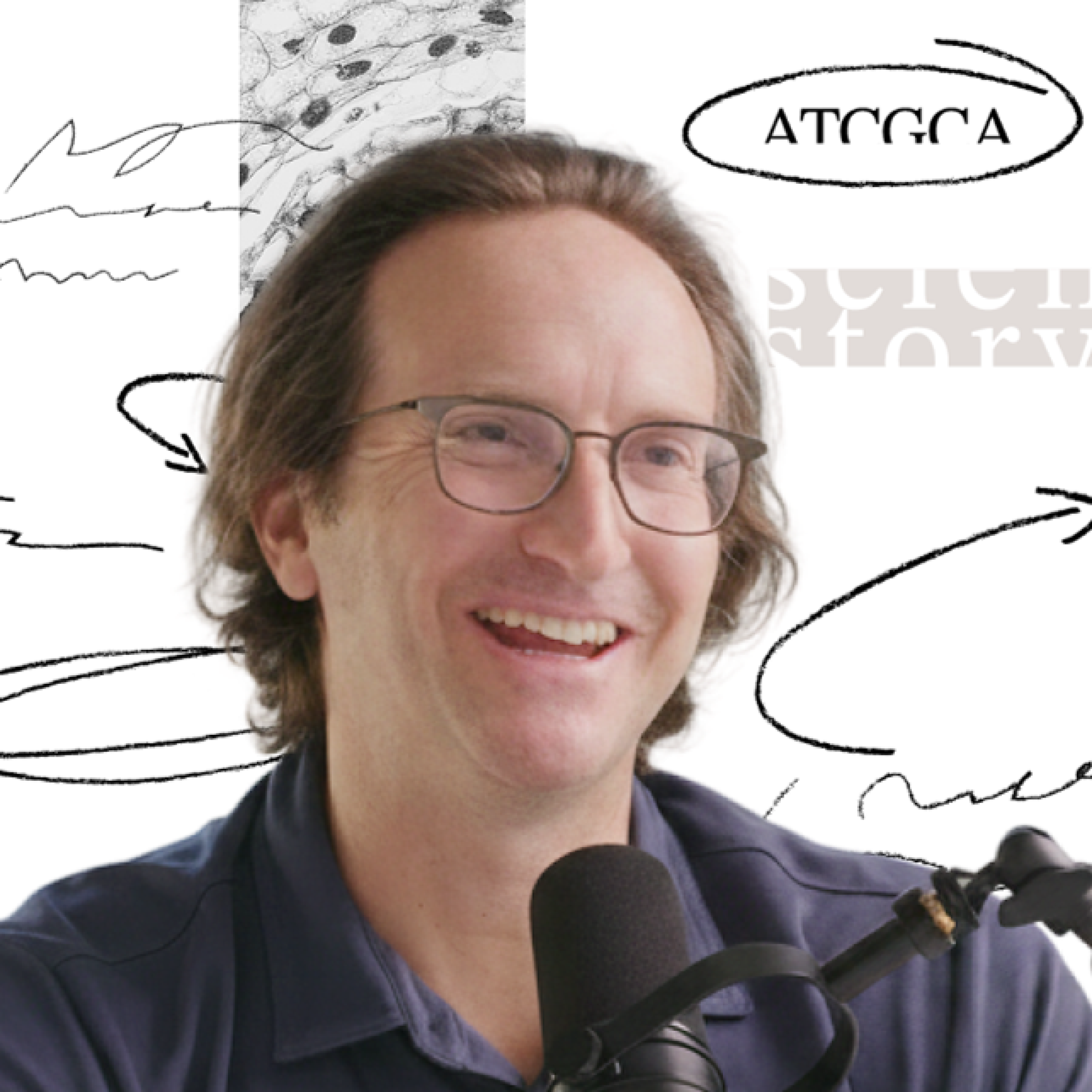
Jacob Berlin on why chemistry is the last frontier for AI drug discovery
from Transcribed
Jacob Berlin spent years perfecting a microarray chip the size of a fingernail before he thought about starting a company. Now, as cofounder and CEO of Terray Therapeutics, he's using that hardware to generate chemistry data at a scale the industry has never seen, and arguing that models without proprietary data aren't a moat at all.Jacob joined Benchling CEO Sajith Wickramasekara to talk about why small molecules are AI's hardest and most important frontier, where human chemists still matter, and what the agentic future of drug discovery actually looks like.Key Takeaways: ➜ The AI opportunity in small molecules is trickierthan in biologics because chemical space is infinite, and models without disruptive hardware to generate data at scale will keep hitting the same ceiling.➜ The durable moat isn't the model—it's the intersection of experimentation and AI, with Terray's dataset now 40x larger than the entire public chemistry dataset and growing by a billion measurements every quarter.➜ Experienced chemists still play a critical role in seeding novel datasets and catching model suggestions that look wrong but turn out to be breakthroughs.Chapters: [00:50] The elevator pitch (and science) that launched a family business [05:09] Why small molecules still demand reinvention [09:25] Building the stack in sequence: Hardware, then data, and AI [20:43] The true moat in AI drug discovery [29:33] Why the platform isn’t the finish line [33:42] Why we’ll always need humans in the loop [39:18] The future of AI drug discovery is agentic — and actually practical [42:15] Lightning roundAbout Jacob: Jacob is the CEO and cofounder of Terray. Terray was formed in 2018 around a new experimental technology that increases the scale while reducing the cost and cycle time for small molecule evaluation, creating massive amounts of highly precise data to fuel advanced computation and AI in the drug discovery process. Jacob and his team developed this breakthrough technology in his lab at the City of Hope, where he was an associate professor. Under Jacob’s visionary and mission driven leadership, Terray has built a world-class team of computation and drug development leaders, built an internal pipeline focused on new treatments for immunology disorders, established partnerships with global pharma partners, and scaled from that initial invention to a highly automated lab that supports the company’s AI and computational drug discovery and development platform.Jacob’s academic work centered on the intersection of nanotechnology and chemistry, and he has been recognized by the industry as an expert in the field, with numerous awards, and more than fifteen thousand citations of his work. Jacob holds 20 patents, a BA in Chemistry from Harvard and was awarded his PhD in organometallic chemistry from Caltech, where he studied with Nobel Laureate Bob Grubbs. Jacob completed his postdoctoral training at MIT and Rice University, focusing on synthetic chemistry and nanotechnology, before founding his lab at City of Hope. Jacob lives with his family in the Los Angeles area.💡 Learn more about Terray Therapeutics: https://www.terraytx.com/Guest Highlights: "What fits on our ultra-dense microarray, which is the size of a fingernail, would have previously fit on about half a tennis court.""I call it 'AI abundance.' You get to the end with 10,000 really interesting molecules, and a chemistry team that can make 50. How do you pick? Solving that optimally is really important.""Whatever you pick to start on is actually your business. If you say, 'We're going to start on this target just to show the platform works, and then we'll pick the real things to work on' — it never happens."🔗 Links: ➜ Connect with Sajith: linkedin.com/in/sajithw ➜ Connect with Jacob: linkedin.com/in/jacob-berlin-phd-57a82
What this episode covers
Jacob Berlin on building the world's largest chemistry dataset and why the AI drug discovery moat belongs to whoever controls the data, not just the models.
NOW PLAYING
Jacob Berlin on why chemistry is the last frontier for AI drug discovery
No transcript for this episode yet
Similar Episodes
Jul 1, 2026 ·51m
Jun 13, 2026 ·58m
May 10, 2026 ·48m
May 10, 2026 ·324m
Mar 26, 2026 ·546m
Feb 28, 2026 ·589m