
EPISODE · Jan 24, 2024 · 2H
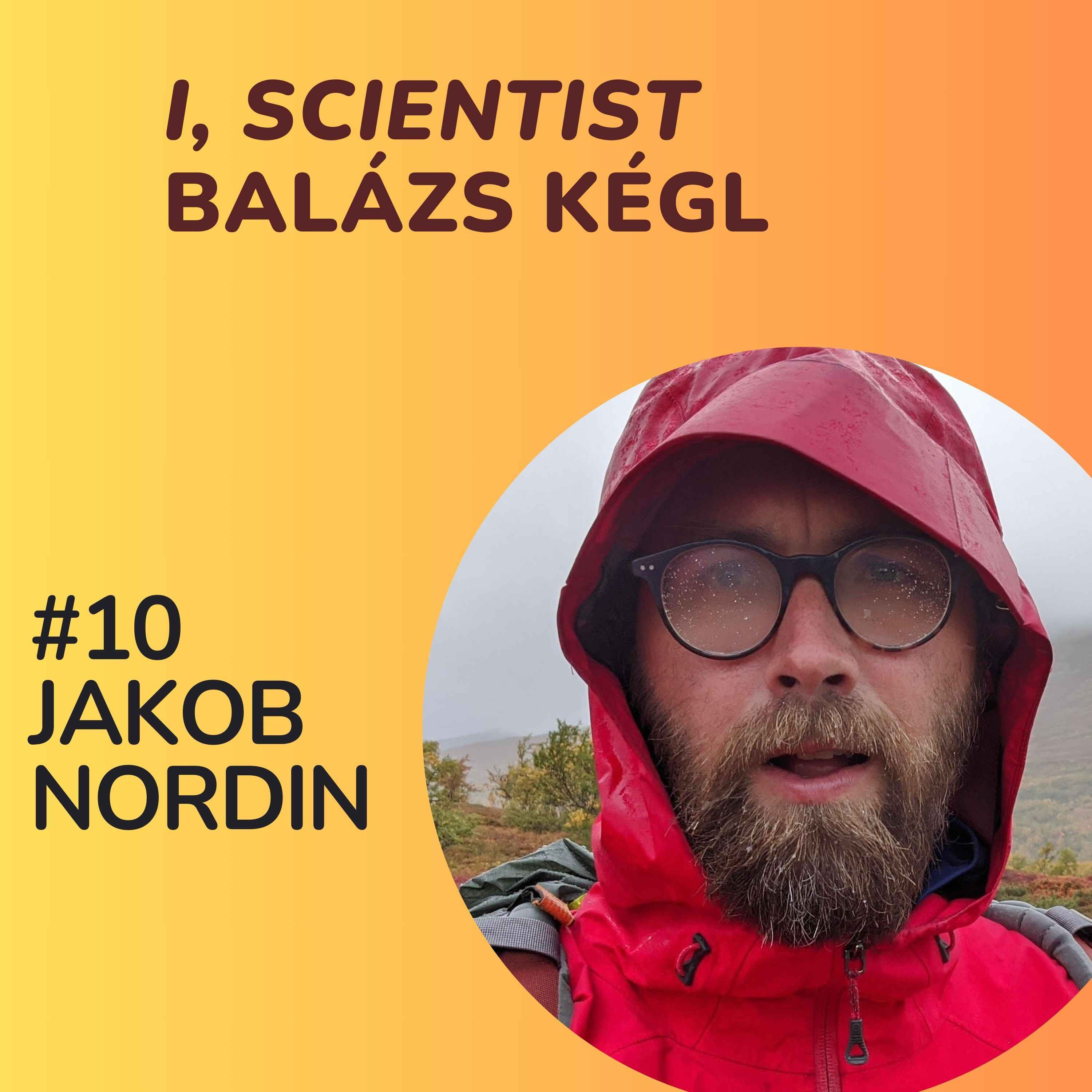
Jakob Nordin
from I, scientist with Balazs Kegl
Jakob Nordin is an observational astrophysicist from the Humboldt University, Berlin, member of the LSST collaboration building the Vera Rubin Observatory and the informational infrastructure to manage the immense data it will collect.Real-time astronomy & LSST: We discuss the intriguing potential of real-time astronomy, focusing on the Large Synoptic Survey Telescope (LSST), its technology and data processing challenges.Multi-messenger astrophysics & brain-like structure: Explored the fascinating concept of multi-messenger astrophysics, where various observatories act like sensors in a brain-like structure, collaboratively detecting cosmic events. Discussed how this network uses a semi-automatic system of alerts to direct scientific attention efficiently, highlighting the organic and evolving nature of this expansive, interconnected system.AI in astronomy: Explored how artificial intelligence is integrated into astronomical research, particularly in image analysis and classification within massive data streams like those expected from LSST.00:00:00 Intro. LSST.00:03:43 Universe as a lab. Astronomer, astrophysicist, observational astrophysicist.00:09:15 The space of astronomical observatories: what messenger, what energy, what field of view (patch of sky), what timescale?00:11:15 Vera Rubin Observatory and LSST collaboration: optical wavelengths, large field of view, detailed map and daily transients. Several instruments in one.00:13:17 Space or ground? Trade-offs and complementarity.00:16:16 Technology: Mirror and camera.00:19:20 Atmosphere. How to deal with turbulence? Exotic locations.00:22:01 Numbers. 7 trillion detections, 37 billion objects (transients).00:23:16 Categories of transients: noise, Solar system objects (planets, asteroids), Milky way (variable stars), extragalactic (giant black holes, supernovae)00:27:57 Alert rate: 10 million nightly events. 60 sec latency.00:30:54 Multi-messenger astrophysics. 00:39:27 Sociological paradigm change.00:43:45 Unknown unknowns. The similarities between multi-messenger astrophysics and a living multi-sensorial perceptual system.00:47:44 AI, what works what does not.00:52:38 Data brokers. Scarcity of resources forces a distributed TAME-like organization in science.00:59:02 AI. Noise filtering. Transient categorization.01:03:3 0 Training data: mostly simulations. Data augmentation.01:07:50 The sociological paradigm change: using telescope time to verify AI pipelines. 01:09:57 Instrumental meditation: AI models need to be calibrated.01:11:08 The price of knowledge. How to calibrate exploration?01:14:06 Why astrophysics? Curiosity + coincidence.01:18:16 What does a scientist do?01:21:05 Organization. Small groups evolving towards large-scale experiments.01:24:56 AI, software, data science, computer science, computer engineering. 01:29:20 Productionalizing AI. Big data vs. small data. AI is tough when models are exposed to reality.01:34:40 GPT for writing and coding. Hallucination and novelty.01:40:18 "Do I get the money?" Would I finance real-time astronomy? How to choose what to work on?01:43:02 Debates are overrated. Jakob's question: Can a podcast change what we do? Can a guest change how I live? You can change me if I want to become like you.01:51:05 Epistemic authority. How do we make decisions? How can we trust information?I, scientist blog: https://balazskegl.substack.comTwitter: https://twitter.com/balazskeglArtwork: DALL-EMusic: Bea Palya https://www.youtube.com/channel/UCBDp3qcFZdU1yoWIRpMSaZw Hosted on Acast. See acast.com/privacy for more information.
Embed this episode
Ready to play
Jakob Nordin
No transcript for this episode yet
Similar Episodes
No similar episodes found.
Similar Podcasts
No similar podcasts found.