
Hey, I'm Anna Sale, the host of Death, Sex, and Money, an energy show here at Slate. And I want to tell you about a very exciting event coming up in June. I am hosting a live episode taping at the Tribeca Festival featuring Peter Dinklage and his wife, Eric Eshnet. Peter Dinklage of Game of Thrones, my favorite film, The Station Agent.
And Eric Eshnet, who is a director, screenwriter, playwright. They are married, and we're going to talk about making art separately and collaboration and how they've built their life around that. Join us. It should be a great event.
It's their first joint interview they've done ever together. And we are so glad at Death, Sex, and Money to be back at the Tribeca Festival. The show is June 10th in New York City at the SVA Theater at 5.30pm. Get your tickets at TribecaFilm.com slash audio.
See you there. Hi, it's Willa. So more than a few years ago now, I was out and about in the world when I heard the Dolly Parton song, 9 to 5, playing. And as I was listening, something like this ran through my head.
Oh, I like this song. And I like the movie it comes from, the 1980s workplace comedy, co-starring part in Lily Tomlin and Jane Fonda, who actually produced the movie too. Fonda produced a lot of movies, didn't she? All of them were really big hits and had progressive themes, and had progressive themes because Fonda wasn't activist, although a lot of people really don't like her for that.
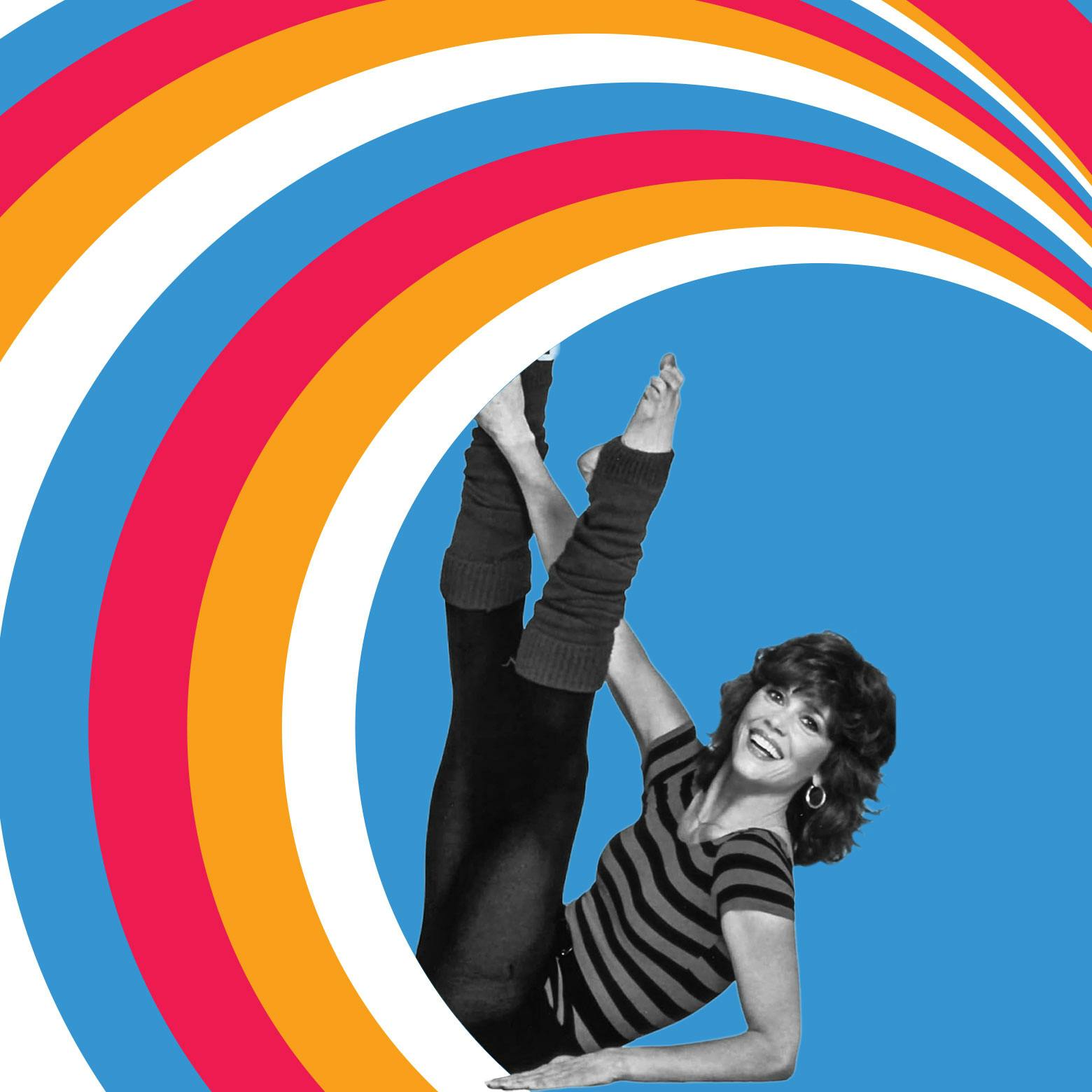
I remember her, though, for sure from the cover of my mom's vinyl record of the Jane Fonda workout, stretching her legs and wearing leg warmers. I can't swear that's exactly what ran through my head as 9 to 5 was playing, but it was something like that. And as this jumble of Jane Fonda thoughts ran through my brain, so did another one. Jane Fonda would make for a great decodering subject.
I mean, how do actress Jane and activist Jane and exercise Jane all fit together? So that's what you're about to hear. The first episode of our two part decodering all about Jane Fonda. This one is about how the Jane Fonda workout came to be.
Next time we'll play you the second episode about how the exercise tape fits into the career of Jane Fonda more largely. As you'll hear, these first came out in the summer of 2020, just a few months after the start of the COVID pandemic. It's a whole five years ago now, but this episode is still one of my very, very favorites. I hope you enjoy it.
I can see that you're here, but you're muted. Hi, Willa. Hi. Hello.
Hi. A few weeks ago, I had a Zoom call that I was really excited about. I'm Jane Fonda and I'm talking to you from Los Angeles. And I'm an actor and an activist.
There are so many things that one could want to speak with Jane Fonda about, but I just wanted to talk with her about one thing in particular, the Jane Fonda workout. Are you ready to do the workout? This is the beginner's workout. Stand with your feet a little more than this.
Just a part. Stomach tight. Pull down. Go out of your torso and head right to and back to.
In 1982, the Jane Fonda workout became the best selling home video of all time. For the next decade plus eight and its 22 follow ups with spawn a fitness empire sell over 17 million copies and transform Fonda into a leg warmer clad exercise guru. And 40 years after its initial release, the workout tape is having a moment. Like Amazon and yeast, it has been a beneficiary of the pandemic.
People are doing it alone and on Zoom. They're tweeting about it, writing about it. Jane Fonda, TikTok about it. TikTok, my name is Jane Fonda and I'm going to bring back the Jane Fonda workout.
The workout is in the air and I figured that's why she agreed to speak with me about it. She had one condition though. I only do the interview if she could do it with a woman named Lenny Kasem. Lenny Kasem and I have survived all these years.
Jane and Lenny have known each other for over 40 years. They met in the late 1970s when Lenny was the instructor of an extremely popular exercise class in Los Angeles. And Jane, a lifelong ballet dancer, needed a new form of exercise. I want to interrupt.
Lenny, your face looks so beautiful. I actually had a makeup person come before it was audio. But I'm happy about it. In the four decades since their initial meeting, there has been a lot of water under their bridge.
And within seconds of starting to speak with them, it became clear to me that that water and not an oral history of the Jane Fonda workout was going to be the subject of our call. This is an important interview that we're doing, Willa. And let me explain why. And I'm very moved that we're going to do this.
I have become famous for the workout. It's been known as the Jane Fonda workout. But the person that created the workout was not me. It was Lenny Kasem.
Jane has written and spoken about Lenny, but they had never done an interview together before this. She was doing it now to try to credit Lenny and to make amends for a wrong sheet on her back in the 1970s. I did not really understand who Lenny was and what the workout meant to her. It was like this was, this is her Sistine Chapel.
She put it together deliberately and it was her life. And I am sorry to say that I didn't really realize that. Lenny, for her part, appreciated what Jane was doing. She wants the credit that she deserves.
She also wanted to make it really clear that she's fine. She's good. She's not fixated on any of this. I'm loving my life and I'm happy and I'm so glad because in today's world, you better be healthy.
This dynamic happened all call along. Jane wanted to bring it back to Lenny. Lenny wanted to bring it back to how she's fine. Meanwhile, I just wanted to talk about the exercise tape and how it was made, even though the tape itself was made years after Jane and Lenny had fallen out.
I got off the call thinking, I can make this work. I can do the episode that I've been imagining and reporting about how the 1982 exercise tape came to be. But that's not really the episode they want me to do. They want me to do an episode about Lenny.
I'm not going to do that, though. But I had always been planning to follow up with Lenny, to take a detailed personal history, which would have taken up too much time on our call with Jane. And it was during the second call that I began to wonder if the conversation I'd had with Jane and Lenny, which it seemed so sweet and lovely as to be almost cloying, might not have been a lot more complicated than I'd first thought. Was it OK for you that last fall?
I thought it was good. What do you mean with Jane? Yeah, with Jane. Yeah, yeah, yeah.
Yeah, well, that's the first time we talked about it, actually, in our life. Really? Yeah, so there's a lot going on. Yeah, I could tell.
I mean, I was like, I shouldn't even be here. You're just talking. Yeah, we made an appointment about, I don't know, 20 years ago to meet with our therapist and I was going to lay out all the pain and agony and everything. And that was a nine o'clock appointment at 630, the biggest earthquake happened.
And I just said, wow, I knew she was powerful, but God, that's really powerful. We never had the meeting. And so you. What started to realize was that within the subtext of my Zoom conversation with Jane Fonda and Lenny Kasdan had hung the weight of decades of friendship and difference betrayal and love.
A subtext I was only just beginning to get glued into. What had gone on between these two women? What was going on with them now? And why on earth was I a witness to it?
It turns out, in agreeing to talk to me, they hadn't just given me an interview. They had handed me a kind of puzzle, a jigsaw portrait of an extremely long, fraught relationship. It's not what I had been expecting or looking for. But when Jane Fonda hands you a jigsaw puzzle, you try to put it together.
This is Decodering, a show about cracking cultural mysteries. I'm Willa Paskin. We're going to do something that we haven't done before, a two-parter. In two weeks, we're going to do the episode we were planning to do all along, about the 1982 workout tape and all it wrought.
It's a story that involves the creation of the modern gym, basically the entire VHS market, dozens of ridiculous celebrity exercise tapes, and that hinges on the changing ways we've seen Jane Fonda, one of the most substantial and controversial celebrities of the last 50 years, the Vietnam War, and her activism there. But we're going to start with something more intimate, the story before the story, a look at the complex relationship that birthed the workout in the first place. It's a tale about creation, regret, fame, forgiveness, trauma, survival, politics, and exercise. And when it's done, hopefully you'll know more about someone you didn't, and also more about someone and something that you did.
So today on Decodering, who created the Jane Fonda workout? Today I'm keeping another promise by nominating Judge Neil Gorsuch. Thank you very much. As we all live through the chaos of another Donald Trump presidency, it can be easy to lose sight of his most troubling legacy.
The US Supreme Court has reshaped the country's legal landscape on abortion, guns, religion, and more. And when we're taking on Trump's first Supreme Court pick, we'll look at the influence that Neil Gorsuch has in this moment. He is the most unpredictable vote on this court, including his surprising pushback against the president who nominated him. Nobody saw the Gorsuch who would join the majority on this.
He is the Justice, most likely to be a true wild card. This is judicial activists. Slowburn, becoming Justice Gorsuch. It's a story that will shape America for years, even lifetimes to come.
Out May 13th, wherever you get your podcasts. To begin to put together our puzzle, we need to start with the part with the most missing pieces. I had heard of Lenny Kasan before I spoke with her. Jane credits her with creating the workout in her autobiography.
And I'd reached out to her before Jane's people had even suggested we do a three person interview. But I hadn't heard that much about her. My first glimpse at Lenny's past came on the call with Jane and Lenny when Jane spoke in broad strokes about Lenny's history. People who are listening to this broadcast, who have had a difficult life, who have had challenges.
I can tell you one thing. I have never met a human being that has had a more challenging life than Lenny Kasan. And I'm so proud of her. And I just want to say that.
Make me cry. Thanks, Jane. I know what Jane was alluding to. So when I spoke with Lenny, one on one, I asked her.
If you're comfortable, I want you to tell me some of what was going on in your life that was making things so crazy hard. Oh, well, I just had the worst childhood for parents. And I know there was a parent who gets a phrenic with bipolar, outside complicated by alcoholism, just for openers. And then I didn't know my dad.
I think I met him around 12 years old. And so I was just a tomboy. I could run away and nobody missed me. My mom was always surprised to see me when I walked in.
She'd go, oh, hey, hey, how's it going? So I was virtually on my own from almost day one. Who spells her name, L-E-N-I, grew up in Newport Beach, California in the 1950s. She remembers getting on a swing with some other little girls and being told, you can't swing with us.
You're too ugly and running off to hide. She remembers jumping off railroad cars with her friends. If she got scared because the train was going too fast to jump off, she stayed on until the next stop and then walked to the tracks back home. And she remembers roller skating.
One day a woman zipped up to her at the rink. I think she got it was a boy with the name Lenny in my ear. I had cut it a barbershop. She came up to me and she really handled those skates.
She invited Lenny to a club meeting at that Sunday night. Lenny went and started competitive pairs roller skating, which is very similar to Paris ice skating and was at the time enjoying its first major wave of popularity in America. This is roller skating, America's favorite fun sport, a wholesome year-round recreation. One of our truly great all-American participants sports.
Skating changed Lenny's life, saved her life, she says. She was looking for structure, she needed a structure, an athletics and exercise with coaching, guidance, discipline, they gave it to her. But even the skating couldn't stop what was going on at home. I kept getting thrown in what I called jail, but they called it protective custody.
Because my mother would break down, they would put her in a state mental institution and there was no one else. So at 16, I married my skating partner, which made me an adult. So now everybody can have their breakdown and I'm good. Her husband, who had been president of her roller skating club, was about 20 years older than her.
It started a pattern for Lenny, I've getting married in times of doubt. I was 16 when we got married, had two children by the time I was 20, I lost the first one to SIDS. The second one survived, she's walking around right now, I love her to death. Lenny's daughter Lori was in the room with her while we were talking, chiming in sometimes to jog her mother's memory.
You may hear her at certain points in the audio. Lenny's first marriage didn't last very long, and by the time it was over, it was the 1960s. I really would have won medals as a hippie. I mean, I ripped through the 60s like big times and had a little baby on my hip and we'd go to the love ends and all the concerts and we just went up and down the coast.
She got married again to a doctor. When they got divorced, Lenny, it was all of 25 or 26, realized she needed some discipline back in her life. She got seriously into dance, going to a dance academy to learn how to teach, and she also got seriously into psychoanalysis. One day her analyst suggested she go to her daughter's school and offer to teach the students to dance.
So I went there and we got the six-way boys and we decided we danced and I worked hard and we put on a performance that knocked everybody out. And that was the beginning. It was the beginning of Lenny's career as a fitness instructor. So before going forward with Lenny's story, I want to go back and give you some context about the dance-inflicted fitness world Lenny was about to enter.
Americans first really started paying attention to fitness as a way of being healthy, living longer, and staving off heart disease in the 1950s. But at that time, there were a lot of things about fitness that we did not know yet. Exercise, how long do you do it for? How sweaty should you get sweaty?
There are plenty of people asking their doctors, you know, should I exercise? How long? And doctors don't know what to say. Shelly Mackenzie is the author of Getting Physical, the Rise of Fitness Culture in America.
And in fact, there are some anti-exercise physicians saying that it's a bad idea, saying that you're born with a finite number of heartbeats and that exercise is going to make you use them up too fast and that, you know, too much bigger exercise will kill you. Even experts and instructors who were sure about exercises' benefits tended towards workout routines that seem by today's standards fairly unstrunuous. And this was especially true for women who weren't supposed to be doing hard physical exertion for social reasons as well. Jane Fonda.
Up until the 70s, there was no workout for women. If you went to, like I did, to the Beverly Hill Women's Health Club in Beverly Hills, Lenny knows this, what you did was you stood on this thing with a strap around you and it kind of made you remember that. That was it. It was like tenderizing our behinds, right?
Tenderizing our behinds. But women weren't supposed to break a sweat. Women weren't supposed to have muscles. It just didn't exist.
This started to change in earnest with a couple of best-selling books, one of them, Arobex, by a former Air Force surgeon named Ken Cooper, was published in 1968. It contained concrete steps for assessing and improving your fitness level and sold millions of copies. Before the book by Bill Bowerman, the track coach and future co-founder of Nike, it would kick off the jogging craze. But Cooper's book also inspired another set of people.
Women dancers. Shelly McKenzie again. People are hearing, get exercise, get exercise, get exercise. The acceptable sports background for women, if you think about it, is dance, right?
That's where women are allowed to get sweaty and to use their bodies over the course of those 70s. What happens is that women who have dance training in various parts of the US are figuring out ways to accomplish the fitness goals, but they do it by setting dance moves to... Hey, you're a good thing. Hey, I have sugar.
Come on, and shake that cute little booty of yours. Ow! Jazarside, an enthusiastic workout in the spirit of a jazz dance class, was founded in 1969 by Judy Shepard-Massette. It was, to quote some of its press materials, a jazz-filled fitness program that conditions your body, lifts your spirit, puts a smile on your face, and a bounce in your step.
Jazarside wasn't the only dance-based exercise program to take off in the 1970s. A woman named Jackie Sorenson founded Arobic Dancing Around this time, which though less well-known today was just as influential. These fitness programs and others like it spread grassroots style, women to women across the country. The women teaching these classes tended to wear leotards and leg warmers because that's what dancers were, and they weren't dancers.
The classes usually took place in any space that was big enough, community centers, churches, school basements. By the mid-1970s, this style of exercise, while by no means everywhere, was popular enough that a small handful of boutique brick and mortar studios had started to pop up in cities like Los Angeles. And this brings us back to Lenny Caston. Lenny is of course also a female athlete from a dance and roller skating background.
After working with the sixth graders, her first job was at the aforementioned Beverly Hills Health Club, which had an old, sleepy, affluent clientele. She took over a half-hour exercise class and made it her own. She stretched it out, started with a warm-up, and then isolated the different muscle groups in a taxing, rapid sequence that includes poses from ballet and other dance disciplines. She spent hours and hours in her living room, timing and counting out the different sections, figuring out the right tempo, the right order, so everything fit together correctly.
It had a beginning and a middle and an end. Basically, it was choreographed. It's really just kind of a reorganized dance class. If you're curious about what Lenny's class was like at the time, it was faithfully reproduced by Jane in the Jane Fonda Workout Challenge, a follow-up to the original workout tape that came out in 1983.
Lenny's class was so hard that Jane had modified and shortened it for the original workout tape. There's something missing from that clip, though, that Lenny's class has always had, and that the previous instructors who had led the class with snapping and clapping hadn't used. Hot music, vinyl records of say Fleetwood Mac, Stevie Wonder, Al Green. When I got in there, I asked if I could add music to it, and then all of a sudden there was no room.
It was just a hassle. One. Make sure your torso was lined up with legs. Lenny became an in-demand instructor.
She worked for a little while at Richard Simmons' exercise club, the Anatomy Asylum, and she came to the attention of Gilda Marks. Marks was another exercise pioneer with a dance background, who owned a number of upscale fitness studios in LA called Body Design by Gilda. One day, she went to scope out Lenny in person. And so Gilda walks in and a complete disguise with a hat, coat, sunglasses, and a cane, okay?
Which is so obvious in the middle of summer. She was coming down to see me teach. She needed to hire someone to teach in her studio in Central City, and I wouldn't go unless I could teach my own theory. I didn't want to do it anybody else did.
So it's 1978, and Lenny's teaching in a penthouse studio in Century City, and that's when Jane Fonda walks in. I had made a movie called Trying to Send Room, and I broke my foot doing that, and I was the next movie I was going to do was called the California Suite. I had to wear a bikini, and I was used to doing ballet. That was my form of exercise.
I was panicked because I had to get in shape, and my stepmother said, well, I go to this workout, and so I went. I had never done calisthenics. I didn't know from aerobics. I walked into this room.
There was this person in the front, Lenny, this tiny little person with short brown hair, with a fabulous boyish body that was just like perfect. And the room had about 60 people in it. She put on some music. If they were records, they were vinyl records.
She dedicated the class to the first woman to have ever sailed around the world. And she started. It lasted an hour and a half. It never stopped.
The next day I couldn't move. My body had never been through anything like it. I fell in love. I was blown away.
I had never seen anything like it. I became addicted. Today, I am keeping another promise by nominating Judge Neil Gorsuch. Mr.
President, thank you very much. As we all live through the chaos of another Donald Trump presidency, it can be easy to lose sight of his most troubling legacy. The US Supreme Court has reshaped the country's legal landscape on abortion, guns, religion, and war. I'm Susan Matthews.
In Slate's new season of Slowburn, we're taking on Trump's first Supreme Court pick. We'll look at the influence that Neil Gorsuch has in this moment. He is the most unpredictable vote on this court, including his surprising pushback against the president who nominated him. Nobody saw the Gorsuch who joined the majority on this.
He is the justice, most likely to be a true wild card. This is judicial activists. Slowburn, becoming Justice Gorsuch. It's a story that will shape America for years even lifetimes to come.
Out May 13, wherever you get your podcasts. So to go forward and fit in a few more puzzle pieces, I have to go back again to fill in the history of the other person in this story. I have to talk about Jane Fonda. Jane Fonda.
Actress. Author. And award-winning creator of one of the most innovative and inspiring approaches to physical fitness. Jane Seymour Fonda was born in December of 1937, the daughter of Henry Fonda and Francis Ford Seymour.
Jane adored her father, an emotionally remote movie star who appeared in films like Rapes of Wrath and 12 Angry Men. Jane's mother was bipolar and her mental health got worse as Jane got older. She was hospitalized frequently and when Jane was 12, she died by suicide in a psychiatric facility. Jane was told it was a heart attack and only learned the truth after reading about it in a movie magazine.
As this anecdote suggests, Jane grew up in a family that did not talk about feelings. In her autobiography, My Life So Far, she writes extensively about learning from a young age that she should suppress her emotions and stoically soldier on, which made her extremely competent but often totally alienated from herself. She began appearing in movies in 1960, though her first film, Tall Story, like many of her earliest pictures, was not particularly distinguished. In 1965, she appeared in her first really notable film, Cat Ballou, a western comedy in which she played the title character.
That same year, she married the French director, Roger Vadim, with whom she would soon collaborate on 1968's sci-fi pop art movie, Barbarilla. In that movie, Fonda plays the title character, a representative of a US government who frequently finds herself wearing little to no clothes on a groovy and futuristic space mission. Barbarilla is still one of Fonda's most famous roles, and she's very winning it, both hilariously wide-eyed and totally in on the joke. But it, like all of Fonda's parts up to this point, are not quite what I think of as quintessentially Jane Fonda roles.
They don't make full use of her ability to project intelligence and a barbed vulnerability. The qualities would only get their first proper showcase in her next film. 1969's They Shoot Horses, Don't They. Dark as a Black Hole, They Shoot Horses Don't They, for which Fonda would receive her first Oscar nomination, is about a depression-era dance marathon, whose contestants are so economically desperate they're willing to die on their feet from exhaustion to win a little bit of money.
Fonda plays the bleakest of all the competitors, in an uncompromising performance that established her as a different kind of actress than people had thought. The historian, Mary Hershberger, in her book Jane Fonda's War, a political biography of an anti-war icon, noted there were a lot of resonances between They Shoot Horses Don't They and the still raging Vietnam War. The dancers are told they can survive if they dance to victory. They sleep in barracks, basically.
Doctors and nurses fix them up and send them back out to compete. Hershberger writes, audiences in 1970 were not indifferent to the symbolism. The film established Fonda as a person to whom politics mattered before she first spoke out publicly on the war. But she would soon speak out publicly on the war.
In France with Vadim in the mid-1960s, Fonda had paid little attention to the news. But that changed in 1968 when pregnant she had to go on a month of bedrest. One footage of what was going on in Vietnam on TV began to pay attention. Soon after she was given a book by a young GI and army resistor titled The Village of Ben Suke by Jonathan Shell, which had first been a series of articles in The New Yorker.
It's about the US Army's leveling of a Vietnamese farming community. And it politicized her. All the deaths on both sides, be they the liberation, people struggling, or the argon troops. All of those deaths are American responsibilities.
Because South Vietnam and the division of Vietnam is an American invention. She moved back to America and got a divorce. Do you ever miss living in Europe? No.
I was at the time of the Chicago Convention and the riots. I went to the fish market and I suddenly said, what am I doing here? What am I doing here? And I moved.
We're going to explore Fonda's activism and the reaction to it in detail in the next episode. But for right now, what I want you to know is that at this point, Fonda is a full-time activist as well as an actress. In 1971, she starts in the thriller Clute, where she gives a monumental performance, a watershed in American Screen Acting as the sex worker, Brie Daniels. A part she performed while feverishly doing anti-war work during set breaks.
What's the difference between going out on a call as a modeler as an actress is a call girl? You're successful as a call girl. You're not successful. Because when you're a call girl, you control it.
That's why. Because someone wants you, not me. There are some John's that I have regularly that want me and that's terrific. In 1972, she went to Oscar for her performance and later in the year it goes on her infamous trip to Saigon, the one that will later get her branded, Hanoi Jane.
After the triumph of Clute, Fonda steps back from acting to focus on her anti-war work, appearing at only a handful of movies over the next five years. She cared about acting, but social justice was more urgent for her. Here she is in the late 1970s on Boston's The Gadde Show, talking about this period of time. I have to give up a film career because of my politics and I might have to again and I would be prepared to do that.
But I would be miserable because I take my work real seriously. Fonda appeared on The Good Day Show with her second husband, Tom Hayden. When asked what was the greatest award you've ever had to answer this way? Oh God, I think I wanted Tom wanted to marry me.
Hayden was a movement heavy. He was the author of the Port Huron Statement, the founding manifesto of the student activist movement. He'd been a key member of students for a democratic society and he was a leader at the 1968 protest of the Democratic National Convention, which had been prosecuted by the Nixon administration as one of the Chicago 7. Fonda and Hayden met through activism and their romantic relationship from the start was completely intertwined with it.
In 1976, with the award finally over, Fonda began acting in earnest again and Hayden sought public office. He primaryed California's democratic senator and lost. Afterwards, Fonda and Hayden started a political action committee called the Campaign for Economic Democracy, CED, which tried to enact progressive leftist policy in California. Their appearance on the Boston talk show was part of a press tour for CED, not one of Jane's movies.
Well, I should tell, I think everybody's aware of the fact that you're at a new organization going. The CED fights inflation and guess results. All right, I'll have to bat you. You're going to have zero income and energy, housing, health and safety, economic justice, and women.
Have you had protesters? The Ku Klux Klan, the Nazis and young Americans for freedom. From the start, the CED was funded in part by Fonda's earnings and Fonda's career was going better than it had ever been. She'd gotten really good at melding her values and her art.
Starting in 1977, she had a string of critical and commercial successes, many of which she developed herself that had politics and a point that used Fonda's activist brain but that also worked as movies, which is very rare for a typical issue film. Probably the best known of these today is the feminist revenge comedy 9-5, which Fonda co-starred with Lilly Tomlin and Dolly Parton. But before that, she made coming home for which she won her second Oscar about her turning Vietnam vet and the China Syndrome, a film about the dangers of nuclear power and unethical businesses that came out just days before the Three Mile Island disaster. We're on here.
I met Jack Adele two days ago and I'm convinced that what happened tonight was not the act of a drunk or a crazy man. Jack Adele was about to present evidence that he believed would show that this plant should be shut down. It's on the China Syndrome. The Jane breaks her foot and has to stop ballet dancing.
And so it starts looking for other ways to exercise. And that brings us back to where we started from, in 1978, in a penthouse exercise studio in Los Angeles. So Jane, trying to get in shape for a forthcoming movie, starts coming to Lenny's class every day. And the days there aren't classes she hires Lenny to teach private ones at the Barbara Thrys and Sisters apartment where Jane Fonda's ranch.
Lenny even makes Jane a vacation location cassette tape to use when she's not in LA. And Jane starts teaching the routine to the female staff on one of her movie sets. They're spending a lot of time together, but they're not exactly intimate. When you have a life like mine and someone asks you, that's the worst thing.
I think the reason my class has never stopped is I didn't want anyone to ask me anything. She was a very mysterious little character. She was this little person who would come in and do this thing for an hour and a half that people became totally addicted to. And then she would disappear.
Yeah. I was kind of like Johnny Carson. Jane was struggling with her own things too. Well, I was totally compulsive.
I had been bulimic from age 15 to in my 40s around this time. And I had gone cold turkey. You know, it's very hard. It's hard to give up an addiction and it was very hard for me, but it was a matter of life and death.
And with what the workout did for me was fill in that hole. It made it easy for me to not go back to having eating disorders. It was a way that I could kind of control my body without having to do bad things to it. So here they were, two people who saw a lot of each other, but maybe didn't know each other as well as they thought.
And then they decided to go into business together. It starts in Jane's telling when she and her husband, Tom Hayden, were trying to figure out how to raise more money for the campaign for economic democracy, which was very expensive to run. She read an article about a fringe political character who funded his organization with a sideline computer business. Tom and I said, oh, wow, we got to start a business that can fund the campaign for economic democracy.
And we thought of all kinds of things. And then one day we had a ranch that was a children's camp up north of Santa Barbara, and I was, Lenny and I were going up there and she was in the car ahead of me. And I remember we stopped for gas. And I remember exactly where it was.
And I thought, oh my God, this could be the business. The idea here was not to film a best selling workout tape. It's 1978. Video is barely a thing.
The idea instead is to open an exercise studio based on Lenny's exercise technique. The two of them throw themselves into the project. Lenny's scouting locations and hiring staff and talking to architects. We pick out a space on Robertson Boulevard in Beverly Hills and a name Jane and Lenny's workout, but there are no contracts, no official deals of any kind.
And Lenny, for her part, doesn't even know that the whole point of the business as far as Jane is concerned is to fund the CED. It's when they start to make everything official, that it all goes pear-shaped. So I need to give you the basic gist of what happened because it's hard to parse just from what Jane and Lenny said on the call. Going into the call, I had this just myself because Jane wrote about all of this in her autobiography.
Jane said she was persuaded by her lawyer that would make the most financial sense to have CED own the business. Even though this would shut Lenny out. At the time, Jane could only see the forest, not the trees, only the CED and the value of its work, which was so intertwined with her marriage that Lenny became an afterthought. And as it's going down, Lenny just removes herself from the situation.
She tells Jane that she's met a man with whom she's going to sail around the world and she leaves, abdicates with nothing to show for it. Lenny and I went and had lunch. She just told me that she felt that given the way things were going, she didn't see her place in it very clearly and that she was going to go sailing around the world. And that's what happens.
I feel badly that she never got the credit publicly that she deserved for the workout. Thanks. On the phone with Jane, Lenny pretty much matched her tone. Well, we didn't do it together.
I had this guy who wanted to get married and sail around the world. He was building a 76-foot cutter named Free Spirit that was gorgeous. I thought, well, and I was used to working alone and without an education and all of a sudden, people are talking about other things and I go, wait a minute. Wait a minute.
It got too business-like, I guess, or something. I don't know. Did you have, did you have, like, at the time, like, did you have any feelings about, like, it took over the world? Like, was that, how did that make you feel?
Like, what did it feel like? I just felt kind of bad that I had a lot to do with it, but I couldn't tell anybody because it looked at me like I was nuts. So I just never mentioned it, sucked it up. Hey, it is what it is.
I'm not sorry about it. I mean, I've had a phenomenal life. It wasn't like I went left and went into the ditch. I sailed around the world on an amazing boat.
As you can probably tell from my fumbling question, as I was on Zoom listening to all of this, I was thinking, Lenny's holding back. Like, we're talking about getting elbowed out of a million-dollar business based on one's own work. It's super enlightened or that has to have sucked way more than she's letting on. But that's what people do with journalists all the time.
They put on their best face. So even as I was thinking, this is kind of whitewashed. I was also thinking, this is just the version of the story that Jane and Lenny want to tell, one with a mutual admiration dialed up and the edges, the conflict, dialed down. So what happened next surprised me, which was that on the phone, by herself, Lenny was ready to get right into how painful this had all been for her.
Jane handed me a contract which might as well have been a job application. She wanted me to sign a contract. We actually had a lunch. We were sitting at a table and she looked at me and she said, this is going on with or without you.
And that was that. I mean, it just literally took everything from me. I didn't have anything else to do. It destroyed me of the top three things and I lost a child.
That's one of them. When she was talking to me, Lenny repeated a phrase a couple of times. They weren't thinking about me at all. For a person who grew up with a mother who always acted surprised whenever she showed up, who in other words was not thinking of her nearly enough.
This whole situation felt horribly familiar in a number of ways. It was pretty bad and it reminded me back on the schoolyard where you're too ugly, you can't swing with us. So she did what she knew how to do. She laughed.
In her own words, she went on a soul retrieval out on the ocean. It wasn't just a man who'd become her third husband was building this beautiful boat. Lenny's father, who she met when she was around 12, had been a world-class sailboat racer too, sailing meant something to her. She was out on that boat for six years.
And it's while she's on that boat, that the workout business, one that no one had had such high expectations for, just takes off. Lenny's not there when the exercise studio, now called simply the workout, opens to the public in Beverly Hills in 1979. She's not there when it becomes an immediate smash, serving 70,000 clients a year. She's not there when it expands to Encino and San Francisco when it becomes a best-selling book when it becomes a chart-topping video, and then another video, and then another, minting money all the while.
Even on the other side of the world, Lenny hears about it. It was real tough on me hearing about all, oh, it's a cash cow, oh my God, it's making so much money. I walk in a hotel in New Delhi, India. There's a life-size cutout with all her videos.
The whole thing is such a hot property that everyone wants credit for it, even as Lenny, whose technique is the bedrock of the whole enterprise goes unmentioned. Here's Gilda Marks, the fitness entrepreneur who came to scope out Lenny's class in disguise and would employ Lenny in her studio when Jane met her, saying Jane's doing her technique in a 1983 interview on Canadian TV. Jane Fonda, who began her exercise career in my studio, learning the body design program, has made it a way of life for herself and millions of people. She's made a fortune.
She's just done an incredible thing in bringing the awareness of the body design program to millions of people. If she worked out with you for seven months, didn't she preparing for California's week? Longer than that. Yes, uh-huh.
When Lenny returned from her soldier in On the Ocean, it was to a whole new fitness scene, one that had been so altered by the Jane Fonda workout that people were now wearing sneakers and instructors talked into microphones, which would have been unfathomable in the 1970s. She eventually integrated back into this new world, though, and became a personal trainer. Jane spent much of the 80s focused on the workout business, but in 1991, divorced from Tom Hayden, she married the CNN sounder and billionaire Ted Turner and retired from acting. So if you were to have made in the early 1990s a movie about the Jane Fonda workout and all of its success, those two things I just said about where Jane and Lenny end up would be like the pieces of text that flash at the end of the film, telling you how everything turned out.
The story of the workout, it seems like it's over, but this isn't just a story about the workout. It's a longer story about the relationship between these two women. And that story is just about to pick up again. Jane and Lenny Sagar restarts in the mid 1990s when Jane walks into another Los Angeles jam.
18 years later, she walks into pro jam and I'm standing there and she goes, Lenny, like that. And I said, I know you thought I was dead. They sit down and talk and after everything that happened, they start a tentative friendship. We stayed together.
We stayed in touch. She was telling me her life story. I said, I have no idea. I didn't know any of this.
And she said you never asked. And that was how I really started asking her about her something getting to know her. Lenny filled in some more detail. She said a few days after she and Jane ran into each other.
Jane's husband, Ted Turner gave her a call. I get a call from Ted. He says, hey, I need to work out. Maybe you could work me out.
I said, okay. So he came in, worked him out. Of course, we hit it off because I was there when he won the America's Cup because I'm a sailor. In 1977, Turner, when the world of yacht racing really did count as a scrappy underdog, had won the America's Cup and become one of Lenny's heroes.
A few days later, Jane and Ted invite Lenny to Colorado where Ted was giving a commencement speech. And then we were sitting there and then he says, well, I'd like you to see my ranch. And I said, okay. And she became a friend of me and Ted, you know, and whenever we came out here, we would go to dinner together and, you know, and Lenny would come with us to place some pretty amazing things, actually.
In my life so far, Jane's autobiography, Jane even says that when she found out Ted Turner had cheated on her, she holed up in a hotel in Beverly Hills. And the only person she told was Lenny would come every day and give her coffee nips candies and hold her ham. Lenny was Ted's trainer and they'd become close friends. He would walk her daughter down the aisle and he kept calling, trying to get her to get Jane to give him a second chance.
She did. Jane had Ted meet her at Lenny's apartment where he won her back. As it suggests, they were all close, but they did not talk about the workout. I never confronted her on it.
I don't think there would have been anything to gain by bringing that up. They were inviting me to incredible places, showing me their ranches. I just, just thought that getting along is a lot better than bringing up something 20 years ago. Actually, that's not entirely true.
At one point early on in their new friendship, Lenny set up a therapy session where she planned to lay it all out for Jane with both of their therapists there. But as she mentioned at the top of the episode, there was an earthquake instead. And I just said, wow, I knew she was powerful, but God, that's really powerful. This session was never rescheduled.
But after that, Lenny's daughter, Lori, wrote Jane and Ted a letter about how important it was to her mother to get a chance to talk about how devastating everything that had happened with the workout had been. It was at that point, still without talking about it, that Lenny was given some financial remuneration. She didn't say exactly how much, but it was enough to live comfortably. And after that, stay sis.
No one talked about it. After Jane and Ted got divorced in 2001, Lenny stayed friends with Ted. They're still close. And she and Jane didn't have a lot to do with each other.
The whole thing, though, it niggled at Jane in must have, because she wrote about Lenny in her 2005 autobiography, My Life So Far in a Self-Critical Way. In it, she starts, What Happens Then is Painful to Write About before going on to say that she let her lawyers frame everything and got into an adversarial relationship with Lenny because she was focused on the CED. It's a couple of pages in a 500 page book, but it makes really clear that Jane feels lousy about what happened, that she thinks she did Lenny wrong. I mentioned this part of the autobiography a few times now, because it's exactly the thing that kept tripping me up, the piece of the puzzle I could not find the right place for.
Because of the autobiography, it's a matter of public record that Jane feels bad about what happened. Every time I spoke with Lenny and she said, we've never talked about it, I couldn't comprehend what she really meant. I kind of felt sorry for you, because I feel like you stepped into something that was never solved. I know.
And I don't know if I talk to you, but I'm having such a hard time wrapping my brain around that I need some concreteness. I got that they had never spoken about it in detail. But there are details on the autobiography, and I figured Lenny must know about that and know how Jane felt about all of this, because I know how Jane felt about all of this. And I don't even know Jane.
All I'd done was read her book. But that's exactly what Lenny had not done. I mean, she talked and written about some of this stuff. She has?
Yes. In my life so far, she writes about you. I ended up reading the section out loud to her on the phone. It is important that I tell the story and that Lenny finally got the credit due to her for her original routine.
Wow, where did you find that? It's literally in her autobiography. This is the first I've ever heard of that. It's funny, because in a case like this, explaining what happened publicly counts for a lot.
Lenny really wants credit for her part in the workout, and she can't get that for herself. She needs Jane to do it. So in writing about Lenny in my life so far, in mentioning her in speeches, Jane is doing the most she can, choosing the most public way to tell the most people. Except Lenny to know was happening.
It's totally possible Jane sent the book to Lenny. Lenny's daughter Lori's reaction to hearing this part of the autobiography was to say to her mom, you never check your mail. But sometimes it's worth picking up the phone too to make sure your heartfelt message has been delivered. Someone finally did pick up the phone in the last year or so, but it was Lenny who called.
She was watching something. We can't quite figure out what. And there was a part in it where Jane mentioned Gilda Marks, the woman who owned the studio where Lenny was working when Jane first walked in. It was taking credit for the workout for decades.
Jane Fonda, who began her exercise career in my studio, learning the body design program has made it a way of life. This is the thing that has always made Lenny angry us, not just not getting credit, but other people getting credit instead. She said, Gilda's name and that was the end for me. I just called her directly and finally confronted it.
And that when my heart was pounding when I did that, I have to say, that wasn't an easy call for me. Jane says, well, what can I do? And I said, get us on the front of a fitness magazine. They could not get one though.
And at this point, months later and totally coincidentally that I wander in with an email asking if Jane Fonda would speak to me about how the workout came to be. On her last call, Lenny read me the email that Jane sent her asking if she would do the interview with me. In it, Jane told Lenny, it's not a magazine, but they want to do a nuts and bolts piece about how the workout started. Quote, let's give them more than they asked for.
It was on the call that resulted from that email. Our call that Jane finally expressed directly to Lenny, what Lenny has so wanted to hear. It doesn't actually contain the word sorry, but it is an apology. Have you been feeling guilty about it?
Like, up until then? Like, how have you been niggling at you? Yes. It's still done.
I oftentimes I say, okay, if I were then where I am now in my head and my heart, it would have gone down differently. I know that. It would have. No, I know that.
But because I wasn't able to yet really deal with the tension that existed between the fact that this was a business now that was going to be supporting a political organization and what was Lenny's role in it? It was easy to have figured that out. It would have been easy. And she may have gone off and married and sailed around the world anyway, but it would have been different.
And it's something that stays with me like in my heart to this day. We can let that go now. Lenny is ready to let it go. It was one of her only regrets.
They hadn't hashed it out. And that's gone now. And that's all the grudge. Everything's cool.
But she remained as ever a little more real about all this when Jane was not on the phone. It feels terrible about it. And I know she feels terrible about it. And I think now in reflection she knows that.
That it was just a very shitty thing to do. And here's Irene. I love Irene. It was campaign for economic democracy.
I wanted to talk to Jane Fonda about the workout because I thought there was a lot to it. But I had no idea that there was this. I thought it was an artifact, a perfect snapshot of its time, all leg warmers and VCRs. But that it was also a roadmap pointing to the future to wellness culture and the celebrity lifestyle brand and another way of seeing Jane Fonda.
But I had the clue that it was a sticking point in a 40 year relationship, alive and meaningful in a wholly personal way. Listening back to the first Zoom call now that I know what Jane and Lenny's dynamic really is, I understand some of the things I misunderstood the first time around. One happened in the opening 10 seconds of the call. This is an important interview that we're doing, Willa.
And let me explain why. And I'm very moved that we're going to do this. Jane's saying interview, but the part that's moving to her is not that it's an interview. It said it's a long overdue exchange, a testimonial.
I thought it was overwrought when I first heard it, but I missed the trick. I don't think it's overwrought anymore. One way to think about all of this, the saga of Jane Fonda and Lenny Kasdan is that mistakes and misdeeds can have long lives. Another way to think about it is that sometimes trying to set things right can have an even longer one.
Life is long and complicated and you can't undo what happened. But maybe piecemeal, bit by bit, you can work it out. So I'm just trying to understand your orientation right now. Here's the deal.
One thing you must avoid as being a bitter old woman, I think, that's not a good look. It also seems like it was maybe important for you, for her not to think you're a bitter old woman. It just seemed like you wanted to make clear to her like your life is fine, which it sounds like it is. I am doing great.
Unfortunately, it wasn't much different than the rest of my life from not knowing my father, being disappointed that I didn't have a mother. It's just crazy. It's just nuts that I should end up happy. And yet, I really am.
This is Dakota Ring. I'm Willa Paskin. If you aren't already a Slate Plus member, please subscribe now from the Dakota Ring Show page on Apple Podcasts or on Spotify or visit Slate.com forward slash Dakota Ring Plus to get access wherever you listen. This episode was written by me and it was edited and produced by Benjamin Frisch.
We had research assistants from Cly 11. Dakota Ring is produced by me, Katie Shepherd, Max Friedman and Evan Chung, our supervising producer. Mary Jacob is Senior Technical Director. Thanks to Lori Torgison, Mark Harris, Amanda Cormier, Fred Hills, Kathy Hills, Mary Hershberger, June Thomas, Shosh Alayonard, Jared Holt, Gabe Roth, and everyone else who gave us help in feedback along the way.
If you have any cultural mysteries you want us to decode, please email us at www.com. You can also call us at 347-460-7281. We love to hear any and all of your ideas for the show. We'll see you in two weeks for part two.
Hey, I'm Anna Sale, the host of Dec Sex and Money, an interview show here at Slate. And I want to tell you about a very exciting event coming up in June. I am hosting a live episode taping at the Tribeca Festival featuring Peter Dinklage and his wife Eric Eshmit. Peter Dinklage of Game of Thrones, my favorite film, The Station Agent, and Eric Eshmit, who is a director, screenwriter, playwright.
They are married and we're going to talk about making art separately in collaboration and how they've built their life around that. Join us. It should be a great event. It's their first joint interview they've done ever together.
And we are so glad at Dec Sex and Money to be back at the Tribeca Festival. The show is June 10th in New York City at the SVA Theater at 530 p.m. Get your tickets at TribecaFilm.com.com. See you there.