I'm Aina Garten, and each week on Happy Hour, I invite new and old friends for a drink and a fun conversation at my kitchen table in New York City. On this week's episode, I'm joined by Julia Louis-Dreyfus. We talk all about attending a fashion show in Paris together, throwing dinner parties, and making her Broadway debut in other desert cities. New episodes of Happy Hour are available every Wednesday. You can watch on YouTube or listen wherever you get your podcasts.
Cheers. How far would you go to have a healthy baby? Embrood editing is very much illegal in the United States, it is illegal in most countries. But there is growing interest as the technology has gotten better. This week on Explained It To Me, the ethics of embryo-maxing.
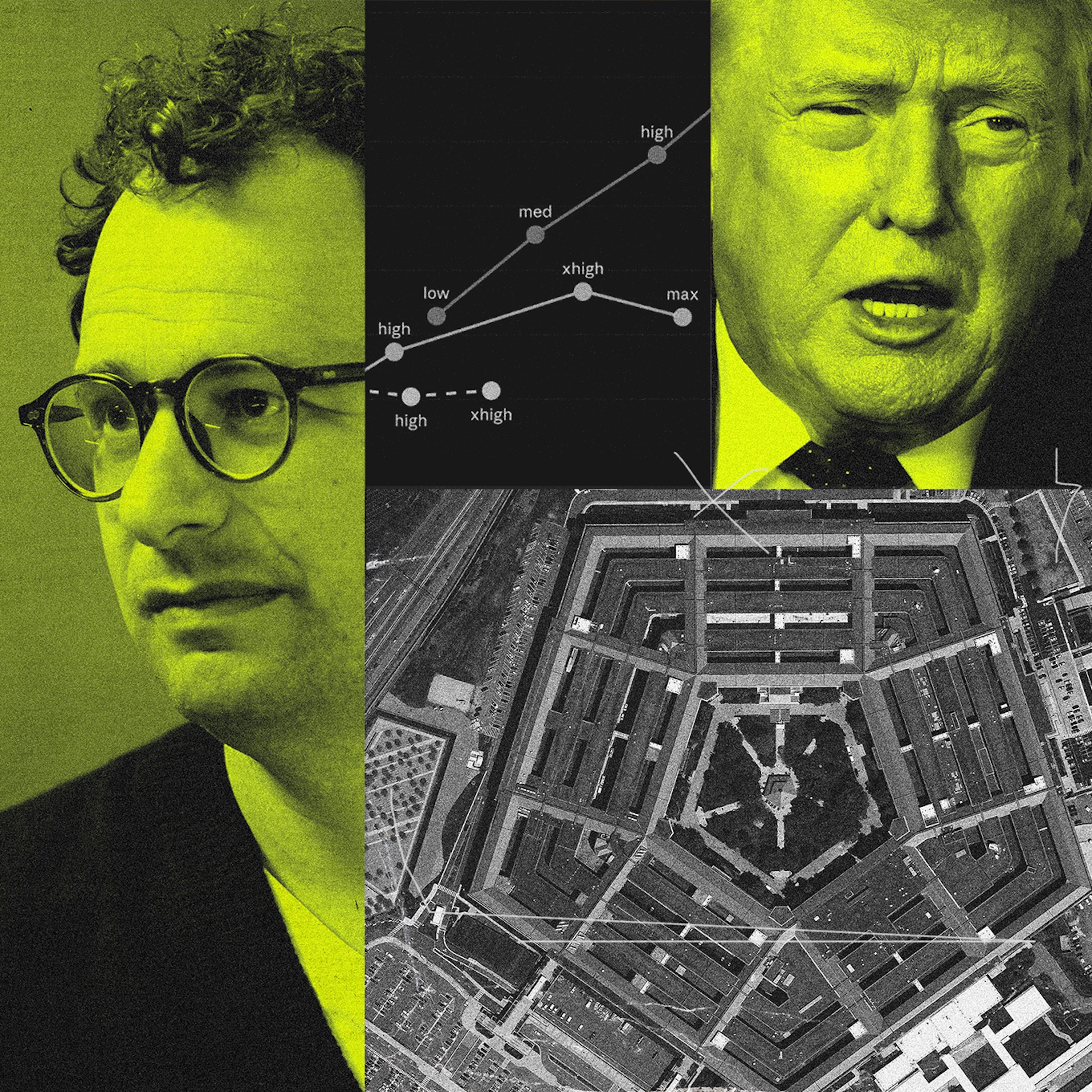
Listen to new episodes, Sundays, wherever you get your podcasts. Hello, and welcome to The Coder, I'm the only high-pelt editor in the show for the Verge, and Decoder is my show about big ideas and other problems. My guest today is Hayden Field, the senior AI reporter here at The Verge. Often when Hayden shows up on Decoder, it's something that's gone wrong in the world of AI. In the last weekend, that something was a pretty intense mix of anthropic and trumpet administration, and anthropic's new model, Cloud Fable 5.
On Friday, not even a week after anthropic released Fable 5 to the public, United States started imposing export controls on that model, as well as the underlying mythos model in Fable Space Now. Those controls restricted foreign nationals, even those working for anthropic in the United States, from accessing these models. And probably then took Fable and Mythos offline for everyone, because the company said it was worried it would not be able to restrict access and reasonably comply with other ones. As you might imagine, this is all a giant mess. Hayden actually just published a fantastic play by play on The Verge about how this all went down on Friday, and scrambled through the weekend from both sides to figure out exactly what happened and how it might all get resolved.
So I went on to go on the show and walk me through the timeline in what it all means. The situation is ongoing, as of Tuesday when we're recording this episode, Fable is still offline. In fact, if you boot up Claude, it tells you right above the chat box window on Fable 5 is currently unavailable. Yet as you'll hear Hayden explain, whether Fable comes back online this week or not, the ripple effects of the government's view with anthropic have far-reaching consequences for the second street and the United States AI regulatory regime. There's also a big irony here, and you'll hear Hayden talk about it quite a bit.
Anthropic has spent years arguing that AI might soon be powerful enough to be dangerous, and the government needs to get serious about regulating AI sooner rather than later. Well, now we're here, and anthropic doesn't love the way it's playing out, and now everyone, but maybe especially the Chinese government is watching to see whether the United States is a real AI regulatory approach, takes the shape of a serious safety framework, or whether it's just another weapon for the White House to use against companies and people that don't bend the knee to the Trump administration. Like I said, it's a real mess. Okay, we're seeing our AI reporter Hayden Field on the Claude Fable Band in the new AI regulatory events. Here we go.
Hayden Field, you're a senior AI reporter here at the Verge. Welcome back to the coder. Thanks, great to be here. It's always chaos when you're here, Hayden. That's what I've run the December.
It really is. Also, my rule is still in effect in that it's always a Friday. It's not always hit the fan on a Friday, and this was no different. Particularly when it comes to the government regulating AI, there's a real what if it all went crazy on Friday, so we all had to think about it over the weekend. And then I think this has been basically true throughout the Trump administration.
The scramble to put it all back together on Monday is immediate. Exactly. It's crazy. And the fact that all these talks were happening all over the weekend, and then Monday, still no resolution, I'm surprised that things aren't resolved yet. But yeah, lots of drama.
Well, this podcast is going to come out on Thursday. We're recording on a Tuesday. We'll see what happens over the next two days. But I think the big picture here of how the United States government should regulate AI, and what that means for American AI companies on the world stage, is open. I don't think it's going to be resolved with whatever happens with Fable.
So let's try to understand the whole story and then pull those themes out of it, because they're just going to keep coming back around again and again and again. I think with every new model really now. So let's start at the start. What is Claude Mythos? What is Fable?
How do they relate to each other? Great question. And I asked them the same thing when they came out with this like a week ago, or by the time we published this a little bit ago, we can have a go because yeah, AI companies are really potted naming things, and it's always very confusing. But the situation is, Mythos is the underlying model that is powering both Mythos 5 and Fable 5. They haven't had Fable 1, 2, 3, or 4.
They just immediately started with Fable 5, very confusing. But Fable is the watered down or safeguarded version of Mythos 5. So when they came out with Mythos preview in April, and Thoropik kept saying they were really hyping up, they were saying this is a potential cyber weapon. It's got to be never released to the public, at least until safeguards catch up, etc. We're only going to release it to enterprise and governments, AKA cyber defenders is what they call them, places that need to patch up all their frameworks before bad actors come in and exploit those vulnerabilities.
Now, fast forward to last week, and they released not only Mythos 5, which is the first official Mythos before it was Mythos preview, so we skipped straight to 5. Then they also released on the same day, Fable 5, which was the very first public version of Mythos class models, AKA same underlying framework, but now tons of safeguards built on top to hopefully stop the public from accessing the super dangerous by anthropics own admission model that could mess up everything. So yeah, that's what they released and they spent a long time having some time on how dangerous it was, and then it kind of came back to haunt them later. So Fable is a mythos with the security guardrails.
And when it first came out, there was a wave of controversy, right? AI researchers, security researchers found those guardrails were actually preventing them from doing research and seeing what Fable was capable of, because if they tried to push the boundary, it would downgrade them to anthropics previous models. Yeah, it became kind of like a meme, like people were making fun of how strict the guardrails were when it came out. So that's the thing that's confusing me, where there's a controversy because the guardrails are so strict, and then something happened that made the government think Fable was so dangerous that it needed to be pulled. What happened?
I was talking about the guardrails that had tumors about this, and before the Amazon White paper was circulating, before this allegation of a jailbreak was public, I talked to them red tumors about how safe Fable 5 was, and they were all pretty impressed with how the guardrails held up. I was expecting it to be a little bit easier to jailbreak. They were saying they had tried a lot of stuff and nothing was working. So that's not my experience when I usually talk to independent of red tumors. They're like, yeah, I got a break here.
I got a break there. In this case, they were saying it held up pretty well. Now what happened this time is, according to a source familiar with the negotiations, who was directly involved with the negotiations that I spoke with yesterday, this is kind of the timeline of last week. Mid last week, anthropic was made aware of some research that Amazon researchers were doing and that they had uncovered a potential jailbreak, something they were pretty worried about. They sent it over to anthropic.
Anthropic was going back and forth with Amazon researchers talking about it, and they were discussing whether it was really a jailbreak or whether it was not that big of a deal, essentially. Apparently reports say that Amazon CEO Andy Jassy then got worried about it and called maybe Scott Bessent, some member of the Trump administration on Friday and talked about his concerns. They said they sent them a message and they said, look, you need to shut this down in 90 minutes and we need to figure out how to send. 90 minutes. Yep, 90 minute ultimatum and they said we need to figure out how to fix this jailbreak that's come to light.
Anthropic got on the phone with the Trump administration within 15 minutes of that first call and they were asking for more details. They're like, okay, let's talk about this. You know, are you talking about the research we're aware of? Are you talking about something different? What is the jailbreak you're talking about?
They're trying to get more details and talk to the administration. I think the administration was also mad that Dario Amade, the CEO of anthropic didn't call back until an hour and 15 minutes after that first call. So anthropic called back 15 minutes in. It took Dario an hour and 15 minutes to call back. So there was a lot going on here.
By the time they're talking, you know, whatever the 90 minute deadline passes, the Trump administration says, okay, that's it. Yep, we're hitting you with export controls. And so that is when they told anthropic, no foreign national can use either of these models and you have to just make sure that that that is the case. No foreign national, whether they work at anthropic or not. AKA, you know, if you're, say, Bank of America and you have access to those five and you're using it to plug vulnerabilities in your system and you're not a US citizen, you can't use it.
Same with, you know, a random, just regular individual using fable five, same with a anthropic researcher who is not a US citizen. So anthropic did the only thing it could really do in the situation and they said, okay, we got a sideline both these models. We can't confirm that, you know, we can't in like one minute figure out a way to make sure no non-US citizens are using the models. So that's what happened. I mean, it was a crazy couple of hours.
And I'll come up with a statement later that night saying they're trying to work with Trump administration on this spent all weekend virtually meeting with the Trump administration and then flying three employees out who I detail in the piece we just published to DC to talk to them in person. Notably, Dario was not there in person. He is virtually joining all these meetings. I can confirm he was not at a wellness retreat, which is what some reports say, but they won't tell me where he is, but it's not at a wellness retreat. So yeah, there's a lot going on.
Very dramatic. All the sources I spoke with over the past couple of days were saying the whole tech industry and the cybersecurity community in particular are just talking about how, you know, one source told me Beijing is laughing at us right now. It was interesting because some cybersecurity leaders in the space came together to write a public letter and they said, look, not all of us believe in regulation. But if you were going to regulate it, this is not the way, which I think is just kind of indicative of this whole situation. We're going to pause here for a quick break.
We'll be right back. What have we told you that there was one thing you could eat to reduce your risk of death by about a quarter? Interested? And what if we added that this magical substance can dramatically lower your cholesterol, improve your mood, and keep your weight stable? No, it's not protein.
It's actually fiber, the least sexy, most overlooked nutrient of all. But what is fiber? How could one nutrient do all those amazing things? And how can you get enough? Is it powder you stir into some water going to do it for you?
All that plus the strange tale of the Gorilla poop obsessed, father of cornflakes in the latest episode of Gastropod. Find Gastropod and subscribe wherever you get your podcasts. We're back with Virgin Air, Florida Hayden Field discussing entropics and showdown with US government over AI regulations. Maybe you believe in aggressive government regulation. Maybe you don't.
There's a way to operate the regulatory efforts that is rigorous and thoughtful and careful and predictable. Nothing about this seems like it was rigorous, or thoughtful or predictable. I actually want to start at the beginning. Andy Jassy, Scott Bess, might be smart guys. They're obviously have very senior positions in our society.
They're not experts in AI. How did we get to Andy Jassy, the CEO of Amazon, relaying concerns about AI security research to Scott Bessent, who does not really oversee AI policy in any meaningful way, and that resulting in a 90-minute ultimatum delivered to a company whose CEO is absent. I don't think your politics should matter. If you just examine that, you have to say, either this is the worst security region history, the CEO, and it's going to call the Treasury Secretary, or this is just a bunch of guys who want to feel important. I can't quite figure out which one it is.
I think it's a combination of a couple things. One, it's the fact that like you mentioned, a lot of these guys are not experts in AI, and something that I'm not saying it's not like any jailbreak of this is obviously serious and worth considering. But I think that it's the type of thing when you don't have direct knowledge of how these systems work, you're going to take a really black and white immediate, I think that these guys weren't experts. Andy Jassy hears about this from his own researchers. His own researchers, by the way, who had been going back and forth with Enthrobic for a couple of days on this, so they weren't calling the president about it.
They're like, okay, let's discuss this and figure out what we can do here. The researchers allegedly didn't seem to think it was the end of the world. They're just like, oh, we uncovered this. Let's discuss. Enthrobic was working on it, and then Andy Jassy hears about it.
He makes this call. Everything hits the fan, which makes sense because if you are not an AI expert, and even if you aren't an AI expert, maybe you're not an expert on cybersecurity and how exactly these systems work, of course. So you're going to freak out. I mean, it's kind of understandable, but what is really strange is what happened after that. So making this phone call, the administration becoming aware, okay, but what I think is really weird is the 90 minute ultimatum, them not giving them additional details, and they said, hey, let's talk about it.
Are you talking about the vulnerability we're already aware of? Are you talking about something else? Can you just tell us about it? They said, no, 90 minutes, do it or die. And then making it so that no foreign national can access the system ever.
That is what's really strange. Just kind of the way all these cards fell is everyone in the tech industry thinks it's just really strange. And it's kind of indicative of like you mentioned, the way that the Trump administration has been operating with tech. A lot of times it seems to be President Trump has one conversation and he's kind of swayed from that most recent conversation. So, you know, he's been very anti-regulation, very pro-American AI, advancing, exporting American AI, which is something that the Congress Department is requesting.
It has an RFI out on right now. They're all about exporting American AI and like, you know, advancing and beating China. But then they do this thing that kind of kneecaps everyone with no notice and could very well impact not just anthropic, but also open AI, Google, every competitor in the space that also has what they call a semi-equivalent mythos product. So yeah, it seems really disorganized and it's very interesting that this often ends up in a scramble with all these CEOs trying to race to cow tau to the Trump administration without really being grounded a lot of times in science or evidence that really matches what's going on.
Like, God, it's not usually matching, you know, the evidence there, but... Amazon is an investor in anthropic. They're a major partner. Why did Andy Jassy kneecap his own investment in this way? Well, Amazon typically like does a lot of red teaming just normally, you know, it's kind of just part of their process.
So it makes sense that this would have been tested and then unearthed. But what's interesting is why Andy Jassy called the Trump administration about it. I'm not sure. Maybe it was a typical call that was already happening and he just happened to mention something offhand. Maybe he was calling them and saying, yeah, good thing.
He did the executive order because XYZ don't know. But what is interesting, and I'm glad you asked this because a lot of the sources I spoke with said that the stuff in the alleged jailbreak and in the Amazon white paper that's been circulating, all of it could be achieved by opening eyes, GPT 5.5, and some other models. So that's the allegation that this is not... These skills are not unique to fable five. The skills in question as part of the jailbreak.
Mythos is obviously more powerful than fable because it doesn't have safeguards. But when it comes to fable and the problems that were brought to life by Amazon, it seems like those problems are not unique to fable and that GPT 5.5 can also achieve those. So it's like something that a lot of people in the industry are asking is why in the topic. So real element of this is that it's always in the topic. In the topic has the most contentious relationship with the Trump administration.
They were designated as supply chain risk by the Department of War. But the posture here is different than the usual in the topic drama. Historically in the topic is that we don't want you to use our tools for X, Y, and the Trump administration has said, no, we get to do whatever we want with the tools. That's why they were designated as supply chain risk by the Department of War. They said we have some red lines about how we want to be used in the military context and Pete said, nope, I'm going to do whatever I want.
You have to allow all lawful purposes. That's the line. And because you want your supply chain risk, there's a lawsuit that's being argued about. Here it's the opposite. The Trump administration is where the model is too powerful and can be used for too many things.
And the topic seems to think that that belief is overblown, that the administration is overplaying a thing that they can fix. They just need the time to do it and, you know, some rigor and conversation about how effective their fix is. How do you put that together? That on the one hand, the Trump administration is anti-AI regulatory efforts. On the one hand, they say we got to do whatever we want with the models, make them as powerful as you can.
And then here, the model is too powerful and has to be pulled before any foreign national can even look at it. And is trusting these companies to tell it what it should be doing. We've seen that a bunch with any regulation that has happened or has become voluntary. Lots of drafts have been adjusted after the Trump administration talks to AI companies. They already don't like anthropic.
There's already a big trust breakdown between the two from the supply chain risk thing, from the lawsuit, from drawing red lines. And so I can't imagine that this exact situation would have played out if this had been a competitor. I mean, opening AI has them with those semi-equivalent. Again, no companies really saying theirs is as good, but they say it's pretty good. Microsoft, Google, I think that the freak out would have still happened, but I cannot imagine the rest of it would have played out the way it was.
I think they would have given them more time. I think they would have more of a conversation. And I don't think they would have made this foreign nationals rule that has sent shockwaves through the whole industry and the world. One of the sources I spoke with said he already knew that backup contracts were being signed with non-US companies right now, open weight models being deployed on alternative hardware arrangements because now companies everywhere are saying, oh, wow, we got to make political risk part of our business plan now. We don't really know what's going to happen with American AI.
Let's make some backup plans here, which is not good for the industry. And so I think it's just interesting that the Trump administration is so afraid of China overtaking us, yet they're willing to kneecap one of their champions, as it were, in the industry. But I also think it's interesting that the reasoning from the Trump administration that's been coming out day by day seems to differ. So every day they seem to have a new excuse or part of the conversation that's coming to light. So first they say, oh, well, what if China had access?
A source I spoke with said that's a rumor from a few weeks ago from way before fable five remember those five came out and that it was referencing like a Chinese telecom company that the administration previously approved to have access to mythos preview and that when the administration said, oh, actually, you know, we changed our mind. Let's take them off and the topic immediately took them off and revoked that access. So I think that's an old rumor. Then we're also saying the executive order thing where the rumors have come to light that oh, and the topic wasn't complying with the Trump administration's executive order. Well, that executive order hasn't gotten into effect yet.
They only signed on June 2nd. It's like two weeks ago. It takes 60 days for them to figure out which models are going to be covered under it. There's a voluntary partnership of like a 30 day pre-release review is voluntary. So I just think, you know, I'm not it's funny because I'm not like, oh, and the topic is totally in the right here at all.
But it's just interesting because in this situation, there's just there's so much like misdirection and scrambling and just weirdness that it's rare that you see me feeling kind of bad for an AI company. It really is like, I am not like, oh, yeah, like they're doing like all AI companies have their own issues. But in this one case, I'm like, well, how like, I really don't know if this would have happened to open AI or or another competitor after, you know, just all the drama and throw up what's been going through with the Trump administration. We know the Trump administration can be petty. And I think, you know, they would have freaked out for any company that was under the situation, but I think, I don't know, I can't see it playing out the exact same way with a competitor.
Is it just as simple as Dario Amade doesn't go to the White House? He doesn't give Trump gifts. I mean, Sam Altman does press conferences with Donald Trump. So you never try to attend the inauguration. Zuckerberg was at the UFC fight.
Notable AI winner Mark Zuckerberg was at the UFC fight by his way into success. Is it just that simple that he there's a personality class here? That's the way it's been perceived by some reports. I mean, I think that's definitely part of it. You know, some reports have said, you know, he doesn't know how to talk to the administration.
You know, and that he doesn't count how as much. He doesn't, you know, know how to play the game. I think that's part of it. I think the other part of it is that the Trump administration isn't quite sure how they're going to regulate things. And they're being, you know, president Trump is being pulled in different directions.
But by any conversation he has, and I mean, he feels like it needs to be more regulated. Some of these things, he needs to be less. Like he's talking to the AI CEO. It seems like, yeah, you know what? I trust them.
We're good. Let them go ahead. We got to be China. In other cases, you know, he sees, you know, the public is going through a pretty anti-AI era right now. You know, there's a lot, there's a rise in AI populism.
You know, he's saying, oh, well, actually the other man kind of doesn't like AI. Oh, maybe I should regulate. So I think that there's just, it's kind of something we've seen with the administration a bunch over the past however many years, but now it's being represented in AI regulation. It's just there's not really a rhyme or reason right now. And I don't think that anthropics communications with the administration help.
You know, if you don't take their call the second they call, if you're not, you know, flying to the White House, have dinner, it probably hurts your relationship a little bit in a presidency that seems to be pretty relationship based a lot of the time. It's just a handful of guys in how they feel. And that seems to be our regulatory apparatus. We have to take on a short break. We'll be back in just a minute.
Insurance is entering a new era. Policyholders expect a fast and flexible experience from the insurers they trust. That's why modern insurers run on Adion. From effortless premium collections to instant claims payouts, Adion's single platform automates your entire policy life cycle. A single platform to reduce churn and claims fraud, drive revenue, stay in control of how your money moves.
Adion, FinTech, built for your next move. We're back with Virgin Air Airport at Hayden Field discussing why anthropics keep fighting stuff in the cross hairs, the trumpet administration. The Biden administration, like notable for a lack of personality and people was very technocratic, very rules based in a way that I think people often thought was bloodless. But the Biden administration, they did put forward an executive order that had things like transparency reviews and research requirements or the frontier models. Trump came in office, he wiped all that out.
He said, we're not going to regulate these companies. And now it seems like we're just headed back there. If you're going to put out an ultra powerful model, the administration wants control of it. Certainly they will use the bluntest instrument to have in the form of export controls. But we're going to get back to a more fine grained, more rigorous approach to how these models are deployed and used and who gets to use them.
Was it a mistake to wipe out the Biden framework? Are we headed back to that framework? Where do we think this goes now? I could see us going back there because a lot of activists and academics, I interviewed a ton of people in the industry at the time ranging across a ton of different viewpoints. And most of them believe that the Biden-era executive order wasn't quite enough.
Some people thought it was a good first step. And I think that's why I could see us going back there because it wasn't seen as being extremely aggressive, if anything was seen as being a good first step in the direction, but really just one rung on the ladder. And I think that that's why I could see the current administration going back there because it wasn't that far. I will say AI companies will lobby against even that little step. They did.
They did deeply. But I could see it going back there a little more voluntary, which again, all these things usually get watered down. They come out swinging and then they talk to some AI CEOs and they're like, oh, okay, let's roll it back a little bit. So who knows, honestly. But the reason I became AI reporter is because I felt like there was no real regulation in the space.
And this was even before TatchPT. And journalism is a way to shine a light on what's going on in the industry. And I think it was still six years later, we're not seeing a lot of regulation. And A, that's happened, got rolled back. So maybe we'll go back in that direction.
I do see us going somewhere there, but maybe not even as much as that first rung. It almost feels like the industry needs to push for a more considered regulatory approach, right? That they need to say, this is chaos. This can't be how we operate. Every new model can't be forced to contend with panicked phone calls on the weekend.
What kind of system would you build, right? If you wanted a more rigorous review process here, is it they just submit their models to the government and the government says, what's dangerous and not? Is it more industry based? What are the solutions being proposed? There haven't been a lot of really robust solutions proposed recently because of this current administration.
They've had a really light touch approach to regulation. So no one's really surfacing those. Now that that might be changing, I think we'll see more robust frameworks proposed. And I just hope that they're not voluntary. A.I.
companies already do a lot of voluntary stuff. If you're going to regulate, do it. There's not, I don't think you need to, there's a lot of different opinions on how light touch or heavy touch regulation should be. But I do think that voluntary frameworks are pretty watered down. You know what I mean?
It's like, we already have those. So what's next? You know, there's a big, I think it's important to remember how the general public feels because this is who A.I. is really affecting at the end of the day. And yeah, the rise in A.I.
populism and the fact that people are upset. There's data center protests going on everywhere. People are even in extreme cases like attacking A.I. CEOs homes are attempting to. There's a lot of disquiet here and people feel like they're getting replaced.
They feel like their job is getting replaced. You know, I was listening to a Seattle City Council hearing recently and a lot of A.I. engineers were testifying saying that they got laid off because of A.I. And they were engineers. So I think both A.I. leaders and the government often kind of are pretty distanced from what
the general public is feeling about this technology and it's important to note. So I think we'll see how that impacts, if at all, regulation that comes out. I don't have high hopes for a lot of regulation under this administration because they can be really sway-y. You know, I think like, you know, they have better one time and then things might shift a little bit and to be fairly many politicians that way. But, you know, we'll see if maybe after this executive order of, you know, the 60 days are up, maybe we see some changes that surprise me.
I don't know. One of the weirder aspects of this is that anthropic itself is the company that most push us for regulation, that most sense the alarm is the most doom-er-ish of all the companies. Jack Clark, one of the co-founders in anthropic research and his conclusion was that, quote, we believe it would be good for the world to have the option to slow or temporarily pause frontier AI development to enable societal structures and alignment research to keep up with the advanced technology. And anthropic is way on the front line of saying, oh, we might kill everyone. Boy, we should stop this.
But they're also on the front line of model capability, right? By all accounts, mythos is the most powerful model that exists today. Is anthropic just getting itself in trouble? Is this just a marketing strategy for them? It's backfiring?
I think it's a combination. I think that the marketing speak is definitely backfiring, you know, if you say something's not dangerous and then a researcher under something that maybe wasn't quite meant to be possible. Yeah, people are going to freak out. So that's why I'm kind of like, you know, I can see the first thing happening to anyone. I can't see the rest of it the way that the cards felt.
But yeah, I think it's partly there. You know, it came back to haunt them. You know, it was a little bit on them in terms of the hype. But I also think that they are trying to be honest in some ways about the risk that this technology can pose. And, you know, it would be really bad if a, you know, system that can flag high level vulnerabilities in our global infrastructure that we use, like your bank system or, you know, a government website could just be used by bad actors.
I fell into the wrong hands. Yeah, that's pretty bad. So I think it comes down to communication. Like, yep, it's important to talk about the risk and not downplay them. But also, you know, if you do that and then you make a mistake or something unexpected happens, you got to deal with the consequences.
So yeah, there's a lot to unpack there for sure. And I also think that, you know, a lot of companies do downplay risks of different systems. Like, you know, we've seen a bunch of AICOs, including anthropic, I believe, talk about how, you know, jobs aren't all going to be replaced. It's okay. You know, there's, I always take all this stuff with a huge grain of salt because at the end of the day, whatever AI company you're talking about, whether it's anthropic or not, they all have the incentives to turn a profit and make money at all costs, and especially if they become a public company, which they are about to.
So people like to paint anthropic one way and other competitors and other, but they're all pursuing the same goal. They just are doing it a little bit differently. Is there a version of this where we just treat AI like military technology from the jump and the public gets watered down version of the military technology? Because that seems to be the risk profile that the Trump administration is operating them, right? This is fundamentally offensive technology.
We can deploy it against our enemies. We can use it to attack the banks. Everyone is worried about the security implications here. Is there a world in which we just start there and then say to deploy to the public to consumers, you got to cut this way down. We're not going to sell F-22s to the public, but we can sell for a rapper.
So there's some version of this, right? Where it's like the technology gets cut way down to the public with the bleeding edge just fundamentally for the military. Yeah. I mean, that's like what we've seen a lot for decades. And I think it's starting to happen now with the myth of stuff.
Fable is the watered down version and enterprise and governments have access to more powerful version. There's a lot of different opinions on that. Like opening AI, one of its biggest marketing pushes right now is, oh, anthropic wants the most powerful AI to only be in the hands of the elites and we want to bring it to the public. So there's a lot of marketing pushes right now. Everyone's just kind of using everything to their advantage or to paint their competitors badly and dropping included.
So it's like, you know, I think the race is just heating up so intensely that the AI companies at the forefront are doing anything they can to win it all costs. Some because they think that they are the best and most moral winner, which I think can always be a big issue as we've seen in like every sci-fi or, you know, fantasy movie for the greater good thing is typically used by, you know, the villain in the story. So I think it's, I don't know, there's a big race happening right now. I totally agree with Jack Clark that, you know, it might be good to slow things down a bit. If everyone could agree, if everyone could agree, which is very, you know, a huge long shot and, you know, especially be very difficult to get other countries to agree as well.
But we are definitely building the technology much faster than we can think about the implications of it. And we have been for a long time. I think this first episode of Dakota where Dario and A was directly compared to Thanos. So that's great. This would be fair.
I was thinking about the guy in Harry Potter when I said that. Well, with a Grindelwald Grindelwald. Oh my gosh. All right. Well, Dario, if you want to come on and address these allegations, you're more than welcome.
Also got to say, it's not just Dario. All of the AICOs are saying that. It's like they're all, yeah, it's crazy. Where does this end? What are the next steps here?
There's meetings happening this week. People are going to be hearing this on Thursday. There's a chance to drop it because just back on market. There's a chance it's not. But after this, it seems like everybody wants a process.
What do you think this ends? Honestly, it's very difficult to predict how this administration is going to act as we saw with the supply chain risk thing. Even though a lot of government agencies were big fans of Claude, I thought that was going to be rolled back eventually because they just signed deals with some other companies and said, okay, we're good. Like, you know, even if you guys were fans of Claude, whatever, here are some other options for you. I guess right now I do think that the foreign national thing is going to be rolled back.
I mean, I just can't imagine that after all the hubbub that the administration has created about American AI has to win. The HEGS-Athem MO from January 9th about how speed at all costs, I just think this administration is so focused on winning an AI that there's no way they're going to continue with that rule, but who knows? So I think I could see this becoming a personality game over the next few days. Anthropic compromises in some way. They try to communicate better, whatever.
And then in a couple of days, this gets rolled back. But then, you know, I've seen some rumors that the Trump administration is trying to have a stake in anthropic and open AI and ownership stakes. So, you know, there could be a lot of different resolutions quote, quote to that here. We'll see. But I definitely, I can't foresee this as it exists right now, continuing for more than a couple of days.
I mean, the industry is just a gas to this. Hey, we're going to obviously have to have you back very soon as this comes to a close. Thank you so much for being on the code. Thanks so much. I'd like to make a field for taking the time to join a coder and thank you for listening.
Hope you enjoyed it. If you'd like to let us know, you thought about the sub-severe anything else at all. Bye. You can email us at decoderattheverge.com. You can really read every email.
Where you can have directly on threads or blue sky. Or also, YouTube, you can watch full episodes at DecoderPods. It's the same handle on TikTok and on Instagram. DecoderPods. They're a lot of fun.
If you'd like to share with your friends and subscribe over your podcast, if you really like the show, hit us with that five star review. Decoder is a production of Port-a-Vaxxing and Podcasts. Show us where you can get access to that edited by versus right. And it's a road director is Kevin Machine. The Decoder music is for breakmaster cylinder.
We'll see you next time.