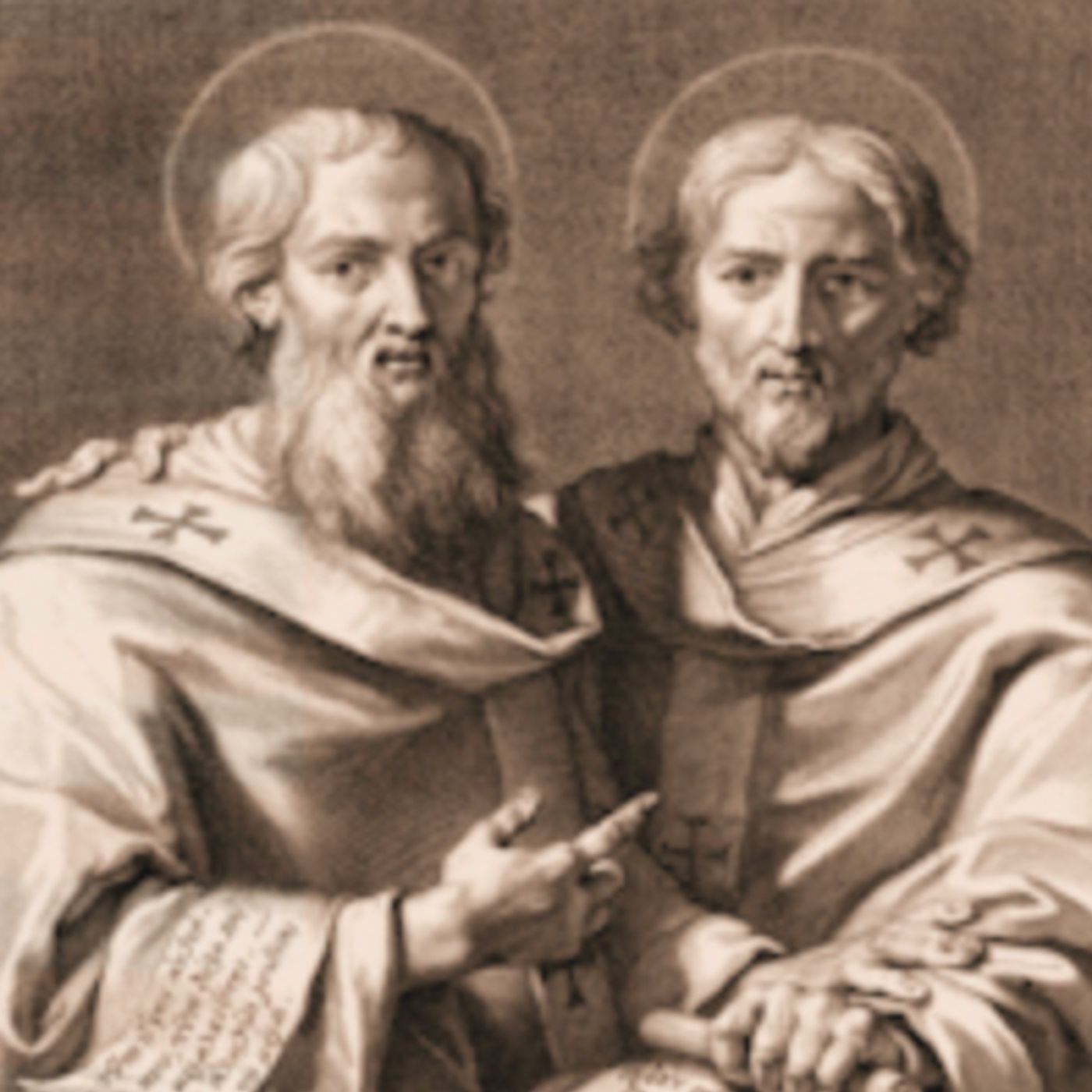
January 2: Saints Basil the Great and Gregory Nazianzen, Bishops and Doctors episode artwork

EPISODE · Jan 2, 2026 · 5 MIN

January 2: Saints Basil the Great and Gregory Nazianzen, Bishops and Doctors

from Catholic Saints & Feasts · host Fr. Michael Black

January 2: Saints Basil the Great and Gregory Nazianzen, Bishops and DoctorsSt. Basil: 329–379; St. Gregory: c. 329–390Memorial; Liturgical Color: WhitePatron Saints of Russia, monks, hospital administrators, and poetsObvious truths are hard to explain, but smart theologians can explain themThe persecution of the Church in the first few centuries, sometimes aggressive, more typically passive, starved her skinny biblical frame of nourishment. When the Emperor Constantine legalized Christianity in 313 A.D., the Church’s bones finally stretched, grew, and added muscle on muscle. Churches opened. Bishops preached. Schools taught. Theologians wrote. And, most significantly, Councils met. Three hundred years after Jesus Christ ascended into heaven, these large gatherings of bishops and theologians sought to end theological confusion, to settle thorny questions, and to establish a standard Christian doctrine. In the vast halls and churches of these councils, the great cast of theologians of the fourth century put their prodigious talents on full display. We commemorate two of the greatest of these bishops and theologians in today’s memorial.Saints Basil and Gregory lived so long ago, were so prolific, and played such crucial roles in so many areas of Church life, that they could each be remembered for any number of contributions to liturgy, theology, ecclesiology, Church history, monasticism, and even popular customs, especially in the Orthodox East. Yet perhaps their greatest contributions were as theologians who defined, fundamentally and decisively, what the word Trinity actually means; how Jesus is both fully God and fully man; and how the Holy Spirit is related to God the Father. Such definitions and distinctions may seem technical, abstract, or remote. But it is always the most obvious things—the most necessary things—that are the most difficult to explain. Why do things fall down instead of up? Why does the sun rise in the east instead of the west? Why are there seven days in a week instead of nine?The most fundamental doctrines of our faith, understood now as perennial, were not always perennial. They originated in the minds of certain people at certain times in certain places. To today’s saints we owe the decisive words that the Holy Spirit “proceeds” from the Father and the Son. These words fall simply and familiarly from our lips. But the word “proceeds” was the fruit of intense thought and prayer. The Father generated the Son, but the Holy Spirit “proceeds” from them both. Interesting. Dozens of millions of Catholics say reflexively every Sunday that the second Person of the Trinity is “consubstantial” with the Father. Not equal in origin. Not equal in role. But “consubstantial,” or equal in nature. Thank you, Saints Basil and Gregory! Thank you, great Bishops and Doctors of the early Church! Thank you for pulling aside the veil of mystery for a peek into the Godhead. Without the teachings of the fourth century on the Trinity and Christ, there would be no Christmas trees. Think about that. Why celebrate the Christ child if He were not God? But He is God. So carols are composed, mangers are set up, lights are hung, and gifts are exchanged. Culture happens, culture flourishes, when theology makes sense. Thank you, Saints Basil and Gregory, for… everything!O noble Bishops and Doctors Basil and Gregory, we ask for your continued intercession to enlighten our minds and to remove the dark shadows that cause confusion. Assist us to recognize that good theology understands God as He understands Himself. When you gave us good teaching, you gave us God. We seek nothing more.

January 2: Saints Basil the Great and Gregory Nazianzen, Bishops and DoctorsSt. Basil: 329–379; St. Gregory: c. 329–390Memorial; Liturgical Color: WhitePatron Saints of Russia, monks, hospital administrators, and poetsObvious truths are hard to explain, but smart theologians can explain themThe persecution of the Church in the first few centuries, sometimes aggressive, more typically passive, starved her skinny biblical frame of nourishment. When the Emperor Constantine legalized Christianity in 313 A.D., the Church’s bones finally stretched, grew, and added muscle on muscle. Churches opened. Bishops preached. Schools taught. Theologians wrote. And, most significantly, Councils met. Three hundred years after Jesus Christ ascended into heaven, these large gatherings of bishops and theologians sought to end theological confusion, to settle thorny questions, and to establish a standard Christian doctrine. In the vast halls and churches of these councils, the great cast of theologians of the fourth century put their prodigious talents on full display. We commemorate two of the greatest of these bishops and theologians in today’s memorial.Saints Basil and Gregory lived so long ago, were so prolific, and played such crucial roles in so many areas of Church life, that they could each be remembered for any number of contributions to liturgy, theology, ecclesiology, Church history, monasticism, and even popular customs, especially in the Orthodox East. Yet perhaps their greatest contributions were as theologians who defined, fundamentally and decisively, what the word Trinity actually means; how Jesus is both fully God and fully man; and how the Holy Spirit is related to God the Father. Such definitions and distinctions may seem technical, abstract, or remote. But it is always the most obvious things—the most necessary things—that are the most difficult to explain. Why do things fall down instead of up? Why does the sun rise in the east instead of the west? Why are there seven days in a week instead of nine?The most fundamental doctrines of our faith, understood now as perennial, were not always perennial. They originated in the minds of certain people at certain times in certain places. To today’s saints we owe the decisive words that the Holy Spirit “proceeds” from the Father and the Son. These words fall simply and familiarly from our lips. But the word “proceeds” was the fruit of intense thought and prayer. The Father generated the Son, but the Holy Spirit “proceeds” from them both. Interesting. Dozens of millions of Catholics say reflexively every Sunday that the second Person of the Trinity is “consubstantial” with the Father. Not equal in origin. Not equal in role. But “consubstantial,” or equal in nature. Thank you, Saints Basil and Gregory! Thank you, great Bishops and Doctors of the early Church! Thank you for pulling aside the veil of mystery for a peek into the Godhead. Without the teachings of the fourth century on the Trinity and Christ, there would be no Christmas trees. Think about that. Why celebrate the Christ child if He were not God? But He is God. So carols are composed, mangers are set up, lights are hung, and gifts are exchanged. Culture happens, culture flourishes, when theology makes sense. Thank you, Saints Basil and Gregory, for… everything!O noble Bishops and Doctors Basil and Gregory, we ask for your continued intercession to enlighten our minds and to remove the dark shadows that cause confusion. Assist us to recognize that good theology understands God as He understands Himself. When you gave us good teaching, you gave us God. We seek nothing more.

NOW PLAYING

January 2: Saints Basil the Great and Gregory Nazianzen, Bishops and Doctors

0:00 5:12

No transcript for this episode yet

We transcribe on demand. Request one and we'll notify you when it's ready — usually under 10 minutes.

PDF feed of Interpreter: A Journal of Latter-day Saint Faith and Scholarship PDF feed of Interpreter: A Journal of Latter-day Saint Faith and Scholarship The Interpreter Foundation is a nonprofit educational organization focused on the scriptures of The Church of Jesus Christ of Latter-day Saints (the Book of Mormon, the Pearl of Great Price, the Bible, and the Doctrine and Covenants), early LDS history, and related subjects. All publications in its journal, Interpreter: A Journal of Latter-day Saint Faith and Scholarship, are peer-reviewed and made available as free internet downloads or through at-cost print-on-demand services. Other posts on the website are not necessarily peer-reviewed, but are approved by Interpreter’s Executive Board.Our goal is to increase understanding of scripture through careful scholarly investigation and analysis of the insights provided by a wide range of ancillary disciplines, including language, history, archaeology, literature, culture, ethnohistory, art, geography, law, politics, philosophy, statistics, etc. Interpreter will also publish articles advocating the authenticity and historicity Verax Patria Verax Patria Restoring The Contemplative Soul & Cultivating Catholic Land Holy and Healthy Saints Laura Pickard The Holy and Healthy Saints podcast is to help Latter-day Saints embrace the power of Jesus Christ as they strive for better health and body image. We explore how and why this faith-filled approach may be the answer to peace and freedom around food. Wild Olive Jeanne Petrolle and Jennifer Bird The Wild Olive Podcast brings you game-changing conversations about literature, culture, and the Bible. With co-hosts Jeanne Petrolle and Jennifer Bird, Wild Olive serves up idea-feasts: tasty insights about biblical texts and contemporary (or classic!) literature, with generous side-portions of cultural commentary and hearty laughter. One literature professor + one biblical studies professor = uncontrolled, out-of-bounds, untamed conversation: ideal listening for the post-evangelical, the spiritual-but-not-religious, the Bible-curious secularist, the free-thinking religionist, and the literary-but-not-stodgy! New episodes every other Friday!

Frequently Asked Questions

How long is this episode of Catholic Saints & Feasts?

This episode is 5 minutes long.

When was this Catholic Saints & Feasts episode published?

This episode was published on January 2, 2026.

What is this episode about?

January 2: Saints Basil the Great and Gregory Nazianzen, Bishops and DoctorsSt. Basil: 329–379; St. Gregory: c. 329–390Memorial; Liturgical Color: WhitePatron Saints of Russia, monks, hospital administrators, and poetsObvious truths are hard to...

Can I download this Catholic Saints & Feasts episode?

Yes, you can download this episode by clicking the download button on the episode player, or subscribe to the podcast in your preferred podcast app for automatic downloads.
URL copied to clipboard!