March 25th, 1979. Mr. Robert Allure. Dear Sir, Pursuant to our recent telephone conversation, we will find attached our invoice for long-distance telephone charges incurred since our last invoice, January 31st, 1979.
As previously stated, I am not including any charges for the work which I performed on my own since that date. I am maintaining a personal interest in the resolution of this case, and will be happy to assist you in any other way you see fit. In the meantime, we will find attached a photocopy of an article which appeared in the Montreal Star, which briefly describes the conflict involving the Quebec police force and myself. Leo Hamel has assured me that I still can count on his cooperation and his assistance in the future, and therefore my present difficulty should not hinder any further investigation on the matter which concerns you.
Yours truly, Robert M. Bulak, Director, Metropole Bureau of Investigation. The Conclusion of the Fernand-Lapont trial, the Certificate Quebec had private investigator Robert Bulak arrested for impersonating a police officer to residents of Asbury Road. During the experiment where he proved that a gun was not fired at the location the night of the Grimard and Bergeron murders.
The charges were retaliation for Bulak having filed a complaint with the Quebec Police Commission alleging that provincial police officers had beaten suspects, intimidated witnesses, and fabricated evidence during investigations of crimes in and around the eastern township city of Sherbrooke. Bulak had documented several beatings by SQ agents against township residents. Specifically, he cited SQ investigators for having savagely beaten Fernand-Lapont on several occasions during his initial arrest between August 3 and 5, 1978. He charged that the Certificate Quebec engaged in acts of brutality and intimidation towards defense witnesses, elaborating that an investigator had twisted the breasts of Laplante's wife, Claire Dussault.
Bulak further alleged investigators made inappropriate casual conversation with the jury during Laplante's trial. Robert Bulak was just one of many in a long queue of Quebecers demanding justice from Minister Marc-Andre Bedard in 1979. The father of D'Andyri, murdered with Mario Corbet, petitioned Bedard over his daughter's botched investigation. Before the close out of the year, Bedard had to order an investigation into the SQ police shooting of David Cross on the Gunanot Way Reserve, south of Montreal.
The problem is, the provincial police in the Sherbrooke area cannot solve cases by the normal methods, so they have started using shortcuts. Robert Bulak, Sherbrooke Record, August 31, 1979. This is who killed Teresa. Frustrated by the lack of cooperation he was receiving from local police and Champlain College Administration in the wake of Teresa's disappearance, my father hired Robert Bulak.
If Bulak believed his conflict with the SQ wouldn't hinder his work on Teresa's case, he was dead wrong. Rather than cutting through the fog of her disappearance, Bulak's imposing presence in the field was one more obstacle that got in the way of a proper investigation. Not that that mattered much anyway, as we now see that the SQ, or QPF as the English called them, had little interest in solving crimes against women. Charles Marion was a big deal.
Raymond Grimard was big cheese. But Manon Bergeron, who was found with him, was fifth business as far as the police were concerned. Most often referred to as Grimard's concubine, or his bitch. And Carol Fecteau?
As I've said before, true crime jetsam, an afterthought. Did she even get a trial? We'll come to that. The acrimony between Bulak and police was so corrosive, they couldn't even stand to be in the same room together, and at least feigned civility and cooperation in the face of the stress and grief my parents were under.
I once remarked to Bob Bulak about a meeting that occurred between my parents, Lennoxville police chief Leo Hamel, and SQ Kapital Roque Goudreau that took place at the Montreal airport Hilton on the one year anniversary of Teresa's disappearance. I mistakenly suggested that the private detective had been there as well, to which Bulak interjected, No, that never happened. When I asked him how he was so sure, he replied, Flat. Cause if Rocky walked in the front door of the Hilton, I would have immediately got up and walked out the back door.
Jean Charlin's trial for the first degree murders of Raymond the Wolf-Germard and Manon Bergeron was finally heard in the fall of 1979, five months after the conviction of his so-called accomplice, Fernand LaPlante, who by now was serving his life sentence for murders. Many of the same cast of characters were brought before Judge Carrier Fortin. The entire mourning was spent on Luc Landry's juvenile record, how at 16 he had held up a Compton credit union, and his Thunder Bay conviction for failure to pay for a sandwich. SQ officer Raël Chateneuve testified that he recovered a birch log on January 8, 1979, under a staircase in the basement of Charlin's home in Lennoxville, which contained 69 rounds of ammunition.
One round that managed to be identifiable matched four rounds recovered from Grimard's body. It's hard to imagine why Charlin would feel the need to conceal evidence that pointed to a weapon used, according to police in Charlin, by LaPlante to gun down Grimard. And recalled it from Charlin's own testimony, the murder weapon would have been retrieved from his house on the night of the murders, but then used by LaPlante, or so he said. On October 3, 1979, exactly 11 months after the disappearance of Therese Allure, Jean Charlin was also sentenced to life imprisonment for the murders of Grimard and Bergeron.
It's hard to understand why. It was only one weapon used to shoot Grimard. The issue was simple. Either Charlin shot him or LaPlante, but not both.
Sherbrooke Justice seemed to be working an angle of, well, something like that happened, so let's convict them both and move on. Charlin's lawyer, Richard Macheter, registered a review, but unlike LaPlante, Charlin's appeal was met with a very different outcome. The prosecution's case hinged on their chief witness, Luke Laundrie's testimony, of how Charlin had told him at the Moulin Rouge, how he peppered Grimard in an alley along Wellington Street. In 1981, the Quebec Court of Appeal overturned the judgment, and Charlin was set free.
The three judges on the appeal board regarded Laundrie's testimony as hearsay. Wasn't Charlin's testimony against LaPlante hearsay? And they unanimously believed that nothing in the evidence linked Charlin to the victims. I guess they needed more dots to connect than the rifle used to murder Grimard stashed in Charlin's house.
Oh, and that log. It was an unprecedented victory for Charlin's youthful attorney, Richard Macheter, who commented it was the first time in Quebec he remembered that the judges unanimously came to a decision on the grounds that the evidence was unreasonable. Le Tribune reported that it was, quote, extremely rare for the Court of Appeal to reverse a verdict in this way, ordering a new trial in many cases instead. Rare, indeed.
What unknown persons intervened on Charlin's behalf? A low police dryly noted that Charlin had been liberated like air, and so it was. While Fernand LaPlante languished in Dorchester prison for over 40 years, Charlin went back to his regular Lenoxville routine of arsons and robberies, and the community turned a blind eye to it all. On the same day that Charlin's conviction was overturned, and in what the Sarté du Québec must have considered a fait accompli, Le Tribune reported that the Quebec Police Commission dismissed complaints made by Robert Bulac of police misconduct during the LaPlante process.
Bulac had been railing now for two years that Jean Charlin had been granted immunity in exchange for his testimony against LaPlante. Nobody listened. In what Le Tribune called, quote, the last drops of the flood of complaints against the SQ, the police commission determined there were no grounds for a public inquiry and asked Quebec police to try to avoid acts of recklessness in the future. Jean Charlin picked up where he had left off, and for the next decade became more of a public nuisance than a menace to the townships.
Less than seven months after his acquittal, and almost three years to the day of Tree Seller's disappearance, Jean and his younger brother Marc Charlin, the one-time boyfriend of Cadet Le Fecteau, were arrested for smashing the front glass of the Sinclair bowling alley just north of the Moulin Rouge. Constable Rodrigue caught up with the brothers in a Wellington alley, hiding under an iron staircase. When asked what they were doing, they replied, Nothing. We are waiting.
Imagine Richard March Taire's excitement when he was also handed this case. If you go to TeresaLaur.com, T-H-E-R-E-S-A-A-L-L-O-R-E.com and see the map. There's a link to the map there. I would say the real estate on Wellington Street is now running out of space.
There's too many plot points. Getting kind of crowded up there. I think that says it all. Someone might want to take a look at that.
Four months later, in March 1982, Charlin was back in the courts again, this time for breaking into his father's restaurant, Che Charles on Lenoxville's Queen Street. By now, he had long departed with the disco coif he sported during his murder trial, falling back on long hair and a jean jacket, as he faced the magistrate. When his father, Ivan Charlin, noticed $680 missing from the till, he had no trouble calling Lenoxville Police Chief Leo Hamel to arrest his son. The zealous Hamel even conducted an investigation with the cooperation of two 70 Quebec agents.
Charlin had only just been placed on probation for another burglary of a township's garage. By now, Charlin had a new attorney, Michel Beauchemin, who pleaded with Judge Roberge to consider that Charlin was dealing with a drug and alcohol problem. No doubt. Prosecutor Claude Melasson, remember him from the La Plante trial, said that drink was irrelevant and Charlin had violated his probation.
The Tribune was quick to note that Fernand La Plante's appeal to the Supreme Court of Canada had been denied, while Charlin, accused of his same murders, was set free by a lower Quebec court. For the townships, Jean Charlin had become the gift that kept on giving. Look, I know investigative genius, I simply frankly possessing good analytical skills, and I'm able to sometimes take apart and reassemble a lot of data, a lot of complex information. When considering suspects in my sister's case, it seemed like a fairly good assumption that you would not focus on persons who had recently been accused or convicted of similar crimes.
And my thinking with that was that the justice process would eliminate those persons for consideration, since they had now transitioned to the courts or were either in jail or prison, or at the very least under a watchful eye of police. So you would assume, right? That sort of reasoning collapses when considering someone like Jean Charlin and the police force like the Serté de Quebec, who completely defy logic. So the thinking would go that Charlin was not party to Teresa's murder because he was on trial for a previous murder and therefore in jail, right?
Except that he wasn't in jail. He was free. He was living at his parents' house in Lenoxville, where Teresa was last seen, and he escaped notice until the night of the Aloha Motel fire, November 10th, one week after Teresa's disappearance. How could police miss such an important detail?
Unless they didn't want to call attention to it. They didn't want it noticed by anyone. There was a story that ran in La Tribune the summer of 1995 about a motorcycle competition that was occurring over a long weekend and local concern that biker gangs, such as the Hells Angels, might be overrunning it. And this is an old story.
These cries for vigilance crop up from time to time. 25 years earlier, practically the same article ran in La Tribune about a summer bike competition that involved the jetons, the forerunners of the Hells. Boboy Beaulieu was even interviewed. We talked about this in Father Jean Salvé, the biker priest of Sherbrooke.
Reporter Daniel Forge canvassed the audience to check the temperature of participants, and he interviewed someone named Jean Charlon, who was identified as a fan attending the entire day of competition. And this is this Jean Charlon. I was sitting right next to a guy from The Evil Ones. It didn't bother him, and he did the same.
And I didn't stop myself from yelling and telling jokes about them. They, too, are there to see the motorcycles. Of course, it helps to be so complacent about these matters if you yourself, if you yourself are possibly connected and a member of the Hells Angels, who transitioned from the jetons, if in fact this was our Jean Charlon. The jetons, Jean Charlon, the one we've been talking about, the one involved in 1978 murders, who set fire to the Aloha Motel, who became a public vagrant, died three years later in Sherbrooke on July 30th, 1998.
He was 39. He looked 60. Someone told me that he died of AIDS. If he had anything further to say of what went on in the Eastern Townships in 1978, he took his secrets with him.
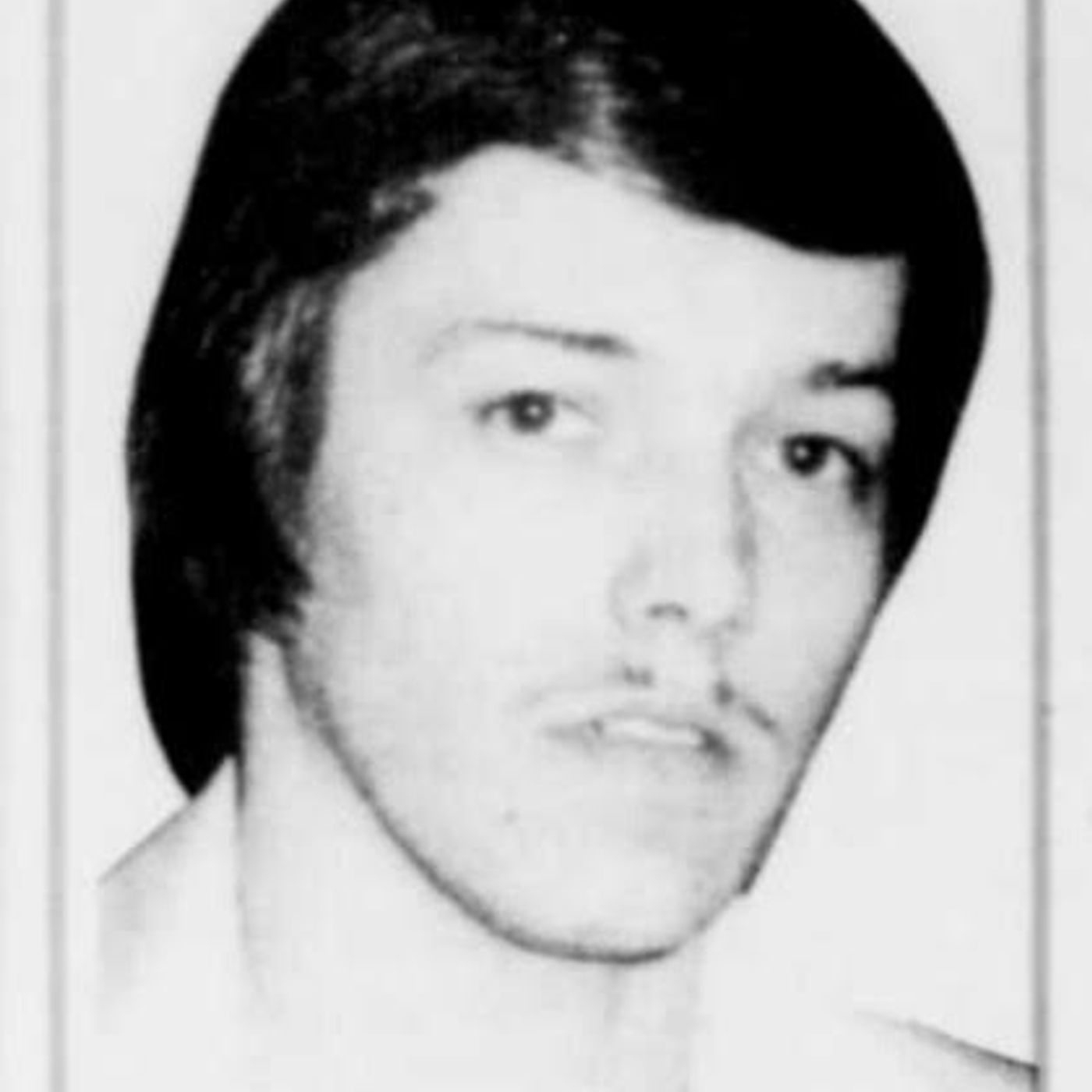
There was no... deathbed confession that we know of from jean charlin very early on when i started the the website who killed teresa i wrote about the fernand laplante trial i had read about it in a allo police annual almanac and i posted these photos of laplante charlin grimard bergeron and robert bulak typeface with this this garish red background that only only allo police can do and this was sometime around the early 2000s almost immediately i got a call from my father asking me to take it down he told me that an old college friend of his who had been friends with laplante had been contacted by quote some people in british columbia when i pressed him on who it was it became obvious that he was referring to members of organized crime um bikers who the college friend was acquainted with apparently who suggested it would be in my best interest if i did not write about such things i'm an obedient son so i did what i was told i took the story down and i will note that in 1978 my parents had no knowledge of any of the murders that had occurred earlier in the year prior to theresa's disappearance not grimard and bergeron not facto not even men on du bay this information was withheld from them by police um and they were living outside of quebec their local news would not have covered such stories it's doubtful police even made the connection with these cases themselves at the time or is it we shall see years later just before he died i asked my dad again about this episode by this time his college friend had passed so i was hoping to get some more information perhaps the true nature of his urgency um but my father changed the story now it wasn't bikers from bc it was simply that the college friend had known fernand laplante and now that he was out on parole he wanted to see that he got a fresh start so a nice story he didn't want me dredging up the past it would be better that i not talk about such things and leave the past to memory my father only ever lied on rare and exceptional occasions it's not my memory that's faulty i know what my father said the first time this is who killed teresa thanks for listening this week um a few housekeeping announcements um we're gonna bring this series to a close uh very shortly um wrapping up some things um and then the announcement um done a couple of local uh readings the final uh reading i'm going to do will be this week at flyleaf books in chapel hill that's on thursday may 26th it's at six o'clock there's like a signing thing at 5 30 but um i'll stick around if you need to sign anything i'll sign up in the parking lot for you i'll give you a copy of the book for free in the parking lot and put my john henry on it that ain't no problem at six o'clock um thursday may 26th at flyleaf books in chapel hill i will be um joined um by um a friend in conversation with eric muller uh if you don't know eric his resume is much more um accomplished than mine he's a unc university north carolina professor uh of law um teaches the school of law there graduate of yale um his story is fascinating um about his uncle great uncle leo who was marched away to concentration camp in world war ii by the nazi regime he's then written extensively um on uh incarceration of japanese americans in second world war books include uh free to die for their country and american inquisition the hunt for japanese american disloyalty in world war ii so eric knows an awful lot about uh oppressive regimes both foreign and domestic i know eric because our kids went to preschool together uh and it should be a great time he's um he's a friendly kind man and and always we'll have you know at the very least we'll have a great conversation about um 80s new wave music maybe we'll get to wish you were here uh if we're so inclined and anyone is welcome to sit and listen uh and ask questions i'll do a reading or something you'll be fine uh if you like podcasts please follow us on social media we're on instagram facebook and twitter uh youtube sub stack uh you can find all that good information on the website theresealore.com t-h-e-r-e-s-a-l-o-e t-h-e-r-e-s-a-l-o-r-e point um uh that's all for today uh this has been who killed theresa i am your host john allure and it sounds great great it's not fair there's a regiment of soldiers standing looking on the queen's bravely shouting what the hell is going on the blood-curdling town oh she talks into the ranks i bless all those grandmars who went there dying to press screen thanks me i'm just waiting so efficiently with my warm-on home to go we're just trying to do them things my boy queen my boy my boy We'll be right back.