
EPISODE · Dec 5, 2024 · 6 MIN
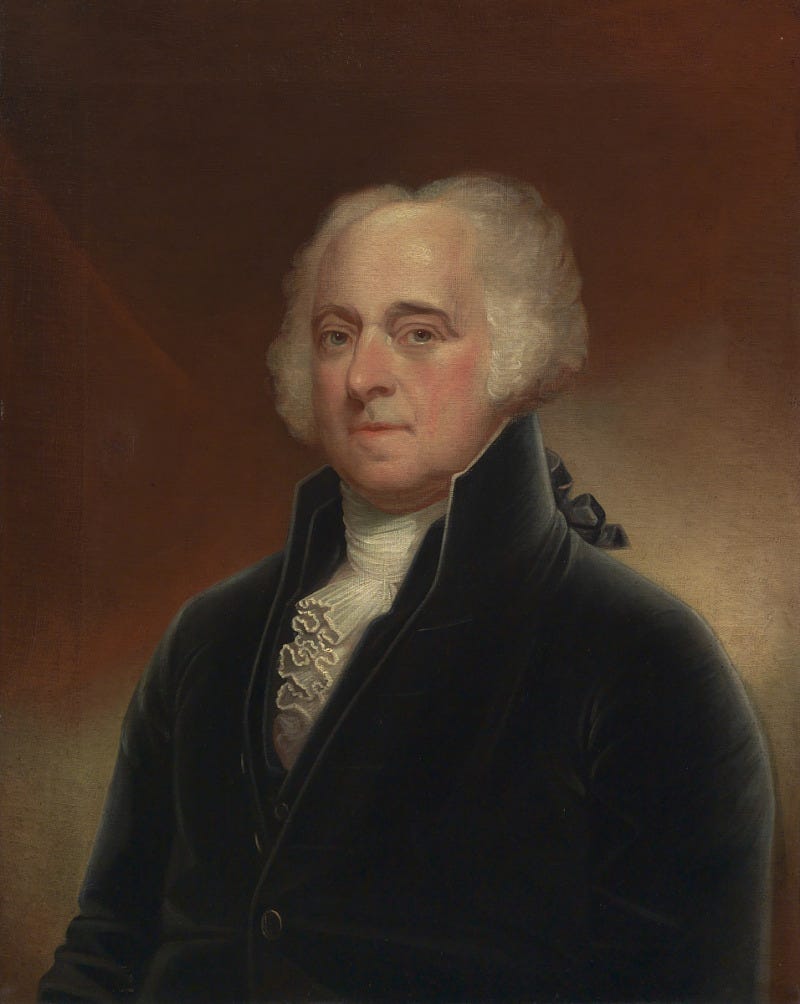
John Adams Defends British Troops
from Historical Snapshots · host Historical Snapshots
Summary: John Adams defends British soldiers after the Boston Massacre, balancing justice and public outrage in a pivotal moment in history. Please note: we’ve kept all quotes in this snapshot in their original form. March 5, 1770, was a bitterly cold evening in Boston, Massachusetts. A heavy snowstorm had left the narrow streets cloaked in a foot of snow. It was not a night for lingering outdoors. But just after nine o'clock, a bell shattered the stillness, clanging the alarm for a fire in the city, which was no small matter. Within moments, townspeople hurried from their homes, spilling into the icy streets. Now, this would not have made the night memorable in history. But some residents went to the Customs House, a government building where British officials managed taxes, duties, and trade regulations. What motivated them isn't clear. Maybe they went because a British soldier had a dispute with some local workers near the Customs House earlier in the day. Or maybe the group was looking for conflict, as tensions between the colonists and the British government had been simmering for years. Unfair taxes were one major gripe. Another came after the British government sent two thousand troops to Boston in 1768, a significant number given that the town was home to only about sixteen thousand people then. Whatever the reason, the colonists went to the Customs House that night, where one guard and eight soldiers stood in defense. The colonists began yelling and cursing at the soldiers, throwing snowballs, ice, and oyster shells. "Kill them! Kill them!" people yelled. Someone hit a soldier with a club. Then, shots rang out, and colonists fell to the ground. When the smoke cleared, five lay dead or dying in the snow. The night would be remembered as the Boston Massacre. The next day, Boston was in an uproar. Calls for justice filled the air as people wanted the soldiers put on trial. But when it came time to find them legal representation, no one wanted the job. To defend the soldiers risked being seen as a traitor to the colonial cause. And people believed that the soldiers would be found guilty in an American court. Then, John Adams was asked. The future founding father and U.S. President was a respected lawyer and a vocal critic of British policies at the time. Taking the position would be a significant risk with all the fury against the British. Yet, Adams believed in the importance of law, writing, "I had no hesitation in answering that Council ought to be the very last thing that an accused Person should want in a free Country … And that Persons whose Lives were at Stake ought to have the Council they preferred … and that every Lawyer must hold himself responsible not only to his Country, but to the highest and most infallible of all Trybunals for the Part he should Act." Though the quote can be confusing given some differences in language from then to now, his argument was that legal representation is an essential right in a free country. So amidst everything, Adams took the case. The first trial was against the captain of the eight men. It started on October 24, 1770, and would be the first trial in the history of the American colonies to go longer than one day. The second trial would be against the eight soldiers and follow shortly after. Adams began with an appeal to the jury, "It has become my duty, it shall therefore be my endeavor, to acquit myself in the course of this trial with decency and candour; reflecting that however interesting the question may be, the object of our enquiry is simply that of truth, and that this enquiry is to be conducted by the wisdom of the laws and constitution." In his closing argument, Adams urged the jury to set aside their passions and focus on the facts, "I will enlarge no more on the evidence, but submit it to you.—Facts are stubborn things; and whatever may be our wishes, our inclinations, or the dictates of our passions, they cannot alter the state of facts and evidence: nor is the law less stable than the fact; if an assault was made to endanger their lives, the law is clear, they had a right to kill in their own defence; if it was not so severe as to endanger their lives, yet if they were assaulted at all, struck and abused by blows of any sort, by snowballs, oyster-shells, cinders, clubs, or sticks of any kind; this was a provocation, for which the law reduces the offence of killing, down to manslaughter, in consideration of those passions in our nature, which cannot be eradicated. To your candour and justice I submit the prisoners and their cause." After days of testimony and deliberation, the jury acquitted the captain and six of the soldiers. Two soldiers were found guilty of manslaughter, but their punishment was light: they were branded on the thumb with a large "M." It was a surprising outcome but one that, ironically, would earn Adams much respect. Reflecting on the trial years later, Adams wrote, "The Part I took in Defence of Captn. Preston and the Soldiers, procured me Anxiety, and Obloquy [strong public criticism] enough. It was, however, one of the most gallant, generous, manly and disinterested Actions of my whole Life, and one of the best Pieces of Service I ever rendered my Country. Judgment of Death against those Soldiers would have been as foul a Stain upon this Country as the Executions of the Quakers or Witches, anciently. As the Evidence was, the Verdict of the Jury was exactly right." Sources: * "1773. March 5th. Fryday. [from the Diary of John Adams]." National Archives, https://founders.archives.gov/documents/Adams/01-02-02-0003-0002-0002 * "Boston Massacre Site." The Freedom Trail, https://www.thefreedomtrail.org/trail-sites/boston-massacre-site * “Boston Massacre Trial.” National Park Service, https://www.nps.gov/articles/000/boston-massacre-trial.htm * McCullough, David. John Adams. United Kingdom, Simon & Schuster, 2001. * “John Adams.” National Portrait Gallery, Smithsonian Institution, https://www.si.edu/es/object/john-adams%3Anpg_NPG.71.4 * Reid, John Phillip. “A Lawyer Acquitted: John Adams and the Boston Massacre Trials.” The American Journal of Legal History, vol. 18, no. 3, 1974, pp. 189–207. JSTOR, https://doi.org/10.2307/845085. Accessed 3 Dec. 2024. * "Thomas Gage." American Battlefield Trust, https://www.battlefields.org/learn/biographies/thomas-gage This is a public episode. If you'd like to discuss this with other subscribers or get access to bonus episodes, visit historicalsnapshots.substack.com/subscribe
Embed this episode
Ready to play
John Adams Defends British Troops
No transcript for this episode yet
Similar Episodes
No similar episodes found.