
EPISODE · Aug 9, 2025 · 9 MIN
John Hawks: varieties of humankind all mixed-up
from Razib Khan's Unsupervised Learning · host Razib Khan and John Hawks
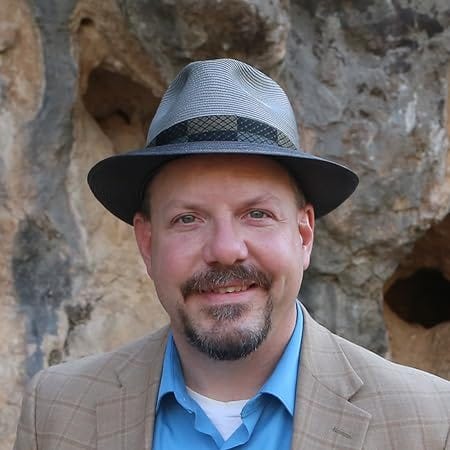
This is a free preview of a paid episode. To hear more, visit www.razibkhan.comToday on Unsupervised Learning, Razib talks to John Hawks, a paleoanthropologist who has been a researcher and commentator in human evolutionary biology and paleoanthropology for over two decades. With a widely read weblog (now on Substack), a book on Homo naledi, and highly cited scientific papers, Hawks is an essential voice in understanding the origins of our species. He graduated from Kansas State University in 1994 with degrees in French, English, and Anthropology, and received both his M.A. and Ph.D. in Anthropology from the University of Michigan, where he studied under Milford Wolpoff. He is currently working on a textbook on the origins of modern humans in their evolutionary context. Hawks has already been a guest on Unsupervised Learning three times.In this episode, Razib and Hawks focus on a very specific question: What were the different contributions to the heritage of modern humans in a world more than 200,000 years ago that was inhabited by at least half a dozen hominin species? First, Hawks takes us back to the year 2000 and his early work extending a more multiregional framework of human evolution, exploring what could be gleaned from the archaeological and paleontological record. Then Razib and Hawks discuss the ancient DNA revolution and the discovery that modern humans had ancestry from Neanderthals, as well as from an entirely new species, the Denisovans. They also examine the fact that, unlike Neanderthals, Denisovans appear to have been separated into very different regional populations that made distinct contributions to various modern populations. Razib also asks Hawks about the discovery of new pygmy human species in Luzon, as well as the current state of research on Homo naledi in South Africa and the Hobbits of Flores. Hawks contends that DNA will likely be extracted from all these lineages at some point and, if not, protein sequence data may be obtained. This would finally give researchers the statistical power to evaluate the possibility of extremely archaic admixture events. Hawks and Razib also address the potential role of natural selection driven by introgressed genes from sister lineages of humans and how this shaped modern variation.
Embed this episode
Ready to play
John Hawks: varieties of humankind all mixed-up
No transcript for this episode yet
Similar Episodes
No similar episodes found.
Similar Podcasts
No similar podcasts found.