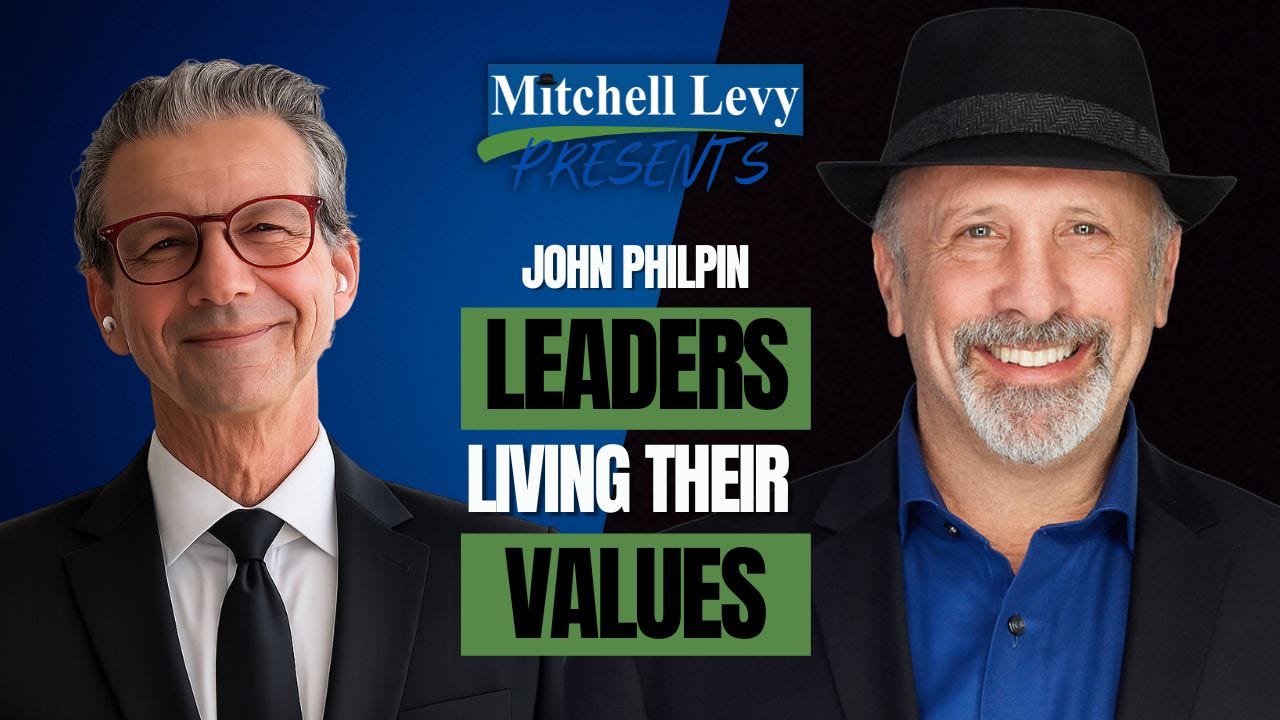
John Philpin on Leaders Living Their Values Interview
from Dr. Mitchell Levy Presents Hosted by Dr. Mitchell Levy
What happens when decades of experience in technology, global business, and leadership lead to one simple conclusion—that people matter more than profits? Business strategist John Philpin shares his journey from growing up as a UK "army brat" to becoming a Silicon Valley executive and ultimately a people-first advocate based in New Zealand. He explains why traditional corporate culture often prioritizes shareholders over individuals and how organizations can create more human-centered workplaces. John reflects on how COVID-19 and a cancer diagnosis reshaped his life and perspective, discusses why education and business systems often reward compliance instead of curiosity, and shares his approach to working only with coachable clients. He also explores authenticity through fairness and clarity, and explains why his book remains relevant for leaders navigating constant disruption and change. Quotes: * “Not all revenue is good revenue.”A powerful reminder that taking every paying client can hurt your business, drain your energy, and compromise your standards. * “We, as humans, spend too long serving the master, and the master is the corporate.”John challenges the idea that people exist to serve corporations, instead arguing that organizations should serve human needs. * “We train, we don’t educate.”A critique of modern systems that produce compliant workers instead of curious, discerning thinkers who can drive real change. Takeaways: * Corporations are still largely optimized to serve investors rather than humans, and John’s mission is to help leaders shift to genuinely people-first thinking without sacrificing commercial effectiveness. * Coachability is a non-negotiable filter for good clients and leaders; saying no to uncoachable clients is essential because not all revenue is good revenue. * Our systems—education and corporate alike—tend to train for compliance rather than curiosity, which stifles discernment, innovation, and the kind of authentic, fair leadership John advocates. Timeline: 0:00 – Mitchell welcomes listeners, introduces the theme of credibility, and brings on guest John Philpin.0:50 – John shares his background growing up as an army brat, working in Silicon Valley, and eventually relocating to New Zealand.2:00 – John explains his mission to help corporations shift from shareholder-first to people-first thinking.3:10 – Mitchell challenges whether corporations are truly changing, noting their ongoing focus on investors.3:40 – John talks about the rise in new entrepreneurial businesses and how many are driven by layoffs rather than choice.4:15 – John describes his career in software and how it evolved into a people-first philosophy.5:20 – He recalls using technology in corporate roles to empower individuals and improve customer experiences.6:10 – John shares how a holiday to New Zealand turned permanent due to COVID and a subsequent cancer diagnosis.7:00 – He reflects on feeling both more and less empowered living in New Zealand compared to the US.8:00 – John compares New Zealand’s human rights and indigenous protections with those of other countries, especially the US.9:20 – He explains how the actual enforcement of protective laws shapes everyday business behavior.10:10 – John discusses New Zealand’s habit of “fixing things locally” and how that can limit looking outward for solutions.11:05 – He describes what makes a great client: paying attention, experimenting, and staying engaged in long-term change.12:10 – John critiques hyper-specialization in marketing roles, which fragments work and obscures the bigger picture.13:10 – He explains his value as someone who connects the dots across organizational silos.13:55 – John shares why he loves turning theory into practice and diagnosing root causes in companies.15:10 – They discuss internal power dynamics and how strong departments can mask the real issues.15:55 – Mitchell asks what John does if a client turns out not to be coachable.16:10 – John clarifies that he evaluates coachability before accepting any engagement.17:10 – He recalls a promising New Zealand prospect who suddenly pulled back, likely due to internal fear of change.18:00 – They talk about why many people stay stuck in corporate roles due to financial obligations and fear of the unknown.18:40 – John criticizes systems that train people to comply rather than to think and be curious.19:30 – He warns that many new entrepreneurs may struggle if they can’t be discerning or say no.20:00 – John shares his maxim that not all revenue is good revenue, stressing the need to reject misaligned clients.20:45 – They explore cultural norms like “don’t answer back” and how they discourage questioning authority.21:40 – John traces modern education back to factory-era needs, misaligned with today’s fast-changing world.22:30 – He notes how many tech leaders and AI practitioners learned outside traditional academic paths.23:15 – John points out everyday rules that quietly limit curiosity and exploration.23:50 – They connect these patterns to frustrated employees and corporate resistance to change.24:35 – John describes how AI rollouts and surveillance tools naturally trigger fear and pushback.25:00 – Mitchell shares that he experiences John as deeply authentic, with no BS or hidden agenda.25:15 – John explains he focuses on fairness and clarity rather than chasing “authenticity” as a buzzword.26:00 – He talks about long-term professional relationships built on trust and straightforward communication.26:40 – John reflects on how his work is best understood experientially, not through a simple label.27:35 – He gives his contact details and clarifies which “John Philpin” he is online.28:00 – John and Mitchell discuss his book about business owners blindsided by a changing world and its relevance to COVID and AI.29:10 – John considers adapting the book’s framework into a guide for navigating a cancer journey.30:00 – Mitchell thanks John, invites listeners to share their biggest insights on social media, and encourages them to tag both of them.30:40 – The conversation closes with a reminder about credibility, clarity, and living your values. Conclusion: This discussion highlights how rapidly shifting realities can expose the gaps in our systems, from investor-obsessed corporate cultures to education models that reward compliance over curiosity. John Philpin’s journey—from global corporate software roles to a people-first advocate living in New Zealand, navigating both COVID and cancer—shows how personal and professional shocks can become catalysts for deeper clarity. His insistence on coachable clients, fair expectations, and honest, long-term relationships offers a practical model for credible leadership in uncertain times. The rise of entrepreneurship, the spread of AI, and growing frustration inside organizations all point toward an urgent need to re-center humans, not just shareholders, at the heart of business. Ultimately, the challenge for leaders is to develop the discernment to say no to the wrong opportunities, to say yes to meaningful change, and to have the courage to keep learning as the world keeps rewriting the rules. Links: * Website: https://mitchelllevy.com Guest – John Philpin * Main website: https://philpin.com * Blog: https://john.philpin.com * Linkedin https://www.linkedin.com/in/johnphilpin/ Get full access to Dr. Mitchell Levy Presents at mitchelllevy.substack.com/subscribe
Embed this episode
No transcript yet.