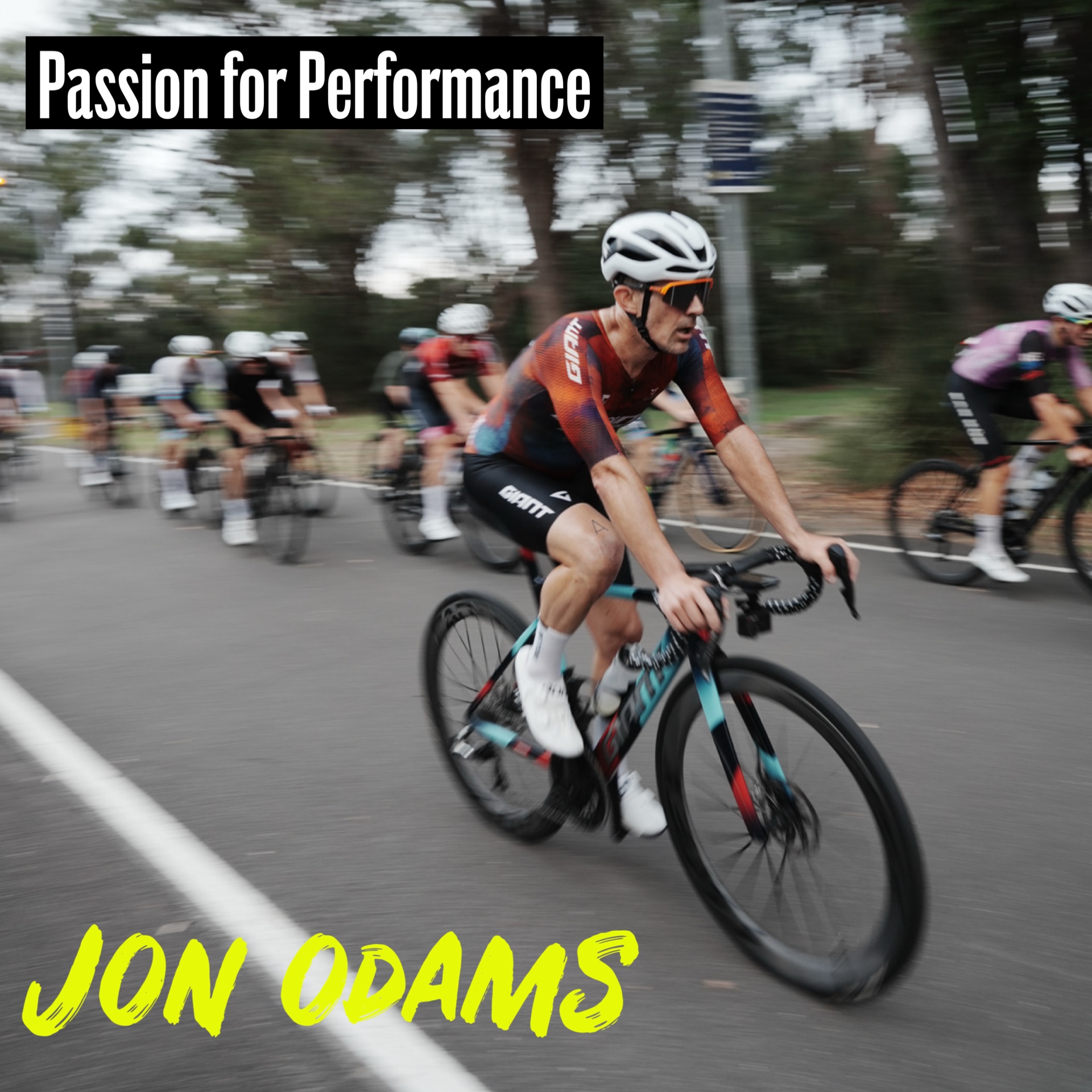
Okay, hi everyone, welcome back to the podcast. I'm really pleased to have a guy here who defines performance to me. He's always at the top of his game and he'll be probably feeling a little bit weird about me saying that. But yeah, just a guy that is always performing always seems to be fit and seems to be doing all the right things.
Local guy and Sutherland Schire, his name is Johnny Odom's, welcome Johnny. Hello, thank you for having me. Okay, let's kick things off by talking a little bit about Johnny the person, the person who is the job, the family, etc. Give me a good run down, I know you are.
A good run down. So I suppose the first thing I'd say on the dad, I have two daughters, they're 14 and 11. I think that actually having kids is actually maybe better, which I think is a little bit controversial to what most people think. My wife, at least is a hairdresser, she has her own hair, someone might help her out with that as well on the back end, which I enjoyed that as well.
I've raced for 25 years. I think my first Mountain White World Championships was in Daniel 25 years ago, which is pretty cool to have, I suppose, had such a journey in cycling and in sports. A lot of it. I am 42 now.
Okay. Yeah. So, yeah, I just enjoyed the journey, I enjoyed the challenge of it. I work for pure sports nutrition, I have done for the last year or so.
I've always been interested in nutrition and stuff like that. I used to work across the road from a go-vider, I was owned by a guy called Tony and he made me interested in it. He'd like, try this, see what the feeling is of this. Yep.
Yeah, just, I mean, everything from the basic sort of protein recovery all the way through to using beaten alanine and alglutamine and all those sorts of things. So, just getting a little bit more of an understanding. I certainly wouldn't say that I'm an expert in it, but I know enough to be dangerous. We're working the industry too now.
Yeah. So, with pure sports nutrition, their endurance focused, I suppose, clean products with, like, gels and hydration drink mixes, different levels of that. They have a high carb drink mix and beetroot powder, black current powder, proteins and stuff like that as well. So, learning and knowing how to use that to my best advantage, I think is really good in helping others as well to understand it.
It's also something that I enjoy. So, you're a racer, so a fair bit lately at the tries. Yeah, yeah, I mean, that's actually really interesting to not just go to mountain bike and gravel events and, yeah, attending a couple of try events and I did high, went to Husky and work there and also the world multi-sport games in town. So, it's very interesting to, I suppose, observe the wider variety of athletes that are there and the different levels that they're at.
Yeah. But you think that mountain bike has a bit of a more tighter band of athletes? I think so. I think that mountain bike probably has a little bit less female participation because of the, I suppose, the perceived challenge of riding technical trails and stuff like that off road.
Whereas, like with triathlon, you've got, you can come from a riding background or swimming and there's a lot of people on fitness journeys that then just embrace triathlon and love the challenge of it as well, which is pretty cool. Yeah. Nice. They're all in triathlon.
I totally mop-boggled. Pretty broad group of people that I call my mates from riding friends and I've got to, I suppose I have an equal amount of friends on the bike and off the bike, which is a little bit interesting. I don't off the bike. Don't generally talk about bike riding too much.
Okay. On the bike, yeah. I mean, everything from like local mountain bike groups to doing road bike rides with them with some real strong riders and a number of my friends have got into triathlon and trail running and stuff like that as well. So I think that it's cool that cycling, I suppose, is a common link between all of us and probably like, I suppose, a mental basis that you can chat and hang out with your mates and yeah.
Yeah. A lot's funny like that, isn't it? I haven't discussed this with my wife and it's, yeah, your mates. I don't know.
I think I observe that girls tend to stick with mates from their school a lot. They're very good at friends girls and guys are very, we just like hang out with people that do things same as us. Yeah. Common interest and stuff.
Yeah. Funny my youngest daughter asked the other day, she's like, oh, you friends with anyone from primary school still. She goes to the same primary school that I went to at one a day and I was like, oh, no, I don't think so. And then literally one of my mates, probably my only mate from primary school still messaged me literally like two minutes.
And I was like, oh, okay. Yeah, I still got a couple of people there. But I think that the mental side of cycling and probably running as well is really important for guys because as guys get older, they tend to be more grumpy and probably put in less effort as far as like cultivating friendships and stuff like that. Yeah, we do.
They're just like, unless you agree with me, you're against me sort of mindset, which I think is interesting and girls tend to make the time to just hang out and go and have a coffee or go and have a coffee or go and have a glass of wine or something. Or as guys do not do that. Guys aren't going to be like, oh, let's go and sit around at the coffee shop unless they're like retired dudes who are like 80, which seems to be a thing of coffee shops. I look forward to that getting to that point.
Yeah, it's funny that you go to a restaurant on a Saturday night, for instance, in the shy hat and there'll be a bunch of tables there with girls around it. It's again, good. We've got to be better at that. Guys have got to be better at that cultivating relationships.
As you say, developing an understanding of what other people are thinking, we're going to do for you. Yeah, it's good. Yeah, it's good. I really love it because it means a lot to me at HVT.
There's a really good side sometimes to having maybe not agreeing with someone because that actually sometimes strengthens bonds between people. And I'm a big one for that. So you don't want to avoid confrontation, but you don't want to get it right because it does make there's an anti-fragile on us to it where you get the little tiny disagreements that build a nice bond. Yeah.
I promise the viewers we're going to get to some really interesting stuff on training because you know a lot about training. I know. But let's just go back first. Yeah.
Where did you just cycling story begin, mate? Cycling story is a little bit of a funny one. So when I was growing up, I would say that I was overweight as a kid. Both my parents were not athletic at all.
Both of them were English and loved to drink and party. I was an only child. My parents were both older as well. They're 40s when they had me.
I was like the only kid, I suppose, that all their friends had old kids who had been 15 years Which I think that when I was growing up, it really made me, I suppose, realise that what I wanted to do when I was younger, I wanted to have kids when I was younger, I wanted to have a broad range of friends or as they tended to hang out with the same group of friends that were from the UK as well. I think that it's just what was going on. No, what I was trying to do was to paint a picture here of the early influences that actually lead you towards cycling. So cycling is a very individual sport and there's not, obviously there's people doing it.
There's a lot of people doing it now. But I'm really interested in the fact that you seem to gravitate towards it very early instead of a team sport. You weren't into team sports. The type back in, yeah.
I grew up in that sort of thing where they were all the older kids who were always playing sports and going away and soccer in this night, I did play soccer when I was really young up until I was maybe six through to, I must mean about 12 or 13 maybe. And then I absolutely loved your games. I was reading that I just used to do like those little ones before I suppose it was Game Boy and stuff like that. And I remember when the PlayStation was coming out and I was like, all I wanted for Christmas was the PlayStation.
It was like new and it was like super expensive at the time. Mum thought it was better to go mountain bike. Oh, right, okay, there it is. There it is.
And us from Mountain Bike and Santa, the jerk brought me a mountain bike and thanks Santa. Yeah, I mean my parents both, obviously like they work a lot and they tended to both work a lot on the weekends. Mum was a real estate agent and dad worked in TV. So I always out, I was left with my own devices.
And I just started going riding further and further. I think that it would be interesting now as far as like if mobile phones and like sharing location was a thing then as to how comfortable they would have been with how far I went. But I just remember, yeah, riding up to them, like the Dublin Crit Track and it must have been like, I feel like it would have been 1995 or something like that, really early. Okay.
Must have been literally just after Christmas and I saw they had like a little mountain bike race there and they were like, why do you want to race? And I'm like, oh, I don't think I'm going to race anyway. You can just have a race anyway. That's cool.
And I did a race and I was a couple like good guys and they're like, oh, you want to come out on the club rides and stuff like that. And I'm like, oh, I don't think I'm really ready for that. And then one of them was like, oh, well, I'll take you out for a ride and we can just cruise along. And then if you want to go faster, go faster and stuff like that.
And I remember didn't have any kit or anything like didn't even have riding shorts or anything like that and went out for like a three hour ride the very first time. And I was like, oh, like I got a long way to even making this comfortable and terrible. But yeah, I did. And then just went from there.
Really, I remember maybe a year or so after that, like I was friendly with like, I remember the St George Cycling Club and Red Dutton, let me go road bike. I remember it was huge. I was a giant coincidentally as well. It was the first road bike that I ever rode.
And he was like, I'll come out on these road guides. And I was like, sorting off 15 and just getting up at like five AM and riding the bunches and stuff like that. But it's not that my parents were very caring and they were always making sure that I was looking after and stuff like that. But at the same time, I don't know.
Like, I don't think they would have been too stoked if they knew that I was riding the city and stuff like that and all those sorts of things. And then the journey just went from there. So I suppose I enjoyed racing a little bit and apparently stuck me to some cross country races and then sort of downhill with all the jumps and stuff like that and like the real technical trails and that's that dreamy and a lot further. And I love the technical side of that.
So started racing downhill, won a national championship in that, made the world's team in 2000, did downhill world championships as a junior and got six, which is pretty good at the time. Where was I? In Sierra Nevada in Spain. Wow.
Yeah. So that was pretty exciting to. That was my first trip overseas. So I was like, oh, it's only like a five minute downhill, technical time trial basically.
But real technical orientated and bike stuff and things like that. So full face helmet. Full face helmet. Yeah.
It's surprising that you get surprisingly high heart rates and that don't you? Because it's so explosive. Yeah. So explosive.
The downhill guys now basically train and probably make sure like the technical side of things and then real explosive strength. Do that. Like 1500, 2000 watts rinse and stuff like that. Like a big output and real solid like I suppose not the same build as like a road or a cross country or a triathlete.
It's super interesting because you see videos on it and like by nature it's downhill. Like it's, you tend to expect that not to be explosive power but you get opportunities of like 15 pedal strokes. Yeah. And so it's all about like that real explosive power output and then tying it together with the technical side and not breaking.
So yeah. It's going to be a level of craziness to your. Yeah. Yeah.
But you're like craziness but not crazy because you know it's obviously skill based. And if you're confident and competent you'll get good. Yeah. I think you're better.
You are the less risk to take. Yeah. You're either like technical and make adjustments and good with analysis or you're just crazy. So you've got horrendous bikes that up and what's the downhill scene like now?
I think that I think it's still strong. I think the World Cup sort of thing has changed a lot and it's gone down an avenue of that real technical sort of analysis thing. They have like suspension data analysis and stuff like that on their bikes. Like it's pretty full on.
How long is it? I don't know. How long is it? Anything like this?
Well Daniel hasn't used any Olympics. It's in the Olympics. It's in the Olympics. Cross country was in the Olympics since 96.
I remember watching Atlanta. Yeah. That's pretty cool. I actually got to test ride the Sydney 2000 course.
Oh, that's all right. So I have my own Sydney 2000 Olympics number plates at home which is pretty cool. Really? Yeah.
Glen Jacob's who's like he owns a World Trail and built most of that course out there and I was friendly with him from it. Yeah. Yeah. Fairfield.
Yeah. But yeah, it was pretty cool to go out and ride the course and give my question all two senses. Daniel Jr. I don't know if he's got a country course.
That's the first one in the area. Yeah. So it was empty first and then I guess as a natural bike product you get in the road. Yeah.
So it was that I was involved in the entry to road too. You want to join? Because you're almost a giant. Yeah.
It was just going to be instant. He worked at Bates Bikes at the time and they did giant. So it was a giant that I first got on. I think it must have been about the same time as maybe it was a little bit before I actually went overseas and raced downhill that I got selected for some Sydney based junior road development thing.
Yeah. I remember going to that and I was doing skills things and I was like this is a waste of time. I remember that. It was more the actual coaching.
They gave you a written thing, a coaching book and stuff like that and they were like go and do this and I suppose that that would have been my very first insight into actual structured training and going and doing things. Before that I remember. It was literally a written training diary and they would have filled out two or three weeks worth and then yeah and then you're writing how you feel and average heart rates and your resting heart rates and stuff like that. The only thing that I'd done probably before that was a little bit specific was before Strava I was doing segments.
I had like a stopwatch and then my dad had like sold it into the back of it. That was on my zip tied to my stem and then I'd have a little cord with a little start stop button on a thumb thing. And I just used to love that. I remember going and just finding trails in the National Park like real rocky like downhill racetrack sort of stuff things and I'd just like go out there and just do the same section like I was on it.
I'm a massive fan of it. I love the leopard on garments. Yeah. And I started here.
It's like oh I get all this. I'd say this is all it doesn't have to be a Strava segment. It can be your segment as you so. Yeah and I remember I don't know.
I mean years later I remember hearing somewhere about like mountain bike technical skills. You're actually instead of some people think that by writing in all different types of train and all different types of conditions you're going to get faster but you're actually going to get faster if you ride the same section over and over again and master one section with a variety of different corners and technical things within that section. So I think that really helped to me actually and I actually think the video games even before that helped like playing like rally car games and you do the same reflexes and reflexes and breaking points and all those sorts of things. Oh yeah.
So you learn how to lean into a coin like it's about cornering isn't it? Yeah. It's about getting traction motion. Yeah.
Maximum grip. Yeah. Well making sure that you're holding as much speed as you possibly can and I suppose jumping over a hole or going through the hole or yeah that's the thing. I mean now in TV they actually can just ghost it and have like the actual rider and then the ghost of maybe the fastest rider.
Yeah. You can actually watch that by the way. That's pretty cool. That's pretty cool.
So I'm picking up that you went to road but you sit in front of me here as a mountain bike. Yeah. That road sort of thing that I was part of I think I remember doing races Friday night so they could. Yep.
And I remember doing seagrading winning my first one and then they're like alright you can go to be great and I won my first one. And then I was like three great races in I was in a great and I was like probably 16 or something like that. So and I just remember like I was like I'm never going to win a great. This is never going to happen.
I'm just sitting on trying to stay as long as I can but I think it took me a few weeks to even just finish a great. A great. A great. It was a different boost.
Yeah. Like those days or something. 40 to 50. Yeah.
Yeah. So I was like Wednesday morning going riding stuff like that and yeah there was like a couple of guys from Discovery and yeah just yeah a lot of strong strong riders and at that stage as well locally we had a lot of like professional mountain bike riders. There was Rob Woods who rode for GT. There was Josh Fleming who rode for felt from memory Paul Riani who they all raced at World Cups and World Champs and stuff like that.
So Rob Woods is still in the show. Yeah. Yeah. I think that he's a fire fire scene every now and then like yeah just all three of those guys are just like really good guys.
I didn't see any. I didn't see any. I think so. Always a bit earlier.
Ah. I was a bit late. No I think Rob did. I think Rob raced.
I think maybe Rob and then Riani and maybe Kadel and Sid might have been four of them because yes he'd tab later we also did a huge amount of racing at C's as well. He also lived locally for quite a while. So what was in the downhill scene? Was there a lot of sport sites involved in those days?
Not really. No not really I mean I think that when I went over to to Junior World to the French were like next level. That was. French was like French was the dominant country they had the world champ at the time I think he might have won six or seven in Elite and he'd already won two or three as a Junior before that.
But yeah they would have coaches who would stand by the course in time visually time riders between particular sections so they could know who's making up time where. Obviously before having like live timing and stuff like that they were going down that route at that stage. So I think seeing that made me think that I enjoyed their view of this sport. It's not just about like saying off the brakes but that sort of analysis sort of side of things.
I think that really actually helps me now in that I think that I definitely have time when I'm going really well but there's also time where I'm not going and I'm not at full fitness but I think I can look at events and figure out how I can negate some of those limitations on fitness or whatever at the time. So how do you do it now? If you're doing some downhill sections in the park with some how do you how do you time yourself? I will start off.
You do with start off? You hit segments. Yeah. So it's not I mean depending on the time of year and how the trails are going like I'll go out there and just pick like four or five segments.
It's a national amount. It's still pretty competitive. There's a lot of people out there that will pop a segment every now and then normally they'll go out and specifically practice one segment to get it. I like to buckle it down a shopping list where you go out and just put five down and then just go have a good ride and make sure that everything's all set up because riding on that limit on a mountain bike is very different to riding on a race space limit sort of thing on a road bike or a triathlon bike because you've got it's so much easier to crash I think.
Not that it's I mean road bike the main thing about not crashing is probably having someone take you out or over like wheels or something like that. I suppose like a triathlon bike again is still possible to crash but it's probably just going too fast around a corner or something like that. You don't crash much those days. No, no, I try to avoid big crashes obviously but little crashes I mean little sleigh out and stuff like that if you're riding near the limit then you're going to get that.
You do have to be pushin it. You've got to know the time and the place to do that. Probably a fair bit of fear of road because road is not a soft landing. It's always a hard landing so yeah I'm just mindful particularly like when we go and do bunch rides like the umbilis.
The Saturday mornings down below is a pretty common ride for us but I mean I like to pin it on it's right but when it's right I do take it easy because of oil and stuff like that because if you crash there and you break your wrist or your elbow or something like that and that's it the most part of the year is going to be done. So you know on the circuit and the shy of it's been pretty diverse kind of guy. You've got a diverse skill set, the mountain biking, gravel, road, downhill cross country. That must be as it's intentional or that's just the personality and you just like riding bikes.
I just like riding bikes and I think that the reason why I'm still riding now is because I like a broad variety. I mean I definitely go through times of like a couple of months where I might not even ride my bike. I'll just ride the bike or ride the gravel bike and the road bike but having I suppose that diverse range of things bikes and stuff like that to go and ride keeps me interested. Is there a coach behind what you're doing now?
No I coach myself so I coach a few other local guys as well. Yeah, I know it's all mostly just like just just mostly just road and mountain bike dads. I think that's probably my happy spot because I understand as I'm a dad as well. Yeah, I have had coaches like last year I did have a coach from South Africa from Science to Sport.
Really good great insight and I like I didn't enjoy it because they're inside I mean they the guy that I had actually coached a fair few like top top level I suppose grappling mountain bike riders so it's good to get the insights and see what I was thinking and how different that was to their approach. Which was it was definitely a learning curve to a lot on board. What about the email? Email, no that's just for fun but I mean it's one way.
It's pretty legit sort of do some kind of. It's proper racing like I mean at like a club level it's probably not but at national chance like the guys who were there when I raced the last couple of ones I missed this year's one but the two before that I won both of those two and yeah their proper races it's hard and because the bike weight is a little bit higher as well they also changed the normal cross country course to make it more technical I suppose more of a challenge for the e-bike when you've got that assisted climbing on it. So it's a cross country. Cross country loop yes.
So how long are the races? Probably just a little bit more than an hour. Now I have 15 something like that so I just got to make sure that you bikes it up. It's almost like a good mix between the downhill and the durosol racing and cross country.
What about the gravel scene? Gravel stuff I'm enjoying doing gravel rides more than gravel races I think. It's a pretty good result in gravel. I mean I've had a couple of real good ones certainly I'm there or there about so I don't think too many people would write me off in one of the shorter I'd say shorter than 100km race it's still quite long but yeah I do enjoy the longer journey type ones.
Thunderbolts adventures won the race recently which is like a 230km but like 60,000 verticals are real quite hilly over barrington tops and I think that only what's peaks challenge is like four thousand. It's less yeah it's definitely less. But I mean something like that it's not so much of a race but it's more of a self challenge. Which is super awesome and yeah up there I just had real good day, good food intake and paced myself really well and got the course record up there which is good but it's interesting because some of those gravel races are stuck in such beautiful places that you're almost not doing a justice to race it.
You need to get back and ride it slowly with friends. It's got that vibe it's a bit of a cross. I do think that more and more as I get older I'm like it's a waste to come to this place and race here. It would be great just to come here and ride.
The long-grain fondos not just gravel but also road peaks challenge and rides like that. They've got a bit of a triathlon for the time with the sub 11 or sub 10 or sub 9 or whatever it is. What do you want to do? I think sub 7 or 8.
Somewhere around there. Yeah I mean I think that I don't know it's interesting I think that because there's less and less open road races the fondo then becomes the road race. So whether or not the event organizers want it to be a race. I don't know whether they did.
It is because that's a big place for the bunch as far as like a proper like going into a similar tour to front stay or a one day stay trace and that's as close as we're going to get in Australia I think. Yeah I think for the mass market anyway. So the interesting thing will be whether it becomes like a gateway drive towards like a like a graphite in Brazil and you know all the big one day races in Australia. I don't know whether they're dying off or what do you see.
Yeah I mean one day races are still relevant in Australia. I think they're still very much a thing but how many people are doing them. It's one of the things like the fondo riders are probably going to go to like a sea grade or something like that. I don't even know if they have it as the same distance as like a graphite in Denver or if they shorten it or what they do with something like that.
But yeah I know like Chris Miller did both peaks challenge and then did graphite in Denver. He's obviously like real competitive as well so. Right so. Yeah.
Okay let's talk about the rainbow star sign. Pretty big. Yeah you went to Keynes recently. Was that only about three or four weeks ago?
Oh I think yeah two or three weeks ago. Masters Mount bike cross-country Olympic world championships. In just to start you can't have any UCI like global points which I normally have. So if you have elite points you normally can't race.
This year my lovely wife Torque Mina going on a barley holiday the day after national Mount bike championships that were held at Mount Bull which made it logistically very difficult for me to go and do. So I decided not to go to national championships which meant that I didn't have any UCI points which then meant that I could do masks as well. So a bit of a coincidence because I hadn't done that on purpose. And I guided a race with called Adrian Jackson from Melbourne.
He won last year and I know that we've had some good races before. Sometimes he's a little bit quicker. Sometimes I'm a little bit quicker. So you're in with a shot.
I knew I was in with a shot. I knew I was going to be close. Didn't know that he's guys or anything like that. I wasn't feeling particularly great beforehand.
Like doing some four by four minute effort up a local climb. I wasn't quite hitting what I wanted to be hitting. But I just kept on making sure that I was doing it and doing those and doing the sprint sessions and stuff. Because I had to go from the Thunderbolts to Adventure races like a couple of weeks before which is around about a 10.
So I did sub 9 but going from that endurance focus to trying to shorten it right up to a half event. So I just imposed on myself no rides over two hours unless it was like a real light recovery ride. Slightly more perhaps. What did you do that?
Because just trying to shorten up the form of little bit I suppose. But I just stuck to the plan. So you felt the longer endurance stuff wasn't conducive to performing set what you're doing? Yeah for that master's world race I really needed to make sure that the power up was a shorter sharper power output.
Which is not really possible to change that too too much in a couple of weeks. But I just stuck to doing the short sharp stuff. And then I did a heap of heat training on Zwift as well. I'm a big fan of doing heat training.
I think it's a real secret one that makes them really big gains in every time I've done it. Heat as in heat as on jump. Yeah so no fan, writing Zwift no fan on and then I normally run a thermal long sleeve jersey. And depending on how cold the ambient temperature is also, yes and will be perhaps a user called Body Temperature Sensor that goes on my heart rate strap.
And you're trying to zone on it? I just, well essentially I trained a zone but I just pick a pace partner with Zwift and then one of my heart rate. So between heart rate and the actual core temperature sensor which I can see both of. Just make sure they don't boil over too much.
Because I knew that Ken's is going to be hot, comparatively hot and humid. So that would be an advantage even if it doesn't make my numbers higher. Yeah we're going to Ken's in less than a month. And for the Ironman, 26 degrees, 82% humidity.
Yeah there's no start swing when you're walking around but it's going to start running. You start sweating pretty profusely so. To make sure that I had that up my sleeve and I was watching the people that I knew who I was racing against watching their starves to see what they were doing. And I don't either have it on hidden or they weren't doing it so I was like there's a tick for me.
It's not my sleeve. Because when it came to race though I found that I actually turned all the data off on my computer just right to feeling. Now other than getting through the traffic at the start because they do a call up sequence. So Adrian was the first thing last year's win.
I was on the third row so. Oh there's a little bit of room I managed to get through most of my guys to third wheel into after about a kilometre into the first single track section. Which I needed to be in that front little group. Yeah so got where I needed to be and then my plane was just to probably pace myself off Adrian.
I thought that he was going to be a better climber while I would be a better descender. The course is quite technical up there so I thought if I could just stay on his wheel then that would be good and then maybe get to the end and I'll try to light the fuse. Maybe a lap or two to go. Yeah.
On the second lap round I realised that I thought that he was riding quite on his limit. Two laps on. Two laps on. Two laps on.
Yeah so I thought if he's on his limit now then I can maybe just put one hard lap in and get out of sight. Because after your own sight on the mountain bike it does become a lot harder to hold the same speed. Someone's not showing you the technical line and that sort of thing. So I think that I was a little bit tricky and I didn't show him any of the lines that I was taking as far as I'm going down to sections.
Or how quick I was going. It's not really. Is it a power limit? Is it a power limit?
No, I think you're using power. Yeah so I've got a power meter on my bike but I don't, yeah I just had the screen turned off. So it's my computer's recording but I don't look at it. I just read to feel.
Okay. I think the lap time was about 12 or 13 minutes and then after I broke away I just did basically 30 seconds or so a bit quicker. Then it got every lap and just built up a couple of minutes by the end. So just became really nerve-wracking us on the last lap because you can still flat or crash or anything like that.
So you still want to go fast but you've obviously got to make sure that you finish this off. Exactly. Yeah. And how much did you win for?
I was more than a couple of minutes. It was good though because when I did my race it was like there was three age groups on at the same time. So 35, 39, 40 to 44 which is the one that I'm in and then 45 to 49 and we started three minute gaps. The youngest one that was going first then I actually caught and passed the whole field in the 35 to 39.
Oh okay. So I was like, well I thought the quickest on the day which was really good. Yeah. Yeah it was a Brazilian guy that won that.
He was the only guy that was actually hard to get passed but I think that he thought that I was in his race. Oh okay. Yeah. You're on the next day.
I don't know. I don't think that next year I think it's in Chile so I don't know if I'm going to go to the race. Can't be cheap to get the chill. Can't be cheap to get the chill.
I can't be cheap to get the chill. But I think that the fields are, I suppose how many people racing in Cairns, I think they're always like 25 or 30 in each age division where it's like when it goes to South America or Europe it's like 100 in each. Okay. So I don't know, I think the fast guys are still there but all the pack fodder in the middle is are all taken out because it's so far away.
So you mentioned a little bit about training for it in terms of how it interface to with the what is your training week for quote? I think that I'd for this event. After this specific one, we need to have a look at my training page. I think that I was doing like a recovery hour on Monday, then Tuesday I would do four four minute efforts.
Yeah. So like 120%. 120% of the activity. Yeah.
So quite fun. On the road bike. Yeah. On the road bike normally.
What should you do that? I do them on the road bike. Yeah. It's a good hill for that.
It's a good hill. I'm going to roll out to waterfall and then I did three thirty second all out. Yep. And three.
Only three. Yeah. Just three recovery. Like five minutes between.
So a proper recovery. So full. Yeah. So that's all sprint stuff.
I was aiming for like 800 watts for thirty seconds. Just probably a little high. I think I was getting like seven. I was about 12 watts a kilo.
Yeah. Somewhere around there. Yeah. Somewhere around there.
But after the four by four I thought that was a good. A good one to do. A good one to do. A two max at the moment.
Well FTP at the moment around 340 to 350. Yeah. A two max is a number. I suppose.
Probably. I don't know. I mean I don't even I just have going. I don't even.
What a good one. Or 400 I would say is like a good number that I. No, no, but a bit of it. Sorry.
Be a two max as in like sixty five or something. Yeah. Is it so that on your garment? I don't think so.
Look at it. Yeah. Not many people do. I don't look at it.
I mean it's actually an interesting conversation is what people look at on their computer screens. It is. Yeah. I suppose I just sort of have like my four and five minute efforts that I do and I have.
And thirty second efforts. Yeah. Yeah. I would then try to go and do either one minute on two minutes off like ten times and I do those at 125%.
Yep. They had to get through it. I found that like. Well, yeah, one minute.
Yeah. So it's like 450 or so. But yeah, ten times is that. What do you do those?
I've done them a fair few different places but the steeper the hill the easier it is. Yeah, for sure. There's one down on that close road at the back of Warrennore there. All right.
Which like that first little rises almost perfectly. And I do them from almost stationary. Warrennore Heights. Yeah, that close road between Warrennore and Warrennore Heights.
Yeah, with a gate. Yeah. Yeah. Yeah.
Yeah. Yeah. So up there I remember that was probably my best to do them. Last time I did them at the top half of Waterfall.
And I don't know if I just feel in shoot as well but I don't do it on like 425 or something. Again on the road bike. On the road bike. Yeah.
I do think that there's definitely an advantage to doing the efforts on the bike that you're going to be on. Yep. I think that how you how you your body like moves the bike and when you're out of the saddle and stuff like that is definitely different from one bike to the other particularly like an out bike with a flat-handed bar as opposed to a road bike with a curly bar on it or a pomino size of TT or a tri bike. You still have ride the I've had tri I've TT bikes on and off just using the gun by stravel with mostly.
Yeah. You don't have one at the moment probably would like one but they're pretty expensive. Yeah, they're pretty expensive. Yeah.
Yeah. Do you like getting your trendy maybe a few years ago and I was going to go and do I don't remember what TT event that it was but I did do TT National Championships like way back in 2010 maybe. I think I've got like 18 or something like that was pretty good but that was when I was transferring I suppose from the downhill and enduro sort of gravity side of things to more cross-country and decent because yeah you're very like makes it's going to be pretty sky-high from that top training and that's kind of the opposite what you want to do. Yeah.
If to say that stuff. Yeah. I mean it was when I sort of we my wife and I had our first daughter I spent around 2010 I must have been just before that I'd say that I started enjoying cross-country riding and the endurance stuff more and having a baby just made me realize that I just need to be better with my time. I was enjoying the training more than I would be doing or you're walking your bike up the hill and doing sections and stuff like that and all driving to places to ride and I was like I just need the best value for money as far as ride time goes so I'd ride everything from home even if it was like a going from Mount bike I'd always ride like the 5 or 10 days to the trails never ever drive.
Yeah. Just never ever. Waiting time. You want to leave a bangle mate?
You're always. I get that I shouldn't say that. I'm an American bizan. We always ride over but yeah I've never been a person to ride over the morning.
Yeah. We lived in Armando. We lived at Caringback for a little bit. And that cracked me riding the Mount bike up to Sutherland all the time and probably rode the Mount bike a little bit less at that point because of my feeling.
Yeah bike on the things like. Yeah. I hated that. That's not the place for me.
No. Okay so and then weekends you would go to do your endurance work obviously. Yeah so weekend I suppose before I'm beforehand I also made the conclusion that as far as the course goes Oakley Park and I'm just enjoying club racing would be a great one. Yeah.
Super high intensity has three little climbs I suppose per lap. Yep. It's twisty. It's a small group.
Generally off the scratch bunch as well so I thought it's good value. Like really good value training. So I was going out and doing like a couple of hours to do an easy sublime in the morning. I get to social in and have like 10 coffees with the leads that my horse after.
Have some lunch. Hang out with the family for a bit and then go and race it on Oakley Park and I think that doing that we just got pulled the intensity up. So just the three short shops sort of specific things that I do and then instead of going in doing a four or five hour ride on Sunday I just do two or three hours. Just to pull it all back in line.
The balance. Yeah. Have you got a force on your train? I mean better like is it polarized, pure metal like you've read all the stories and all the stuff.
Yeah. You just, I think it's the intensity rules. It's certainly credit in all those things. I just probably specify my training for the event that I'm next to.
It's probably not good as far as like a period or like being like periodizing things. This is probably like at the moment I've got a couple months I actually don't have a specific event that I'm going to train for. Yeah. So I'm sort of just enjoying it.
I'm doing a couple of big long adventure type rides and I'm also like wanting to do some street races because I don't normally do that much street racing. So I'm going to go in Sydney Crit series. I did the first one on Sunday at East and Creek. Yep.
On the break. Comes at the War of Time next year. Yeah. So it's the War of Time.
Like Sutherland Club at War of Time. A couple of Saturdays away and then lands down on the Sunday. So it's back to back. Oh, okay.
Which I think is a little bit in my favor with the stage race of the thing that I've done in the past. East and Creek was, that wasn't going to be at East and Creek. No, it's going to be at West Head. West Head, yeah.
The rains got to the, the rains got to the West Head hard to get to, particularly if you live down south of the Gulf. But yeah, East and Creek guys are like, I've raced out of the race twice maybe before. And how'd you go? I've gotten the break away of nine riders after a couple of laps and then got fourth.
Oh, absolutely. You know, you're going to start. It's pretty good. I didn't think they even had a five-man podium, but they did.
Someone told me after I was in the lake. I wasn't even there to collect it. Oh, no. That's pretty cool to us.
So it's going to be a bit of incentive. So, so, so, so, quick to think for you that moment. Well, I just want to, I feel like I'm not that great at Creek Racing. It's too short for me to, because I enjoy the longer rides and the year.
How long was the road ride ever? By the time we rode out, it was hour and a half out there. I'm talking about the race. The race is like 50 minutes plus a lap.
So, it's 55 minutes. I think when you like, normalised, they're almost 340 though. Wow. So, it's pretty solid.
I didn't, I felt pretty good though. So, yeah, just need to get smarter at reading the race. I think that with Creek Racing, you can, you know. It's Creek Racing isn't it?
Yeah, you can not get a citizen. You can still win. Yeah, you still, I learnt that the hard way from the old blokes. Many times I've worked with Warrata.
Yeah. Oh, go sit in the back gym, you eat some of all those guys. Yeah. And just go past your like a steam.
Yeah. So, I think that's a little bit more experience in that. And I think by doing that little series, we'll be fine. Yeah.
I'll just ride to all of them. So, I think that's so no real specific. You just like pick a race, train for it, enjoy it. Yeah.
And have you down time. So, you're a generalist. Yeah. It's a generalist, I think.
Yeah. And that's what endurance sport is. Like, it's about being a generalist, I reckon. If you can be good at being a generalist, I think that's an advantage.
And I like get fit as, as if. Yeah. I think it's, I think it's. Yeah.
I think it's, I think it's, I think it's, as well, if you like specifically training, the whole year round, you'll get so done. Mentally. So, to have a little bit more, I suppose be a little bit more chill on the training front. Like, yeah, I'm following my own training plan and trying not to swap out days or anything like that.
But just being a little bit more like, I don't know, like less specific real hard efforts, like going and getting it done. Yeah. Because I mean, I'm probably, up until like thunderbolt, probably doing like 15 to 20 hours a week. Yeah.
Okay. So, I'll say a bit, I think that you can probably do, you need to do about probably 12 and up to be competitive in the races that I do. If you were real smart on 12 days, you're probably good for most races up to about four hours long. You just train once a day, don't you?
Yeah. Sometimes I'll do a Rico or something on Zwift or something like that. Generally not. The other thing I want to do sort of through this next, I suppose through winter is probably get some gym stuff lined up.
I've done gym stuff at home, like just body weight stuff. Yep. But I'd like to investigate and learn a little bit more about that. Obviously, there's some good games to be made there.
Yeah. Yeah. I'm always looking at that. It's just polarises.
The biggest problem that I find with it as a coach is getting the athletes by in because they go, I want to get strong and they get in the gym and they last about six weeks. Literally. It's the lack of consistency that really ruins it for. Yeah.
And that's, I think it can be a bit boring. Yeah. Yeah. Like the gym is not sexy.
It's just a brick in the wall. Yeah. You're trying to build this big wall of performance and it's a brick that might not be an exciting one, but you need to put it in there. Yeah.
I think that there's a lot of things like, there's some zone two rides that I've gone in. I remember actually last winter I was doing like metabolic ones and I was doing them at like 300 watts out of Colonel because you can't have any hills and you can't have any interruptions. Yep. And I was doing those up to two hours.
That's like four way out in the backs of Colonel. Oh god. Yeah. Yeah.
I like hard mental work and I suppose I always go the raw dog and never run headphones or anything like that. He does. So I must have a lot of head. I often forget immediately what I've thought of the whole ride.
It's just like at home. It must be so mind-numbing in some ways. You're like most people. You get out there and dream of what you're trying.
Yeah. That's what I've become a coach. Literally because every time I went out, I didn't have headphones. So every time I'd go out and train, I'd be dreaming of different sessions.
Next time. Yeah. So your, so your, as a self-coached athlete, it's, I was speaking to you. I was speaking to quite a high level pro triathlete the other day about this.
And he, I said to him, did he, did you write your own program? And he doesn't. He has done in the past. But yeah, do you write your own program at the start of the week?
Yes. I normally try to do it probably in a four week block. Okay. The one main thing that I've done myself as I do it is you need to do the thing on the days.
And that's the main difference between us having a coach and I'm paying money for and they're doing it. Yeah. Is that your mental outlook on it is like they've gone to the time and effort of putting it in there. It's meant to be on that day.
Don't change it. Do it on that day. Don't swap the days around. Can I coach you please?
I mean, I have got, I have got to the point like maybe at the end of 20, 20, 23 and I was like, just felt I was always off my days. I'm like, I need to pay some money and get a coach. There's just so much, there's sort of region structure. Yeah.
Just develop so much. Yeah. And I don't think that there's like one day is probably not going to make a huge game. But by the time that you put in a number of weeks block together, that's when you see the games.
They're all tight. People want immediate gains. And that coach actually like from science to sport. He looked at myself on training peaks and he's like, this is it.