
Bookies New and Use Books is a supporter of WXAV88.3 FM and WXAV.com. Located at 10324 S.H.W. in Chicago, Bookies offers a selection of new and use books with orders available for books not currently in stock. For more information, visit their website at bookiesbookstores.com.
Support for WXAV88.3 is being provided by Northwest Community Credit Union located on campus inside the Graham School of Management. The Credit Union provides us members with a variety of financial products and services to help them achieve their financial goals. Members can access services and bank on NWCCU's mobile app. For more information, visit their website at NWCCU.com or call them at 1-800-TUBELONG.
This is a WXAV 773 Sounds Podcast, introducing you to the best local bands in the Chicago land area. Hi, this is Peter Creighton from 773 Sounds here on the XWXAV88.3 FM Chicago, your escape from ordinary radio. And I'm really excited for this week's featured Artist of the Week. If you dig that great 90s alternative, hard rock vibe, I'm talking some Alice in Chains, I'm talking some Soundgarden.
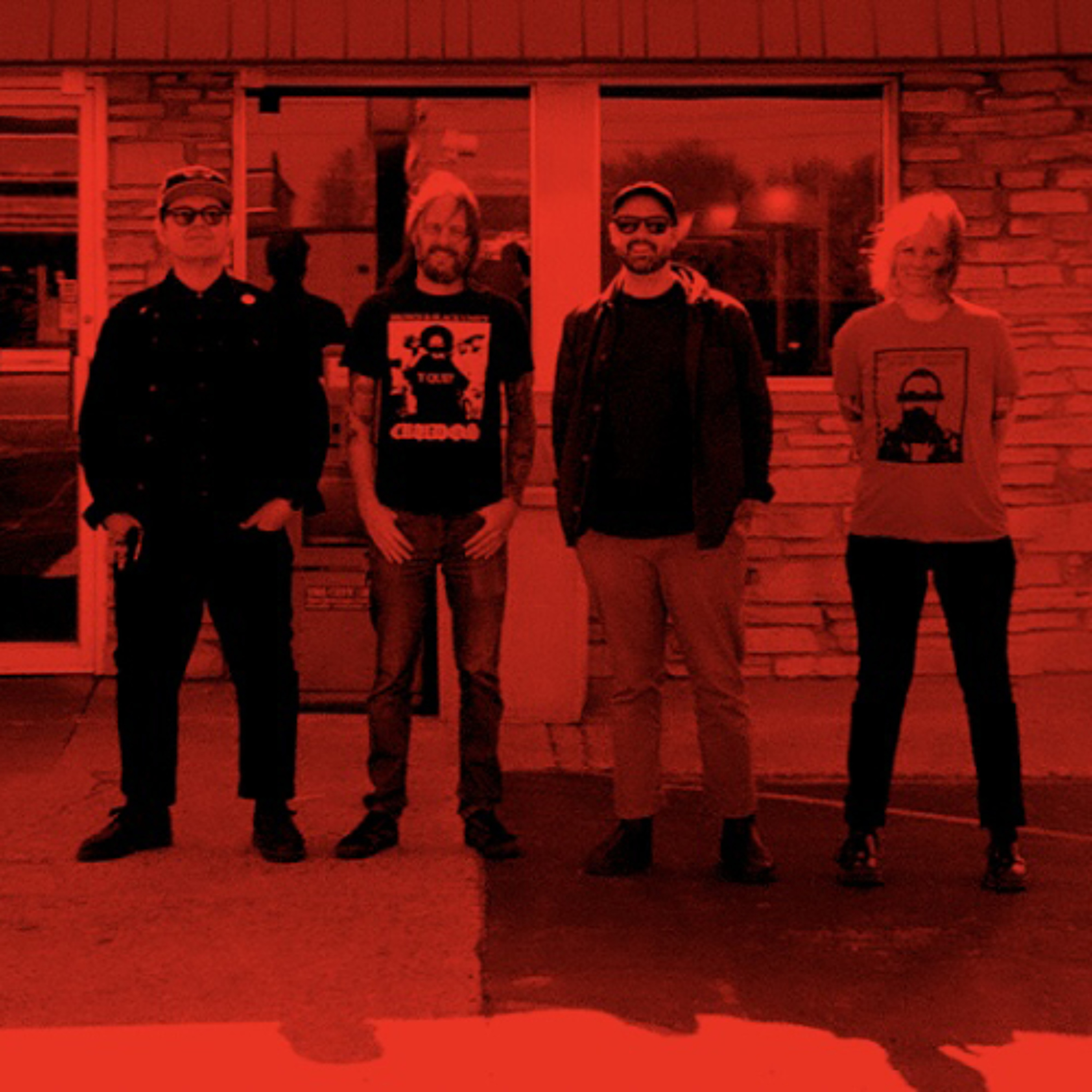
You are absolutely going to love the very next band that we have for this week's featured Artist of the Week. Chicago's very own Time Thieves, and I'm very lucky right now to have Jonathan Poole from Time Things Here With Me. Jonathan, how are you? Hello, hey, how's it going?
So, I think we always have to kind of start back at the beginning, Jonathan. How did you discover music? Oh, gosh. Well, all of us come from pretty diverse punk backgrounds.
So I would say, I mean, we probably have a cumulative 50 years of band experience between all of us. And we all came up being in DIY punk bands in and around Chicago, and I'm in Texas and stuff too. So I don't know how I discovered it. But we've all been doing it basically since we were kids.
So yeah, I would say that mainly just DIY punk is what most of us got into this particular band from. Oh, that's awesome. So can you kind of talk about a little bit how Time Thieves came together? Yeah, in fact, being pretty heavily involved in the punk scene, me and our old drummer Mike, we're both in pretty aggressive punk bands.
And over the course of time, I had started talking about, you know, I grew up loving that 90s power pop kind of sound. And like the bands that you mentioned too, obviously were very formative to my like, you know, 12 to 15 year old brain. So I was always like, Hey, I wanted to start like a rental style power pop band or like, we were talking about specifically like rentals in granddaddy. And then that early air weezer that everyone loves, you know, or like from that time, you know, so that's basically what the impetus of the band was.
It's like, okay, let's do a rentals meets granddaddy type thing. And it was me and him just kind of like plugging away at like these kinds of songs in our practice space since like 2015. And kind of just, we weren't really planning to do much with them. And I was like, let's do this.
And because our other bands were pretty active at the time. And essentially it just kind of organically grew into a full band. Our other guitar player, Tim was also in a power pop like kind of punk band called horrible things that we used to play with all the time. And I just remember his recordings being like, I was always blown away by his vocal harmonies.
He would do all his own harmonies on these records. And I was, that's what I wanted, you know, I want just like very, you know, intense harmonies, basically, in like heavy guitar sounds and stuff. So I asked him to be in it. And then our friend Annie, who's been in punk band since, I don't know, the early 90s, just has an amazing voice and is an amazing bass and guitar player.
And I remember she posted something about liking this solo silent record or something. And that was like the thing that gave me the courage to be like, hey, do you want to be in this kind of band? You know, because I don't know, all of us kind of were like not known for anything but like pretty heavy punk stuff. So it was definitely a step out of our own comfort zone.
So we're like, can we sing quietly and display our voices in a way that isn't pure screaming. And we have to actually listen to ourselves and focus more on that. And so we basically wrote the songs in a way that was like, let's write them so they're easy to play so we can focus on the singing live, you know, so that's basically where at all, that's how we all kind of came together to get that this particular project going. That's awesome.
Was that transition from the hardcore punk scene to something a little bit more melodic? Was that challenging for you? For me personally, it was, but I think that like, and I say this kind of often, but like, when I look at my own personal trajectory over all the bands I've been in, it was always this. These songs are four chord, simple songs with a verse chorus and interlude and another chorus.
That's pretty much what those songs are, their basic songs. When I look at my old records on my old bands, I was doing the same thing just in a much more aggressive, faster way. And I always tell it like, because my parents love this band. They love time-teaves and it's great because it's like I finally made something that my parents liked, which is hard to do.
And I was like, hey, mom, these songs are all the same as Brick Fight and all the other bands that I've been in the years that were like, in my mind, they are. So I think it was all just like a natural trajectory. But to answer your question, like getting to that point where we were singing these songs in a studio live in front of people was very challenging. It was very, I mean, just as far as being that vulnerable was really hard for me.
And that's been the biggest part of, I think growing in this band has just been, let's put it out there, this is who we are, and it's hard to hide behind streaming. That's basically what we were doing, at least that's what I would say I was doing. I just can't, I have to be a little bit more honest and like a little bit more vulnerable. But yeah, I mean, that's hard.
I think it's hard for anybody. Yeah, no, it definitely is. And I think you can really hear that vulnerability on the new record. It just came out a few weeks ago.
It's called If You Survive. And it is so fantastic. You guys do this great job of capturing that, that 90s alternative hard rock vibe, having the melody, but you still have that punk spirit with the tracks and everything. Thank you.
How did you approach this record? Because you released a record back in, I think it was 2020 called Space. How have you seen kind of the band grow from that first album to your most recent record? So over that, obviously that first record came out during COVID and I don't, we were just like, let's put this record out even though we didn't really know what was happening.
And all that time since then we've been working on this new material. And for me, I think getting these songs out was more important than making a record per se. And so we started, you know, kicking around all these ideas for these different songs. Me and Tim both, Tim wrote a lot of the songs on this new record.
So we basically were, I was like, I was kind of in the position of, you know, especially with everyone's streaming and everyone's in million bands. And, you know, every day you look at the internet, there's 50,000 new songs to listen to. And I just wanted to get them out into the world. So we had considered to just put a single out every six weeks or just kind of like continually put songs out.
But as these songs took shape, they ended up, you know, kind of fitting into like little chunks. So the first EP came out in May of this last year, that was called Come Home, which was kind of like a summary kind of thing, at least in my mind, it was like a spring. It was like a little bit lighter. And then we had planned for this, if you survive EP to come out in the fall, which is, you know, obviously even by the title alone, you can kind of tell it a little bit darker.
So that was kind of the plan. And then after that all came together, we realized that all those 10 songs together really have a pretty good arc as an LP. So what we ended up doing is pressing both EPs as an LP, like side A is Come Home, and side B is if you survive. And now it just kind of has a life of its own as like a whole piece.
And we didn't really intend to do that, but it for me, it kind of helped out because I feel like we were able to kind of put songs out continually through the year and then, you know, have a final product at the end of all of that whole arc, which is, you know, what we have now with this LP or we haven't released it yet, but it'll next year, early next year rolls around, we plan to like fully release it. So fabulous. It's one of those like happy accidents that you didn't plan for to go this way, but it just very organically happened and it was like it was meant to be. Yeah, it's nice to have like a thing, you know, it's obviously it's hard and expensive to put out a record and there's all sorts of things that go along with that.
But it personally, for me to have like a thing that can be like, this is a market time. This is what we did in 2025. It feels nice to be able to give someone that and be like, here's, here is this part of our, you know, history is a band and now we've moved on to something else. Yeah, no, absolutely.
Now I'm kind of curious how you approach your songwriting. Do you usually start with lyrics or do you start with melody? It's usually melody. In fact, the unseen fifth member of this band is named Scott Whit and he lives in Portland.
And he's one of my best friends. He was the best man in my recent wedding. And this guy is just like what I consider like a genius songwriter and he has three or 400 songs just sitting around that he's been in a band, but he's never like, he's not, he's not a performer. So he doesn't, he hasn't been in like lots of bands that go out and tour and stuff.
So he's a person that, you know, I'll write these riffs, I'll write full songs and, you know, start trying to put stuff over him and send him off to him and just get some ideas for vocal melodies because he's just like a melody genius, this guy. He'll send me back some ideas for melodies. And then like, for instance, this whole, this whole LP was kind of like, I, it all started as like, I want to do a concept album and like, let's do a dystopian concept album. Like that's always where my mind goes.
So, you know, I had tons of lyrics and like, strollings and things that I wanted to write about in this, in that mindset. And so my personal problem with writing lyrics and melodies and all that kind of stuff is I just try to cram too much in and what he's really good at is kind of letting melodies breathe and getting that perspective from him is really helpful for me to be like, okay, I've got this 23 word sentence. Can I pair it down to four words to fit these four, you know, so a syllable line that he's put down? Because often he'll just, you know, just say, la la la la or just kind of like fill in words that sound good to him that don't necessarily make any sense, but just like phonetically sound good.
And so a lot of times I can just like, I'll take what he has and fill in my words with what, you know, what he does. So that's really the most helpful thing for my own personal songwriting. Ten, the other guitar player will come in with complete songs that we basically will demo. And some of the melodies of his we will keep and some will rearrange to fit the vibe of time thieves, which whatever it is, like we've got this thing that we're like, okay, well, this is kind of like a power pop and we want to stay away from sounding to, you know, punk or pop punk or whatever the sub genre is that sometimes it just leans a certain way that we don't like.
And so like most of these songs got demoed three or four times before we finally like track them all. Oh, interesting. I'm here with Jonathan Poole from Time Thieves here on 773 Sounds. Now, Jonathan, if people want to go and check you guys out on social media, where can they find you?
At Time Thieves Chicago on Instagram, that's the main one. And then we got a website that's TimeTeeps.org. And I think there's Time Thieves Chicago dot Bandcamp dot com. Those are the main ones mainly Instagram and just our own website, which is like we're trying to book or we're booking right now our release show for our LP.
The LP is up for sale now. People can buy it and then we're going to have the official release show early next year in February, I believe. So be sure to check out their website for more information on that. It is timetheves dot org.
Now to kind of get back to the album, for me, one of the standout tracks is Stare at the Sun. I absolutely love that track. Can you walk me through the process of how you guys kind of wrote that song? Yeah, that was Tim's song, almost complete when he brought it in.
I think we didn't change much except for rearranging, like I was just talking about rearranging some of his lyrics with different vocal patterns. The big story with that song was we had that interlude right before the break. And I had had it in my mind that I really wanted to do a whistling part over this interlude. And essentially how we record is like I record everything we have a practice space.
So we'll go in and track drums, all the loud stuff live in our room. And then I've got a studio of stairs in my house that we do all the vocals, all the synths and everything else. So it's easy to just kind of like piece me together. And then once it's all recorded, we send it off to our buddy Luke in Springfield to have it mixed and mastered.
So a lot of times, you know, it's a lot of it's done alone. I'll do a lot of it by myself when no one else is around or can't be around. And so I had it in my mind. Like I want to put just a whistling part on this thing.
And like Tim had no idea about it. I was just like, God, I hope he doesn't hate it. I was like, man, if he hates it, I'm going to put so many whistles in so many other songs. Because I just like, for whatever reason, I really wanted like whistling over that really heavy chuggy stuff that we do.
And I ended up loving it. Or he liked it. So he kept it in. So that's my favorite part of the song personally.
Yeah, it works. And it caught me off guard the first time I heard it because you're not expecting that to come into that song. But it really works well. Well, and another thing about that is that like, none of us are good with whistlers.
We're all terrible whistlers. So we had to record each of us doing it like three times each. Just to get like enough, you know, we were just going to send off nine whistle tracks and is it file to our mixing guy? Like here they are.
Like, please, you know, I remember saying like, please make it sound like, you know, like a scout troop on a hike in the woods. That's like, that's what I'm going for. Now you were talking a little bit about the recording process. And it seems like there's quite a bit that you guys kind of record on your own.
And then just put it together in post production. Does that kind of give you a little bit more freedom to be creative? Or do you kind of thrive a little bit more where you're all together in a room and you can bounce ideas off of each other? I personally, for the recording process, you know, we like to have it most mostly done.
But for instance, with my own personal songs, I don't know exactly what I'm going to do or want to do with the vocal harmonies until we get in there. So I usually have a lead vocal, you know, for instance, that's pretty much set. I like to be able to be by myself in that process. I am kind of a perfectionist, and I will spend hours on one line.
And I hate when other people are there because I feel like they're just waiting on me and I don't want to do that. So usually what I try to do is get a basic outline of how I think it should sound. And then I'll record their vocal parts like a scratch tracks and be like, here's what I think, you know, feel free to change or blah, blah. So usually by the time they come into record, they have a general idea of where everything is going to sit.
And then that's when the really magical part, I think of the collaboration happens, because I'm always like, listen, if you want to change something, please do because I'm not, I don't want this to be just my thing. And I don't think I have all the answers and I know I'm not the best songwriter in this band. Often, often when they get in there will change things. And that's fun because it's like I don't have a preset notion of how it has to sound at all anytime.
And if I do, I'm like, I don't want to change that. You know, there's some things that I'm like, this is the one thing that I don't want to change. But you know, I think for them, it's also helpful because I am, I'm not demanding, but I'm like, I do it's hard to record vocals, particularly. So we have to really kind of peg it down because we don't use auto tune.
We don't, you know, we're trying as much as we can to be as like organic as possible. And it comes through sounding, it sounds, some of the stuff sounds like it's auto tuned because we plugged away at it so much. But it's not like for the most part, I think there might be a few little things here and there that will never get fixed. But yeah, I think that's kind of basically just long story short.
When we can get in there and all be together, it's really collaborative. Yeah. But I think that's the kind of also the beauty of rock and roll is you get those little organic imperfections that just add that extra layer to attract and everything. I definitely don't want it to be perfect.
That'll need to be perfect. We do our best to like record as much as we can and basically wadded all up into a ball and handed to our engineer and be like, please make this sound good. And he's great. His name's Luke McNeil.
He's in a band called The Copyright's Hospital Job. And he does all his own recording for those two bands. And obviously, if you've ever heard either of those bands, productions phenomenal. And so Tim, the other guitar player, was in hospital job for a long time.
They're from Springfield and he's still lived down there. So that's where that whole connection came from. So I mean, you guys have been a part of the local scene for the last few years now. Can you kind of give me a state of what you think the local scene is like right now?
Yeah, I mean, it's for us, it's kind of the same because we're, you know, we've been, we're all in kind of punk bands that have been playing around for years. Like I said, the drummer, Mustafa was an event called The Broke Downs. They just put out a record this last Friday and just had their release show on Friday at the Burlington. And I guess the main thing I would say is that like we're still playing shows.
We still, you know, anything that we can do, we will try to do a lot of times people, you know, we've all had such extensive DIY touring backgrounds and stuff like also get hit up from people that are touring and trying to come through Chicago and they'll be like, we're the good house shows. And I'm like, man, I'm in my 40s. I don't know. Like, and I'm not supposed to know the kids know, and I can always kind of point somewhere in the right direction.
But like, I don't, I don't know where all the cool house shows are happening now. And I think that's for good reason, you know, like we'll play them when we get asked to play them. And I was, you know, always down. But I like, I'm not, we used to book a lot of house shows and we still, you know, be way more active than that part of the scene.
So I mean, by and it's by virtue of just getting older at a new scene forming. And that's how it's supposed to be. So yeah, yeah, to that point, I don't necessarily know all the younger punk bands or all the all the DIY bands now. And that's fine.
Like, I'm like, go do your thing, please, like, all these bands that are coming up and doing their own thing. It's awesome. Like, never, don't ever stop doing that. Yeah.
Now, we're a college radio station here at WXAV. And one thing I hear from students a lot is they want to get into local music, but they almost are afraid they don't know where to start. Right. Where would you recommend for people if they want to get into the local scene?
Where should they start? And what also, too, is the best way for them to help support the local music scene. Right. I think kind of what I was just saying, finding the house shows, finding the DIY spots, there's a really good resource.
It's DIY Chicago that you can find on Facebook, Instagram, by just searching that. People are constantly posting on there for house shows and DIY spots that, you know, that I never heard of. And to find bands through there is a great resource. You know, and then especially college kids, if you're under age, and there aren't tons of all ages shows necessarily at the clubs.
But also searching out, like I know Beat Kitchen has a lot of all ages shows, trying to think who else. I don't know, personally, for me, before I was 21, I was at every house show I could find. And then some bands are going to like, some bands are not going to like. But the great thing about the DIY scene is it's very eclectic and usually very open and welcoming to all sorts of genres.
So you never know what you're going to get necessarily when you go to one of these shows. So that's, that's my advice. Look up the DIY scene, look up the DIY bands. And those will always point you and push you towards other stuff.
Like that's kind of what happens with DIY bands. Like our band specifically, we play more club shows now and play larger venue shows now. We don't get asked to play every bass and show, although we are playing one next month in Bridgeport. There's a band called No Men, they're from Chicago, a band called Dauber.
They're from friends from New Jersey that have been in a bunch of bands over the years and another band called Scuff. And I don't know where that the address of that house is right now. But it's one of those like DIY spots that if you know where it is or can ask somebody, they'll tell you where it is. And that's what I would recommend to do.
Anyone that doesn't know, just go, just go and get out of your comfort zone and have a good time. You absolutely will. And you just brought up my final question. If people want to go and check out Time Thieves, do you have any upcoming shows for them where they can go see you?
Yeah. So that show that I just mentioned is December 21st. And I cannot remember the name of the venue. If you DM us on Instagram or email us, that's timetapeschicago at gmail.com.
Or you can contact us through timetease.org. I can give you an address once I get it. That's our next show. That's December 21st.
After that, we'll be doing our LP release show in January, early February date and venue all to be announced soon on that. Great. So be sure to follow them. Their website is timetheves.org.
And then their time thief Chicago on Instagram and check them out on Bandcamp, timetheveschicago.bandcamp.com. Jonathan, thank you so much for joining us today here on 773 Sounds. Oh man, thank you so much for having us. We're super excited.
Thank you for listening to this WXAV 773 Sounds podcast. For more information on 773 Sounds, please visit our website WXAV.com.