
EPISODE · Jul 21, 2025 · 46 MIN
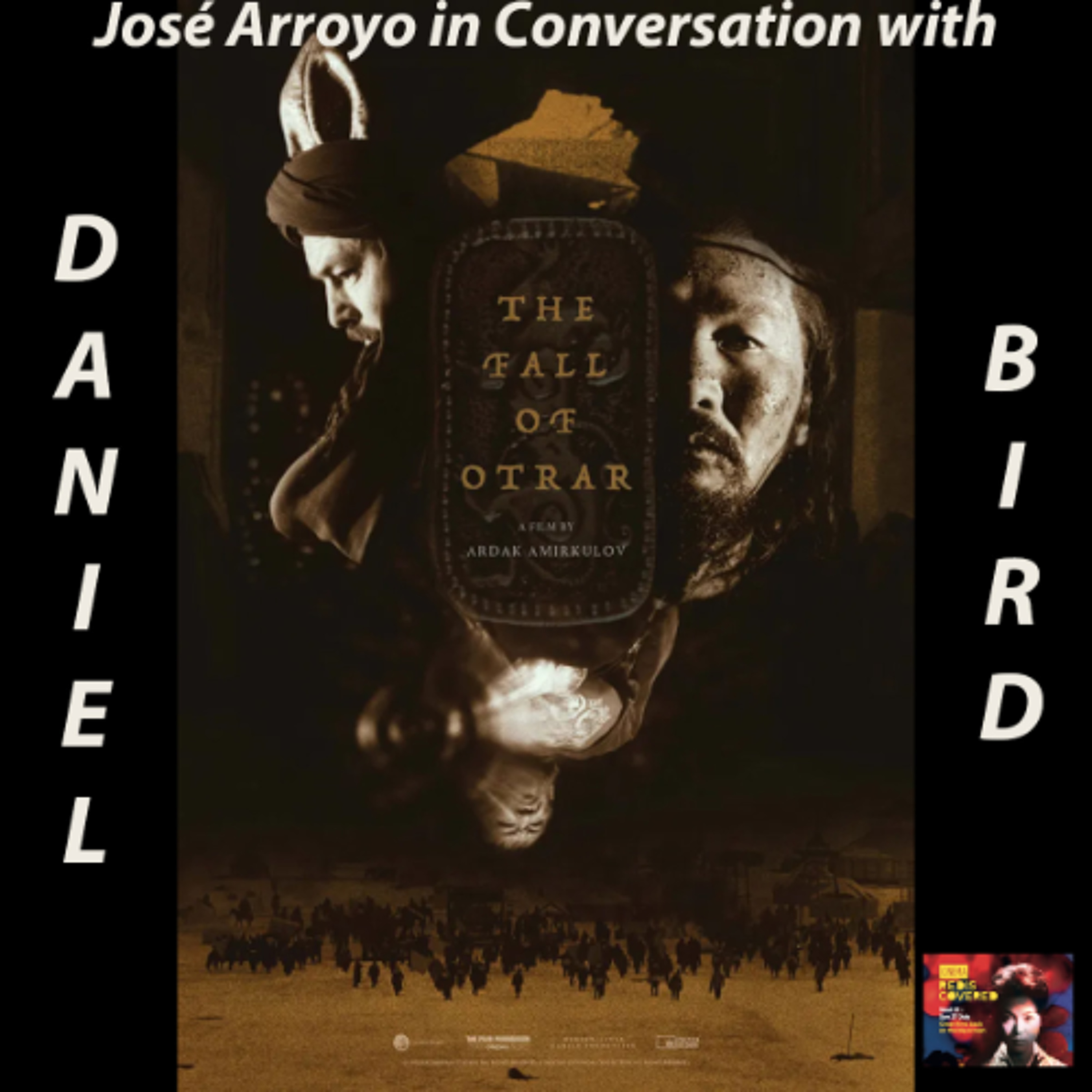
José Arroyo in Conversation with Daniel Bird on THE FALL OF OTRAR (Ardak Amirkulov, 1991)
from First Impressions: Thinking Aloud About Film · host Jose Arroyo & Richard Layne
https://notesonfilm1.com/2025/07/21/jose-arroyo-in-conversation-with-daniel-bird-on-the-fall-of-otrar-ardak-amirkulov-1991/ My choice for must-see film of this year’s Cinema Rediscovered is Ardak Amirkulov’s THE FALL OF OTRAR (USSR, 1991), which will have its UK Premiere in Bristol’s old IMAX cinema, now called the Bristol Megascreen, on Sat 26th of July. As Daniel Bird says in the podcast, ‘it’s a once in a lifetime occasion’. I wanted to talk to Daniel about the film because he knows more about it than anyone I know, because he speaks so articulately and with such an expansive frame of reference and because he’s the one who proposed the restoration to Cecilia Cenciarelli, one of the four artistic directors of Bologna’s Il Cinema Ritrovato and part of The World Cinema Project, whose goal is to restore great film from around the world. Such as this one. THE FALL OF OTRAR is an epic set in the 13th Century where an obedient servant of the state Undzhu (Dokhdurbek Kydyraliyev) is persecuted for telling Kaiyrkahn (Tungyshpai Zhamankulov), his ruler, what he doesn’t want to hear, which is that Otrar is soon to be invaded by Genghis Kahn. The film is an extraordinary aesthetic experience, a film of great style, structured in two halves, with the last part depicting the siege of Otrar and battles sequences that clearly use Kurosawa’s KAGEMUSHA (1980) as a reference point whilst transforming before our eyes into something else altogether. The film has crane shots that rival Leone’s, poetic compositions that recall John Ford’s, and a selective use of sepia and colour that recall some of the masters of the late Soviet era. A beautiful film that feels epic and yet very intimate as well. In the accompanying podcast Daniel tells me of THE FALL OF OTRAR’s fascinating production history (it was part of a national search for ‘new blood’ from the ‘regions’; it began filming just as the Soviet Union was unravelling, it started off as Amirkulov’s graduation project, it is now one of the key works of Kazahkstan cinema); his own involvement with the project; how the film can be seen as the result of a Russian influence in the dramaturgy and an East Asian, particularly Japanese, influence in the visual aesthetic. We talk too of the film’s initial distribution at home and in New York, Martin Scorsese’s involvement, and how this new release is demonstrating how the film is also one that speaks to our times, and the various ways it does so. There are digressions (Russian Formalism, Deleuze and Guattari’s A THOUSAND PLATEAUS: CAPITALISM AND SCHIZOPHRENIA, showing vs telling in cinema….and much more. It can be listened to below:
Embed this episode
NOW PLAYING
José Arroyo in Conversation with Daniel Bird on THE FALL OF OTRAR (Ardak Amirkulov, 1991)
No transcript for this episode yet
Similar Episodes
No similar episodes found.
Similar Podcasts
No similar podcasts found.