
EPISODE · Jun 25, 2025 · 19 MIN
Joseph Lister: Antiseptic Pioneer in the Age of Superbugs and AI Surgery
from The Cogitating Ceviché Podcast · host Conrad T Hannon
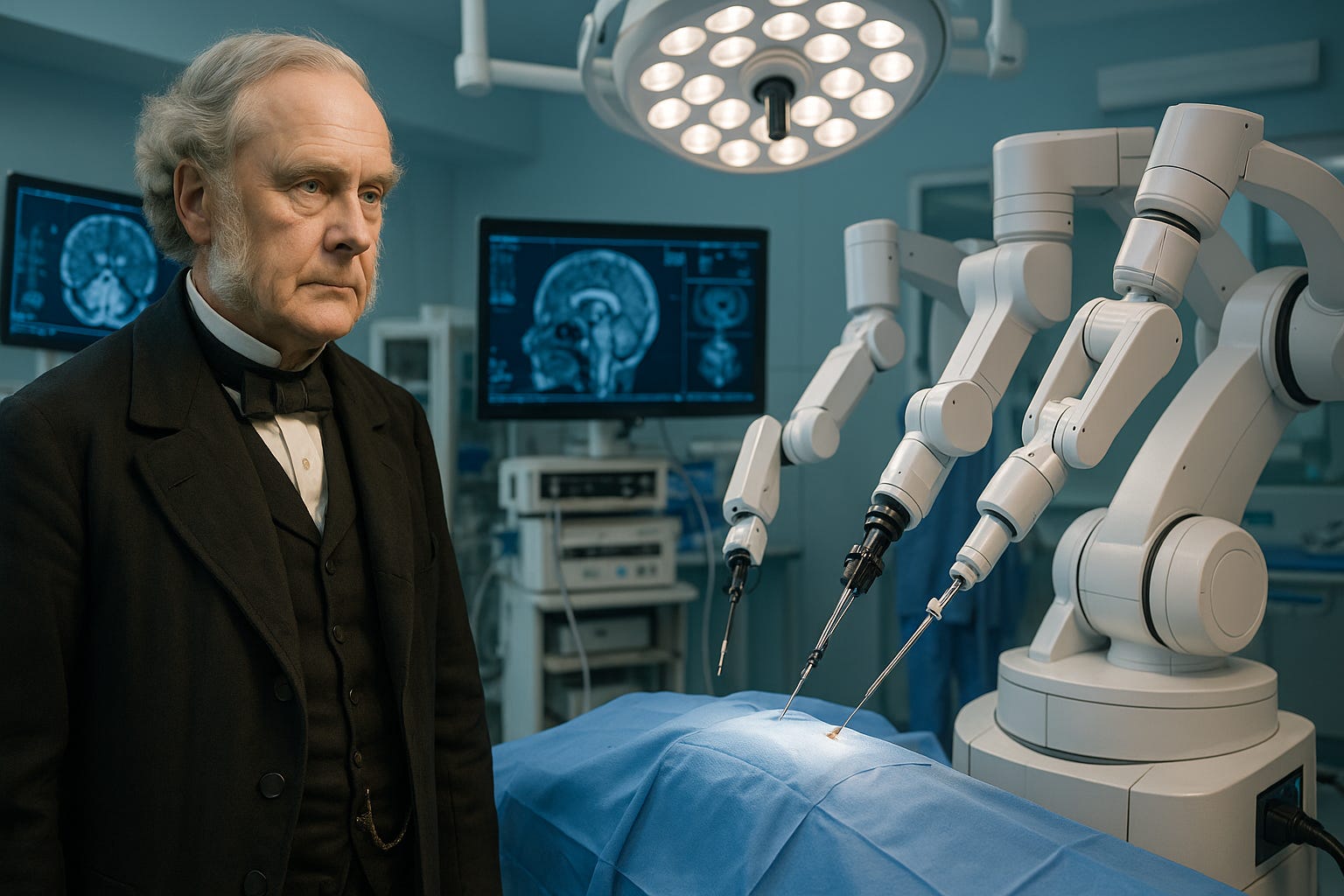
The Cogitating CevichéPresentsJoseph Lister: Antiseptic Pioneer in the Age of Superbugs and AI SurgeryPast Forward: Historical Icons in the Digital Frontier #66By Conrad HannonNarration by Amazon PollyPrefaceJoseph Lister revolutionized medicine in the 19th century by introducing antiseptic techniques that dramatically reduced surgical infections and mortality rates. Born in 1827 to a Quaker family in Essex, England, Lister brought scientific rigor to surgical practice at a time when post-operative infections claimed more lives than the original injuries or diseases being treated. His meticulous approach to cleanliness, inspired by Louis Pasteur's germ theory, transformed surgery from a desperate last resort into a reliable therapeutic intervention.Known as the father of modern antiseptic surgery, Lister's principles underpin contemporary medical practices worldwide. His insistence on carbolic acid disinfection, sterile instruments, and clean surgical environments reduced surgical mortality rates from over 50% to less than 15% in his own practice. More importantly, his systematic approach to infection prevention established the foundation for all modern hospital safety protocols.Lister's contributions extended beyond technique to philosophy. He understood that medicine required not just skill, but scientific understanding, careful observation, and unwavering commitment to patient welfare. His willingness to face skepticism from the medical establishment while persistently advocating for evidence-based practices demonstrated the moral courage that effective medical innovation requires.But how would Lister react upon encountering the modern hospital landscape, where automation, artificial intelligence, and microbial warfare against superbugs have reshaped patient care? How might he view the ethical dilemmas posed by advanced medical technologies that can both heal and potentially harm? This exploration imagines Lister navigating these complex, contemporary medical and ethical landscapes, bridging his historical contributions to the forefront of today's medical innovations.IntroductionAwakening in the sterile, humming corridors of a state-of-the-art medical center, Joseph Lister experiences a profound sensory shift from the gas-lit hospitals of Victorian England. The antiseptic scents that greet him are familiar yet refined—no longer the harsh carbolic acid he once championed, but sophisticated disinfectants that eliminate pathogens without overwhelming the senses. The floors gleam with surfaces that seem to repel contamination, walls display gentle antimicrobial lighting, and the very air moves through filtration systems that would have seemed miraculous in his era.He gazes around with astonishment at the seamless integration of cleanliness and technology. Digital monitors display real-time air quality data, pathogen counts, and infection control metrics. The precise movements of surgical robots operate within sterile fields that maintain perfect environmental conditions. The quiet efficiency of automated systems—from medication dispensing to waste disposal—reflects a level of systematic infection control that exceeds his most ambitious dreams.The antiseptic scents and clinical ambiance reassure him, yet the precision of robotic limbs conducting delicate operations stuns him. He watches through observation windows as surgical robots perform microsurgery with movements more precise than any human hand could achieve, their instruments automatically sterilized between each tissue interaction. The integration of his fundamental principles with this advanced technology fills him with both pride and curious concern.He observes a surgeon consulting with an AI-driven diagnostic tool, the interaction revealing a partnership between human insight and algorithmic precision. The AI analyzes thousands of similar cases in seconds, while the surgeon brings intuitive understanding of the individual patient's unique circumstances. This collaboration represents an evolution of the systematic, evidence-based approach that Lister himself pioneered.Lister's curiosity is piqued—how did his principles of cleanliness and caution evolve into this astonishing blend of human and machine? More importantly, have the fundamental values of patient care and scientific integrity that drove his own innovations been preserved in this technological transformation?Historical Context and Modern ConnectionIn the 19th century, Lister's antiseptic practices transformed surgery from a hazardous endeavor fraught with infection to a safe and structured process. His rigorous methods using carbolic acid to disinfect surgical instruments, wounds, and even the air around surgical sites represented a revolutionary departure from existing practices. Before Lister, surgeons often took pride in their blood-stained coats as symbols of their experience, never realizing these garments carried deadly pathogens from patient to patient.His approach was systematically comprehensive. He sterilized not just instruments, but hands, surgical sites, dressings, and surrounding surfaces. He introduced the practice of cleaning wounds with antiseptic solutions and covering them with treated dressings that prevented bacterial invasion during healing. Most importantly, he documented outcomes meticulously, providing statistical evidence that his methods significantly reduced mortality rates.Lister reflects with pride and wonder at how his fundamental emphasis on hygiene and microbial awareness has blossomed into sophisticated infection control measures that permeate every aspect of modern healthcare. He observes infection control teams that monitor hospital environments continuously, tracking pathogen populations and implementing targeted interventions with precision that far exceeds what he could achieve with carbolic acid alone.Yet he also recognizes familiar challenges. The hospitals he visits still battle resistant bacteria—superbugs like MRSA, C. difficile, and multidrug-resistant tuberculosis that have evolved defenses against the very antimicrobial agents designed to eliminate them. The principle remains the same as in his era: microorganisms adapt and survive, requiring constant vigilance and evolving countermeasures.His foresight and careful observation have paved the way for a modern medical landscape that continually strives to stay ahead of microbial threats. Hand hygiene protocols, environmental disinfection standards, and surgical site preparation techniques all bear the hallmarks of his systematic approach, even as they employ technologies he could never have imagined.Exploring Modern InnovationsLister eagerly dives into exploring robotic-assisted surgeries and AI-driven diagnostics, drawn by their potential to eliminate many sources of human error that plagued surgery in his era. In state-of-the-art operating theaters, he marvels at robots like the da Vinci Surgical System performing minimally invasive surgeries with sub-millimeter precision. The robotic arms move with fluid grace, their instruments capable of rotating and flexing in ways that exceed the capabilities of human hands, all while maintaining perfect sterility through automated cleaning cycles.Surgeons explain how AI algorithms analyze patient data to predict optimal surgical approaches, identify potential complications before they occur, and recommend modifications to standard procedures based on individual patient characteristics. The systems process vast databases of surgical outcomes, learning from thousands of previous cases to optimize each new procedure. Recovery times that once measured in weeks now measure in days, with infection rates approaching zero in many types of surgery.Lister himself contributes valuable insights during these observations, suggesting enhancements in robotic sterilization protocols that combine traditional antiseptic principles with modern antimicrobial technologies. He proposes modifications to instrument design that would make them even more resistant to bacterial colonization, drawing on his deep understanding of how pathogens establish themselves on surfaces.Working with biomedical engineers, he helps design new antimicrobial coatings for surgical instruments that actively eliminate bacteria rather than simply resisting them. These coatings incorporate silver nanoparticles, copper ions, and other antimicrobial agents that create hostile environments for pathogen survival, representing a evolution of his original carbolic acid approach.However, Lister remains cautious about the role of automation in patient care, emphasizing that human oversight remains essential. While praising technology's potential to reduce human error and improve outcomes, he insists that intuition, empathy, and clinical judgment—human qualities machines cannot replicate—must continue to guide patient care. He observes instances where algorithmic recommendations conflict with experienced clinicians' instincts, recognizing that the art of medicine cannot be fully automated.He proposes a collaboration model that integrates AI diagnostics with enhanced antiseptic vigilance, ensuring meticulous infection control alongside technological advancement. This approach would use artificial intelligence to optimize infection prevention protocols while maintaining human oversight of their implementation and adaptation to individual patient needs.Ethical Reflections and Societal ImpactLister's exploration of modern medicine soon leads him into territory that would have been unimaginable in his era—the potential misuse of microbiological knowledge for harmful purposes. He encounters research on biological weapons development, the deliberate creation of antibiotic-resistant strains, and the possibility that his own principles of understanding and controlling microorganisms could be perverted for destructive ends.Appalled by these developments, he engages with bioethicists, infectious disease specialists, and national security experts to understand how scientific knowledge intended for healing might be weaponized. The concept that researchers might deliberately create more dangerous pathogens or enhance existing ones with increased virulence or resistance deeply troubles him. His life's work was dedicated to protecting patients from microbial threats, not creating new ones.He confronts policymakers and international health organizations, passionately advocating that such practices are anathema to medicine's humanitarian essence. Drawing on his experience with the unintended consequences of medical interventions, Lister stresses the dangers of weaponizing microbes, emphasizing how easily such research could escape containment and threaten global populations.His participation in ethics committees reveals the complexity of modern medical research. Gain-of-function studies that enhance pathogen capabilities, ostensibly to understand natural evolution and prepare countermeasures, raise fundamental questions about acceptable risk. Lister argues for extreme caution, noting that the potential benefits must be weighed against catastrophic possibilities that could affect millions of people.He joins international symposiums addressing these challenges, passionately arguing for global ethical standards in microbiology and biotechnology. His historical perspective adds weight to discussions about dual-use research—scientific work that could serve both beneficial and harmful purposes. Lister advocates for international cooperation in establishing and enforcing guidelines that prevent the misuse of microbiological research while preserving its beneficial applications.His voice carries particular authority because his own work demonstrates how understanding pathogen behavior can save lives when applied ethically. He becomes a compelling advocate for maintaining the healing mission of medicine even as scientific capabilities expand beyond what previous generations could imagine.Collaborative ContributionsEnergized by the possibilities he observes, Lister engages directly with medical innovators, microbiologists, and bioethicists to improve infection control protocols within automated healthcare systems. His first major collaboration involves redesigning sterilization procedures for surgical robots, combining his traditional antiseptic principles with cutting-edge nanotechnology.Working with materials scientists, he helps develop new antimicrobial coatings that incorporate multiple mechanisms of pathogen elimination. These surfaces use copper nanoparticles for contact killing, silver ions for sustained antimicrobial activity, and photocatalytic titanium dioxide that generates reactive oxygen species when exposed to light. The resulting materials actively eliminate bacteria, viruses, and fungi rather than simply resisting their attachment.He co-designs enhanced environmental monitoring systems that continuously assess contamination levels in operating rooms, patient care areas, and high-risk zones throughout hospitals. These systems use advanced sensors to detect pathogen DNA, monitor air quality, and track the movement of potentially contaminated materials through healthcare facilities. The data enables real-time adjustments to cleaning protocols and early intervention when infection risks increase.His participation in clinical trials provides unique historical insights into optimizing surgical protocols. He helps develop new hand hygiene procedures that combine traditional washing techniques with modern antimicrobial agents, creating protocols that are both more effective and more acceptable to healthcare workers. His understanding of human behavior and habit formation proves valuable in designing compliance strategies that encourage consistent adherence to infection control measures.Lister also contributes significantly to medical education, helping formulate curricula that blend ethical clarity with technical expertise. He works with medical schools to develop training programs that emphasize the historical development of infection control, helping students understand not just what to do, but why these practices matter. His courses stress that technology should enhance, never supplant, the foundational human values of compassion and care that motivated his original innovations.He collaborates with pharmaceutical companies developing new antimicrobial agents, providing insights into how antibiotic resistance develops and spreads. His systematic approach to studying bacterial behavior helps inform strategies for designing drugs that are less likely to promote resistance development.Legacy and Modern InfluenceAs Lister's journey through modern medicine progresses, he begins to see how his contributions have evolved far beyond his original innovations. The principles he established—systematic infection control, evidence-based practice, and unwavering commitment to patient safety—now permeate global healthcare systems in ways he could never have anticipated.His emphasis on rigorous documentation and outcome measurement has evolved into sophisticated quality improvement programs that continuously monitor and enhance patient care. Modern infection surveillance systems track pathogen patterns across entire healthcare networks, enabling coordinated responses to emerging threats that transcend individual hospitals or regions.The antimicrobial stewardship programs he observes represent sophisticated evolution of his careful approach to using disinfectants effectively. These programs optimize antibiotic use to maximize therapeutic benefit while minimizing resistance development, requiring the same careful balance between intervention and restraint that characterized his use of carbolic acid.Yet he also recognizes new challenges that his era never faced. Healthcare-associated infections now include pathogens that resist multiple antimicrobial agents, requiring infection control strategies that constantly adapt to changing microbial landscapes. The global nature of modern healthcare means that resistant organisms can spread across continents within days, demanding international coordination that goes far beyond anything he experienced.The integration of artificial intelligence into infection control represents both opportunity and responsibility. AI systems can analyze complex patterns in pathogen behavior, predict outbreak locations, and optimize prevention strategies with unprecedented sophistication. However, Lister emphasizes that human judgment remains essential for interpreting these analyses and making ethical decisions about their implementation.Conclusion: Legacy and Modern InfluenceReflecting on his journey through the labyrinth of modern medical innovation, Lister recognizes the enduring power of his contributions while marveling at how far medicine has advanced since his era. The principles of antisepsis he championed have matured into an era of astonishing technological achievements, yet his original ethos remains crucially relevant. The fundamental insight that drove his work—that preventing infection is more effective than treating it—now guides global health policy and individual patient care decisions.His legacy persists not only in the sterile surfaces and robotic systems, but also in the ethical frameworks that govern their use. The systematic, evidence-based approach he pioneered continues to guide medical research and practice, even as the tools and techniques evolve beyond recognition. His insistence on putting patient welfare above professional convenience or tradition remains a cornerstone of medical ethics.The challenges he observes in modern healthcare—antibiotic resistance, bioweapons research, the balance between technological capability and human values—require the same qualities that made his original contributions possible: careful observation, systematic thinking, moral courage, and unwavering commitment to healing rather than harming.Joseph Lister's visit to the modern medical frontier confirms that humanity's capacity to heal continues to expand in wondrous ways, provided it remains anchored by conscientious responsibility and unwavering compassion. The technologies he encounters represent fulfillment of his vision that scientific understanding could eliminate much of the suffering caused by infection, yet they also require the ethical foundation he exemplified.As he prepares to return to history's pages, he leaves behind a profound reminder: medical advancement, at its heart, must always serve humanity's highest ethical and compassionate standards. The tools may evolve, but the mission remains constant—to heal, to protect, and to preserve the dignity and welfare of every patient entrusted to medical care. His legacy lives on not in any particular technique or technology, but in the enduring commitment to making medical practice safer, more effective, and more humane.Thank you for your time today. Until next time, stay gruntled. This is a public episode. If you'd like to discuss this with other subscribers or get access to bonus episodes, visit thecogitatingceviche.substack.com/subscribe
Embed this episode
NOW PLAYING
Joseph Lister: Antiseptic Pioneer in the Age of Superbugs and AI Surgery
No transcript for this episode yet
Similar Episodes
No similar episodes found.
Similar Podcasts
No similar podcasts found.