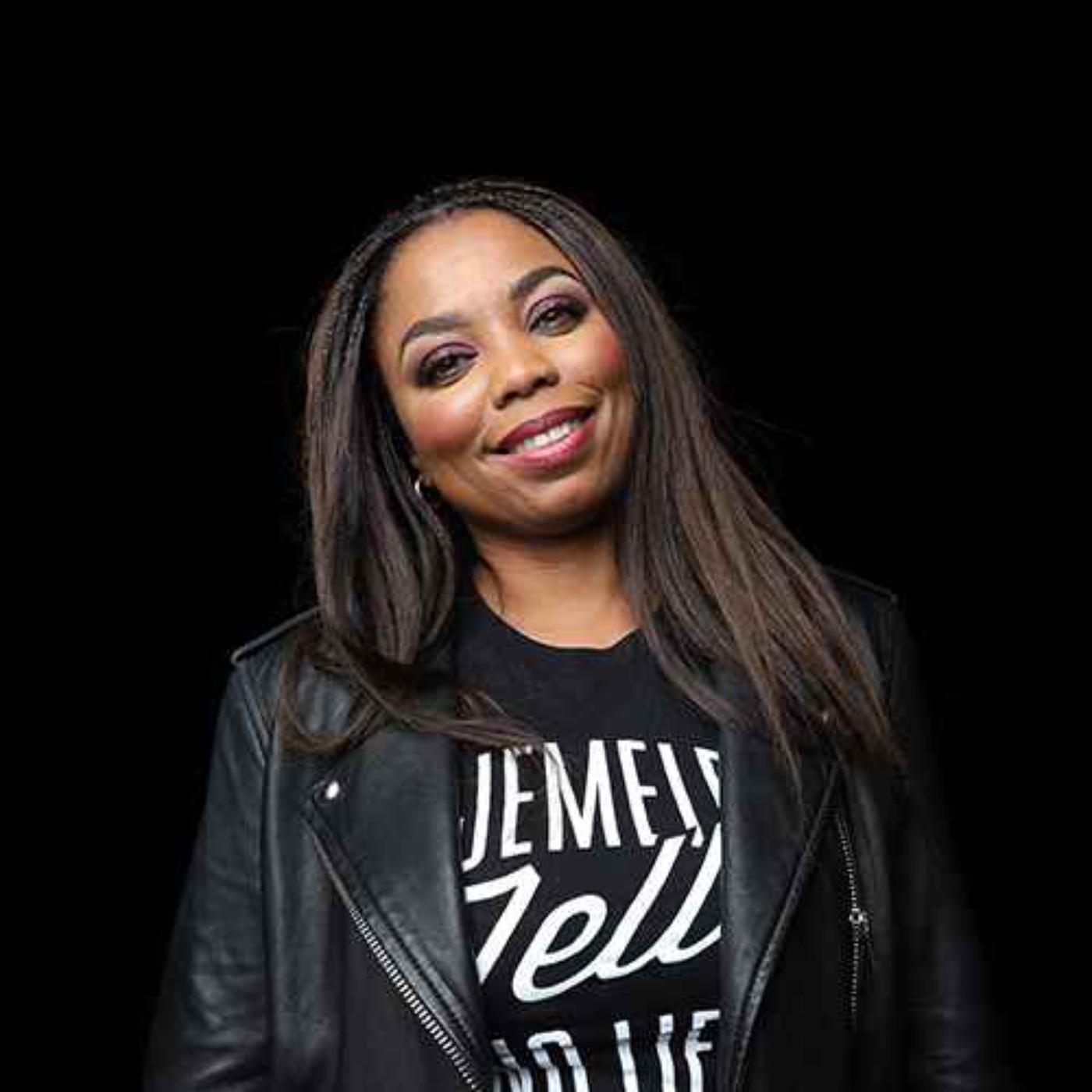
Journalist Jemele Hill on the intersection of sports and race (revisiting) episode artwork

EPISODE · Jul 26, 2024 · 1H 31M

Journalist Jemele Hill on the intersection of sports and race (revisiting)

from Berkeley Talks

In Berkeley Talks episode 205, sports journalist Jemele Hill discusses her career at the intersection of sports, race and culture in the U.S. at a UC Berkeley event in January 2020."Sports journalism," began KALW radio journalist Hana Baba, with whom Hill joined in conversation as part of a Cal Performances speaker series. "So you’re growing up, you’re watching TV, you’re reading the papers ... When did you realize that this is a male journalist's space?"I knew that, but I didn’t know it," replied Hill, author of the 2022 memoir Uphill and host of the podcast Jemele Hill Is Unbothered. "And this is why — whenever I talk about mentorship, I preach this to both mentees and mentors: The first thing you can give a mentee and the first responsibility as a mentor, you need to give them a sense of belonging."She went on to describe how, when she was in an apprenticeship program for the Detroit Free Press, two women journalists — feature writer Johnette Howard and sports writer Rachel Jones — were assigned to be her mentors."So I never knew that it was something I wasn’t supposed to be doing because the very first person I knew that did it was a woman. ... And so because I got that early confidence at the beginning of my career, I just never went through a period of self-doubt, which is totally normal for any woman in a male-dominated space, especially a Black woman. So I was very lucky that I got that sense of belonging early." Later on, Hill discussed when NFL quarterback Colin Kaepernick kneeled during the national anthem throughout the San Francisco 49ers’ season in 2016 to protest racial injustice, effectively ending his football career. “I mean, the NFL owners are spineless,” said Hill, who worked for ESPN for more than a decade and was named Journalist of the Year by the National Association of Black Journalists in 2018. “I knew Colin Kaepernick would never play in the NFL the moment Donald Trump said his name … One of the few things that a lot of people unfortunately agree with the [former] president about is that Colin Kaepernick should not be taking a knee. So, he [Trump] knows every time he says his [Kaepernick’s] name, that it is giving him a level of universal support … that he doesn’t experience usually.“And so what does that say about people in this country? … We just celebrated Martin Luther King Jr.’s birthday, commemorated him. And the same people I saw talking about how great Dr. King was for his nonviolent protest are also the same people who think Colin Kaepernick doesn’t deserve to play in the NFL? … But the NFL, I think, as we have seen in the case with Muhammad Ali, as we have seen is the case with a lot of history, 20 years from now they’ll be telling a different story. They’ll act like all of this never happened.”Listen to the episode and read the transcript on Berkeley News (news.berkeley.edu/podcasts/berkeley-talks).Music by Blue Dot Sessions.Photo by Daniel Stark/ESPN. Hosted on Acast. See acast.com/privacy for more information.

In Berkeley Talks episode 205, sports journalist Jemele Hill discusses her career at the intersection of sports, race and culture in the U.S. at a UC Berkeley event in January 2020."Sports journalism," began KALW radio journalist Hana Baba, with whom Hill joined in conversation as part of a Cal Performances speaker series. "So you’re growing up, you’re watching TV, you’re reading the papers ... When did you realize that this is a male journalist's space?"I knew that, but I didn’t know it," replied Hill, author of the 2022 memoir Uphill and host of the podcast Jemele Hill Is Unbothered. "And this is why — whenever I talk about mentorship, I preach this to both mentees and mentors: The first thing you can give a mentee and the first responsibility as a mentor, you need to give them a sense of belonging."She went on to describe how, when she was in an apprenticeship program for the Detroit Free Press, two women journalists — feature writer Johnette Howard and sports writer Rachel Jones — were assigned to be her mentors."So I never knew that it was something I wasn’t supposed to be doing because the very first person I knew that did it was a woman. ... And so because I got that early confidence at the beginning of my career, I just never went through a period of self-doubt, which is totally normal for any woman in a male-dominated space, especially a Black woman. So I was very lucky that I got that sense of belonging early." Later on, Hill discussed when NFL quarterback Colin Kaepernick kneeled during the national anthem throughout the San Francisco 49ers’ season in 2016 to protest racial injustice, effectively ending his football career. “I mean, the NFL owners are spineless,” said Hill, who worked for ESPN for more than a decade and was named Journalist of the Year by the National Association of Black Journalists in 2018. “I knew Colin Kaepernick would never play in the NFL the moment Donald Trump said his name … One of the few things that a lot of people unfortunately agree with the [former] president about is that Colin Kaepernick should not be taking a knee. So, he [Trump] knows every time he says his [Kaepernick’s] name, that it is giving him a level of universal support … that he doesn’t experience usually.“And so what does that say about people in this country? … We just celebrated Martin Luther King Jr.’s birthday, commemorated him. And the same people I saw talking about how great Dr. King was for his nonviolent protest are also the same people who think Colin Kaepernick doesn’t deserve to play in the NFL? … But the NFL, I think, as we have seen in the case with Muhammad Ali, as we have seen is the case with a lot of history, 20 years from now they’ll be telling a different story. They’ll act like all of this never happened.”Listen to the episode and read the transcript on Berkeley News (news.berkeley.edu/podcasts/berkeley-talks).Music by Blue Dot Sessions.Photo by Daniel Stark/ESPN. Hosted on Acast. See acast.com/privacy for more information.

NOW PLAYING

Journalist Jemele Hill on the intersection of sports and race (revisiting)

0:00 1:31:11

No transcript for this episode yet

We transcribe on demand. Request one and we'll notify you when it's ready — usually under 10 minutes.

Carnivores Don't Get Sunburn - Carnivore Diet Talks Carnivores Don't Get Sunburn - Carnivore Diet Talks Welcome to “Carnivores Don’t Get Sunburn,” where we have fun and explore the carnivore diet and its transformative power. Join us as we uncover real stories from individuals who have thrived on this diet, defying convention and embracing optimal health. Plus, stay tuned for our upcoming documentary featuring diverse carnivores overcoming health challenges. Learn more at www.carnivoredietdocumentary.com.Excitingly, we’re working on an upcoming documentary where we’ll feature carnivores from various walks of life, conquering diverse health challenges. Join us on this journey and learn more at www.carnivoredietdocumentary.com.Join us in uncovering the power of the carnivore diet. Prepare to be inspired, informed, and empowered to embrace optimal health and well-being.Welcome to “Carnivores Don’t Get Sunburn: Unveiling Real Stories of the Carnivore Diet.” Stay tuned for our upcoming documentary. Discover how this lifestyle can transform lives. Learn more at www.carnivoredietdocumentary.com IT IS WHAT IT IS with SHALLZ - SHALLY ZOMORODI Shally Zomorodi What?  "It is what it is" with ShallZ – Shally ZomorodiWhen? WeeklyHow long? 35 minutesEvery week, Mother of 4, wife, morning TV news anchor and ultimate hostess, Shally Zomorodi talks about life - its up's and downs and how to stay on track in her weekly podcast, ‘It is what it is.’  Known for her high energy, infectious smile and ability to see the cup as half full Shally talks about all things in life and how to work through its challenges. From parenting, marriage, friendships, current events to how to smile when it just seems impossible ‘It is what it is’ is the perfect podcast to help inspire you to dance through the rain. Tracking Nuclear Weapons Programs Center for Strategic and International Studies The CSIS Proliferation Prevention Program talks to experts about transparency and nuclear weapons. Cover Stories with Chess Life US Chess Chess Life Editor John Hartmann talks to the authors of each month's Chess Life cover story.

Frequently Asked Questions

How long is this episode of Berkeley Talks?

This episode is 1 hour and 31 minutes long.

When was this Berkeley Talks episode published?

This episode was published on July 26, 2024.

What is this episode about?

In Berkeley Talks episode 205, sports journalist Jemele Hill discusses her career at the intersection of sports, race and culture in the U.S. at a UC Berkeley event in January 2020."Sports journalism," began KALW radio journalist Hana Baba, with...

Can I download this Berkeley Talks episode?

Yes, you can download this episode by clicking the download button on the episode player, or subscribe to the podcast in your preferred podcast app for automatic downloads.
URL copied to clipboard!