
EPISODE · Jul 31, 2025 · 23 MIN
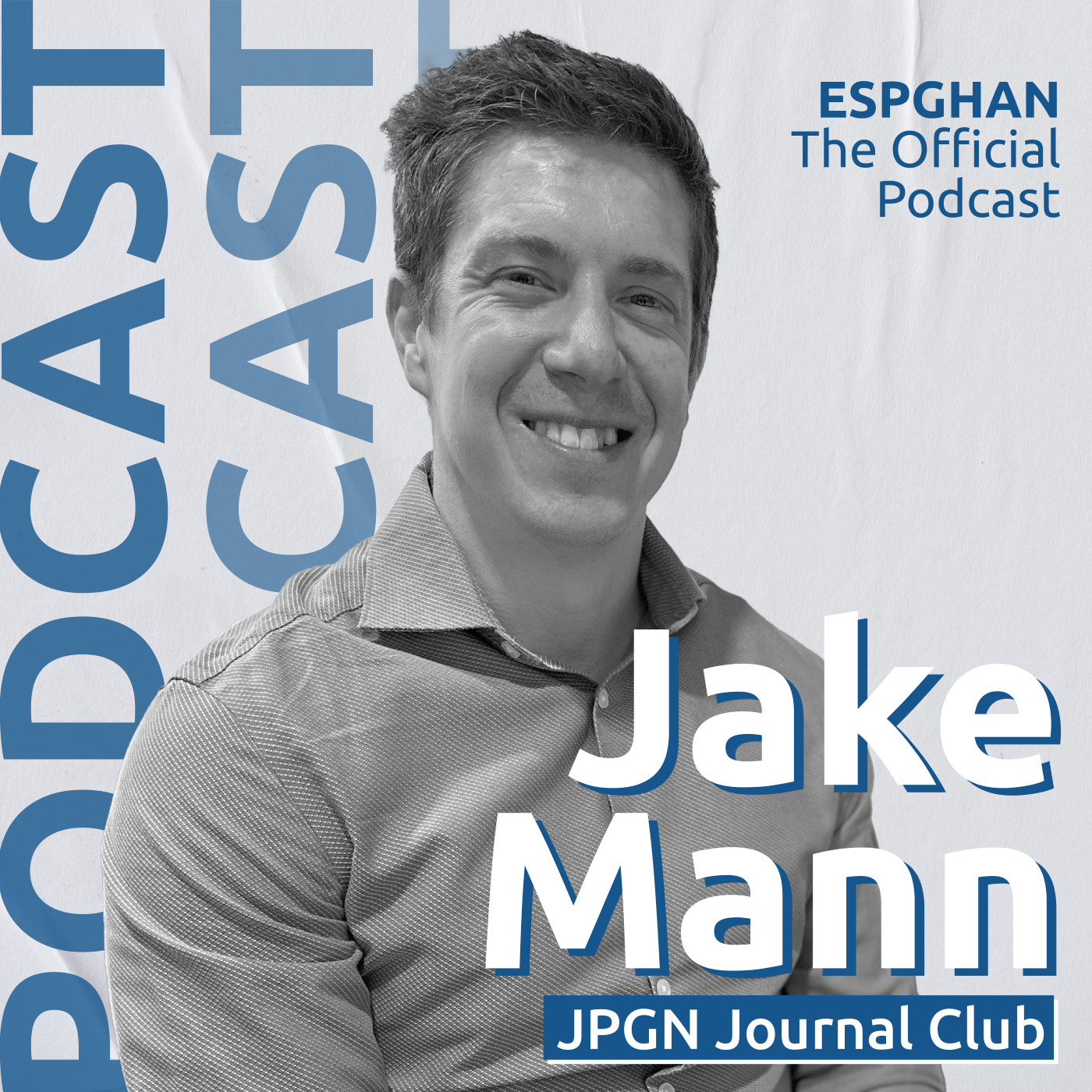
JPGN Journal Club August 2025: Portal Hypertension Management and Genetic Insights in CHAPLE Disease
from ESPGHAN Podcast · host ESPGHAN
Summer! So hot... and everywhere is parched. The hosepipes are trickling in the twilight, both at dawn and at dusk – but is it true that watering one’s garden in the heat of the day injures the plants? Wherever you are, dear reader and listener, let’s hope it’s somewhere shady, and that on the table next to where you’ve chosen to lounge and listen is a tall glass of something with ice cubes and gin. Lots of gin. A tip of the hat to you who, under such adverse circumstances, have chosen to log in for the JPGN Journal Club! Our Teuton friends speak of Wissensdurstigkeit—thirst for knowledge. Today, let’s combine that with Gindurstigkeit—thirst for, well, you can read on. Grab your highball and listen up, it’s Dr Jake Mann! Jake’s choices for today: First, from J Pediatr Gastroenterol Nutr, by Roilidis I et al., authors from a wide range of institutions:“Variability in the management of portal hypertension across European countries: A survey-study by the ESPGHAN Portal Hypertension Special Interest Group.” Second, from Clin Gastroenterol Hepatol, a case report as a letter from Amsterdam, by de Boer ECW et al.:“A pedigree with complement hyperactivation, angiopathic thrombosis, and severe protein-losing enteropathy (CHAPLE) disease: Variable penetrance and treatment with pozelimab.” The contribution from Roilidis et al. certainly underscores an unhappy truth: no one really knows the best way to manage patients with portal hypertension. Protocols that clearly demonstrate advantages in handling portal hypertension and its complications have yet to be defined, resulting in widely varying approaches. Pharmacotherapy with non-selective beta-blockers? Endoscopy with prophylactic intervention when varices are found? Meso-rex bypass construction? Transjugular intrahepatic portosystemic shunt placement? Treatment of hypotension-related sequelae during variceal hemorrhage? Roilidis et al. do not explain why different institutions choose different approaches. Perhaps the Special Interest Group will provide analysis, rather than description only, in follow-up work. De Boer and colleagues evaluated a family from the Maghreb in which three siblings had digestive tract complaints. One brother was diagnosed with irritable bowel syndrome, and two sisters born eighteen years apart were diagnosed with Crohn disease, but not without some head-scratching. The older sister was initially diagnosed with anorexia nervosa before a more “organic” diagnosis was made. Whatever their condition, it did not respond to therapy that would usually control Crohn disease. Given the apparent familial incidence, genomic sequencing was undertaken. All three siblings were homozygous for a known disease-associated variant in CD55, which encodes a modulator of complement activation. Without such modulation, inflammation and thrombosis surge forward. Administration of an antibody targeting complement component C5 led to substantial clinical improvement in the two young women; the young man chose not to be treated. A cautionary tale: don’t be Dr. Procrustes. When the patient doesn’t fit the diagnosis, when the guest doesn’t fit the furniture, step back and think again. Perhaps the guest would be better rested in a different bed, or the patient better treated in a different paradigm. As a corollary question: should any patient labeled with treatment-refractory inflammatory bowel disease have their genome sequenced—before the appearance of similarly affected siblings, as in this family— as part of re-evaluation and second-line work-up? Answers on a postcard, please, to the usual address. Literaturede Boer ECW et al. A pedigree with complement hyperactivation, angiopathic thrombosis, and severe protein-losing enteropathy (CHAPLE) disease: Variable penetrance and treatment with pozelimab. Clin Gastroenterol Hepatol 2025 Jun; 23(7):1264-1267.e3. doi: 10.1016/j.cgh.2024.11.015. Epub 2024 Dec 15. PMID: 39689772 Roilidis I et al. Variability in the management of portal hypertension across European countries: A survey-study by ESPGHAN Portal Hypertension Special Interest Group. J Pediatr Gastroenterol Nutr 2025 Jun 12. doi: 10.1002/jpn3.70115. Online ahead of print. PMID: 40501451
Embed this episode
Ready to play
JPGN Journal Club August 2025: Portal Hypertension Management and Genetic Insights in CHAPLE Disease
No transcript for this episode yet
Similar Episodes
No similar episodes found.
Similar Podcasts
No similar podcasts found.