Julian Assange’s Final Appeal - Read by Eunice Wong
from The Chris Hedges Report Podcast Hosted by Chris Hedges
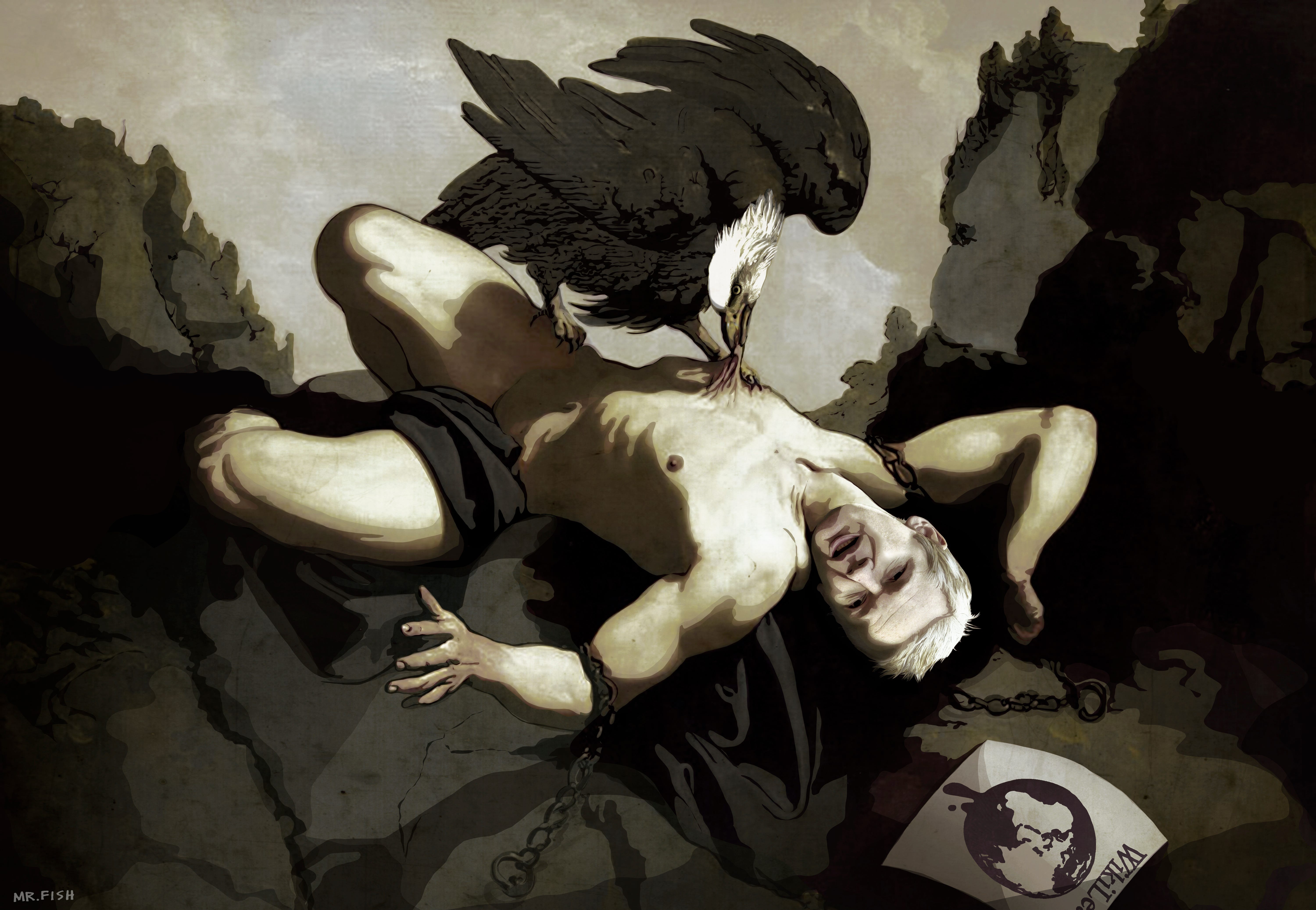
Text originally published Feb. 18, 2024 Assange - by Mr. Fish LONDON — If Julian Assange is denied permission to appeal his extradition to the United States before a panel of two judges at the High Court in London this week, he will have no recourse left within the British legal system. His lawyers can ask the European Court of Human Rights (ECtHR) for a stay of execution under Rule 39, which is given in “exceptional circumstances” and “only where there is an imminent risk of irreparable harm.” But it is far from certain that the British court will agree. It may order Julian’s immediate extradition prior to a Rule 39 instruction or may decide to ignore a request from the ECtHR to allow Julian to have his case heard by the court. The nearly 15-year-long persecution of Julian, which has taken a heavy toll on his physical and psychological health, is done in the name of extradition to the U.S. where he would stand trial for allegedly violating 17 counts of the 1917 Espionage Act, with a potential sentence of 170 years. Julian’s “crime” is that he published classified documents, internal messages, reports and videos from the U.S. government and U.S. military in 2010, which were provided by U.S. army whistleblower Chelsea Manning. This vast trove of material revealed massacres of civilians, torture, assassinations, the list of detainees held at Guantanamo Bay and the conditions they were subjected to, as well as the Rules of Engagement in Iraq. Those who perpetrated these crimes — including the U.S. helicopter pilots who gunned down two Reuters journalists and 10 other civilians and severely injured two children, all captured in the Collateral Murder video — have never been prosecuted. Julian exposed what the U.S. empire seeks to airbrush out of history. Julian’s persecution is an ominous message to the rest of us. Defy the U.S. imperium, expose its crimes, and no matter who you are, no matter what country you come from, no matter where you live, you will be hunted down and brought to the U.S. to spend the rest of your life in one of the harshest prison systems on earth. If Julian is found guilty it will mean the death of investigative journalism into the inner workings of state power. To possess, much less publish, classified material — as I did when I was a reporter for The New York Times — will be criminalized. And that is the point, one understood by The New York Times, Der Spiegel, Le Monde, El País and The Guardian, who issued a joint letter calling on the U.S. to drop the charges against him. Australian Prime Minister Anthony Albanese and other federal lawmakers voted on Thursday for the United States and Britain to end Julian’s incarceration, noting that it stemmed from him “doing his job as a journalist” to reveal “evidence of misconduct by the U.S.” The legal case against Julian, which I have covered from the beginning and will cover again in London this week, has a bizarre Alice-in-Wonderland quality, where judges and lawyers speak in solemn tones about law and justice while making a mockery of the most basic tenets of civil liberties and jurisprudence. How can hearings go forward when the Spanish security firm at the Ecuadorian Embassy, UC Global, where Julian sought refuge for seven years, provided videotaped surveillance of meetings between Julian and his lawyers to the CIA, eviscerating attorney-client privilege? This alone should have seen the case thrown out of court. How can the Ecuadorian government led by Lenin Moreno violate international law by rescinding Julian’s asylum status and permit London Metropolitan Police into the Ecuadorian Embassy — sovereign territory of Ecuador — to carry Julian to a waiting police van? Why did the courts accept the prosecution’s charge that Julian is not a legitimate journalist? Why did the United States and Britain ignore Article 4 of their Extradition Treaty that prohibits extradition for political offenses? How is the case against Julian allowed to go ahead after the key witness for the United States, Sigurdur Thordarson - a convicted fraudster and pedophile - admitted to fabricating the accusations he made against Julian? How can Julian, an Australian citizen, be charged under the U.S. Espionage Act when he did not engage in espionage and wasn’t based in the U.S when he received the leaked documents? Why are the British courts permitting Julian to be extradited to the U.S. when the CIA — in addition to putting Julian under 24-hour video and digital surveillance while in the Ecuadorian Embassy — considered kidnapping and assassinating him, plans that included a potential shoot-out on the streets of London with involvement by the Metropolitan Police? How can Julian be condemned as a publisher when he did not, as Daniel Ellsberg did, obtain and leak the classified documents he published? Why is the U.S. government not charging the publisher of The New York Times or The Guardian with espionage for publishing the same leaked material in partnership with WikiLeaks? Why is Julian being held in isolation in a high-security prison without trial for nearly five years when his only technical violation of the law is breaching bail conditions when he sought asylum in the Ecuadorian Embassy? Normally this would entail a fine. Why was he denied bail after he was sent to HM Prison Belmarsh? If Julian is extradited, his judicial lynching will get worse. His defense will be stymied by U.S. anti-terrorism laws, including the Espionage Act and Special Administrative Measures (SAMs). He will continue being blocked from speaking to the public — except on a rare occasion — and being released on bail. He will be tried in the U.S. District Court for the Eastern District of Virginia where most espionage cases have been won by the U.S. government. That the jury pool is largely drawn from those who work for or have friends and relatives who work for the CIA, and other national security agencies that are headquartered not far from the court, no doubt contributes to this string of court decisions. The British courts, from the inception, have made the case notoriously difficult to cover, severely limiting seats in the courtroom, providing video links that have been faulty, and in the case of the hearing this week, prohibiting anyone outside of England and Wales, including journalists who had previously covered the hearings, from accessing a link to what are supposed to be public proceedings. As usual, we are not informed about schedules or timetables. Will the court render a decision at the end of the two-day hearing on Feb. 20 and Feb. 21? Or will it wait weeks, even months, to render a ruling as it has previously? Will it permit the ECtHR to hear the case or immediately railroad Julian to the U.S.? I have my doubts about the High Court passing the case to the ECtHR, given that the parliamentary arm of the Council of Europe, which created the ECtHR, along with their Commissioner for Human Rights, oppose Julian’s “detention, extradition and prosecution” because it represents “a dangerous precedent for journalists.” Will the court honor Julian’s request to be present in the hearing, or will he be forced to remain in the high-security HM Prison Belmarsh in Thamesmead, south east London, as has also happened before? No one is able to tell us. Julian was saved from extradition in January 2021 when District Judge Vanessa Baraitser at Westminster Magistrates’ Court refused to authorize the extradition request. In her 132-page ruling, she found that there was a “substantial risk” Julian would commit suicide due to the severity of the conditions he would endure in the U.S. prison system. But this was a slim thread. The judge accepted all the charges leveled by the U.S. against Julian as being filed in good faith. She rejected the arguments that his case was politically motivated, that he would not get a fair trial in the U.S. and that his prosecution is an assault on the freedom of the press. Baraitser’s decision was overturned after the U.S… This is a public episode. If you'd like to discuss this with other subscribers or get access to bonus episodes, visit chrishedges.substack.com/subscribe
Embed this episode
No transcript yet.