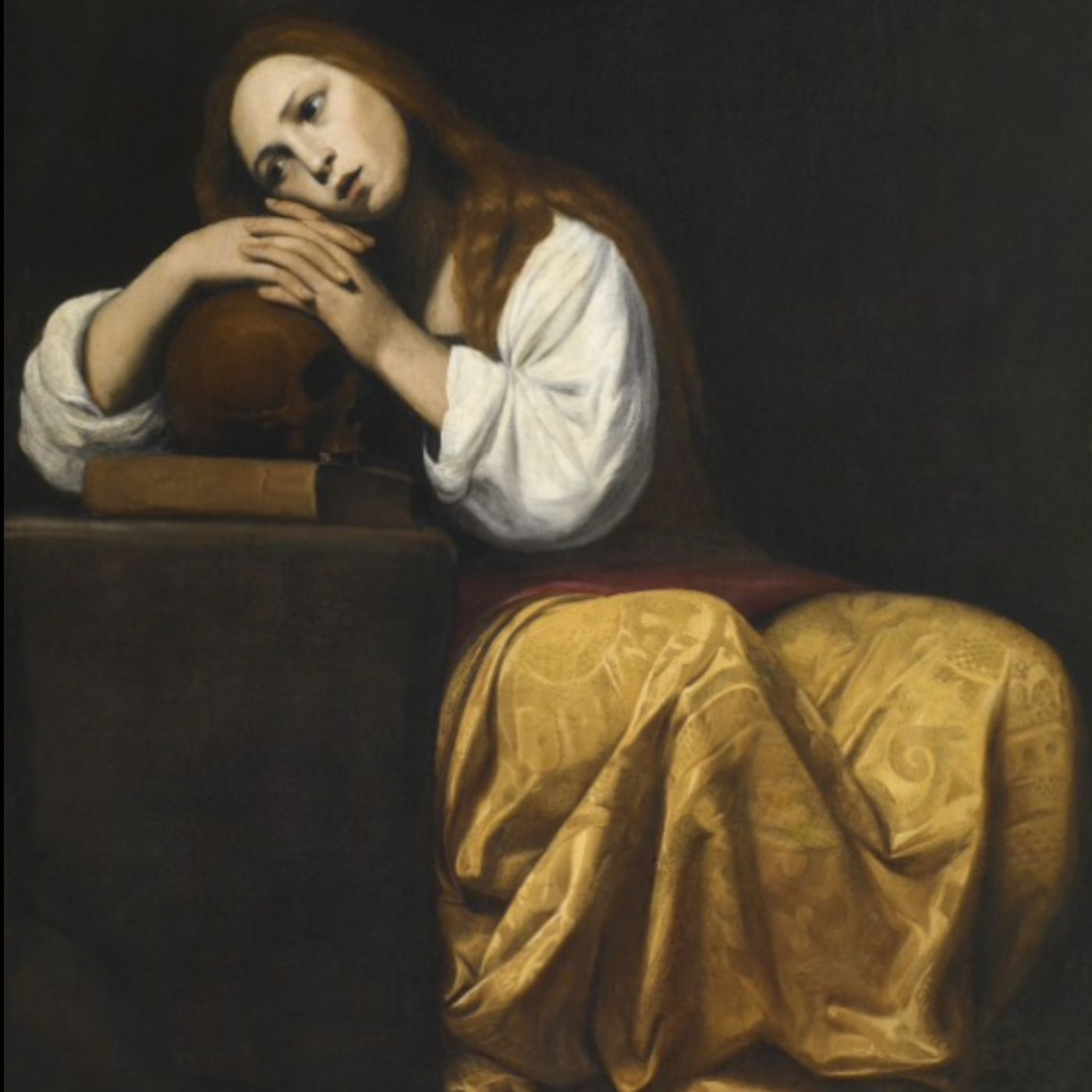
July 22: Saint Mary Magdalene
from Catholic Saints & Feasts Hosted by Fr. Michael Black
July 22: Saint Mary Magdalene First Century Feast; Liturgical Color: White Patron Saint of perfumers, converts, and hairdressers An Apostle to the Apostles first spreads the Good News “Cherchez la femme“ is a French phrase meaning “Look for the woman.” It is used as a convenient shortcut in movie or literary criticism to discover what is driving a plot, especially in a detective story. Why did the man risk his life? Cherchez la femme? Who had a motive to lie? Cherchez la femme? Where is the treasure buried? Cherchez la femme? It’s a cliché, of course, but clichés often convey some truth. Look for the women in the Gospels, and you will not be disappointed. Search for one woman in particular, Mary Magdalene, and you will find yourself present at all the most important Gospel events: the passion, the crucifixion, the burial, and in a garden for the resurrection, just moments after a huge stone is rolled away from a tomb, allowing the Lord to step forth into a new world. Saint Mary Magdalene is present at key moments, says key things, and is a key witness. She opens the door to Gospel scenes that would otherwise remain hidden from view. Saint Mary Magdalene was among that troop of women who congregated on the outer edge of the twelve Apostles. These were probably women of means, who “provided for” Jesus and the Apostles “out of their resources” (Lk 8:3). When these women are named, Mary Magdalene is always named first, similar to Saint Peter’s position in the listing of the Apostles. Mary Magdalene is named many more times in the Gospels than most of the Apostles themselves, signaling her importance. The Gospel of Luke relates that seven demons were driven from her (Lk. 8:2). But there is debate over whether Mary Magdalene is also the sinful woman who anoints Christ’s feet and if she is also Mary of Bethany, the sister of Martha and Lazarus. Building on the presumption that the sinful woman was Mary Magdalene, medieval traditions wrongly described her as a repentant prostitute. Artistic depictions almost universally show her as sultry, forlorn, and repentant. Despite the dubious connection between Mary Magdalene and prostitution, this association continues today and will likely take centuries to purify. A “combined Mary” understanding rolls all three of the above Marys—the woman from whom demons were expelled, the repentant sinner, the sister of Lazarus—into the one person of Mary Magdalene. Mary was an extremely common Jewish name. It requires, then, careful attention to the text to sift which Mary is doing what in the New Testament. Magdala was a town on the Sea of Galilee. So when Mary from Magdala is referenced, the reader can trust that her town is adjoined to her name on purpose to distinguish her from other Marys. An old Christian tradition calls Mary Magdalene the “Apostle to the Apostles.” The resurrected Christ appeared to her first, before all others. She is the proto-witness. Mary and other women go to the tomb of Jesus to anoint His body. They see the stone rolled away and enter. The body is not there. An angel tells them to not be afraid, “But go, tell his disciples and Peter” (Mk 16:7), so Mary dutifully fulfills his angelic orders. It is a woman, then, who tells the men, who spreads the news of all news to everyone else. The men come running and verify her account. The tomb is empty. As usual, Mary respectfully remains on the fringe of the Apostles. She weeps outside the tomb while Peter and John are inside. Time passes as they try to absorb what this all means until, finally, the “disciples returned to their homes” (Jn 20:10). But Mary does not go home. And then it happens. Mary is alone again, crying. She just can’t believe it. She has to take another look. So she bends her body in half to peer into the low empty tomb once again. When she straightens up, she notices a man standing just behind her. She thinks he is a gardener. A short, awkward conversation follows and then abruptly concludes: “Mary!”...“Rabbouni!” (Jn 20:16). Her name is in the mouth of God! A name is enunciated and a new life begins! At Baptism. At Confirmation. At religious vows. May we all hear the voice of the risen Christ speak our name, directly to us, just as Mary Magdalene did, when we hopefully walk for the first time in the garden of paradise: “Ashley!” ”Susan!” “Tom!” “Marty!” “Quinn!” “Juliette!”...and on and on and on until the end of time. Saint Mary Magdalene, assist all who seek your intercession to be humble followers of Christ, doing, from the margins, what is necessary to carry forward the ministry of Christ’s Church, quietly accomplishing God’s will without recognition except for its eternal reward.
Embed this episode
No transcript yet.