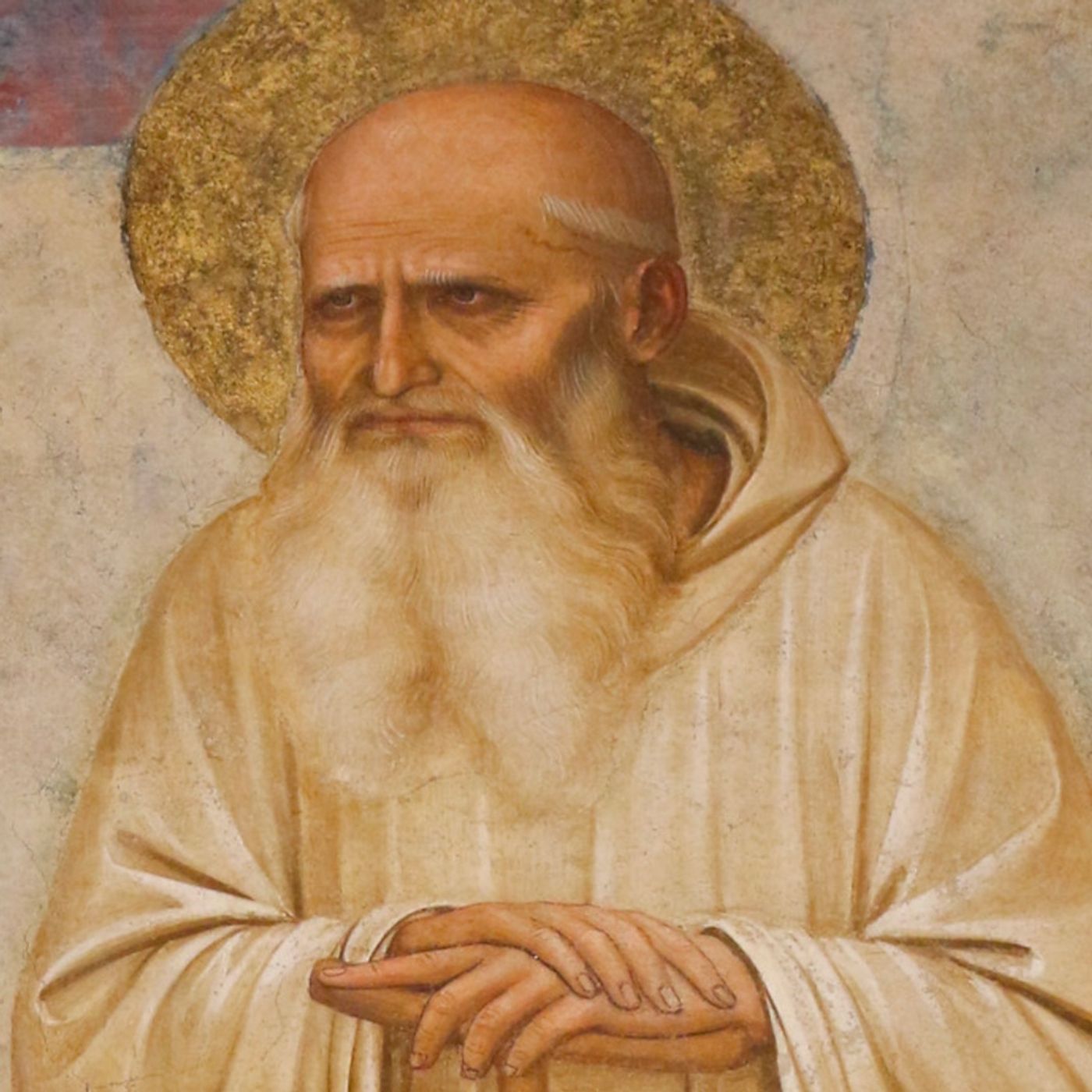
June 19: Saint Romuald, Abbot
from Catholic Saints & Feasts Hosted by Fr. Michael Black
June 19: Saint Romuald, Abbot 951–c. 1025 Optional Memorial; Liturgical Color: White Founder of the Camaldolese Benedictine Order To be alone with God is not to be alone It is easy today to slip down a technological hole into a cave piled high with televisions, video games, and the toys of virtual reality. Many technological “hermits” disappear from meaningful contact with society, and instead marinate, perpetually, in the blue glow of their screens. Retreating from sustained contact with everyday life has always been attractive for a very small number of people. These people are called monks. But a religious monk’s motivation is not isolation for isolation’s sake. Nor is it flight from overwhelming adult responsibilities. Today’s technological monks separate themselves from society for different reasons than a religious monk does. Religious monks were not, and are not, merely recluses with antisocial or introverted personalities. They do not become monks because they are more comfortable playing war on a digital battlefield or retreating into sci-fi universes. Although they may have an innate disposition toward the interior life, religious monks do not enter a monastery primarily to flee, or hide from, something. Instead, they run toward someone—God. A monastery is not a cave. It is an oasis. Monks seek a Christ-centered community where mortification and self-discipline are easier to practice, where a chapel and the Sacraments are always available, and where spiritual direction, Church approval, and the reinforcement of fellow monks assure the community that they are doing the will of God. Since the time of Saint Benedict in the sixth century, there had essentially been only one monastic order in the Latin Rite Church, the Benedictines. Benedictine monasteries shone like stars in a broad constellation, blinking throughout Europe from east to west and north to south. Each monastery and school was like a vertebra strengthening the intellectual and spiritual skeleton of Europe. Over the centuries, however, and inevitably, the Benedictines atrophied, cracked from dryness, and needed new wine poured into their old wineskins. The saint who reformed Benedictine life and who founded the Cistercian Order was Saint Bernard of Clairvaux. But he was not born until 1090. It was today’s saint, Romuald, much less well-known, who cleared the path for Saint Bernard and for the reform of monasticism, ensuring its survival in the middle ages. Saint Romuald was born in the middle of the tenth century in Northern Italy. After his father killed a relative in a duel, Romuald entered a local monastery for a few weeks of penance. But the weeks turned into months and the months into years. He stayed. Unfortunately, the monks were as lukewarm as old bathwater, and Saint Romuald told them so. He had to leave. He put himself under the tutelage of a wise hermit, then traveled to Spain to live as a hermit on the grounds of a Benedictine monastery. He subsequently spent about thirty years walking the length and breadth of Italy. He had acquired a great reputation as an ascetic and master of prayer and so founded, or reformed, various monasteries which sought his assistance. Finally, in 1012, he settled down in Tuscany and established a reformed branch of the Benedictines. The Order was named after the man who granted Saint Romuald the beautiful land on which he first built. The donor’s name was Maldolus, and the new community was thus called the Camaldolese Order. The Order still exists in several countries and continues to attract those few men and women inclined to the radical isolation, prayer, asceticism, and deep hunger for God, which only a hermit’s life can satisfy. Saint Romuald planted the seed of his Order in the Benedictine garden. But Camaldolese monks emphasize solitude more than their monastic cousins. In a typical Benedictine monastery, every single monk places his oar in the water to pull the monastery’s school, or orchard, or farm, forward. The Camaldolese tradition is more hermit based (eremitical) while allowing some community based (cenobitical) life. Camaldolese monks generally live in individual structures but pray the Mass and Liturgy of the Hours together daily in the Church. They live simplicity, penance, and contemplation more intensely due to their total focus on these goals to the exclusion of all outside apostolates. Unlike modernity’s reclusive technological monks enraptured by their screens, the Camaldolese choose to live without phones, the internet, or television. The tabernacle is their screen, and the scene stays the same. With this intense focus on solitude and prayer, Camaldolese monks perpetuate, in their narrow, unique, and faithful way, the vision of their pioneering founder. Saint Romuald, by your intense example of prayer, penance, and solitude, assist all the faithful to put God above all things, to conquer themselves before any other mountain, and so come to know themselves, and their Maker, more deeply.
Embed this episode
No transcript yet.