
EPISODE · Dec 29, 2025 · 45 MIN
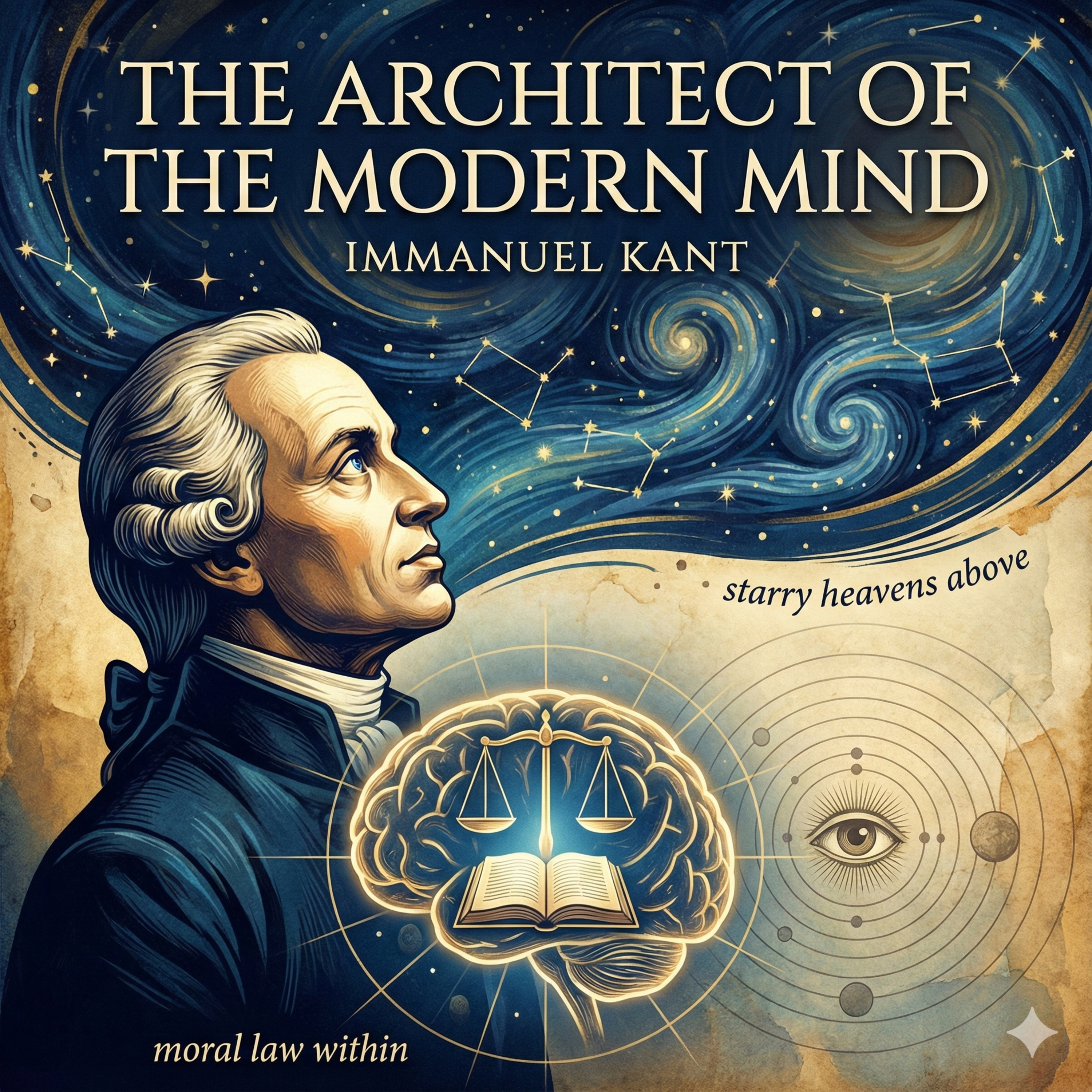
Kant’s Copernican Revolution: The Starry Heavens, The Moral Law, and The Death of Metaphysics
from Trinity and Christian Life · host Ajay Daram
Immanuel Kant’s philosophy stands as the definitive watershed of the modern era. In this deep dive, we explore Kant's "Copernican Revolution," where he argued that the structure of reality—space, time, and causality—are contributions of the knowing subject.Key Topics:• Phenomena vs. Noumena: The distinction between the world we experience and the unknowable "thing-in-itself".• Synthetic A Priori: How we can know universal truths (like mathematics) before experience.• Refuting Aquinas: Why Kant believed the Cosmological and Ontological arguments for God were logically invalid.• R.C. Sproul’s Rebuttal: The argument against Kant’s restriction of causality and the absurdity of "unintentional intentionality" in nature.• The Moral Argument: How Kant saved religion by grounding it in moral necessity rather than theoretical proof.Famous Quote: "Two things fill the mind with ever new and increasing admiration and awe... the starry heavens above and the moral law within." — Immanuel Kant.--------------------------------------------------------------------------------Analogy for Understanding Kant: To understand Kant’s "Copernican Revolution," imagine you are born wearing blue-tinted sunglasses that you can never remove. Every object you see looks blue. You might argue that "blueness" is an intrinsic property of the world, but in reality, the "blueness" is a contribution of your own visual faculty. For Kant, space, time, and causality are those sunglasses—they are the necessary conditions of our experience, not necessarily properties of the world as it exists independently of us.
Embed this episode
NOW PLAYING
Kant’s Copernican Revolution: The Starry Heavens, The Moral Law, and The Death of Metaphysics
No transcript for this episode yet
Similar Episodes
No similar episodes found.
Similar Podcasts
No similar podcasts found.