
EPISODE · Oct 25, 2020 · 24 MIN
خطاهای شناختی؛ وقتی مغز شما به شما دروغ میگوید
from روانشناسی شخصیت و خوشبختی · host Plato
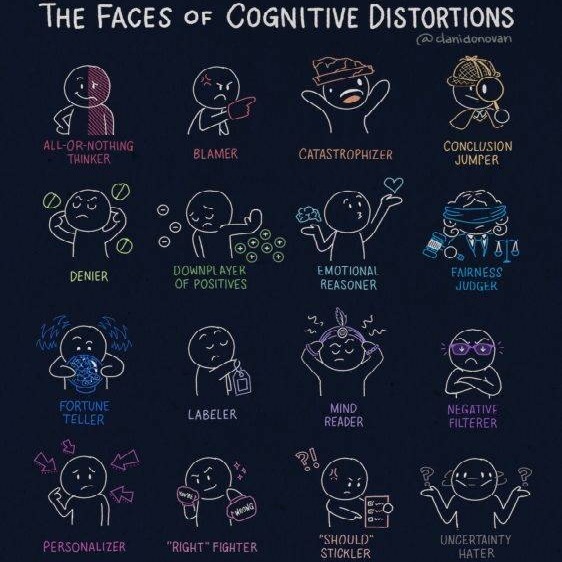
Thinking Errors Or Cognitive Distortions دکتر حمیدرضا هاشمیمقدمA List of the Most Common Cognitive DistortionsBeck and Burns are not the only two researchers who have dedicated their careers to learn more about depression, cognitive distortions, and treatment for these conditions.There are many others who have picked up the torch for this research, often with their own take on cognitive distortions. As such, there are numerous cognitive distortions floating around in the literature, but we’ll limit this list to the most common sixteen.The first eleven distortions come straight from Burns’ Feeling Good Handbook (1989). 1. All-or-Nothing Thinking / Polarized ThinkingAlso known as “Black-and-White Thinking,” this distortion manifests as an inability or unwillingness to see shades of gray. In other words, you see things in terms of extremes – something is either fantastic or awful, you believe you are either perfect or a total failure. 2. OvergeneralizationThis sneaky distortion takes one instance or example and generalizes it to an overall pattern. For example, a student may receive a C on one test and conclude that she is stupid and a failure. Overgeneralizing can lead to overly negative thoughts about yourself and your environment based on only one or two experiences. 3. Mental FilterSimilar to overgeneralization, the mental filter distortion focuses on a single negative piece of information and excludes all the positive ones. An example of this distortion is one partner in a romantic relationship dwelling on a single negative comment made by the other partner and viewing the relationship as hopelessly lost, while ignoring the years of positive comments and experiences.The mental filter can foster a decidedly pessimistic view of everything around you by focusing only on the negative. 4. Disqualifying the PositiveOn the flip side, the “Disqualifying the Positive” distortion acknowledges positive experiences but rejects them instead of embracing them.For example, a person who receives a positive review at work might reject the idea that they are a competent employee and attribute the positive review to political correctness, or to their boss simply not wanting to talk about their employee’s performance problems.This is an especially malignant distortion since it can facilitate the continuation of negative thought patterns even in the face of strong evidence to the contrary. 5. Jumping to Conclusions – Mind ReadingThis “Jumping to Conclusions” distortion manifests as the inaccurate belief that we know what another person is thinking. Of course, it is possible to have an idea of what other people are thinking, but this distortion refers to the negative interpretations that we jump to.Seeing a stranger with an unpleasant expression and jumping to the conclusion that they are thinking something negative about you is an example of this distortion. 6. Jumping to Conclusions – Fortune TellingA sister distortion to mind reading, fortune telling refers to the tendency to make conclusions and predictions based on little to no evidence and holding them as gospel truth.One example of fortune-telling is a young, single woman predicting that she will never find love or have a committed and happy relationship based only on the fact that she has not found it yet. There is simply no way for her to know how her life will turn out, but she sees this prediction as fact rather than one of several possible outcomes. 7. Magnification (Catastrophizing) or MinimizationAlso known as the “Binocular Trick” for its stealthy skewing of your perspective, this distortion involves exaggerating or minimizing the meaning, importance, or likelihood of things.An athlete who is generally a good player but makes a mistake may magnify the importance of that mistake and believe that he is a terrible teammate, while an athlete who wins a coveted award in her sport may minimize the importance of the award and continue believing that she is only a mediocre player. 8. Emot
Embed this episode
NOW PLAYING
خطاهای شناختی؛ وقتی مغز شما به شما دروغ میگوید
No transcript for this episode yet
Similar Episodes
No similar episodes found.
Similar Podcasts
No similar podcasts found.