
EPISODE · Jul 28, 2026 · 9 MIN
'Kia ora! Welcome to your job. It'll cost you $60k'
from The Kākā by Bernard Hickey · host Bernard Hickey
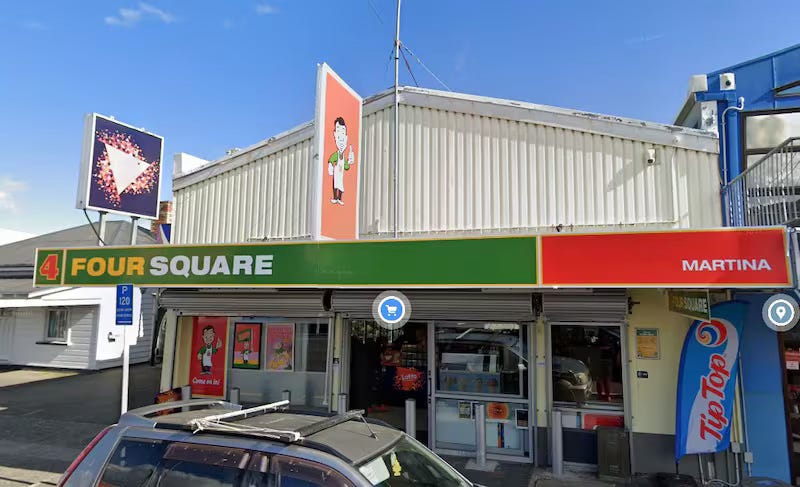
Cases of the most egregious migrant exploitation are now emerging in dribs and drabs through decisions by the Employment Relations Authority, indicating a tip of iceberg that should shame the nation and endanger our exports to countries that monitor the use of slave labour. But it doesn’t, and hasn’t. Yet.This week, the ERA ruled the owner of Four Square Martina in Thames, Jaswinder Singh, had to pay $44,000 in penalties after he charged two workers from India $60,000 each for jobs at the supermarket in the Foodstuffs North Island Co-operative. The workers were repaid their $60,000 each after the Labour Inspectorate got involved. Each worker will receive $1,000 of the penalties. Foodstuffs has said Four Square Martina is no longer part of the Co-operative, but it’s not clear if it has been ‘de-bannered’ from using the Four Square signage because of the abuse. Singh is still running the store.This case is the latest showing the endemic abuse and the small fines and sanctions being applied. The fines fit into the ‘Business as Usual’ and as a ‘Cost of Doing Business’ category. (See more analysis, charts and detail below, and in the video above.)Elsewhere in the news around Aotearoa’s political economy of housing, climate and poverty this morning:* Immigration Minister Erica Stanford has announced unspecified changes to the Recognised Seasonal Employer (RSE) scheme for temporary fruit pickers from the Pacific that she said would ‘simplify’ the scheme. * HortNZ said yesterday it was confident of doubling annual exports to $20 billion as it welcomed the changes, which Immigration NZ announced would include an employer accreditation scheme that would allow accredited employers to not have to prove they had tried to find local workers.* Employment grew by 14,327 or 0.6% in June from a year ago, which was less than the 54,000 growth in the working age population over the last year. That means the unemployment rate is expected to rise to 5.5% in the June quarter from 5.3% in the March quarter. The data is due next week.* NZ First Leader Winston Peters said he had to accept the current Government’s removal of full employment from the Reserve Bank’s dual mandate as a ‘dead rat’ because both National and ACT wanted to return to the single inflation mandate. He told Henry Cooke at The Post-$ yesterday he wanted to bring the bring back the full employment mandate in any future governing arrangement and Labour has said it is already considering a return to a dual mandate.Join us as a paying subscriber to get my full daily selection of the news, analysis, commentary, links, charts, front pages and cartoons below, and to support this work I do sorting the signal from the noise in our political economy. Here’s 50% off for the first year.FYI to all paying and free subscribers, I have decided to open this up immediately. Thanks in advance to paying subscribers for their permission.‘Kia ora! Welcome to your job. It’ll cost you $60k’New Zealand believes it is squeaky clean when it comes to forced labour. So much so, that just last week, Trade Minster Todd McClay, was indignant in protesting against Donald Trump’s new 12.5% tariff aimed at countries that accepted imports from countries where forced labour was used. He said:“I strongly reject that there is any support at all in the New Zealand system for forced labour. We're not involved in it. It doesn't happen through our trade. It doesn't exist in New Zealand.” Trade Minister Todd McClay quoted by RNZ on July 24.It doesn’t exist in New Zealand? Minister McClay should have a look through the last couple of years of ERA rulings involving migrant workers and have a chat to the Government’s own Labour Inspectorate. Those rulings and the Inspectorate’s releases are a cavalcade of examples of unpaid wages, sick leave not granted, premiums charged for jobs, beatings, slum-like accommodation and routine ignorance of employment laws and rights.So how did we get here? And why are we kidding ourselves?One of the ‘bits tacked on’ to New Zealand’s low investment, low wage and resource-extractive economy over the last 20 years has been the endemic use and exploitation of migrants tied to their employers by temporary work visas and seasonal work visas. It has helped enable economic growth without investment or wage growth, and allowed businesses to use spare cash to buy and leverage land for tax-free capital gains — which is the real game. This temporary migrant industrial complex has also disguised relative declines in workers’ purchasing power because consumers found taxis, food delivery, convenience stores, services stations, shops, cafes and liquor stores were cheaper than they otherwise would otherwise have been the case. Entry level jobs in services jobs for young, locally educated workers have become harder to get, with lower real weekly wages and poorer work conditions. 300,000 work visas granted, while 108,600 young NZers unemployedThere were 108,600 15-24-year-olds Not in Education, Employment or Training (NEET) in the March quarter, representing 15.9% of the New Zealanders of that age. Yet, New Zealand also approved temporary work visas for 194,079 migrants in the year to the end of March, along with a further 85,575 visas with work rights for foreign students and 17,175 visas for RSE workers. There were 78,165 work visas granted last year for temporary workers aged 20-29, MBIE data shows.The way these temporary migrants are treated is appalling, and little is being done to fix it or question whether this system of temporary work visas tied to individual employers is a sustainable or even moral way to operate. New Zealanders and many overseas believe our business culture is honest, incorruptible and gives everyone a fair go. Buyers of our exports have not put us on the lists of ‘bad’ countries that use slave labour or operate exploitative factories. However, even a cursory glance at the ERA rulings shows how awfully we treat these temporary workers, many of whom are forced to leave after their three-year visa ends, especially if the Government becomes worried they may start costing our health system too much. The Four Square Marina case is just the latest, adding to the December 2025 case of Four Square Tauhara in Taupō, where two workers were charged $10,000 each for their jobs and were not paid for 710 hours work. Here’s the details of the Thames case, as relayed by the Labour Inspectorate:ERA Member Helen van Druten ordered the company, A Dharni Enterprises Ltd, trading as Four Square Martina, to pay a penalty of $32,000 and Jaswinder Singh, the sole director, a penalty of $12,000. The workers will each receive $1,000 of the penalty paid by the company.“Effectively, A Dharni Enterprises Ltd used the premiums to pay the employees’ own wages,” Ms van Druten said.She found the arrangement provided A Dharni Enterprises Ltd with a financial advantage, freeing up company money that would otherwise be used to pay those wages.Ms van Druten said the workers were particularly vulnerable because their visas were tied to their employer and they were new to New Zealand. The new Accredited Employer Work Visa scheme set up under Labour was the tool used in this case. Agents in India were involved too.The 2 workers, who each paid $60,000 to secure their jobs, had family ties to the business owner Mr Singh and entered New Zealand on Accredited Employer Work Visas (AEWV) in July and August 2023. The money was paid in India in 7 instalments.They only worked for the business briefly before leaving because Mr Singh felt they had misrepresented their English ability during the recruitment process.The Labour Inspectorate investigation was complex because inspectors needed to contact witnesses in India, where the premium payments were made, establish the role of intermediaries who facilitated the payments, and demonstrate a link between the payments and the workers’ employment.Earlier this month, the ERA and the Labour Inspectorate reported on the case of a kiwifruit picking contractor who systematically underpaid workers. The case involved a wage “banking” arrangement that resulted in workers not receiving all of their lawful entitlements, as well as failures to keep accurate employment records and correctly calculate leave entitlements. Workers with contracts guaranteeing them minimum hours were routinely required to work unpaid hours to offset time they had previously been paid for but not worked.The total amount of arrears owed to the four workers was $61,312, which the company agreed to pay prior to the ERA hearing.It’s clear New Zealand is debasing its reputation in exchange for cheaper stuff and avoiding investment in systems and training of local workers. The biggest issue is the use of temporary work visas, which are supported by NZ First as a way to allow to migration without admitting it’s migration, using the assumption that migrants that leave within three years don’t need to be counted as requiring the infrastructure in health, transport and housing for the extra resident population.The Greens have called for the visas to be disconnected from specific employers, removing a lot of the power currently wielded by such employers. Labour, National and NZ First have opposed this shift.My Top Pick n’ Mix Six* Interview with Claire Achmad by Lyric Waiwiri-Smith for The Spinoff: Children’s commissioner on her early exit: ‘I have a lot more left to give’ * Scoop by Alice Peacock for Newsroom: Stats NZ plan to crack down on dodgers risks corrupting data* Scoop by Fox Meyer for Newsroom Pro-$: Labour vows to keep billions in conservation costs off councils if elected* Ethan Griffiths for NewstalkZB: Migrant super bill tops $1b despite tighter rules* Deep-dive for Reuters: China muscle-flex is iron ore miners’ call to arms* NZ Herald Video: Should the Government extend fuel support as prices dip below $3? ‘Bernard Hickey unpacks whether the fuel support should continue.’Front page of the Day: Winston’s ‘dead rat’Cartoon of the Day: DementedTimeline-cleansing nature pic: Dark & stormy daycheers. BernardPS: I update this post online later in the morning for paying subscribers, including more detailed Picks n’ Mixes on housing, climate and poverty, a chart pack and more cartoons below the paywall fold. It is only available to paying subscribers, who are also enabled to comment and use The Kākā’s chat room. This is a public episode. If you'd like to discuss this with other subscribers or get access to bonus episodes, visit thekaka.substack.com/subscribe
Embed this episode
Ready to play
'Kia ora! Welcome to your job. It'll cost you $60k'
No transcript for this episode yet
Similar Episodes
No similar episodes found.
Similar Podcasts
No similar podcasts found.