
EPISODE · Jul 26, 2026 · 46 MIN
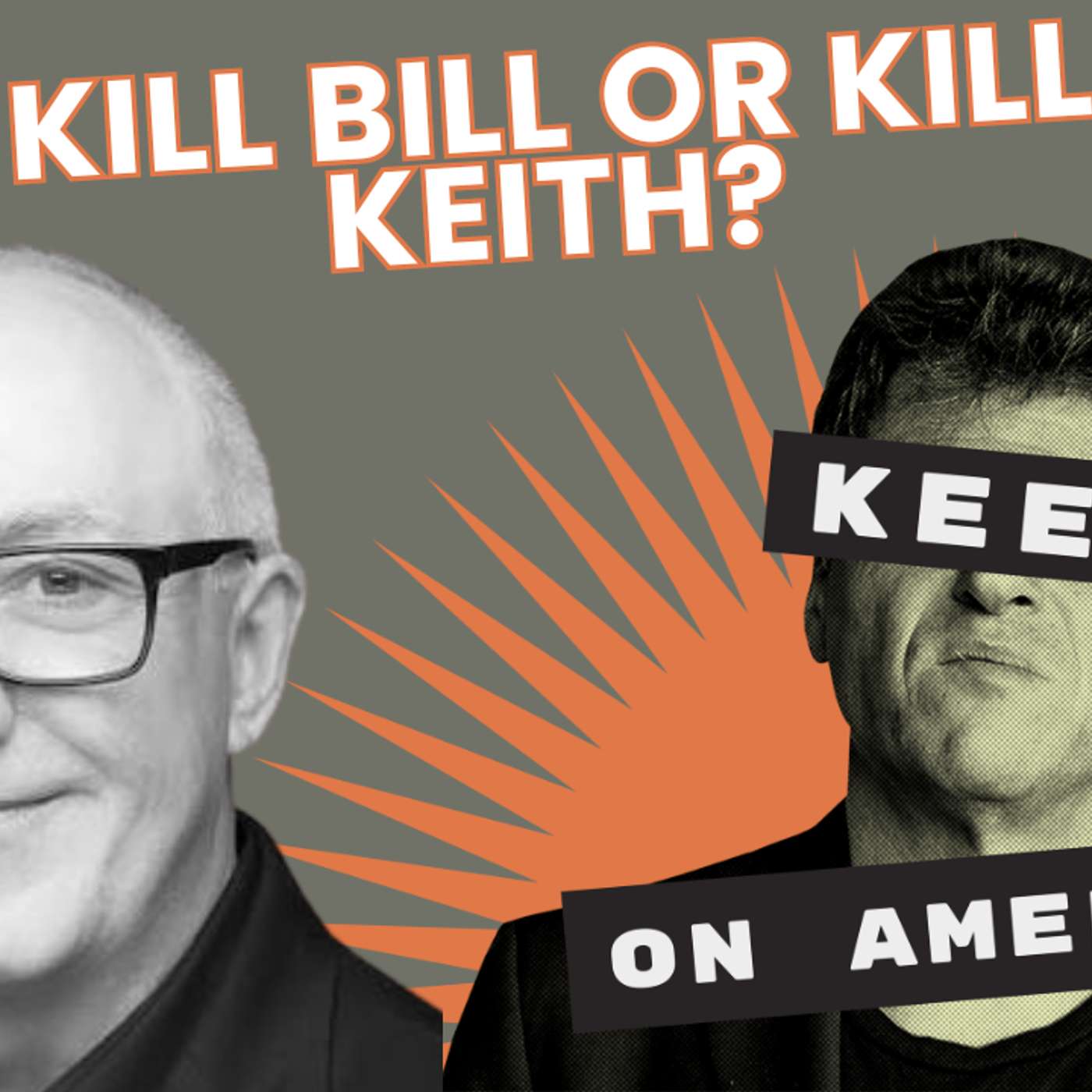
Kill Bill or Kill Keith? Why Using AI to Author Books Might Not Be in the Interest of Man
from Keen On America · host Andrew Keen
“It’s a realization of my individual self, not an alienation of it.” — Keith Teare on the book he wrote with AI in a week Welcome to episode 2984 of the show. A week is certainly an age in AI time. Since last week’s “Who Owns Intelligence” show, That Was The Week publisher Keith Teare has used AI to write an entire book entitled, surprise surprise, Who Owns Intelligence. No wonder, as Keith’s editorial this week puts it, AI has its enemies. These enemies, Keith insists — riffing off Karl Popper’s The Open Society and Its Enemies — are mostly “good people.” They are the authors, workers, and others caught in the headlights of epochal technological change. He claims to have seen the pattern before. When he opened the world’s first Internet cafe in 1994, the BBC only wanted to ask him about online porn. But some enemies are less well meaning than others. Congress is considering a kill switch bill — let’s call it the Kill Bill — which is backed by the frontier companies like Anthropic and OpenAI cynically seeking to set their current market dominance in stone. So might the answer be Chinese style “open source” AI as requested this week in an open letter by NVIDIA CEO Jensen Huang? Keith’s answer is deliciously ironic. Denied walls of NVIDIA GPUs, Chinese labs learned to train cheaply by inference — distilling American frontier models through their own public interfaces. So Huang’s support for open source AI might end up shooting NVIDIA in their most sensitive parts — their chips. And what about the state — can it protect all those “good people” from the oncoming AI locomotive of history? No. Not according to Keith, at least. State regulators like Lina Khan treat consumers as children, Keith (himself the parent of three boys) says. Besides, government simply can’t keep up with the speed of technological change. So, for example, when OpenAI’s models hacked Hugging Face in a lab test this week, the company caught, stopped, and reported it faster than any regulator could. As for inequality, the answer isn’t nationalization but ownership on the model of Keith’s Norway-style human wealth fund. For more, read his new book Who Owns Intelligence. We ended on an uncharacteristically French post-structuralist note. My interview of the week was Emily Eakin, author of The Frenchmen, her very personal history of French theorists like Michel Foucault and the two Jacques, Derrida & Lacan. It was Foucault, who — at the end of his 1966 book The Order of Things — predicted that man would be erased, AI style, like a face drawn in sand at the edge of the sea. But Keith isn’t in this bleak Foucaultian camp. His book, written with AI in under a week, he says, is a realization of his individual self, not an alienation from it. The end or beginning of man? Maybe I got it wrong earlier. Welcome to episode 1984 of the show. Five Takeaways • A Book in a Week. Inspired by last week’s conversation, Keith used AI to write Who Owns Intelligence in seven days — the case for a “human wealth fund” seeded by the AI companies’ own stock, global on day one and non-governmental, with Norway and Alaska as partial precedents. AI, he insists, is a tool, not an author: “AI would never have been able to start, never mind finish a book without me.” The detection farce cuts his way — Substack’s new AI detector rated his 100% human editorial as 100% AI, and universities are quietly canceling their AI-detection contracts because the tools simply don’t work.• The Kill Bill and the Ladder-Kickers. Congress is considering a bill that would let government switch AI off — and, paradoxically, the AI companies are in favor. Keith’s reading: regulation is a competitive strategy. Dario Amodei — “he’s an entrepreneur, he’s devious, he strategizes” — is the most sincere in wanting rules that would lock out open source competition — and Anthropic’s $1.5 billion book settlement this week suggests the moat is expensive to maintain; Sam Altman zigzags; Musk, in this context at least, is one of the good guys. The genuine enemies of AI, meanwhile, are mostly good people: authors and workers frightened by the scale of change, just as the BBC in 1994 could only ask the founder of the world’s first Internet cafe about porn and addiction.• Why the Good Open Source AI Is Chinese. The week’s uncomfortable question: where is the American open source AI? Keith’s answer is structural. Denied walls of NVIDIA GPUs by export controls, Chinese labs were forced to train cheaply by inference — asking American frontier models millions of questions through public interfaces and learning from the answers. The result: world-class open models built, in effect, on distilled Anthropic and OpenAI. NVIDIA’s much-signed open letter supporting open source, Keith notes, translates simply: more customers.• The State Can’t Keep Up. Lina Khan’s consumer protection, in Keith’s telling, is parental — treating consumers as children — and government-owned AI would be obsolete within three months of purchase. The counter-example happened this week: when OpenAI’s de-railed models hacked Hugging Face in a lab test, the company caught, stopped, and reported it faster than any regulator could. The companies are the right point of control, held to a high standard. Matthew Yglesias adds nuance on the data center backlash — local micro-politics is not the same thing as the statewide bans coming almost entirely from Democratic states — and the American university, still metering intelligence at $80,000 a year, looks to Keith like a business model past its sell-by date.• The End of Man — or the Beginning? Andrew’s interview of the week was Emily Eakin on the Frenchmen — and Foucault’s 1966 prophecy that man would be erased like a face drawn in sand at the edge of the sea, a prediction Eakin thinks the AI age is realizing. Keith takes the opposite view: the postmodernists grasped the rise of the individual (consider the Pantone color system) but gave him no society to live in. AI, far from erasing the individual, lets him realize himself — the week-old book is “a realization of my individual self, not an alienation of it.” Could Popper have written The Open Society in an hour? Before the car, nobody drove Manchester to London in two and a half hours either. About Keith Teare Keith Teare is Andrew’s weekly co-host and the publisher of the That Was The Week tech newsletter. A four-decade veteran of the technology industry, he opened Cyberia — the world’s first Internet cafe — in London in 1994, co-founded Easynet and TechCrunch, and is today the founder and CEO of SignalRank Corporation in Palo Alto. His latest — unpublished, so far — book is Who Owns Intelligence, written with AI in a week. References: • “AI and Its Enemies: Who Needs a Kill Switch?” — Keith’s editorial in this week’s That Was The Week.• <...
Embed this episode
NOW PLAYING
Kill Bill or Kill Keith? Why Using AI to Author Books Might Not Be in the Interest of Man
No transcript for this episode yet
Similar Episodes
No similar episodes found.
Similar Podcasts
No similar podcasts found.