Korea's fuel price cap shields consumers, but someone has to pay episode artwork

EPISODE · Apr 23, 2026 · 5 MIN

Korea's fuel price cap shields consumers, but someone has to pay

from Korea JoongAng Daily - Daily News from Korea · host NAM SOO-HYOUN

This article is by Nam Soo-hyoun and read by an artificial voice. SEJONG — Pressure is intensifying on the government's fuel price cap policy as rising global oil prices test its sustainability, even as authorities move to extend the measure to curb inflation. The average gasoline price at gas stations nationwide stood at 2,005.39 won per liter ($5.13 per gallon) on Thursday, up 18.5 percent from 1,692.58 won recorded on Feb. 27, before the outbreak of the Iran war, according to the data from the Korea National Oil Corporation. Though both fuels have seen sharp increases, the rise remains limited compared to global markets due to the government's price cap. Over the same period, gasoline prices in Singapore, a key benchmark for Asian oil prices, surged 49 percent, while diesel jumped 66.9 percent. But the government on Tuesday maintained its position to continue the price cap system to alleviate the burden of inflation on consumer prices. "As the Iran war continues and global oil prices remain unstable, the price cap is contributing to price stability and the broader economy," Yang Ki-wook, director-general of the Office of Industry, Trade and Resource Security at the Ministry of Trade, Industry and Resources, said in a briefing. "It is also playing an important role in protecting vulnerable groups and those who rely on fuel for their livelihoods, such as truck drivers and farmers." The government said Thursday it will freeze the fourth round of maximum prices for petroleum products, set to take effect on Friday. The capped prices will remain at 1,934 won per liter for gasoline, 1,923 won for diesel and 1,530 won for kerosene, unchanged from the second round introduced on March 27. A key concern, however, is sustainability. The government must later compensate refiners for losses incurred under the price cap through fiscal spending, and the longer the gap between international prices and the domestic ceiling persists, the greater those losses will grow. This burden ultimately falls on taxpayers. The government has allocated 4.2 trillion won in a supplementary budget based on a six-month implementation plan, but the exact scale of losses remains uncertain, raising the possibility of additional fiscal strain. Another issue is that the policy has not sufficiently led to reduced energy consumption. Weekly gasoline and diesel sales in the fourth week of March — after the price cap took effect — reached 731,000 kiloliters (193 million gallons), about 9 percent higher than a year earlier, the Ministry of Trade, Industry and Energy said. "Some say consumption is actually increasing," said President Lee Jae Myung during a Cabinet meeting on April 14. Although sales declined by 13.2 percent and 11.3 percent in the first and second weeks of April compared to a year earlier, critics say the reduction is insufficient given the severity of the energy crisis. There are also concerns that an early onset of summer heat could further increase cooling demand and deepen the crisis. "When supply is constrained, prices should rise to encourage conservation, but maintaining a price ceiling inevitably limits the effect of reducing energy use," said Yang Jun-sok, an economics professor at the Catholic University of Korea. "Continuing to import oil at high prices could worsen the trade balance and lead to inflationary pressure due to a weaker won." Many major economies have opted to lower taxes or provide subsidies rather than directly control prices. The European Union, for instance, recently recommended measures focused on reducing oil demand, including working from home once a week, expanding public transportation subsidies and offering tax incentives for solar energy. Seoul, however, argues that Korea is not alone in intervening in fuel prices. Data presented by the Industry Ministry showed that in Japan, gasoline and diesel prices rose about 7.3 percent and 9.4 percent, respectively, compared to before the war. "Japan has kept increases lower...

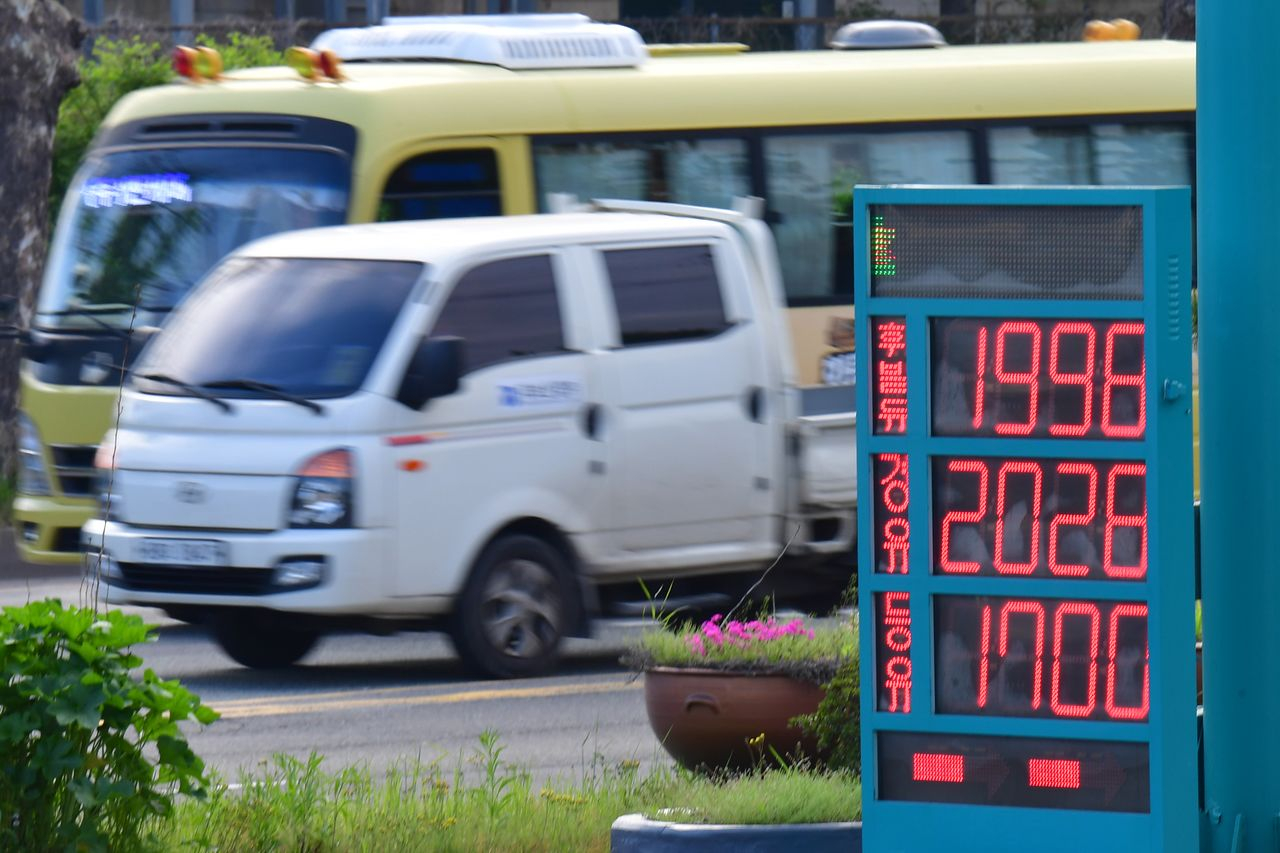
This article is by Nam Soo-hyoun and read by an artificial voice. SEJONG — Pressure is intensifying on the government's fuel price cap policy as rising global oil prices test its sustainability, even as authorities move to extend the measure to curb inflation. The average gasoline price at gas stations nationwide stood at 2,005.39 won per liter ($5.13 per gallon) on Thursday, up 18.5 percent from 1,692.58 won recorded on Feb. 27, before the outbreak of the Iran war, according to the data from the Korea National Oil Corporation. Though both fuels have seen sharp increases, the rise remains limited compared to global markets due to the government's price cap. Over the same period, gasoline prices in Singapore, a key benchmark for Asian oil prices, surged 49 percent, while diesel jumped 66.9 percent. But the government on Tuesday maintained its position to continue the price cap system to alleviate the burden of inflation on consumer prices. "As the Iran war continues and global oil prices remain unstable, the price cap is contributing to price stability and the broader economy," Yang Ki-wook, director-general of the Office of Industry, Trade and Resource Security at the Ministry of Trade, Industry and Resources, said in a briefing. "It is also playing an important role in protecting vulnerable groups and those who rely on fuel for their livelihoods, such as truck drivers and farmers." The government said Thursday it will freeze the fourth round of maximum prices for petroleum products, set to take effect on Friday. The capped prices will remain at 1,934 won per liter for gasoline, 1,923 won for diesel and 1,530 won for kerosene, unchanged from the second round introduced on March 27. A key concern, however, is sustainability. The government must later compensate refiners for losses incurred under the price cap through fiscal spending, and the longer the gap between international prices and the domestic ceiling persists, the greater those losses will grow. This burden ultimately falls on taxpayers. The government has allocated 4.2 trillion won in a supplementary budget based on a six-month implementation plan, but the exact scale of losses remains uncertain, raising the possibility of additional fiscal strain. Another issue is that the policy has not sufficiently led to reduced energy consumption. Weekly gasoline and diesel sales in the fourth week of March — after the price cap took effect — reached 731,000 kiloliters (193 million gallons), about 9 percent higher than a year earlier, the Ministry of Trade, Industry and Energy said. "Some say consumption is actually increasing," said President Lee Jae Myung during a Cabinet meeting on April 14. Although sales declined by 13.2 percent and 11.3 percent in the first and second weeks of April compared to a year earlier, critics say the reduction is insufficient given the severity of the energy crisis. There are also concerns that an early onset of summer heat could further increase cooling demand and deepen the crisis. "When supply is constrained, prices should rise to encourage conservation, but maintaining a price ceiling inevitably limits the effect of reducing energy use," said Yang Jun-sok, an economics professor at the Catholic University of Korea. "Continuing to import oil at high prices could worsen the trade balance and lead to inflationary pressure due to a weaker won." Many major economies have opted to lower taxes or provide subsidies rather than directly control prices. The European Union, for instance, recently recommended measures focused on reducing oil demand, including working from home once a week, expanding public transportation subsidies and offering tax incentives for solar energy. Seoul, however, argues that Korea is not alone in intervening in fuel prices. Data presented by the Industry Ministry showed that in Japan, gasoline and diesel prices rose about 7.3 percent and 9.4 percent, respectively, compared to before the war. "Japan has kept increases lower...

NOW PLAYING

Korea's fuel price cap shields consumers, but someone has to pay

0:00 5:05

No transcript for this episode yet

We transcribe on demand. Request one and we'll notify you when it's ready — usually under 10 minutes.

No similar episodes found.

No similar podcasts found.

Frequently Asked Questions

How long is this episode of Korea JoongAng Daily - Daily News from Korea?

This episode is 5 minutes long.

When was this Korea JoongAng Daily - Daily News from Korea episode published?

This episode was published on April 23, 2026.

What is this episode about?

This article is by Nam Soo-hyoun and read by an artificial voice. SEJONG — Pressure is intensifying on the government's fuel price cap policy as rising global oil prices test its sustainability, even as authorities move to extend the measure to...

Can I download this Korea JoongAng Daily - Daily News from Korea episode?

Yes, you can download this episode by clicking the download button on the episode player, or subscribe to the podcast in your preferred podcast app for automatic downloads.
URL copied to clipboard!