Welcome aboard Via Rail. Please sit and enjoy. Please sit and stretch. Steep. Flip. Or that. And enjoy. Via Rail. Love the way. I put my hand. This is like a touchdown. I'm doing a touchdown. What is it called? Goalposts? Am I the advertisement for Judaism right now? I think right now it's all you.
This is Unorthodox, the universe's leading Jewish podcast. I am Stephanie Botnick, and I'm joined by my two co-hosts, tablet editor at large, Liel Leibovitz. At large and... In charge. At large and not at all in charge of anything going on in the world these days. Hello. And our West Coast West Wing correspondent, Joshua Molina. I'm here at Medium. He's in the West, but his heart is in the East. Exactly. That is true. I'm facing East as we record this. Today on the show, we're sharing an interview with Netta Ariel. She's the director of the Ma'ale Film School in Israel, and she shares what her students are working on these days.
We also speak with Dr. Phil. That's right, the Dr. Phil of daytime television fame. He's starting his own TV network and he also has a new book out. He talks to us about all of that. Plus, today is our 400th episode. That's a lot. That's a high number. It's not mine, but I'm happy for you guys. It counts. It counts. Don't worry. You retroactively inherit old. I'm sorry. Yeah, sorry. Look, I ate the cake when the West Wing had a 100th episode party and I didn't belong there either, but I'll always eat the cake. You belong here and we love you. Let him eat cake, we say. Get one of the producers very quickly while we do this. Look up for some.
Interesting gematria words that equal 400. So we could do some stupid gematria. Hey there, J.Crew. It's producer Josh Cross with some Gematria tidbits for episode 400, courtesy of Gematrix.org. First of all, in the religious sphere, 400 equals Mario Bergoglio, which is the rest of the name of Jorge Mario Bergoglio, also known as Pope Francis. Interestingly, 400 is also Papa Francesco. On the other side, it's also Book of Satan and Necronomicon. Perhaps in the realm of world politics, 400 is also equal to It's Go Time and Buckingham Palace. Then, for our younger, single, and perhaps lonely friends among the crowd, 400 equals the following four things. Soup, cigarettes, Fortnite, and Dumbledore.
And finally, if you're looking to watch a movie inspired by our 400th episode, you can watch Batman and Robin. You can watch Total Recall or even the obscure, weird Justin Long movie, Tusk, all three of which are equal to 400. Now back to the show. I have to say the problem with being Jewish is like episode 360 or episode 613, like when you get to just like a solid. hundo numeral, it doesn't feel as exciting. Like 418. 400 is very ego-ish. 420. You're right, Stephanie. That is the one problem about being Jewish. That's my one complaint right now. There's literally no other setback. You know how like in some hotels, there's no 13th floor? Yes. Like 12 and 14. But like if you're on the 14th floor, you know what floor you're on. I think it's the same thing with like Jewish podcasts. Just be like episode 18, episode 36, episode 72. Can you imagine? It's like Jewish pod years, basically, instead of dog years. I've always taken that as slightly anti-Semitic as we are a bar mitzvah at 13 and it's kind of an auspicious number for us. That's the floor they have to get rid of. Oh, yes. We should bring back 13. No wonder Taylor Swift loves 13 so much. It's the year of the bas mitzvah. Yes. I actually...
I had a take that I shared on a call earlier on a professional work call, which is that I think non-Jews who grew up in places where they attended bar mitzvahs, you do not turn out anti-Semitic. You love the Jews. You love the Jews because you're like, they're just here to have a good time. All these people want is to give me Shirley Temples. Yeah. I want to play Coke and Pepsi. I want to run across the dance floor. I think that everyone should be going to bar mitzvahs when they're younger. I got a hoodie. Exactly. I danced my pants off, but they were scrubs. I want a pair of headphones. Exactly. What do you think of this incredibly hot take? Yeah, I think we should fashion our B'nai mitzvah receptions to pull people in and win their favor. Just please like us. Here is a DJ, a dance floor.
Yeah, exactly. Kids menu. Maybe a little loot bag. You might get a temporary tattoo. You can take funny pictures. We're fun. Making me realize I haven't been to a bar bar mitzvah in a long time. I guess I'm nearing the age. I have to wait now until my friend's grandchildren are going to be of the correct age. And then I'll have another wave. God willing. Jaker, you heard it here first. Joshua Molina needs an invite to your bar mitzvah. A desperate plea from a desperate man. Invite him to your bar mitzvah. I feel like you should get on the like, you know, people have like NBA stars. J-Lo at their bar mitzvahs now.
You should get on that list. Yeah, sure. For the kids who just love West Wing and that one episode of iCarly. No, I'm sorry. It's for the kids who love Leopold Stott. Also, I think the iCarly kids have aged way out. Could you do this monologue about assimilation? Because all our friends love it. Besides, you know, turning 400 pods old and trying to save the world of apartments, what else you guys got going on? Well, I think, you know, we're recording this on a Monday as we have barely recovered.
from Super Bowl Sunday. Yeah, why is this day not a day off? I thought to myself as I rolled into preschool drop-off very late. So yesterday it was really air of Super Bowl, but today should be Super Bowl. Yes. East Ruchag Super Bowl. Yeah. There was a take on Twitter from a person by the name of Elon Altman, or Elon Altman, as we call him here on the show. He tweeted as follows, so X'd as follows, or shared on the social media previously known as Twitter as follows. Religion Super Bowl ads. Christianity, join us. Scientology, join us. Judaism, leave us alone, which I think is...
It's a very astute observation. It is true. I forgot that all the religions come out on the Super Bowl. The Scientologists are like, here's a splashy ad. The Mark Wahlberg helmed Halo. Oh, that was awesome. Has its own ad. I will say, though, props to tablet writer and former unorthodox guest Maggie Phillips. She's our religious literacy correspondent. She wrote about Halo like years ago. And so when I see this ad, I'm like, oh, yeah, Halo. I know about that from my favorite Jewish magazine. But yeah, I like that ad. Look, I'm not going to comment on other religions ads. Just stick with internal. Let other irreverent podcasts and other faith traditions do that. Are there any? Jesuitical, we're looking at you, please. You know what you got to do.
But I have to say, those stop anti-Semitism ads really kind of totally rubbed me the wrong way. That is 100% not the message that I want to send to the world at this point in time. Say more. Well, I never thought I'd say this, but say more. First of all, I don't know how many of them were actually run on the actual show because, you know, nowadays people do the thing where they share like special Super Bowl ads on the internet without having to pay the $7 million for 30 seconds. But I know at least some of them did. One of them was, you know, this woman coming home and seeing, you know, swastika on her garage door and she's very troubled and there's sad music and her non-Jewish neighbor is looking on.
And then when she returns home in the afternoon, the garage door has been painted white. And then he kind of camera pans over to the neighbor and you just see like specks of white paint on his shoe. And you understand this good Samaritan did a good thing. He helped the helpless too. I would like for this woman to click the garage door. Garage door opens. Adam Sandler as the Zohan comes out, grabs the person who does this, says, you would not like this. And then like does like a crazy kick while having a fizzy bobach. This is the vibe that I feel I need right now. I will say I was kind of moved by that ad. I liked it. Although I wanted there to be, I did want there also to be one more beat where the woman looked at the door and then.
Complained about the shade of white that the neighbor had. This is an eggshell. You call this white. I appreciate the gesture, but. By the way, here's my issue with this ad. The said graffiti on the garage door was a swastika. And then the words, no Jews. And I was like, is that what it would say? No Jews? Like, I think you usually see like F Jews, which I understand you don't want to put that word on the broadcast. But I was like.
Who would write that? Or is the idea that these people are just so dumb, like when they get the swastikas wrong? Well, at least this one got the swastika right. Yeah, the swastika. It's a very hard thing. Only the smartest neo-Nazis get the little, you know. And we're like, well done. But once again, how hard is it in a serious, and forget, you know, Israel and the Matzav, as we say, the situation. How hard is it to do like an ad for Judaism? Like the Christians could do the sort of like, ah, Jesus is love. Here are people who disagree with each other, watching each other's feed. Scientology only had to show its freaking gnarly real estate that it has all over the world. What would we do? Like, do you like herring? Do you like a lot of like text to study? Do you like disagreement?
Well, you know, not saying we're the best. We're okay. I love the whole thing. It's like, we don't proselytize. And it's like, do you ever think about why? Yeah. We're the best. Here's the deal with us. We're like the A team. You can only find us if you like really need us. The J team. We don't advertise. The J team is a good name for a podcast. Someone else wants to come at us. Right. And we're literally small enough to fit in one van. Josh and Melina. Yes. Pitch Judaism. You have $7 million in 30 seconds. Go. Oh, but why?
Don't we want to discourage people from taking on the yoke of the Torah? Judaism, enter at your own peril. I know I did it before, but I do feel like we play on this like the, why would you want to join us? Because like, actually, we are freaking awesome. And being Jewish is really cool. Maybe not right now, but in the moment. Especially right now. It's the best. But I'm saying in these moments when it seems like being Jewish is a liability in so many situations, like we need to double down and we need to be proud. And it's like, the ad I actually want is like proud Jews. Well, maybe we open on Ali Raisman winning the gold medal for her floor exercise to the tune of Hava Nagila. That's inspiring. I think it's these moments where we do need to see Jewish role models, right? We do need to see people who are proudly.
Jewish in all sorts of places, right? Not just like the stereotypical places we imagine Jews to be. But I mean, I just, I think we want to see the diversity of Jewish life. I think we want to see the richness of Jewish life. That's why I'm pitching sports, which I don't think is where you, which is the go-to touchstone for Jewish comedy. I mean, the richness maybe is there. I'm all about this. Let's take out this billboard. Go Jewish. But Joshua Molina, a lot of dramatic things happened during the Super Bowl. But one really dramatic thing happened during the Super Bowl.
The rescue of two hostages. Someone clever on Twitter said the only touchdown that matters. Was that playing Touching Down? Yes, this was thrilling news that two hostages, two older gentlemen of Argentinian birth, were rescued from Rafah and brought home, apparently in good health. And the funniest thing is that immediately, as soon as the news started, every Israeli instinctively went to the computer and played a theme song from Operation Thunderbolt, the Entebbe movie. Entebbe raid. It's like, oh God, we needed this.
Let's start a Jewish movie club. I want our listeners to write in, like, with on-screen portrayals of just, like, badass Jews. To me, the definitive kick-ass Jew on screen will always be the Zohan. I'm sorry. Let's put him at the top of the list. That is really the greatest of all Jewish heroes. J.Crew, J-Team, write in on orthodontistatmanmag.com. Tell us where should we be going for bold, badass portrayals of Jews in all walks of life. Send them to us. We'll start watching. You'll start watching. It'll be great.
All right, time for some news of the Jews. Here's one of those stories that isn't actually a Jewish story, but maybe could be drawn into our universe. This is from Eater, Los Angeles. The headline reads, the hottest new accessory in LA restaurants, your takeout containers from home. People bring their own bags to grocery stores and metal water bottles everywhere. So why not apply that line of thinking to dining out? If it involves leftovers, it is automatically a Jewish story. No questions asked. And this is basically by a writer who says she started to bring her own takeout containers to restaurants. And she said she grew up in a multi-generational Vietnamese household in Southern California. And she says, my grandma's commitment to reusing plastic containers trickled down to my mother.
and eventually to me. But yeah, I feel like this could be a Jewish story too. Although if you were to take your own containers, your own to-go containers to a clot kosher restaurant, they wouldn't allow it. They would poo-poo it. I'm always, I love when I order from a kosher restaurant like delivery and it comes and it's almost impossible to get to the food because it's so sealed. The integrity of the seal is very important. I would say in one of our live shows, I believe in Chicago, we met a wonderful woman. We were at a restaurant and we had, you know, a nice meal and she took a leftover container and then she was giving us her ride to our event. She popped a trunk and in the trunk, she had a cooler and I asked, do you always keep a cooler in the trunk? And she says, yes, because that way.
If I want leftovers, which is always, I just pop them in the cooler and then I don't have to rush home and put them in the fridge. That is a great Jew. That is baller. That is smart. That is thoughtful. I would like to share a new story that is fascinating. May I? Please. Please. Okay. This is a headline you don't hear every day. Government failure to arrange circumcisions delays conversion to Judaism for 98 men. This is from the Times of Israel. At least 98 Israeli men who completed their Orthodox conversion to Judaism have been waiting since April for a government-funded circumcision that would finalize the process officials said, citing bureaucratic complications and funding issues.
First of all, government-funded circumcision is an amazing name for a band. I'll put it right out there. Second of all, really, why do you need a government-funded? Like, why would a government be funding the circumcision if you really want to do it? Can't you not fund your own moral? Plus, I'm sorry, is it really that hard? I mean, it's not like there's a shortage of morals in Israel.
And like, what is a moral cost in Israel? And this is since April, like what, almost a year? My favorite is a word that emerges in this article that I don't know for some reason is very funny to me. I'll just read this. And this is from the acting director of the conversion authority, Rabbi Yehuda Amichai. Not the poet, Yehuda Amichai. He has the skills too. No need to look down that, Yehuda Amichai.
That's sharp prose. To arrange circumcisions, Amichai said, the authority is legally required to issue a tender, which has to be approved by an external committee for hospitals. A new tender is needed because the rabbinate's previous tender expired and its contractor won't renew the contract. And I'm just like, I literally was reading this article, I'm like, what am I reading? The tender is needed for the circumcision? I don't know, it just made me uncomfortable. Careful, it's tender. Love me tender. And that's all I have to say about that. Just love me tender. It's been a rough day. Won't some intrepid American memorial do a mitzvah and fly to Israel for a work trip? That is one way to discourage.
as we discussed earlier, to discourage conversion is to give people more and more time to think about their impending circumcision. That's right. Why don't you sit right here and contemplate the fact that at some point, someone with a knife is going to come knocking on the door. You may not know when. Stephanie, what else is new in the medicinal Jewish field this week? We got one more headline for you. This is from the New York Jewish Week. Why this Upper East Side doctor is offering free plastic surgery to victims of anti-Semitism. That's actually a nice segue from, you can't get a circumcision over there, you can get... The tradition is, your nose, I kick out.
In the three months since he started offering free plastic surgery to victims of anti-Semitic hate crimes or anyone affected by Hamas's deadly October 7th attack on Israel, Upper East Side plastic surgeon Iris Sovetsky has performed one nose job as an asked to remove a tattoo and counsel the victim of an anti-Semitic assault in New York. And while these aren't quite the kinds of cases he anticipated after making the offer in November, the Jewish doctor, who boasts a significant social media following, said he hasn't regretted his offer. So let's, for context here, this is Iris Sovetsky. He's married to Lizzie Sovetsky, who I think a lot of people probably follow. She's a very, very active advocate for Israel and Jewish people on Instagram. So am I to understand that this is for people who have been beaten badly, who have suffered physical hate crimes? Yes, I think this all started when...
Dr. Sovetsky met someone who had been sort of attacked in an anti-Semitic context. And so he, this guy gets punched in the face a bunch. And what do you do in that case? So the answer is like, you know what? You get punched in the face for obvious reasons. Here, let me, let me help you look less Semitic. No, I think it was more like, let me fix it. But you know, this is actually really sad. Someone reached out to him about getting a Hebrew high tattoo removed. I'm just fearing that it might make this person more identifiably Jewish. That is so depressing. 2024. I would need like a face off, like the Travolta Nicholas Cage movie type of like face transplant to look less Jewish. Like honestly, how much work would I need done to not look like the world's biggest Jew?
Like, sir, we could replace your nose, cheeks, ears, like everything about you. But we can't tamp down that neshama. He's like, yeah, I try. Yeah, I guess if anyone needs rhinoplasty stemming from any kind of trauma, Dr. Ira Sovetsky is here for you. He's a good man, but that's a sad story. That has a tinge of sadness there for me. So there you have it. Take out containers, government-funded circumcisions, and de-jewifying people via plastic surgery. It is 2024, everybody.
We make Chevrolet vehicles, but what you do with them makes them so much more. You make them mobile offices, your kid's personal taxi, a concert shuttle, your hockey equipment locker, your recording studio. We make a Chevrolet, but you make it a Chevy. Discover yours at chevrolet.ca. Welcome aboard Via Rail. Please sit and enjoy. Please sit and stretch. Steep. Flip. Or that, and enjoy. Via Rail. Love the way.
Our Jewish guest is Netta Ariel. She's the director of the Ma'ale School of Film and Television in Jerusalem. She joins us to talk about how film students at Ma'ale are shifting their focus to bring attention to the hostages still held in Gaza. Netta Ariel, welcome to Unorthodox. Thank you, thank you. You are the director of the Ma'ale Film School in Jerusalem. A lot of people know exactly what that is, but for our listeners who have not yet heard of it, will you tell us a little bit about the school? So Ma'ale is a film school located in the center of Jerusalem. If you heard about Shtisel, Shabab Nikim, Shrugim, and a lot of other films, some Ma'ale graduate made them. Ma'ale has kind of an Israel and Jewish agenda. A lot of our students come from Orthodox communities and education, but it's open to everybody, so we have all kinds of population, from the Orthodox to the secular, and it's a very unique and special film school.
And you're being modest. It is the film school. Yes. So we have been in conversation for a while about these amazing programs that you do. One in particular, these video therapy workshops that you've been doing. Of course, in the post-October 7th world, your focus as a film school has shifted. So will you tell us a little bit about what happens after October 7th for the school and how you guys pivoted to serve the broader community? After a week or two of a little bit shock and sadness, you know, everything was closed in Israel. We're not allowed to open the school. I must say that a lot of our students are in the army, so not all of them can come to study. After two weeks, we start to say, OK, what we can do.
to contribute our tools and abilities to the Israeli society and to the war efforts. We start to do three projects. One, we immediately offer the people that was evacuated from their home from the south and from the north to a lot of hotels in Jerusalem, in the Dead Sea, in Tel Aviv, etc. Events, screening our films. Come to them and make workshops.
how to use writing or filmmaking to express themselves, tell their stories, make documentary films. It was amazing once to see so many people help them and come to make them happy and do a lot of things. And we have our tools that give them some ability to tell the story and to do with it something artistic. So this is one thing that we are doing still. The second thing, we saw that it's very important to work in the social media, especially not for the Israelis, but here in America and in Europe, to bring the voices of those who held as stages and now still in Gaza.
you know, women and men that stock there. And we want to be part of this effort. So my filmmakers graduate making short videos on each one of them that the family wants to bring their voice. And it's on our website and Instagram and Facebook. And we want that people will watch them and help us to push and to bring them home.
our one of our main goals. This is what we can do. So can you tell us a little bit about these video therapy workshops, which, as we mentioned, you have been doing for quite some time. How did those come about and what are they? OK, so I think that the story starts around 20 years ago. We are a very small film school, so we know every student and especially when they started to write their graduate film, they studied for four years. And we found ourselves every year or two reading a script and understand that these stories that they wrote based on a trauma.
a secret, an unfinished business. And they are not even aware that they are choosing this opportunity to make a film and to write it, maybe change the end, maybe change the character, whatever. And, you know, the adults are coming when they are 20-something after serving in the Israeli army or national service. So we are not asking them, is it your story? It's how do you know?
I can tell you that one of our students wrote in the past a script about the post-trauma in the army. So one of our teachers that helped him say, you know, I think that you have to make a research because it's not reasonable that the husband hits his wife during the night when he's sleeping and he has a nightmare. I don't think so. So the students tell, I don't need the research. It's my story. It's happened to me. I never share it with anyone. And this is the first time that I want to tell what happened to me, that people will know, even my parents doesn't know. So we understood that it's an amazing tool because to make a film, it's a long process.
Therapies also must be a long process. It's not like to take a picture, a stills picture, and that's it. So this is one thing that just came to me that we have to use this tool. Another thing that happened more or less in the same time is that we had opportunity to raise scholarship for our students, but the foundations that give us the money say that they have to contribute to the society. So we say, okay, they are students of filmmaking, so maybe they will work with youths at risk or disables and do some workshops with them. So my students did what their teachers did. They tell them, let's write your story and let's make a movie about it. And when they did it, suddenly we saw that they're kids or they used it.
were part of it, had an amazing process. And their guides say, listen, it's the first time that they have a positive experience and they did something successful and they tell their story and then their parents come to see their friends. So we said there is something here. So we did tens of groups in the last two decades. And I think that it's about time that we prepare ourselves to the next step. Unfortunately, we have so many people now in Israel with a trauma that were hurt. And we now prepare the ground to start to work with them in a few months.
It's amazing to really think about the way film and these creative projects allow you to process all sorts of trauma. And we've talked a lot on the show about why Israeli TV, why Israeli film is so good, right? Why all around the world we're importing it, we're trying to sort of distill that for our own cultures. And part of it does seem to be the high stakes nature of Israeli life, right? Just the sort of volatility that at any moment, as we've sadly seen, can erupt. And it's really fascinating to think that like out of this horrible thing that happened on October 7th and is continuing to happen, great art eventually might come out of it.
Unfortunately, I must say that all the Israeli society in all kinds of fields, not only in art and culture and filmmaking, but you would see how everybody thinks what is the best thing that I can do with my abilities, with my talent, whatever. And people volunteer and amazing things happen. It is so sad that it's because of the war, but it still shows the strength of the Israeli society. And I'm so happy to be part of it. We have our small area in the filmmaking tool. But yes, in the end of the day, if we can help people and give them ability to take care of themselves, give them tool and give them a voice.
I can tell you a very nice story that I had. After Operation Protective Age in 2014, we also had a war in Gaza. After a few months, we opened a group for bereaved mothers. And I just knew someone that years before used to work in Malay. one of our economic department, and she left, and her son passed away in Gaza war in 2014. So, of course, I went to the funeral and the shiva, and when we opened the group, I called her and I said, listen, I want to invite you, and I want you to know that we are going to have a videotherapy for birth mother, and maybe come, you live in Jerusalem, it's going to be in Jerusalem. So she said, thank you so much for thinking about me and invite me, but I will not come. I don't want to belong to this group. I don't allow myself. I don't want to meet other mothers like this.
I can't. I can't. So I said, okay, no problem. I just want you to know that we are going to do, there will be women like you. So she said, no, thank you. It worked. And before we opened the group, most of them don't know what is videotherapy. So we invite them just to introduction. Come to the school. We are doing something. We explain them what we are going to do. We show them examples, what we did in the past. So I sent her invitation only to the introduction meeting. And I saw what will be. And she came and she said, I just came because you honor me and you invite me, but I'm not going to be part of this group. I said, fine, just thank you for coming.
And then was the first meeting and she came and then the second. And all the time, every time I say, hi, how are you? And she say, I'm fine, but I'm not part of this group. And then just before Pesach, one of the tools was that they have to choose an item that used to belong to the killed son and to make a voiceover. So they told him, go home, find something that belongs to your son and you have to write it and then to film it and bring it next day a week. So this woman that didn't want to come and to be part of this group, she bought one of the most amazing kind of an exercise. She shoot the toothbrush.
of her son in a glass. And the voiceover was, you know, it's almost Pesach. And in Pesach, our family saw up to the garbage all and we changed. We have new. But I belong to, she said the name of her son. And I want to ask you not to throw me up and leave me here. I even agree to clean corners, but just let me stay. It was so touching. The other also was amazing. But this is example of how people in this terrible situation that you are in the morning and...
you lost your son or someone from your family and you have no tools to deal with it. And it's not enough to hug them and you have to give them, first of all, they were together. They come, they laugh, they cry, they tell stories. The gathering together every week was amazing. There were women that come two hours, they come from the other area of Israel, they say, we don't care, we drive, we need a quiet time, we can cry, we can sing. So I know from inside that there is a sentence in Hebrew, everybody that save only one soul.
It's like you save all day. So I feel that even a group of 12, 15 women, men, youth, old people who can help them. Welcome to that. It is such an honor to talk with you and our listeners can learn more about Maale at maaleh.co.il. That's M-A-A-L-E-H dot C-O dot I-L. And if you want to see these amazing social media films featuring small portraits of the hostages, you can get on Instagram and follow them at M-A-A-L-E underscore film underscore school. Thank you so much for joining us. Thank you for having me.
Please sit and stretch. Steep. Flip. Or that. And enjoy. Via Rail. Love the way. The new Subaru Crosstrek Hybrid is the most fuel-efficient Crosstrek yet. That means less time filling your tank and more time filling your day. More court time. More ride time. More lake time. More camp time. More go time. The new 2027 Subaru Crosstrek Hybrid. Consumer Reports' top-rated subcompact SUV. Stop by your local Subaru dealership or visit Subaru.ca to learn more. Consumer Reports' non-endorse products or services.
mailbox got a letter in the mailbox got a letter in the mailbox mailbox All right, let's get to the mailbox. We've got a lot of letters coming in, and we are loving it. This one comes in from Rachel. She says, Hi, podcast crew. I just wanted to say thanks. My mom recommended unorthodox to me after October 7th, and it's honestly been a lifeline. I'm a little behind, but I loved your reporting from Israel. I just listened to the Moshe Kosher interview and related to so many things he said. This podcast offers me a little laughter with my tears. Thanks for helping me feel less alone. Rachel, thank you for listening and making us part of your world. What a sweet email. Our next letter came in as a voicemail to our listener line. As a reminder, we have a listener line. You can leave us messages there as well. Hey, guys, catch up in the back catalog. I am a conservative Jew.
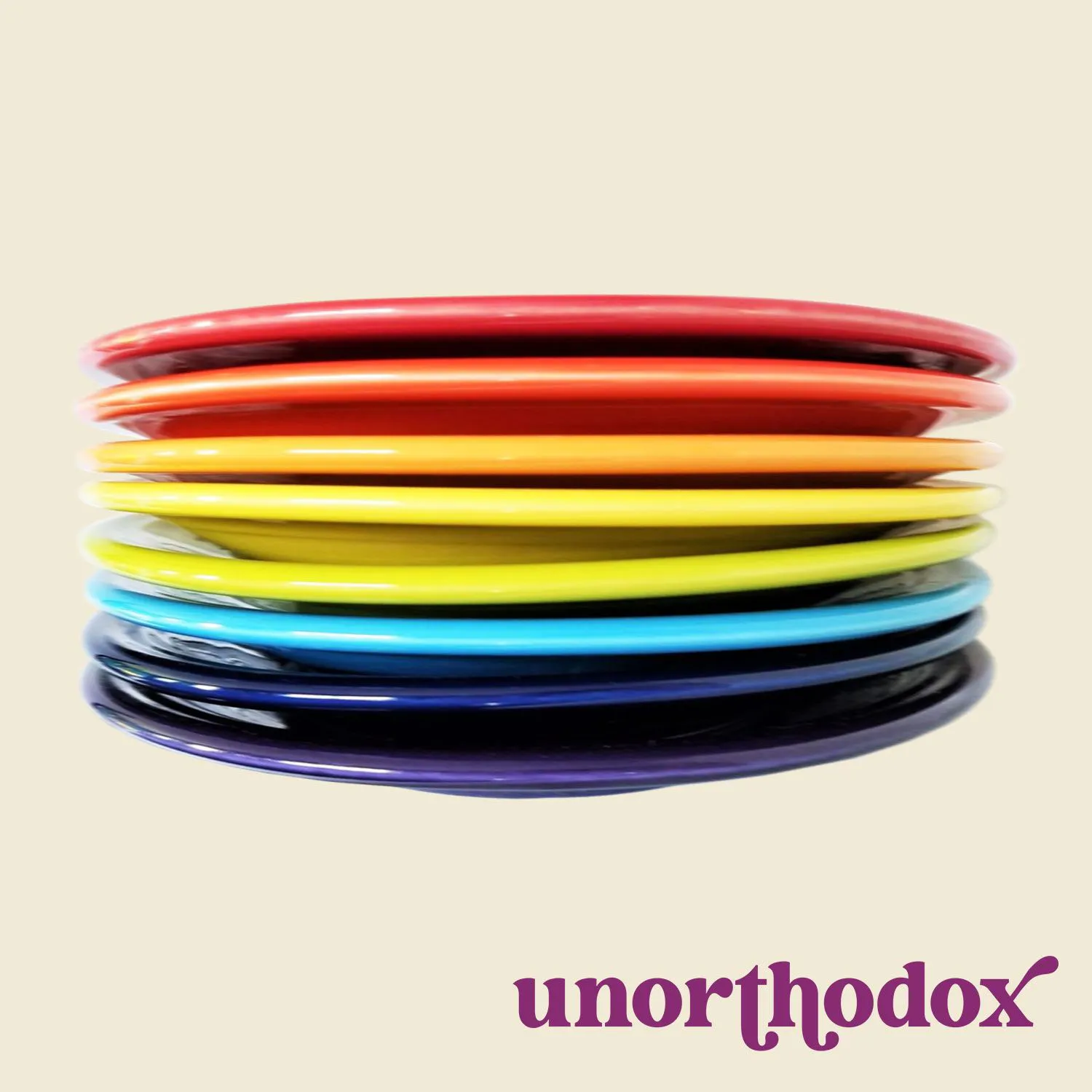
So is my wife. We're both converts, but that's not really what I called. We're getting back into our faith, and we've never been as observant as we are right now, and we're really getting into kosher. But my wife does not want to replace our fiesta wear, and we recently unpackaged our wedding flatware, which we never used for 20 years. And we're using that, and we're not replacing that. So we fully replaced all our cooking wear. We're eating kosher meats, and we're trying to follow the hectares. We're not going to replace our dinnerware. And my question to you guys is, where do you go out of the line as far as the Jewish life goes? Where is your OJ, as I call it, when you're over-Jew? And how do you not over-Jew it?
should you just throw caution to the wind and just cram all the mitzvah you possibly can and just go, just go make sure you're done with it. Where do you draw that work-life balance and let the secular world end? Let me hear where the selling point is from Orthodox people, especially. Love you guys' show. It's been a godsend.
First of all, I will never not think of OJ Simpson as over Jew Simpson, which is a wonderful thing. So yeah, nameless caller, you're asking an amazing, amazing question that, you know, I myself spend a lot of time thinking about as I, you know, embarked on my own Jewish journey, just as we're on our own Jewish journeys. But I'm kind of going to answer it by first kind of rejecting the last, you know, sentence or two. It's not about keeping the secular world out or letting the secular world in. There's no such thing as the secular world. You know, this is all Hashem's world. Everything here is Hashem's creation. And simply, it's a matter of your decision of how you want to bring.
Jewish meaning and practice into your life. And honestly, the possibilities are sort of endless because I know people in the Orthodox community who would gladly step into a non-kosher restaurant and eat, you know, a salad or something that they're fairly certain will not have been exposed to any non-kosher materials. I know people who would only eat in very glut-kosher restaurants. I know people who would, you know, be very careful and observant about only drinking kosher wine or posse serale, the kosher bread. It's really a matter of where you feel comfortable, which I think is not a journey to be approached with a sense of, you know.
censorship and trepidation, don't think about it as like, oh, there are rules and I must obey some and reject some. Just think about it in terms of like, okay, well, I want to do these things. Honestly, clearly something in your soul led you to say, I want to do this. I want to keep more kosher. Go with that feeling. Say like, okay, why am I thinking like this? Why am I feeling this? What is it that I really want to do? Let's just try it out. Let's just go on this journey and see where it takes us. And if you feel very comfortable, like our family, for example, eating out in non-kosher restaurants and, you know, assiduously avoiding non-kosher foods in said restaurants, that's great. And if you feel like taking all of your dishes and koshering them, that's not very hard to do. And if you say like, hey man, I put them in a...
in the dishwasher and I'm only eating kosher meat. And so that's kind of good enough for me. That's fine too. I think the most important thing, and some rabbis I assume will disagree with me, the most important thing is to really focus on the joy and the pleasure and the meaning that this practice and these mitzvot bring you. Not to think of them as strictures because they're never meant to be that. They're paths to get closer to Hashem, closer to our Maserat, to our tradition, closer to what it is that you're already feeling because it led you back home to Judaism and it led you to want to keep kosher. So just go with that. Hear, hear. Also, we're talking about fiesta wear.
Those are those amazing, brightly colored dishes. I don't want you giving up on them. No, kosher them. Yeah. Those are very easy to kosher them. Like, honestly, supremely easy to do. There are actually like internet discussions about how to kosher fiestaware. We'll help you. We'll give you our non-rabbinic ordination to kosher them. We can make up a ceremony and help you. Those dishes bring me joy. They bring you joy. I think you want to keep them in your life. That was a very good answer, by the way, Leo. I found that moving and awesome and open-minded and big-hearted.
Thank you. You're so much better than everyone says. I don't know about that. I'm just kidding. I aim to disappoint. No, I'm always inspired and refreshed to hear you answer that way, because I think that really is, that gets the ruach of it all. I'm glad that you're not somebody who is mired down in the minutia or can't see the forest for the trees. The ruach of it all is all we got. Keep those letters. Keep those voicemails coming. Email us at unorthodox at tattlemanac.com or leave us a message on our listener line, 914-570-4869. Our Gentile of the Week is Dr. Phil. He's starting his own TV network, and he also has a new book out called We've Got Issues, How You Can Stand Strong for America's Soul and Sanity.
Dr. Phil, welcome to Unorthodox. Well, thanks so much. I appreciate you having me. So it is an absolute pleasure to have you. There's a lot to talk about, mainly your new book, We've Got Issues. We'll get there in a second. But I want to start with a video that I've seen recently, very shortly after the October 7th attacks. You produced, I think, a five or six minute long video. And when a lot of other people were, you know, giving statements that were sometimes, you know, far, shall we say, from ideal, you delivered a very stark reminder of right versus wrong. This is days after the attack. How did it come about? Tell me, where were you on October 7th? What did you feel? Why did you decide to make this video?
Well, and I love the way you framed that question in right versus wrong. And I think I said in the video, I don't remember, I said, if I didn't say, I should have said, I'm not a political animal. I'm certainly not steeped in geopolitics. And I would fail a history lesson on all the history of that part of the world. But I don't need to be a geopolitical expert to know right from wrong. I don't need a degree in geopolitics to know murderers and assassins when I see them. And this was not.
an act of war this was someone uh hitting soft targets uh elderly women and children these were unconscionable assassins and i've been criticized i've been attacked by bot farms i've had death threats and i just double down because look there's right and there's wrong you have a chapter in a book called uh deprogram yourself or devoted to this idea which i love the notion of like okay you know maybe one of these people who were fed a great deal of the sort of you know gunk on the internet or on campus, but it's time to get back to basics. Give us some baby steps here. What can we do?
Well, I think the first thing we've got to start doing is teaching critical thinking. I think that's what happened. That's what upset me so much about what I saw after October 7th when you see Harvard and Columbia and others where you see these young people out there in these organizations that are pro-Palestinian. And then pretty soon that kind of got dropped and they're just pro-Hamas. I saw one picture where it was gays for Palestinians. Really? You wouldn't want to march that banner into the Gaza Strip. You wouldn't get very far.
Is anyone not teaching them critical thinking about how is this going to play with these people that I'm cheering on here, these people I'm putting in a hero role? They would kill you where you stand. They don't tolerate you. And you're over here cheering them on? Are you kidding me? And people say, well, this was resistance. I had the Israeli consulate arranged for the IDF to bring me data, footage that has not been released because I said, look, if I'm going to speak on this.
I can't be hearsay. I can't just listen to what people say they saw. I don't want to see it, but I need to see it. And I looked at body cams. I looked at video on phones that were recovered from people that were murdered. I saw these people celebrating and doing unmentionable sort of things. Phone calls back home celebrating things they had done in their own voice. And these are not things that are subjective. This is factual information and they're celebrating this. Nobody's teaching them critical thinking. Nobody's teaching them to say, wait a minute, let's compare this to basic humanity. And it's just unbelievable that...
And we're supposedly educating these kids, these young people, but we're not teaching them how to evaluate things against any kind of moral compass. And what should we do, those of us who are paying attention to all of this, right? I remember in the immediate wake of October 7th, a lot of us were just watching all the videos we could, right? Trying to understand what was happening. We felt like we needed to see everything. It did seem like, for me at least, there was a point at which I had to turn it off. I had to say, like, I cannot watch another horrible video because I don't know what I'm going to do. So when things like this happen...
How do we protect ourselves while also trying to stay informed and also trying to be a good person? I care about what's happening. I care about the people who are suffering, but I also need to sort of like protect myself. Well, that's a great question, Stephanie. And I think the answer is you go to a point where you say, okay, I get it. I don't need to see every single atrocity. I don't have to have the detail. I get it. I get the extent to which this happened. I understand how unconscionable this was. And I'm not going to go down that black rabbit hole.
any further and lose myself in that. But I've gone down far enough to know what we're dealing with, because that's when the reality comes home that we've got these millions of people living across a chain link fence from people that want them dead. And so that informs you when you start saying, OK, how do we negotiate a settlement here when their beginning and ending place is they want you wiped off the face of the earth. And you have to have that reality check to understand. what you're dealing with. And what I've seen in terms of the human evaluation of this is people have begun to forget that as you've seen the PR turn on Israel and people start getting critical and saying there's a moral equivalent between what was done there and collateral damage in acts of war. There is no moral equivalent to what was done. I mean, it's terrible that people are getting killed if a bomb is dropped and there's collateral damage. That's not the moral equivalent of someone going invading someone's, a non-combatant's house.
and murdering unarmed noncombatants in their homes. Those things are not the same. And you have to be informed enough to realize what you're dealing with. And once you're there, you don't have to have a hundred more examples of that. You've embraced that reality and say, okay, I got it. I don't need to keep beating myself over the head with it. And at some point, you've got to compartmentalize that and say, I understand this in concept. I don't need to deal with this with example after example after example, because it truly will get you so depressed.
And so downtrodden that you just really can't see a light at the end of the tunnel. And there is light. I mean, truly, these people are outliers. This is not human nature. This is not people in the mainstream. These are radicals that don't belong in society. Something has to happen to marginalize these people where they can't do what they do. So, Dr. Phil, you have some changes of your own coming up. You've been with CBS forever. We've seen you on TV for years and years. And you're actually, you're putting out your own shingle. You're starting your own television network. Can you tell us a little bit about Merritt Street? I didn't name this.
network by accident. I didn't just throw a dart and pick merit. It is based on the very strong belief in us all working hard. But yeah, it's a 24-7 network. I think we're going to launch off in a very huge way. I think we'll be in over 70 million homes day one. It's probably the biggest launch since Fox.
which was the fourth network, of course. Dr. Phil Primetime is the anchor show that we'll be on in the evenings. We have four hours of news a day, and then we've got a lot of other original programs we're going to be announcing. Then we have some legacy programs. We'll have Dr. Phil reruns, of course. I've got a 21-year library with over 3,500 episodes, so we'll have a lot of that going on. We'll have true crime episodes, things like that. But it's a network that I've designed to be television you can use. I remember the first time I ever did an interview about Dr. Phil, somebody said, what's this going to be about?
And I said, I want to talk about things that matter to people who care. And my thinking was, if I can deliver usable, common sense information to people's homes every day for free. How can you miss? And I think I was right. I mean, I'm here 25 years later, and that's my goal. If I'm talking about psychological challenges, I've stuck to evidence-based therapies, things that are proven to work. And I've relied a lot on common sense. I know a lot of 75-cent words. I just try not to use them. I try to explain things in ways people can understand. You know, we've been doing this show for eight years and really hope to have some longevity here. So give us tips, like 25 years into it.
And it doesn't seem like you're bored or tired in the least. It seems like you're just as into it as you are when we first saw you on screen. Give us some pro tips here. How do we keep the passion going? You know, you got to change with your audience. That's the best advice I can give you is when I started in 2002, think about this.
The first text message had never been sent. There were no text messages. And then as things changed, I had to start dealing with things like cyberbullying. Those words had never been used in the same sentence together, cyberbullying. That wasn't a thing. And then in like 08, 09, it's like these big airplanes flew over the United States and dropped smartphones on America. And the whole world changed at that point. We were walking around with computers in our hands. And so we got a whole new set of challenges. And I had to evolve with that and not being very tech savvy.
I mean, if I can't fix it by tapping on the top of it, I need to call somebody. So I had to figure out what people were dealing with and evolve with that. And then online predators and romance scams and all of that sort of thing. And then all the positive things that you come up with. Kids today, you say library to them, it's like, what? No, it's a big building with books in it. You can go in there and look. It's Google. It's search engines to them. I mean, it's a whole different world. Now we've got AI.
I saw an ad the other day with me selling a product and I'm holding the product and talking. Never did the ad. It's all a deep fake. It's not me, but it is. It's my voice. It's me speaking. And it's my, I look better than I look in real life, but it was a deep fake of me. That's a whole new challenge that people are going to have to face. So you've got to evolve with your audience and they'll tell you what's important to them. And I listened to that and, you know, try to meet the audience where they are. So I've really tried to pay attention to that. Dr. Phil, as the world's universe is leading Jewish podcast.
We welcome Gentiles on our show every now and then, and we'd like to offer them the opportunity to ask us a question about Judaism, something they've always wondered but never knew. So I don't know if you have any questions, but I want to extend to you the opportunity as a Gentile minority on this here show. Well, I'll take that opportunity, actually, because you guys were asking me what my reaction has been. And I'm really curious how you guys are dealing with watching the shift in the world position since October 7th. And we've got issues how you can stand strong for America's soul and sanity.
I talk about the fact that we have to be who we are on purpose. And I'm seeing Israel right now being who they are on purpose. They're not caving, it seems, to the shift in world sentiment and calls for ceasefires and all this type thing. But I'm wondering how you guys react when you see the ADD that takes over when at first everybody is outraged at what happened, but then they seem to be caving to the PR machine. that starts being critical of the toll the war is taking on Palestinians. You know, I'll kick us off. I think that's something that's been hard for a lot of us is seeing how the world has reacted, right? I think that realizing that the people you are friends with, the people you admire from the very beginning, before any sort of counteroffensive started, really just didn't care about this the way they've been trained to care about all the other conflicts, all the other sort of like causes du jour. And I think that it's been very painful for a lot of Jews, I know myself included, to just see, to be let down, I would say, by the realization, the dawning realization, maybe not a new phenomenon, that people just don't really.
care about Jews the same way or they say, oh, no, no, it's Israel. Israel's bad. It doesn't matter. Like there's a way in which there's this caveat that's been attached to this place that people just don't seem to be as horrified by what happened on October 7th as as they would if it were somewhere else. And I think that that's been a really, really painful realization for a lot of people. And in an amazing way, it's allowed them to double down. Right. It's about how important it is to be Jewish and how important it is to be proudly Jewish and loudly Jewish. But I think a lot of people, there's like a heartbreak, I think, of just realizing that from the get go, this wasn't going to get the same kind of attention or care that every other conflict has.
I would say just part of my response is to attempt to respond with balance and nuance to people who aren't showing the same and to not be monolithic. It's very easy to get backed up in your positions when you are faced with monolithic hatred and anti-Semitism. I think it's possible to be anti-Hamas and pro-Palestinian and pro-Israel at the same time. And so I try to respond with balance where I don't see any. So I sadly lack much of my friend's magnanimity here, though I admire him for it and aspire to it, certainly. Look, I'll be honest here. I was not surprised as the sort of resident bearded zealot. This has been confirming and affirming some things that I've been seeing kind of percolate under the surface for a long time. But the one thing that it did kind of bring to the surface is that this attack wasn't just in Israel, the country. To me, it was much, much bigger than that. Israel, if anything, represents to me this perfect combination of faith, family, and nation. It's the embodiment of these three things. And I think the people attacking it.
did so not just because of geopolitical reasons, but also because they hate these very concepts. And I think the response has to be precisely doubling down on all three. To double down on your family, to double down on your nation, whether it's Israel or America, and to double down on your faith, because there's no other path for us against this. Because really, as yourself said a few minutes ago, this is not Israel versus Hamas or America versus Iran or anything like this. To me, it is as simple as good versus evil. Well, that's really helpful to hear from all y'all. And I just, again, thank you so much for letting me be.
one of the Gentiles that you've had on your podcast today. I really thank you so much. It's been fun. It's been great and enlightening as well. So I hope we can do it again sometime. Dr. Phil, what a pleasure. We would love it. And really thank you for your staunch support. I mean, hearing you come out so vociferously and so uncomplicatedly is unusual to us. And we're like, just always happy to have people, especially non-Jews, say nice things about us and to us. So thank you, Dr. Phil. You bet, guys. Thanks so much.
Time for some Mazel T's. What's everyone got going on? I'm pretty excited. Next weekend, I'm going to BBYO's international conference in Orlando celebrating their 100th anniversary. And I'm excited to be a part of that because I went, I think, years ago when it was in New Orleans. And I found it very refreshing and heartening to see young Jews who care about being Jews, which is maybe our greatest resource as a people. And so I'm excited to meet all the kids and young people there next weekend. Also, at 100 years old, BBYO is officially the oldest teenager ever. Exactly. Mazel Tov. Mazel Tov to BBYO.
And the oldest BB. And I will B-Y-O-B. B-B-Y-O. And you could also have a little taste of Disney next door. I have a double-barreled muscle. First of all, to our beloved Sam Singer, son of our very own, also very beloved, Tony Singer, who graduated, we don't mean to boast, but a lot of nachos, graduated summa cum laude in just two and a half years from the University of Pennsylvania. Like it's hard. Two and a half years. Two and a half years. That's showing off at this point. Kid's a freaking genius. Honestly, could have done it in a year. But much more important than that, graduated with, you know, his Jewish neshama on fire with a great...
rediscovered, reinvigorated love for all things Jewish. And we're so happy and proud of him. And speaking of love and passion for all things Jewish, the biggest mazel tov to my dear friend, Amber Allen, who just last Thursday joined us by returning home to the Jewish people. So Amber, welcome home and a thrill to have you on board. I love that. That is amazing. I have a shout out to super listener Gary Weiss. We met at our show in Scottsdale years back. He actually gave us his badge. He was the board chairman of the Valley of the Sun, JCC. At this point, Gary Weiss is not just a super listener. He's part of the show. He was outgoing and he gave us his little name tag and we have it up in our office. Anyway, Gary Weiss is headed to Israel on Saturday with his brother-in-law, David Klein, on a volunteer and solidarity mission.
with the Minneapolis Federation. So there's 28 frozen chosen. That's what the Jews of Minneapolis call themselves. And he says they're the two desert tagalongs with the 28 frozen chosen members of the Minneapolis Federation. They'll be volunteering and working every day. And he's so excited and can't wait. We are so excited for you, Gary. And we can't wait to hear all about it. If anyone could fix all the problems in Israel, Gary Weiss. I think it's him. You're the man.
All right, Unorthodox is a production of Tablet Studios. The show is hosted by me, Stephanie Buttnick, with Leah Leibovitz and Joshua Molina. We're produced and edited by Josh Cross, Robert Scaramuccio, Quinn Waller, and Ellie Blyer. And our team includes Tanya Singer, Courtney Hazel, and Jerome Ruskay, with help from Sam Hacker and Jordana LaRosa. Our episode art is by Esther Werdiger. Our logo is by Danny Rosberg. Our theme music is by Golem. And our news and mailbox themes are by Steve Barton. We'd love to hear from you. Email us at unorthodoxatabletmag.com or leave a message on our listener line, 914-570-4869. Until next week, shalom, friends, and kosher the fiesta wear. This episode is brought to you by Telus. Scammers, they're about as annoying as this.
Tell them to buzz off with TELUS. Get built-in scam protection included on new mobility plans and help protect yourself from pesky scam texts, calls, and emails at no additional charge. Visit telus.com slash scam protection to learn more. Conditions and exclusions apply.