
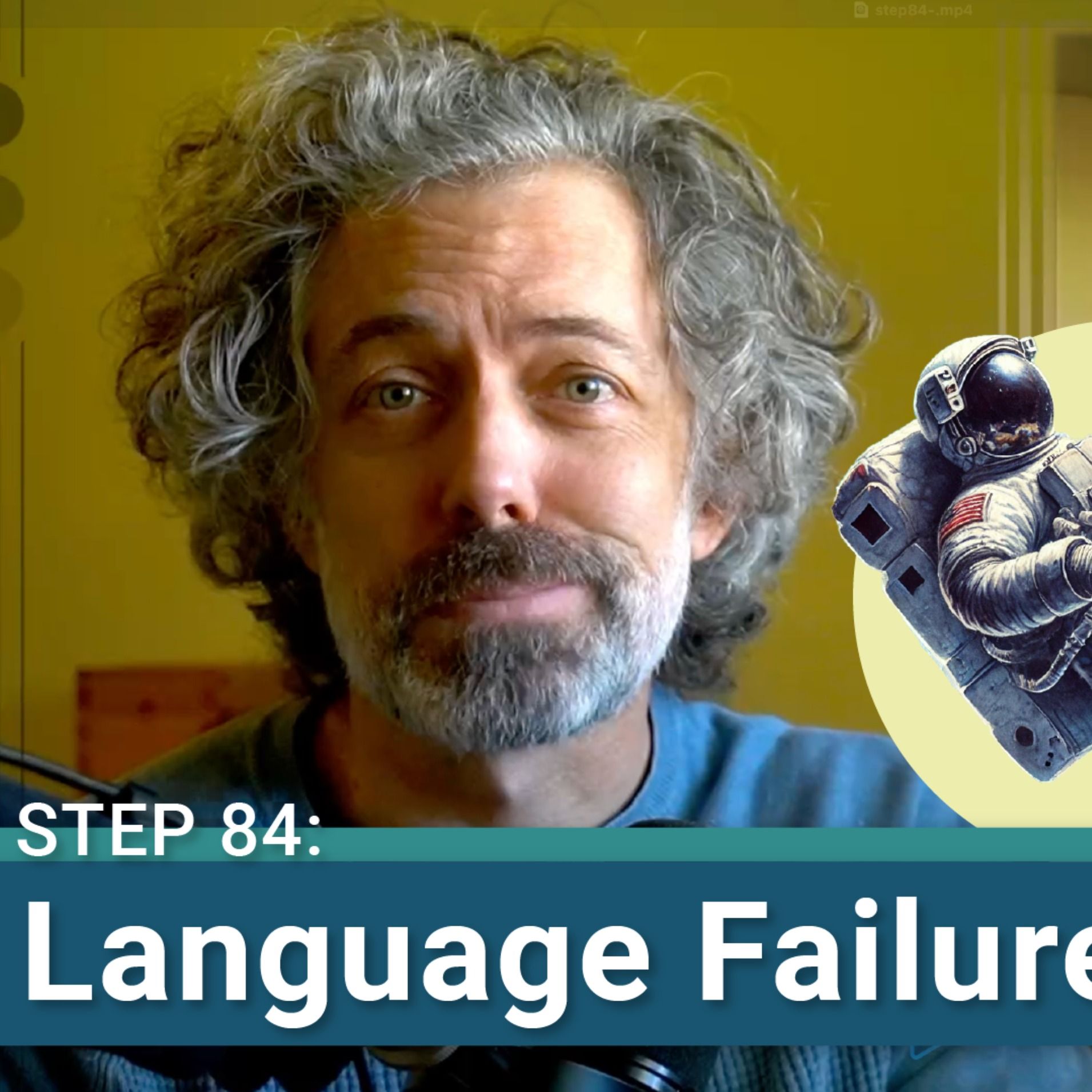
EPISODE · Feb 17, 2025 · 23 MIN
Language Failure: How Words Shape Our Reality
from let's THiNK about it · host Ryder Richards
Language Failure: How Words Shape Our Reality A Long-Form Summary of the Podcast Opening Hook: The Illusion of Reality Imagine walking through downtown San Francisco. On your phone, you see pristine streets and a bustling city. But when you look up, the reality is starkly different—crumbling infrastructure, vacant storefronts, and widespread urban decay. This isn't an episode of Black Mirror; it's what happened in 2023 when San Francisco created a Potemkin village—a facade meant to impress foreign dignitaries while hiding the city’s deeper issues. This phenomenon isn't just about urban aesthetics; it signals something deeper: the failure of language to accurately reflect reality. When we manipulate language, we manipulate perception, and when perception detaches from truth, society begins to collapse. The San Francisco example proves that we know what a functional city looks like—we can manufacture an illusion of order when necessary—but we don’t maintain it. Instead, we mask the problem rather than solving it. This mirrors the broader theme of the podcast: language, like infrastructure, is breaking down, and instead of repairing it, we disguise its failure with illusions. The Problem: The Breakdown of Reality What happens when our words and perceptions no longer match reality? We see this in: Infrastructure decay: Baltimore’s bridge collapse, failing subway systems, and deteriorating roads. Media and distraction: Instead of addressing problems, we divert our attention—scrolling through TikTok instead of engaging with real-world issues. Social and political discourse: Headlines inflame emotions, but we rarely engage with the underlying facts. We live in a loop of anxiety and escape, toggling between existential threats and dopamine-fueled distractions. This is not just modern life—it’s a historical pattern that has preceded societal collapse before. Historical Warning Signs: Orwell, Cuenco, and the Soviet Union Most people remember 1984 for its themes of surveillance and thought control. But Orwell also illustrated a world where physical reality itself was decaying—the elevators don’t work, the food rations shrink, and yet, the Party insists everything is improving. Michael Cuenco builds on this idea in his 2021 essay, Victory Is Not Possible, arguing that today’s culture wars function in the same way as Orwell’s language control. The ruling elite isn’t just lying—it’s actively shrinking language, making dissent impossible because people lack the vocabulary to express opposition. The Soviet Union offers another chilling parallel. Adam Curtis’s documentary, HyperNormalisation, explores how, in the USSR’s final years, everyone knew the official narrative was false—record-breaking harvests were announced while store shelves were empty. But rather than resist, people played along, creating a world where fantasy replaced reality. The result? A world where illusions become more real than facts. People, exhausted by the gap between truth and propaganda, retreated into cynicism, vodka, and pop culture. Today, we are experiencing a similar detachment from reality—not through authoritarian control, but through semantic drift, emotional manipulation, and digital distractions. The Mechanism: How Language Becomes Untethered How does language lose its connection to reality? Through concept creep and false logic. Concept Creep (Semantic Drift) Words broaden in meaning, diluting their original precision. Example: Trauma once meant a physical wound (1850s), but by 1895, William James and Freud extended it to psychological wounds. Today, it describes any discomfort—I was traumatized by cold coffee. Hyperbole and Semantic Inflation Overuse weakens terms: Abuse now includes neglect, fascism is applied to trivial disagreements, bullying can refer to mere criticism. Example: Courage once meant facing real danger, but now can mean avoiding offense. Semantic Inversion Words flip in meaning—what was once good can become bad and vice versa. Example: Freedom increasingly means freedom from reality and consequences rather than actual agency. When words become unanchored from objective meaning, they create ideological vacuums—leaving us drifting like astronauts in space, weightless, disconnected, and incapable of grappling with reality. The Ladder of False Logic: How We Convince Ourselves of Lies The Ladder of Inference, or false logic, explains how we trick ourselves into believing distorted realities: Observable Facts – A politician says, Education is declining despite higher spending. Selected Data – You focus on a single phrase that confirms your bias. Interpretation – This sounds like something a dictator would say. Assumption – They must have a hidden agenda. Conclusion – They’re trying to destroy public education. Belief – They are evil and must be stopped. Action – Post an outraged rant online, comparing them to Hitler. Each step takes you further from reality—until your worldview becomes purely ideological, detached from objective facts. At this point, we are radicals—not because of some external manipulation, but because we self-radicalized through unchecked emotional reasoning. The Philosophical Root: Kant’s Detachment from Reality Matthew Crawford critiques Immanuel Kant, arguing that his philosophy set the stage for modern detachment from reality. Kant suggested true freedom means acting according to self-imposed rational laws, independent of external influences. This led to a view of reality as subjective—where internal logic overrides external truth. Instead of grounding ourselves in the real world, we live in a mental space station, floating free but becoming increasingly weak and incapable of dealing with reality. Astronauts in zero gravity may enjoy their detachment, but their bones and muscles deteriorate. Likewise, the more detached we are from reality, the weaker our ability to engage with it becomes. Contemporary Crisis: The Illusion Economy Modern financial markets and politics operate not on productivity or value, but on perception and emotion. Stocks rise and fall based on optimism, not output. Presidential campaigns are waged on vibes, not policy. Social movements focus on interpretations rather than material outcomes. In San Francisco, the government hid homelessness rather than solving it. This is how language manipulation replaces action. When words detach from material reality, truth becomes contingent, and society drifts into ideological orbit. The Challenge of Re-Entry: Reclaiming Reality How do we return from orbit and reconnect words with truth? Verify personally – Base beliefs on direct observation, not media narratives. Reality-check assumptions – Climb down the ladder of inference before reacting. Resist semantic drift – Demand precision in language. Closing: The Fight for Truth We are at a turning point. We can either continue floating in ideological orbit, or we can re-enter reality. Re-entry is painful. It requires effort, humility, and engagement with the material world—but it’s necessary. In the next episode, we’ll explore specific tools for resisting semantic drift and maintaining a clear connection to reality. Until then, stay grounded.
Embed this episode
What this episode covers
🚀 Language is failing us. In this episode, we dive deep into how words shape reality—and what happens when they lose their meaning. 🔍 Topics Covered: ✅ How San Francisco’s Potemkin village mirrors Orwell’s 1984 ✅ The collapse of language and how it leads to the collapse of society ✅ How semantic drift, hyperbole, and inversion make words meaningless ✅ Orwell’s 1984 vs. Michael Cuenco’s theory on modern culture wars ✅ Hypernormalisation and the Soviet Union’s reality distortion ✅ The "ladder of false logic"—how we trick ourselves into believing lies ✅ Matthew Crawford vs. Kant: How detachment from reality fuels today’s crises ✅ Attention economy & distraction—how language is weaponized against you ✅ How to reclaim reality and stay grounded in truth 🔥 Why This Matters: We are floating in an ideological orbit, detached from truth, trapped in an illusion of freedom. This episode explores how to re-enter reality before it’s too late. 🎧 LISTEN NOW and learn how to resist semantic manipulation and reconnect words with meaning. #Orwell1984 #LanguageManipulation #Hypernormalisation #CultureWar #PoliticalDiscourse #RealityVsPerception #AttentionEconomy #PhilosophyPodcast #SemanticDrift #CognitiveBias 0:00 Introduction: Thought experiment on augmented reality facade in San Francisco 02:27 Breakdown of language and the failure to address real issues 05:39 Historical parallels to 1984 and the concept of hypernormalization 09:43 Semantic drift and the ladder of false logic 19:41 The contemporary crisis and the linguistic containment of reality 24:26 Reconnecting language with reality and suggestions for the way forward 26:11 Conclusion and plans for future exploration
Ready to play
Language Failure: How Words Shape Our Reality
No transcript for this episode yet
Similar Episodes
No similar episodes found.