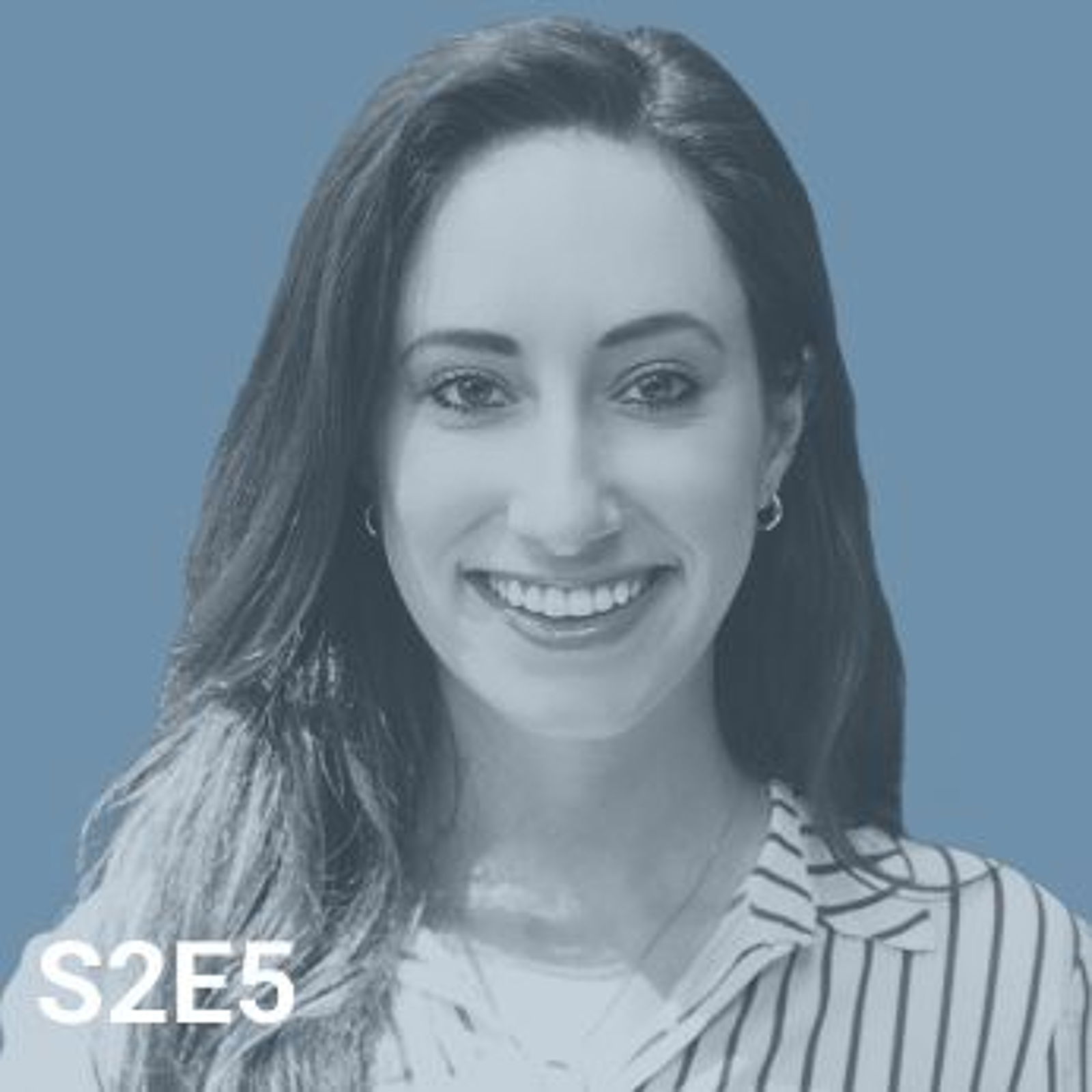
Hello and welcome back to Invisible Machines, a podcast produced in partnership with UX Magazine and OneReach AI. Rob, another fantastic episode. This is a trend here, I guess. Today we're talking with Laura Herman, who's a senior research lead at Adobe. And this was a fascinating episode for me because we spend a lot of time really digging deep on the relationship between creativity and AI and what it means to be an artist and to create artistically. And it was interesting because I was having this really in-depth conversation with somebody about...
our conversation on this podcast. And it was really quite moving to both myself and this person. And then right as we're finishing up my phone dings and there comes a message from you that I'll just read right now because it really kind of blew our minds. So here we go. Your words. We are moving into an era or I'm sorry, I'm gonna start again. We are moving into an age of hyper discovery and creativity. Creativity will accelerate at an unprecedented speed as we go from skilled art creation to art discovery. Same as it is said that math is not invented, but discovered. The same is now obviously true for art and creativity.
People will engage in discovery in all disciplines of art, not just the ones where technique was honed. Society is now unburdened by the challenge of learning the skills to craft, ushering in the discovery of art by anyone. We see our environment in the rearview mirror. Our past defines our present. Art is a window into our environment as it is, not as it was. Art helps us move forward. Overwhelming creativity leading to a society filled with sophisticated palettes. An optimist might see this as societies evolving at an unprecedented rate, an age of enlightenment driven by art explosion. Yeah, the backstory is I literally wrote that to you while I was at a kid's birthday party.
And if anybody wonders what introverts do at kids' birthday parties, this is a window into that. I love this conversation with Laura. She's a researcher researching how art is appreciated, which I think really connects into the whole McLuhan version. Because media, I mean, it's super fascinating. And to research it, to take a researcher's perspective on what is it to appreciate art? How is it appreciated? What is art?
And then to kind of join that with some of Don Norman's thoughts around design versus art and explore that with her. And then the fact that she, you know, words are colors to her. Yeah, synesthesia. Yeah, which is just super fascinating perspective for her to have as a researcher and to bring to the table. I found this, yeah, to be a really interesting kind of philosophical delve into creativity and where we're all going.
Absolutely. And how it connects with technology on so many different models. Let's get into it. All right, here we go. All right, well, Laura, thank you so much for joining us. It's great to see you. I think one thing that really stood out to me as I was looking through materials on your blog was that you created an art project during the pandemic kind of around synesthesia. And there were a lot of interesting elements to that art project. But one thing that resonated with me was that you went into it not necessarily feeling like you were an artistic person, if I'm remembering right. You're like, you see yourself as a creator because you were able to create and then you were able to share that art and it sounds like it was well received. So that's an interesting concept. And then we were also, Rob and I were just kind of talking about the fMRI.
article that you were quoted in where you kind of point out that there's a possible use case for something like that with people who have uh motor disabilities and can't really express themselves but now they can maybe see their thoughts take the form of expression uh artistic expression so so maybe we could start off kind of jamming on those interrelated things yeah Yeah, that sounds great. I've been thinking a lot actually just even in the past couple of days about how generative AI has this push and call, right, where it unlocks so much more creativity for people who maybe don't have access or are physically incapable of creating using the sort of standardized tools that we've had for years. But by the same token, because it lowers that barrier to entry, there's a lot more room for bad actors. There's also a lot more room for sort of like replacement of the sort of traditional creative roles, right? So there's these tensions that we're grappling with. On one hand, this like exciting unlock and democratization and access.
But on the other hand, like the potential negative externalities of that, trying to figure out how to balance those two, I think will be a challenge we'll be grappling with for quite a while. But yes, in terms of the cytosthesia artwork that you mentioned, well, first of all, I'm honored that you even looked at it. So thank you. But yes, it was one of those early pandemic projects that I think many of us had where we found we had more time on our hands and suddenly felt like we could do things that we didn't previously give ourselves the permission to do. And I was experimenting with something that I've always been fascinated by, which is perception. And I think that...
I really identified for a long time as a researcher, and I still do, and I think that's still core to the primary way that I would introduce myself. But I've been a researcher of perception, and then specifically of perception with and around and of artworks. But I was not someone who made those artworks. I enjoyed looking at them, I enjoyed thinking about looking at them, I enjoyed watching other people look at them, but I didn't necessarily make them myself. But that was sort of in tension with my own synesthetic experience, which most people immediately when they hear you have synesthesia, say, oh, you must be an artist or musician because that's how so many previous synesthetes have identified. I was just like, I just can't make stuff. I just like looking at stuff and talking about it. But the interesting thing that I realized is that I could leverage how my own brain worked to create something that other people could then experience a peek into my own mind, I guess. And that's something that I personally would want to do. One of the benefits of art for me is getting that lens into someone else's perception of the world.
In that particular project, I sort of was almost inverting my natural synesthetic experience. So currently when I'm talking, when I'm listening to you talk, each individual letter has a color and the word has an overall color based on the combination of those letters. And that just happens naturally and fluently and automatically and has been that way my whole life. But what I was trying to do in this art project was take colors that already existed, in this case from sort of forgotten, thrown away, paintbrush palettes, and come up with words that got as close to that color as possible due to their combination of letters. But usually when I see colors, I don't see words. I just see words and then see colors. So it was this really interesting exercise where I actually was sketching by writing out words. That's sort of how I was testing out the colors. I'd write out the words. Oh, no, that's a little bit too pink. Okay, yeah, there's a little more blue in that one. But it was just me listing random words that I could think of going through dictionaries. So it was actually a way that I could be comfortable with visual creation. That wouldn't have seemed inherently visual to other people because it was textual work that I was doing. So, yeah. That's kind of interesting.
You hear the word, you see the color, but you don't see the word backwards. So if you see the color, you don't see the word. You don't really know what color the word is going to be until when. So you think it, or until you say it, or until you hear it. Any of the above, actually. So if I'm reading, each word is in a color. If I'm thinking, I personally read my thoughts. That's a whole other conversation, which is like, what are different people? Like, do you see your thoughts? Do you hear your thoughts? I personally read them. And so as I'm reading them, I see each individual letter. Just at the instant at which it is recognized as a letter, it instantly has a color. Like, I can't see a letter without a color because they are, I guess, neurologically, those two experiences are literally fused together. So the letter part of my brain, so to speak, automatically triggers the color part. So it doesn't matter whether it's written or spoken or thought. It's always just automatically.
there um yeah it's a stupid question but i can't help it when you when you see the word that is a color is it the same color as the word Oh, great question. It is not. And it actually is really challenging for me. I don't know if you've ever done, they call them, I think, the Stroop test where it will be color words. So like the word blue or the word purple written in the wrong color and you have to try to read them out and start reading the word purple as yellow and it just gets overwhelming. That is exactly what I would experience if a word is written in the wrong color because I'm reading the word and you can see that it's written in red ink, for instance, but to me it's purple. So there's this sort of conflict happening in real time. There's an interesting...
story actually once about where my the color perception slightly by like a millisecond preceded the word perception or the letter perception so i was i was a kid playing that game in the car when you're extremely bored on a long road trip and you're you're the goal is to look for a word um that starts with each letter of the alphabet in order so first you just see a word that starts with a and then and then find the letter b and then find letter c as you're driving down the highway and um I think I was on the letter K. I was trying to find the letter K and I was like, oh, there it is. I got it. But it was actually a speed limit sign that said 40. But 4 and K are the same color in my mind. And so I saw the purple and I assumed it was a K, but it was actually a 4. And at that moment, I realized like these two things are happening like sort of pre-attentionally, which is really fascinating. Yeah. How do you... Sorry, Rob and I are going to hit you with all these silly questions. But when you're seeing the color, is it like you're seeing it in your mind or is it affecting like your visual plane as well?
Yeah, it's a great question. It's hard to describe perfectly, but there are two types of synesthetes in this regard. So some are projectors and some are associators. The projectors are literally projecting the color into the physical real world space. And the associators, it's like more in their mind's eye. I think that my experience would be more of an associator experience, but it is a very strong visual experience. I feel like I'm seeing it, but I'm seeing it in my mind. Almost photographically. So I kind of describe it as two layers where I see the colors that the word really is.
But then I see my colors like layered on top of it almost. Interesting. My colors being. Yeah, they're your colors. Yeah. You have your own colors because, yeah, because they're your words. I only have one more synesthesia related question, but I have tinnitus fairly, really this year. And is it all like it's just kind of always there and I've kind of tuned it out. Is it something that you is kind of a present distraction? Can it be distracting or is it something that you are able to kind of tune out or is it like enhance your experiences?
Yeah, it's interesting. I don't know what your experience was if you've always had it or if it was like this onset. For me, because I've always had synesthesia, I haven't really tuned it in or tuned it out. It's just like this is a fact of life. And I had to learn to realize that other people don't experience this. But because it is a fact of life, I think there are definitely a lot of situations where I am not attuned to it. Like when I'm speaking every single day, thinking every single day all day long, I'm not like, oh, look at that color, right? It's just like you don't think about the individual letters. You are just saying words and trying to communicate ideas and all of that.
But there have definitely been times where it's been distracting. And I think when I was younger, especially, I needed to sort of like learn to deal sometimes where there would be a bunch of color stimulation, like it's just another layer of input. And so if in a crowded room, hearing many conversations and therefore seeing all of the colors of those conversations, sometimes I would be a little confused about which thread I should be following, so to speak. But I kind of have just gotten used to it, trained myself over time. Wow. And so that, I guess you've had to spend a lot of time thinking about perception. Is that...
Is that perhaps where your real interest of perception took root? Definitely, definitely. I mean, it totally traces back to when I first learned that, well, when I first learned that other people didn't see letters as colors, and I was like, what do you mean? And so I started asking all sorts of questions to family and friends and teachers, and then eventually we realized that what I had was anesthesia. And then I still had questions, right? Like, well, why do I have this? How does it work? Like, is it my brain messed up? There's a researcher piece, yeah. Yeah, exactly. And so that was actually like the first few research studies I did. And I'm actually really grateful because I wasn't really much of a math or science kid before, and then it got me totally into the field of science research.
I ended up working in a vision science lab while I was in high school. And my project was around synesthesia. And it was really interesting and fascinating, like good motivation for me to get started. I did not want to stay in that field forever and like being this tiny little synesthesia niche. Also partially because synesthesia is, it's fun and interesting, but for the most part, it doesn't have extremely negative implications. There's some exciting opportunities when the neurological underpinnings of synesthesia are sometimes linked to similar situations with like epilepsy and autism. So if you understand how some of those...
neurological functions are implicated. You can learn things about other, I guess. I don't know what the right word is, but other neurological conditions that are useful. But I didn't want to just be doing this, like, fun, interesting research. I wanted to do something with, like, a little bit more impact. So eventually I broadened my scope from the synesthesia. And, yeah, but that is definitely what started my interest in perception was just realizing, oh my gosh, if I see the world so differently from everyone else, how are all these other people seeing the world differently from each other? And just, you know, it really hits you over the head that, like, perception is not veridical. It's what they teach you in every perception science class. You're like, yeah, every one of us is seeing the world in a different way. Yeah.
can't help but like my brain's echoing here with like McLuhanism stuff you know the concept that that art is a combination a combined co-creation of the artist and the viewer and and so you know some portion is done by the artist some portion is completed by the viewer depending how high fidelity or low fidelity it is and so all art is only half done or some portion done and then completed and then you come across somebody in your uh in your position where it just becomes so clear that what you see It's a complete, that art is going to be so different from what I see. And so therefore, you know, we're both looking at the same art, but we see something completely different. And, you know, that obviously gets into other areas of like arguing about which, whether it's nice or not nice, ugly, or you're like, well, we're both seeing different things. So we're arguing about different things. That's interesting. I've been really...
It's influenced, I guess, by like Gombrich's The Beholder's Share, right? Like what is this share? And it's exactly what you're saying. It's like the share of work that, or not work, maybe the share of creation or... perceptual experience that the viewer of an artwork takes on and how that then shapes the piece both for themselves but also as an independent entity and it's interesting because I totally completely believed that for a long time it was sort of core to how I perceived the perception of artworks but I've definitely talked to some artists who say no like I'm not a commercial artist I'm not making stuff just so it can be seen I'm making this artwork because I have no choice other than to make it and I'm making it to to unleash my own creativity and that it's not solely with the intention of being viewed by someone else. And even if no one else viewed it, it would still be artwork. It's an interesting and very valid, I think, pushback against that sort of beholder share question. And now I'm starting to think a lot about intentionality and the role of the artist's intentionality in the creation of a piece and then the subsequent perception of that created piece.
And, you know, naturally when I look at a piece of artwork and probably you as well, you think about what was the artist trying to convey or how did they do this? It can be like just physical intentionality. It could be conceptual intentionality. And the interesting part now is like with these new technologies, shifting the visibility of intentionality and shifting how that intentionality is brought to bear on the ultimate artwork. There's just so much to think about in that space.
It's funny too, thinking about music and movies in particular, and maybe it's more in that focused time of adolescence, but I feel like people come to define themselves around certain works of art that they internalize at this really high degree, like the songs that capture your heartbreak or your triumph or whatever, and then the movies that sort of represent who you think you might want to be. So there's also this element of, I don't know if that's completing the art or it's kind of internalizing the art and transmuting it into something else, into a persona, a personality that you share with the world. That's interesting, because then how much like... ownership do you have over that yourself? If it becomes a part of the fabric of your personality, there's actually this really interesting tension where the artist created this to convey something. You've taken that and made it your own. And some artists would be very excited about that. That means I'm really impacting my audience. But then other people would be like, hey, that's my work. I don't want someone potentially who I disagree with. You can imagine someone that they maybe wouldn't want internalizing and using their artwork doing that. And suddenly they're associated with these ideas that they don't follow. It's just a really interesting question of the bounds of ownership and influence.
um for an artist and then there's subsequent artwork too yeah i think that's that's that's like one of those slippery steps it's so hard to to draw uh boundaries around this idea that art belongs to you because you because you came up with it but did you or was it channeled through you by your inspirations and other things and then the moment you share it that it continues to belong to you and it doesn't belong to those you you shared it with but it's But there's so much evidence that shows that once you share art, the more you share art, the less it belongs to you, right? The more society, whether you like it or not, the more society takes ownership over it.
decides what happens to it and what it means and it's I feel like that's true for so many things I think even as an entrepreneur it's true for a company because you start a company and it's just you and every time you add a person right to your company it's not yours it's it's all of yours and then you share it with customers and then they decide what they want your product to be and they start influencing it and everyone feels a right to have an opinion and at the end of the day you realize that it goes public and now it's a public company and and it's like it's almost like the beginning of a company is the beginning letting go of of your art right like if you fight that it's just inevitable that in success you will have to let go of it unless we redraw the lines of what success means to successfully create art does that mean that many many people appreciate it or does it just mean that you do you keep it in a room locked up and only you look at it exactly it's totally like the metrics of success determine determine everything i guess in this case like if the success is having a public company with
high stock price then yeah keeping something locked up in your room is not success if it is about um having space to visually experiment then maybe you can just keep it locked up in your room but um but yeah going to what you were saying rob about the opening opening up a company or a product um to not only other employees and but also to to users or customers i think that's um that should be the goal right like in my personal view and i realize like that's not everyone's goal but um the more people that you have feeling invested in the workings of and display of and experience of the product, hopefully the more useful and powerful and impactful that thing will be. And obviously, as someone with UX background, I strongly believe that. And that's what I think my day job is trying to make sure that those users' voices are incorporated into. Yeah, UX is like the opposite. It's like the idea of...
accelerating giving it away you're trying to like you're trying to do it on purpose and as fast as you can right exactly and so yeah it's it's very tough because like is is creating a product art right you know like we we have these definitions of art and artists and you know i have a lot of friends that are designers and wear the designer uniform you know the tattoos and um and they say it like you know this is my designer uniform um and and they're You go, well, art's for artists, but really we draw these lines. Clearly you just realize, oh, I'm an artist because I made art. But no, you were always an artist, apparently, right? Well, and who determines what art is, right? I think something I've been thinking a lot about is these cultural gatekeepers. So previously, the definition of what art was, and I don't think there's a single definition of what art is, but the sort of cultural expectation of what art was, was determined by...
gallery owners or museum curators or these people who could put something on a pedestal. And Duchamp was clearly playing with that when he put the urinal on the pedestal and said, well, because it's in this gallery context, now it's art, right? And the people who have the power- Art because I say it's art, yeah. Exactly. And he was in a unique position as an artist because he had the power to choose what work he was putting on display in the gallery. But someone who's maybe starting out, before you yet have a reputation, you're reliant on the gallery owner or the curator or whatever to choose your work and then put that on display. And that then becomes our cultural definition of what art is.
And I think there's been a lot of excitement around some new technologies, even something like Instagram, enabling people to share their artwork with the world without some gallerist or curator putting their stamp of approval on it. You can just directly share it. People can see it. They can appreciate it if it resonates with them. And it doesn't matter whether you're maybe living in the global south, whether you're a member of the global majority. You have space in this online context. That was very exciting for people. The change now is that...
we cannot all see all of the content and all of the artwork that is posted online, right? Like that view I just described is idealistic because it assumes that I can go and look at every single piece of artwork posted not only by everyone in the Global South, but everyone in the world. And, you know, even if I spent every second of every day just looking at artwork on Instagram, I would never even see a quarter of it, you know, for the rest of my entire lifetime. And so therefore, we have to have some way to determine, again, what is rendered visible, what is put on that pedestal, the equivalent of being hung in the gallery. And instead of a gallerist or curator that we would have previously relied on to make those decisions, now...
um in many cases it's algorithmic platforms that are making the decision about like what you see and i think that we've kind of like shifted that curatorial um displaying power from yes the you know there's many problems with these sort of like elite institutions that were rendering certain people visible but now it's instead like a big tech company deciding what's rendered visible and i don't know which has been or worse but just important to state i think that like it's not a neutral democratized platform necessarily there's still decisions being made about what is put on pestle what is considered art and um And unfortunately, and I think they would admit this, like the big tech companies, they're not designed to be art platforms. So they're not thinking about what is art and let's optimize our algorithms to display art. So then it's like, where do those decisions get made that you're saying, Rob, about like someone's deciding who art is or what art is. I think it's a unique perspective or maybe not unique in a smaller community, but unique broadly that art is decided by those who own the surface, not those who own the art, not the creator, but the person who owns the surface, whatever, whatever surface.
that art's displayed on that and the person that grants rights to that surface that allow other people to see it they're the decider of what art is or isn't um versus the the author of the art uh who creates it yeah the the surface owner as you as you call it like it's not necessarily the owner of the art but they're the determiner of what the decider that yeah what is art yeah right right good point good point very important distinction it's similar but different yeah so yeah yeah yeah yeah it doesn't become art until they say it's art and then once they say it's art you know as the artist own it you own art but you didn't until they said it's art Exactly. And this has been happening for so long. I mean, I think Howard Becker, the sociologist who wrote about art worlds in like the 80s or something is talking about, oh, the systems of distribution determine not only what art is in that society, but also the artworks that people therefore end up making. And so therefore the system of distribution is actually a co-creator of that artwork, which is taking my argument maybe like slightly more to an extreme. But it is interesting if you think about like these surfaces having input into what people make that then shape it being made and therefore shaping maybe aesthetics or media types or genres of art.
So now we get to AI that designs things, right? I don't know how else to say it, right? Creates art. It doesn't. It designs things. And then somebody else decides if it's art. And that surface decides that this thing's art. So out it goes to the world. Becomes art. And nobody owns it because that artist was an AI, apparently. Unless some human puts... And it seems like they're trying to draw some boundary here that says... Unless they put some percentage...
of effort into it, altering it, then it suddenly becomes their art. That's like, in my mind, almost impossible to measure or prove or anything else. So that's where I get kind of lost in who owns this art. Well, it's also impossible to imagine that there'd be an effective algorithm for judging what is art. How would you even go about designing that? It seems like it would maybe need to be customizable. It'd have to have all sorts of temperature gauges so everyone can kind of set their own parameters, which I don't know how useful that is in any use case. Yeah.
I think it's really interesting to think about those questions because, yeah, there's this sense that we're like, oh, we'll just create an AI that does that. That sorts it according to creativity then or sorts it according to art. It's like, well, we've been doing research for hundreds of years to try to figure out what art even is. We don't even have a written definition, let alone a definition that we could translate into a quantifiable metrics, which I can imagine would be... just a complete mayhem into trying to like first define art like good luck and then take that definition and say yeah can we boil down into these three variables that relate to each other in this way and you can just sort things accordingly I mean I'm sure many people would say first of all that's impossible but second of all even if it was possible that that would almost eliminate the entire beauty and like sort of of the subjective art experience which is again inherently subjective and we're trying to like objectify these things that are not um not possible to objectify and i i can say this because i personally at one point was one of those people i was a very naive um uh like first year phd student coming in and i was everyone's talking about you know creativity and technology and in order to make creative technology we need to understand what creativity is come up with a framework for that that can then be measured in the context of technology then we can optimize the technology for creativity like pretty straightforward and then obviously my first like
term, it was just immediately like, you realize that we don't know what creativity is and also that we could never measure it, right? So I don't know how you're going to do any of this, which was an extremely important learning experience for me. And so I'm trying to pass it on to other people who hopefully will also give up on their dreams of quantifying creativity because I think that would actually be a huge mistake. So. Yeah. Yeah, I guess it comes down to people want to find a way to make money in this world making art. And maybe that's just the question we should...
we should all address not how do we retain the same methodology but more like what is the new framework for this and how can people continue um to make money making art but more importantly like how can we even add more people to the pot so that more people can make money making art because i think like you know those folks that get paid to copy from one spreadsheet to another spreadsheet 1 000 times a day um that hate their jobs would love to make art and get paid you know, instead of that. And so I guess we just have to think about how to redefine, you know, how to reward artists for their creativity in a way that, you know, still allows them to make art so that art isn't made by machines because no one can afford to take the time off of work. But I think there's also an issue that's like, if the machines can make art, then they can do your work. So then...
then you're not taking time off of work. What are you taking time off of to make art? Or are we just all making art? It's so interesting. I saw some meme or something that was saying, we have now made AI that can make art, but we still don't have a robot that does our laundry for us. If we focus on the things that we don't want to do, we actually want to make art. Can you fold the clothes so I can make art versus making art so then I have more time to fold my clothes?
But yeah, the worry that I think has come up recently is like, yes, we want more people to be able to be empowered to make art for sure. But as you have more people in the space, typically then the rates go down to be competitive. I'm certainly not any sort of labor economist, but I think we want to make sure there is more room for creative labor and also that wages rise versus, yeah, anyone can make art and be paid for it, but they're being paid some dismal sum. Right. Yeah, it's never been easy to make it as an artist. And it's concerning, I guess, to see generative AI encroaching on that in some ways. But then there's, yeah, there's also this possibility that maybe it's not that everyone gets paid for their art, but that we find ways of making money or earning an income or providing for our loved ones that give us way more time to be creative. And whether that's, you know, painting or writing music or whatever, like the options there. And then there's also the element we kind of alluded to earlier, where now we have tools so that people that would cringe if you suggested that they might make art.
now maybe feel empowered to wait. Yeah, I think I could express myself this way or that using these tools and getting into it. Exactly. And I think it shifts the role of the person creating needs different skills, right? So like maybe that person and that person may have been me actually cringing if I needed to make art. It's like, oh, I'm such a bad drawer, right? But it's like, maybe I don't need to draw anymore. And what I need to do is to be able to have ideas and have like imagine things. And I also maybe need to be able to curate. I need to go through like an array of options and choose which ones I want to select and who I want to lay those out. And maybe there's other tasks that are like skills that I would need to have, but those skills are not the physical generation skill.
But yet they're still artistic and creative skills. Just different parts of that creative workflow are coming to the surface, which might be unlocking for some. Like if I have a lot of great ideas, but I can't draw, then that's great. But maybe for the person who wants to just copy from reality and just draw what's in front of them, maybe that's less ideal. So it's just a rejiggering of the creative workflow in a way.
Yeah, we were talking to Seth Godin recently in one of our prior broadcasts, and he kind of brought up a really good point, which is a lot of us, you know, I was sort of posing the question because art is about fresh, right? It's about uniqueness, you know, and I was, and he talks about purple cows, you know, and if you're familiar with that, it's the whole like, you know, you're on a long road trip and you're always passing cows. All of a sudden a farmer paints his cow purple and everyone's talking about it. and uh and i you know i asked him like could could ai create purple cows right because it's always sort of generating stuff it's seen um and his point which i agree with it was that yeah it can but it doesn't know when it has and it's going to create a lot of really dumb ideas and people still have to curate it as you said and good taste still has to so so now instead of yeah authoring it um we're curating and we're we're finding What are these, let's say, mutations or these unique things that we think matter? And that's art. And that goes back to what we were talking about at the beginning, the intentionality. The purple cow is funny and interesting and cool because someone painted their cow purple. And that is fun and great. I don't know if you've seen that example. This was in the early days when Dolly 2 first came out. And if you put salmon in a river, it shows you fillets of salmon. And it's funny because it doesn't get it.
It's actually... Someone the other day was like, it's funny because... we're laughing at a product failure. And like how many times like a UX person do we see users laughing when the product totally crashes on them? Like it's actually a bit more enjoyable when things fail these days. But I think like that salmon thing is like it's interesting and it has like a short term little like ha ha. But the intentionality of the human making an active choice, it still seems more worthwhile and more valuable. And that is where the human is the curator of all different pieces coming out of these different systems. I'm writing a short piece with...
an AI artist in Memo Atkin, I don't know if you've seen his work, it's really wonderful. And he's talking explicitly about this, saying how like, as an artist, I no longer need to physically generate. Those skills are not what are valuable for me anymore. Instead, it is about the imagination and it is about the curation. And that's where, you know, drawing is the long division of yesteryear, right? Like before we all came to be totally reliant on calculators. But he of course still views himself as an artist and what he's producing is artwork.
It's just that the skills that he would probably want to optimize for in an art school curriculum might be more territorial ones than they are generation ones. Yeah. Well, even if a generative AI can draw at some point better than most humans are capable of, it wouldn't necessarily negate the value of teaching, of learning to draw, of going through that process. Because those processes are processes of self-discovery, which I think is something that we've talked a bit about in this podcast in the current framework. Generative AI can't really create anything without a person feeding it a prompt. I suppose it could get to a point where there is a generative AI that's somehow prompting itself and just creating stuff all the time. And even if it created something...
that checks certain boxes for being magnificent, it feels like the core element would be missing because the core element of the art and the way we've been talking about it is that it affords an opportunity for two people to connect who aren't even in the same room. They're connecting through this experience that's been brought to bear in the form of painting or whatever else. So there is this missing piece that it feels like there will always be a hole no matter how sophisticated these systems get. Yeah. No, I think that aspect of humanity is really interesting and important. I just did a...
large-scale survey with a collaborator of mine, Katerina Maruzzi, and what we were looking at was the role of embodiment in perceptions of creativity. So what you're describing is like if the AI just comes up with its own prompt, prompts itself, makes the thing, there's no embodied experience there. I mean, I guess you could argue the person who originally coded the AI was an embodied human who did a thing physically to then result in that ultimate output. But there's been a lot of research that shows how when we're looking at artwork... we care about the embodied experience that went into creating that artwork. And even in my own work, I've seen people value pieces where you can see visible brushstrokes much more than a piece that was made digitally where there's no trace of the human embodiment. And so what we were curious about in the study was, what if you showed the embodiment behind, say, like a generative artwork, where you showed someone coding the algorithm, you showed someone typing in the prompt, and then choosing from the options of the prompt, and then potentially, like, going through the process of... Bob Ross, freaking guy. Yeah, exactly, exactly. It was actually really interesting because...
And there's been so many studies, and you've probably seen them, where if you put an AI-generated image and a human-made image in front of someone, they'll always say that human-made image is more creative, more valuable, more everything, because we as humans care about that. But suddenly, when you've showed the human process behind the generative work, people valued those two outputs equally. So there's this sense of, like, if you show that embodied process that goes into generative work, as it currently stands, right, where there is someone prompting it and coding it and curating from it, that then the appreciation... of creativity and the role of the human in that um actually does create then value and creativity um perceived creativity on behalf of that artwork so there in this particular case there wasn't a difference between a hand-drawn illustration and a generated work generated work in terms of perceived creativity when you showed that involvement which i was actually somewhat surprised by but it's really interesting when you think about the future of future perception of generated works yeah yeah yeah it seems like there's there's going to be um
So much more content coming our way. I'm trying to remember that I was watching a webinar and someone was describing, I believe they were calling it mega feed. And it was this idea they had about kind of a future state where generative AI, it's so cheap and easy to create that whether you want it or not, you're just getting a constant stream of like, here's a movie starring you. And you're having that conversation on a fishing boat you never got to have with your dad. And I mean, that is kind of a frightening thought, but it's for me, it's hard to imagine that something like that would be as impactful as like we were talking about earlier, like hearing the right song at the right time in your life in the right moment and developing an emotional bond to it, as opposed to just being force fed, you know, kind of like these cinematic memories. Yeah, cinematic memories. I love that. I do think it's interesting when you're talking about these.
I mean, I've been thinking less about it being personalized for you, like the movie starring you and like you on that fishing boat, but more just about we're already being said content based on the machine's perceptions of our tastes and our interests, right? Review page on TikTok, explore page on Instagram, or even just the feed on Instagram, right? Like it says, you like this, I'm showing you this. There's a bidirectional thing going on there where people then perceive that as their taste, whether or not it actually is. That's a whole other conversation to have. That's already happening. At the same time, what's already happening is AI is generating content according to certain specifications. You can imagine those two paths converging and resulting in AI-generated content that is optimized and generated in real time according to your tastes and your interests.
And then cutting the human creator out of the loop entirely. There's a lot of reasons why I hope that that doesn't happen. Like you said, Joshua, there's a sense that what I'm seeing, what I want to consume, I want to consume because there's a human behind it. And hopefully I would know that there wasn't a human behind that and then choose not to invest so much time in that space. But if you think about what the...
motivating economic factors and the ability to create something hyper-personalized that captures your attention and with just-in-time product placement and advertisements, the business case for that sort of possibility is quite strong. And some version of that is not impossible. Yeah, I think also when you think about that. concepts of, you know, usually art, often art's part of another experience. Like it's embedded, right? It's like this nested thing, like Pantone colors, right? That's an art. And then people use them to create art. And then that art sits in a room that's been designed by an interior decorator. And that art piece is just one of a total experience that then is, you know, in some sort of, you know, wedding venue and there's a wedding planner and it just keeps going up this chain. And you're like each one an artist creating an experience at the end of the day, like as you kind of go down.
from moment to moment and you say, what do all these things have in common? It's that ultimately it's trying to create an experience for someone else and for other people. And that's kind of at the heart of, I guess, experience design. And this was something that we were talking about with Don Norman just recently, where he makes this strong distinction between artists and designers. And he's like, artists make stuff for themselves and designers make stuff for other people. What do you think of that as a perception?
Well, it's interesting. It sort of goes back to what I was saying at the beginning when you were implying like art is made for other people to perceive it and that people to share. That resonates with me personally as either an artist or a non-artist, however I guess should or shouldn't identify. But what I've heard from many artists is more in line with what I guess he was saying, right? Where, no, I'm making this artwork for myself because I have no other choice than to put these ideas to paper and it's not about someone else seeing it. I think that...
Going forward into the future, there's convergence potentially between art and design. Two things caused me to think of this. One is this whole idea of content creation. I'm always struggling, and you've probably heard me even in this conversation, like toggle between talking about content and about art and the boundaries between those two being very blurry. Like we're talking about Instagram as a platform that displays art, but it's certainly a problem that displays content. But like content maybe is the macro space that art exists within. I'm sure some artists would take issue with that, right? So then is it art and content are separate or content is part of art? Like those boundaries are truly blurry. And I think...
You can imagine designers designing content, artists making artwork, and those two borders somehow fusing together. And then the other thing that this causes me to think about is this idea of the UX of art. This is something that the Serpentine Galleries in London have been writing about, this UXification of artworks. Because especially as artworks are digital, there is going to be a user experience or a viewer experience of that artwork that will look somewhat similar to the considerations of current digital product UX. So how does someone come into contact with this? What are these sort of functionality options?
layout and design and there's all sorts of questions about interaction that is afforded by digital artwork that with physical artwork you know usually we can't interact with it you can't touch it and move around but with digital artifacts in some cases you are able to do that so then there's this whole other layer of user experience to consider and ever since I like had that UX of art term in my mind from the serpentine I just see it everywhere and I just see it exploding more and more so I think those boundaries are actually going to come closer together the way agree that perhaps that was the distinction between art and design in the past. Yeah, that's really interesting. I know that you've, I think you wrote something about the need for tools to be more multisensory. And when I think about the way technology is accelerating, it feels like our experiences with technology are bound to become kind of more multisensory and like these tapestry kind of experiences. And in a setting like that, where there will be more content, you know, setting aside whether or not everyone would agree that some of it's art and some of it's not, it's going to be part of a rich experience that will have to be designed on certain levels. So like you're saying, in that scenario, art and design are sort of collaborators, right?
Totally, totally. It's not like coexisting within a single entity. Yeah, like I know there's... I recently was seeing sort of a preview of a piece that Gabriel Masson made. He's an artist based in Berlin from Brazil, I believe. And it's essentially a gameplay experience. And it's in virtual reality and also on the web. But it's an artwork and he identifies as an artist and it's being put on display in a museum. But the considerations that he made in developing complex, multidimensional, multiplayer game experience in a 3D engine are quite reminiscent of some of the...
the considerations that I know colleagues that our UX designers make, right? Like, how does the person enter this space? Like, what are their options? Where do they see? Where do they go next from here? And so exactly, as you're saying, Josh, as the artworks themselves become more immersive, and they are inherently more multisensory, at the same time as the platforms and surfaces themselves are becoming more multisensory, right? Like, we've gone from the static, like, square box of Instagram to this, like, immersive full-screen experience of sound and video on TikTok. Like, that continuum just projects into more and more immersive experiences that are more and more multisensory.
And I think that the design role, like the experience design role is, I believe, more and more important because it's not just about looking at one flat thing. You're suddenly considering movement. You're considering sound. You're considering bodily embodiment. You're considering relationality between individuals in a similar space. And the interplay of all those variables makes everything extremely more complex.
I think it allows, too, for the categories of art to broaden. I feel like more things can become art. You know, Rob and I, I feel like I've had the conversation multiple times about conversation. Is conversation an art form? Because it really is, especially on this podcast, right? But I mean, the process of having a conversation can be very artistic in a way. It's almost like art on the fly in some ways. It just depends on what your metrics are, I suppose. All comes back to metrics, unfortunately or fortunately. I don't know. But it's the same question of like, yeah, what counts as art? But of course, conversations.
as a medium are particularly relevant in the past few months given all these conversational interfaces, right? So even if the conversation itself is not art, the conversation is being used to create art. So it's therefore the input and it's the intentionality going into the formation of the artwork. So that gives it a role in the artistic process automatically. And then if that conversation itself is artwork, which I can very easily imagine and be convinced that it would be, then there's layers of art within conversation. Well, in your brain, it's definitely art. We all know that. Sometimes it's very ugly with colors. People always assume it's this beautiful rainbow that's so...
than what their name is. And I'm like, well, it's kind of this warm brown tone. A lot of beiges. If someone's name is like kind of color clashing, is that a bad sign or is that just going to happen sometimes? No, I always say it has nothing to do with you as a person. It's just that your parents chose for your name. But I've certainly offended some people inadvertently by telling them the truth. Don't take it personal, but you're khaki. Well, this has been great. I really appreciate you coming on. I feel like, yeah.
I'm glad we didn't plan this conversation. It just, we took it in places that, you know, I felt we would have never gone. So it was great. Yeah, we definitely moved into some new territory. So we really, thank you. No, of course. And I appreciate it. And again, sorry about all the back and forth, but it's been lovely chatting with you both in this artful conversation. Yes. Thank you for the great questions and thoughts. Yeah, very cool.
All right. All right. Thanks again for hanging out with us right here on Invisible Machines. Thank you as always to the team at UX Magazine, especially Kate Timchenko, the marketing team at OneReach AI, Elias Parker and Natalie Budziak in particular work very hard to make this podcast great, as does Michael Lifinoff, our video editor. Please subscribe to UX Magazine wherever you get your podcasts so that you can hear new episodes as soon as they come out. If you want to watch new episodes, and I recommend you do, the video feeds are really pretty amazing, follow the Invisible Machines YouTube channel. And I think that's all I have for you this week. So let's go ahead and look forward to next week.
when we will connect again right here on Invisible Machines.